

After eight days in Tibet where I traveled from Lhasa to Everest Base Camp, Chengdu felt almost suspiciously easy. I flew in from Lhasa just before lunch and within a few hours I was wandering old lanes, drinking tea in People’s Park, and wondering why nobody had told me Chengdu was this enjoyable. Most people come here for the pandas, which is fair enough. They are a big part of the draw. But what stayed with me just as much was the pace of the place. Temple courtyards, busy alleys, riverside lights, and tea houses full of people who looked like they had nowhere better to be.
If you only have 2 days in Chengdu, I would keep it simple: one day for the city itself, and one for the panda base and possibly Leshan Giant Buddha, with enough space left for slow walks and long meals.
If this is your first time in the country, my guide to how to travel China independently covers the practical side in more depth.
Table of Contents
Before You Go: Essential Chengdu Tips
Best time to visit Chengdu
Spring and autumn are the easiest seasons for a Chengdu itinerary. March to May and September to November usually bring the most comfortable weather for walking around the city, visiting the panda base, and spending time in parks or old streets. Summer can be hot and humid, while winter is cooler and often grey, though still manageable for a city break.
For a broader seasonal breakdown, see my best time to visit China guide.

Where to stay in Chengdu
If you only have 2 days in Chengdu, I would stay somewhere central and well connected rather than chasing the perfect hotel. Areas around Tianfu Square, Chunxi Road, Taikoo Li, or central Chengdu near a metro stop make the most sense for a first visit. That gives you easier access to places like Wenshu Monastery, People’s Park, Jinli, and the airport, while still leaving plenty of dining options nearby.
For the full breakdown and best hotels, check out my detailed guide on where to stay in Chengdu.

Payments
Like the rest of urban China, Chengdu is easiest when you treat it as almost fully cashless. Set up Alipay or WeChat Pay before arrival if possible and link your foreign card in advance. You can still carry some cash as backup, but for most day-to-day spending, digital payment is what makes the city run smoothly. I cover this in more detail in my guide to traveling China independently, but the short version is simple: set up your payment apps before you arrive.
Getting around Chengdu
For a short stay, I would use a mix of metro + Didi. The metro is cheap and efficient, while Didi is useful when you are tired, pressed for time, or moving between stops that do not line up cleanly. For this itinerary, Didi is especially handy on arrival day when you want to move between neighborhoods without turning the afternoon into a transport exercise.
Airport arrival
I flew into Chengdu Shuangliu Airport from Lhasa and reached the city without much trouble. If you land at either Shuangliu or Tianfu, the key is simply to avoid wasting your first afternoon on logistics. Use the fastest reasonable option (usually metro) to get into town, drop your bags, and start the city portion of the itinerary while you still have energy.
Connectivity and apps
A China eSIM is the easiest option if you want instant data as soon as you land. You will also want a few basics sorted before arrival: Alipay or WeChat Pay, Didi, and an alternative to Google Maps. As with other parts of China, Google services are unreliable or inaccessible without workarounds, so it is better to prepare before you arrive. My China travel apps guide explains the full phone setup I used for payments, maps, Didi, translation, bookings, VPN access, and mobile data during more than a month in China. If you need Gmail, WhatsApp, Instagram, YouTube, Google services, or hotel Wi-Fi access during your trip, sort out your VPN access in mainland China before you fly.


Reserve dinners in advance
For this Chengdu itinerary, I would reserve dinners ahead of time rather than leaving everything to chance. Chengdu takes its food seriously, and if you have a shortlist of places you really want to try, it is worth locking them in before you arrive. That is especially true for more sought-after restaurants or places with private dining rooms.
I ate at Aromatherapy Jing, where we had a private dining experience, and it ended up being one of the highlights of my time in Chengdu. It was not cheap at roughly $220 for two people, but I thought it was completely worth it. The setting felt special, the service was attentive without feeling stiff, and the meal introduced me to rarer local dishes I probably would not have ordered or even found on my own. It felt less like a standard dinner and more like a carefully curated introduction to a deeper side of Sichuan cuisine.
If that kind of experience appeals to you, I would absolutely reserve in advance. The same goes for Taolin Restaurant or Wang Zi Chuan Restaurant if they are on your list. In a city like Chengdu, where food is such a central part of the travel experience, your best meals deserve a bit of planning.

At a glance
Chengdu in 2 Days: Quick Trip Snapshot
This itinerary is designed for first-time visitors who want to experience Chengdu without rushing. Day 1 focuses on old lanes, temple courtyards, People’s Park, and an evening walk through Jinli. Day 2 is built around the Panda Breeding and Research Center, followed by either a slower final afternoon in Chengdu or an optional Leshan Giant Buddha add-on.
Day 1: Old Chengdu and Tea House Culture
- Arrive in Chengdu
- Kuan-Zhai Lane
- “I Am Here” Panda Sculpture
- Wenshu Monastery
- People’s Park and a local tea house
- Anshun Bridge
- Jinli Road
- Dinner
- Optional Sichuan Opera show
Day 2: Pandas, More of Chengdu or Leshan
- Panda Breeding and Research Center
- Relaxed afternoon in Chengdu
- Optional Leshan Giant Buddha add-on
- Final Chengdu dinner
Practical takeaway: keep your first day focused on the city itself, then start early on Day 2 for the panda base. If you have enough energy for a longer day, combining the pandas with Leshan gives this short Chengdu itinerary a much bigger Sichuan finish.

Why Chengdu Deserves More Than a Quick Stop
A lot of China itineraries treat Chengdu as a transit city. People pass through on the way to Tibet, Jiuzhaigou, Yunnan, or somewhere else. I understand why. Chengdu is well connected and easy to slot into a bigger route. But that also makes it easy to underestimate.
What makes Chengdu memorable is not just the pandas or the big-name sights, but the rhythm of the place. Parks full of people lingering over tea, temple courtyards that slow you down, and evenings that feel lively without ever becoming frantic. That is why I would not rush Chengdu. Even with only 2 days, the city works best when you leave room for atmosphere as well as sightseeing.

Day 1: Old Chengdu, Monastery Calm and Tea House Culture
I landed at Chengdu Shuangliu Airport at 13:40 after a late-morning Air China flight from Lhasa. By the time I reached the city and dropped my bags, it was already clear that this was not going to be the kind of destination where I wanted to rush from one major attraction to another. Chengdu immediately felt better suited to a slower first afternoon.
So that is how I would start. If you arrive around midday like I did, this route works well as a first afternoon and evening in Chengdu. The stops flow reasonably well, and none of them require a heavy time commitment on their own. The point is not to race through everything, but to ease into the city and let the first day feel enjoyable rather than overpacked.
Begin at Kuan-Zhai Lane
For a first walk in the city, Kuan-Zhai Lane makes sense. It is restored, visitor-friendly, and very much part of the modern tourism circuit. But after arriving in a new city, that can actually be a good thing. The lanes are easy to explore, visually attractive, and full of the kind of details that help you settle into a place: courtyard-style architecture, little shops, snack stalls, traditional facades, and a steady stream of both locals and visitors moving through the area.
I would not come here looking for some untouched version of old Chengdu. That is not really the point. The reason it works in a Chengdu 2 day itinerary is that it gives you a gentle, atmospheric introduction to the city. It helps you shift from transit mode into travel mode.
Stop at the “I Am Here” Panda Sculpture
Nearby, the “I Am Here” Panda Sculpture is one of those playful city stops that fits naturally into the route. It is not a major monument, but it works as an early reminder of how deeply the panda is woven into Chengdu’s identity.
I liked that this came before the actual panda center the next day. It made the city’s panda obsession feel more organic. First you meet the symbol in the streets, then later you meet the real stars.
It is a quick stop rather than a major attraction, but it fits nicely into the route and works as a light introduction to Chengdu’s panda identity before visiting the panda base the next day.

Slow Down at Wenshu Monastery
From the livelier lanes, I would continue to Wenshu Monastery. After the commercial buzz of the old streets, the monastery offers stillness. The pace changes. Courtyards replace storefronts. The city noise softens. Even if you are not particularly interested in Buddhist sites, Wenshu works because it changes the emotional texture of the day. It reminds you that Chengdu is not only a city of food and lively tourism, but also one of reflection and continuity.
I have found that on short city breaks, these quieter places often matter most. They keep the itinerary from becoming just a checklist. Wenshu Monastery does exactly that.
If you are planning what to do in Chengdu in 2 days, this is one of the stops I would absolutely keep.


Spend Late Afternoon in People’s Park
From Wenshu Monastery, we first walked a bit along Fuhe river, then headed to People’s Park. This is where Chengdu starts to reveal its everyday character. On paper, a city park might not sound like a highlight. In reality, this was one of the most enjoyable parts of my time in Chengdu because it showed how the city actually lives. People gather here to sit, talk, play games, drink tea, and simply exist without apparent urgency. The best way to experience it is not by hurrying through.


Visit a Local Tea House
If there is one thing I would insist on in this itinerary, it is this: sit down in a local tea house in People’s Park.
Do not just take a photo and move on. Stay. Order tea. Watch the rhythm around you. Listen to conversation. Let the afternoon stretch a little.
After Tibet, this felt almost therapeutic. But even without that context, it would have stood out. There is something deeply Chengdu about making time for tea in a park and treating that as a meaningful part of the day rather than dead time between attractions.
For me, that is one of the reasons Chengdu stands apart from other Chinese cities. It is not just about the sights, but about the rhythm of the place.

Evening in Chengdu: Anshun Bridge, Jinli and Dinner
As the light starts to fade, I would shift the itinerary toward evening atmosphere.
Walk Around Anshun Bridge
Anshun Bridge is one of those places that works best in the transition from day to night. The bridge itself is elegant, and the reflections along the water give the area a distinctly cinematic feel once the lights begin to come on.
I liked this stop because it added something visually different to the day. By this point, you have already had old lanes, temple courtyards, and a tea house. Anshun Bridge brings in the river and a more modern-nighttime version of Chengdu without losing the city’s softer mood. It is not a place to spend hours, but it is a very satisfying part of a first evening.

Finish the Night on Jinli Road
From there, make your way to Jinli Road. Like Kuan-Zhai Lane, Jinli is undeniably popular. It is lively, restored, and built to attract visitors. But that does not mean it should be dismissed. At night, it has exactly the kind of energy that works well at the end of a first day in Chengdu: lanterns, crowds, snacks, movement, and enough color to make the whole place feel festive.
I would treat Jinli as an atmospheric wander rather than a historical deep dive. Come here to absorb the mood, browse a little, maybe snack if you are still hungry, and let the first day taper off naturally. For a short itinerary, it is a good finale.
Where to Eat Tonight
For dinner, I would reserve a table at Aromatherapy Jing (芳香景 / Fang Xiang Jing). The easiest option is to ask your hotel to help arrange it in advance by calling 028 6460 1181. Once you book, they will get in touch on WeChat to make a menu specifically designed for you. We had a 10-course meal with rare local dishes and excellent service in a private dining area for less than $220 for 2 people. It was so worth it!
If that is not available on your dates, the alternative would be ChengDu Xiao Jing Si Fang Cai.

Optional Evening Add-On: Sichuan Opera
If you only do one evening activity in Chengdu, make it the Shu Feng Yan Yun Sichuan Opera show. It is one of the city’s classic experiences and an easy way to add something memorable to your first night. The face-changing performance alone is worth it.
Yes, it is touristy, but it is also fun, atmospheric, and far more worthwhile than just ending the night after dinner. On a short Chengdu itinerary, it gives you one more unmistakably local experience without much effort. If it fits your schedule, I would absolutely book it in advance here.

If you want to compare this with other bookable experiences, my guide to the best Chengdu tours covers the Panda Base, Sichuan opera, cooking classes, food tours, teahouses, and private city tours in more detail.
Day 2: Panda Base and a Relaxed Final Afternoon in Chengdu
You cannot really talk about a first-time Chengdu itinerary without talking about pandas. If you only have 2 days in Chengdu, I would make this your main priority for the second morning. The panda base is one of the city’s signature experiences, and it makes far more sense here than trying to squeeze in a bigger day trip that would pull you away from Chengdu itself. I would also sort tickets and timing in advance, especially in busy seasons. So on day two, I would start with the Panda Breeding and Research Center.
There are certain attractions that become famous for a reason, and this is one of them. Even if you generally try to avoid obvious highlights, the panda center is worth including. It is one of the most iconic things to do in Chengdu, and for most travelers it will be one of the emotional high points of the trip.
Seeing pandas in Chengdu felt both joyful and oddly grounding. The city spends so much time introducing you to pandas symbolically, through sculptures, shops, and references, that finally seeing them in person gives the whole visit a kind of narrative completion.
That is why I prefer placing the panda center on day two rather than trying to cram it into the arrival day. By then, Chengdu has already introduced itself properly. The panda visit feels like part of the story rather than just a must-see item to tick off.
Important tip: Go to the panda base early. Pandas are usually more active in the morning, especially around feeding time, and the crowds build as the day goes on. I would aim to arrive as close to opening as possible, especially if you are visiting during weekends, holidays, or peak travel seasons.

After the panda base, you have two good options: keep the rest of the day relaxed in Chengdu, or turn it into a fuller Sichuan sightseeing day by continuing to Leshan. Below I recommend a tour that I did and was a great day trip.

A Relaxed Final Afternoon in Chengdu
After the panda base, I would resist the temptation to over-plan the rest of the day. This is where a lot of short itineraries start to fall apart. People try to cram in too much, and by the end the city becomes a blur. Instead, I would keep the afternoon flexible but still intentional.
If you want more city atmosphere, return to a neighborhood you liked on day one and see it at a different pace. If you want something more modern, spend a few hours around Chunxi Road or Taikoo Li and enjoy the contrast with old Chengdu. And if you are tired, which is completely fair on a short China itinerary, take the easier option: a long lunch, a coffee, and a slower final walk before dinner.
For me, that is a better use of the second half of the day than forcing in another major attraction. Chengdu is a city that rewards slowing down.

Optional and Highly Recommended: Leshan Giant Buddha
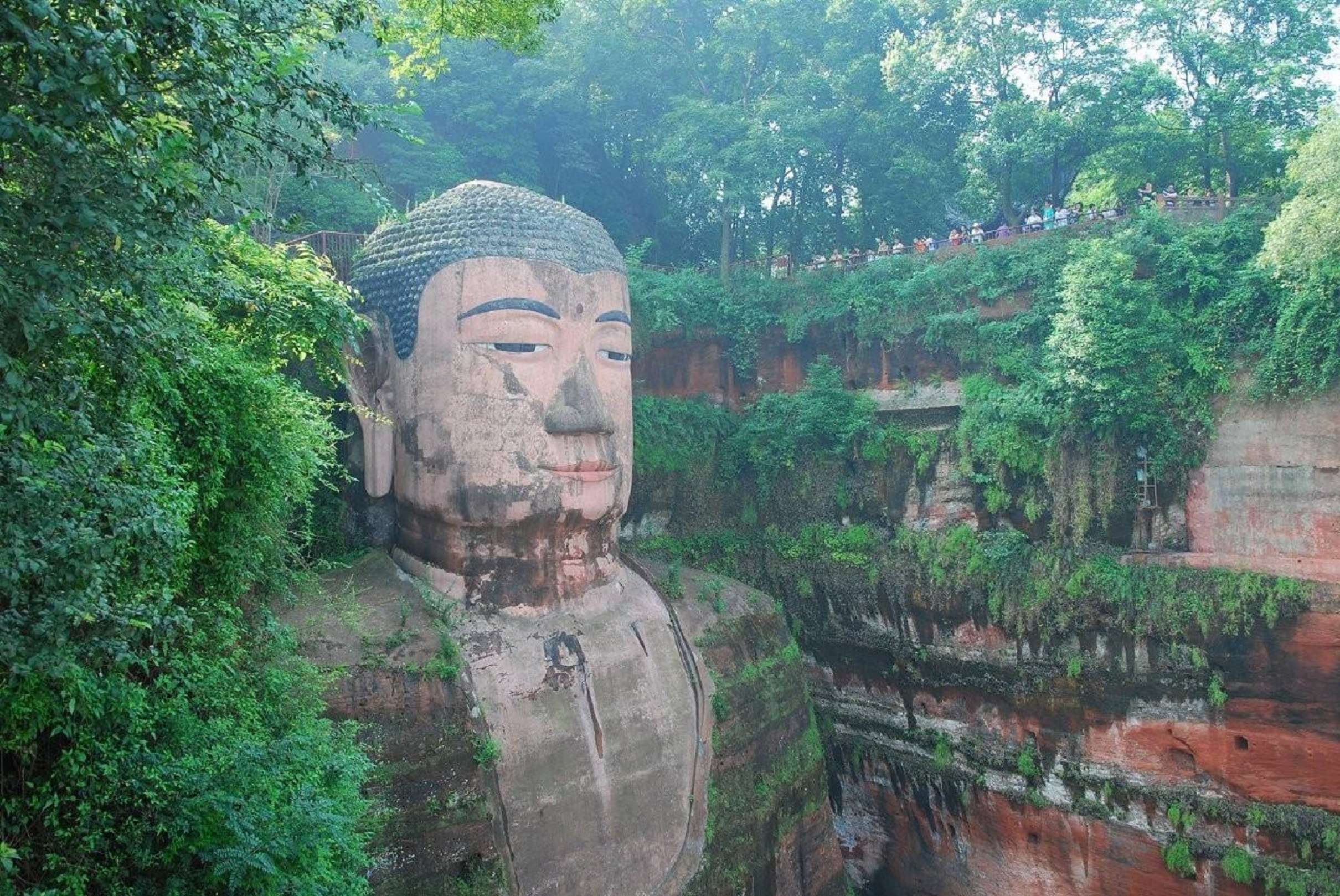
If you have the energy for a longer second day, I think Leshan Giant Buddha is a very worthwhile addition. This is exactly what I did, combining the panda base and Leshan in one full day, and while it made for an early start and a busier schedule, it also turned Day 2 into one of the most memorable parts of my time in Sichuan.
Normally, I would be cautious about squeezing a major day trip into such a short Chengdu itinerary. In many cities, that kind of decision ends up diluting the main destination. But Chengdu is unusually well placed for it, and Leshan is not just another random excursion. It is one of the region’s most iconic sights and a very different experience from the city itself.
What I liked about doing both on the same day was the contrast. The morning starts with something playful and unmistakably Chengdu, then the day shifts into something much grander and more monumental. After seeing pandas, heading out to Leshan gives the itinerary a completely different scale. It stops the second day from feeling repetitive and adds a more dramatic, classic Sichuan highlight to the trip.
That said, I would only do this if you are happy with a long day. If your priority is to keep Chengdu relaxed and unhurried, then stick with the panda base and spend the rest of the afternoon back in the city. But if you do not mind an organized excursion or a more packed second day, I think Leshan Giant Buddha is one of the best optional add-ons to a 2 days in Chengdu itinerary.
If you are deciding whether Leshan is worth the effort, or want more ideas beyond the city itself, my guide to the best day trips from Chengdu breaks down Leshan, Dujiangyan, Mount Qingcheng, Sanxingdui Museum, and the easiest ancient-town escapes.

Final Dinner in Chengdu
For your second dinner, I would go with Taolin Restaurant (饕林餐厅; tel 028 8321 9956) or, if you want something a little more refined, Wang Zi Chuan Restaurant (马旺子·川小馆; tel. 028 6423 1923). If either is high on your list, reserve ahead.
A short stay in Chengdu should still leave room for two memorable dinners. The city’s culinary reputation is too central to ignore, and ending with a proper meal is one of the most satisfying ways to close out the trip.

Is 2 Days in Chengdu Enough?
Yes, for a first visit, I think 2 days in Chengdu is enough. Not enough to know the city deeply. Not enough to cover every district or day trip or hidden corner. But absolutely enough to understand what makes it special.
In two days, you can experience the older, more atmospheric side of Chengdu, the city’s temple and tea house culture, its evening energy, and its most iconic attraction, the panda center.
That is a strong introduction and, more importantly, it feels coherent. This itinerary does not try to make Chengdu compete with other destinations around it. It lets the city speak for itself.

Frequently Asked Questions
How many days do you need in Chengdu?
For a first visit, 2 days in Chengdu is enough to get a strong feel for the city. That gives you time to explore the city itself, visit the panda base, and still enjoy the slower side of Chengdu without turning the trip into a rush. It is not enough to see everything, but it is enough for a very satisfying introduction.
Is Chengdu worth visiting if you are already traveling elsewhere in China?
Yes, definitely. Chengdu works especially well as part of a longer China trip because it offers a noticeably different rhythm from places like Beijing, Shanghai, Xi’an, or Tibet. It feels slower, softer, and easier to enjoy at street level, which makes it a great place to reset for a couple of days.
Should you include Leshan in a 2-day Chengdu itinerary?
Leshan is not essential if you only have 2 days in Chengdu, but it can work very well as an optional second-day add-on if you are happy with a longer schedule. I combined the panda base and Leshan on the same day, and while it made for a full outing, it was absolutely doable. For more options beyond the city itself, see my guide to the best day trips from Chengdu.
Is the Chengdu Panda Breeding and Research Center worth it?
Yes. For most first-time visitors, the panda base is one of the main reasons to come to Chengdu, and it absolutely deserves a place in a 2-day itinerary. It is one of the city’s signature experiences and pairs well with a slower day exploring Chengdu itself.
Should you book the Sichuan Opera in advance?
If it is something you really want to see, then yes, I would book ahead. If you are undecided, you can leave it flexible and decide later depending on your energy levels. It works well as an optional evening activity, but I would not force it into the itinerary if you are already tired.
What kind of traveler is this Chengdu itinerary best for?
This itinerary works best for first-time visitors who have limited time and want a mix of famous sights and local atmosphere. It is a good fit for travelers who enjoy cities with character, food, parks, temples, and slower-paced wandering rather than nonstop sightseeing.

Where to Go Next
Chengdu fits very naturally into a longer China itinerary. For me, it came after Tibet and before Chongqing, which made it feel like a comfortable reset between two very different parts of the trip. If you are planning a bigger route, my full 4 weeks in China itinerary shows exactly how Chengdu can fit into a broader trip, while my guide on how to plan a trip to China helps with the bigger planning decisions.
If you are continuing across China by rail, my guide to buying train tickets in China will help you choose the simplest booking option, while my China train classes guide explains which seat or sleeper type to book.
Chengdu also pairs well with Xi’an, especially if you are moving west to east across the country. You can also continue easily to Chongqing before heading onward to Zhangjiajie and Shanghai, which is exactly the kind of route that works well if you want to move from Sichuan’s food culture into dramatic mountain scenery and the east coast.


Final Thoughts on Spending 2 Days in Chengdu
What I remember most about Chengdu is not a single sight. It is the feeling of the place.
The monastery courtyards. The tea house in People’s Park. The lantern-lit evening walk through Jinli. The easy way the city moved between stillness and liveliness without ever feeling frantic. And of course, the pandas, which somehow managed to feel both delightfully obvious and completely worth it. If I were doing it again, this is exactly how I would spend 2 days in Chengdu.
Last Updated on 08/09/2026 by Panos


