

Hiking the Río Celeste Trail in Costa Rica’s Tenorio Volcano National Park is like stepping into another world. Nestled in the highlands of Guanacaste, the park is a hidden gem where steaming volcanic vents meet lush rainforest, and a river so vividly turquoise it almost seems unreal winds through the jungle. From misty fumaroles and bubbling mud pots to suspension bridges and tranquil pools, every step offers a new surprise.
In this guide, I’ll take you along the Río Celeste hike like a local: sharing trail highlights, insider tips, the best time to visit, and practical advice to make your adventure seamless. Whether you’re drawn by the famous waterfall, the magical El Teñidero, or the chance to spot wildlife in their natural habitat, this trail is one of Costa Rica’s most unforgettable experiences.
Table of Contents
Essential Information
Opening hours
- Open daily: 8 AM to 4 PM
- Last entry: 2 PM
Timing & Trail Difficulty
- How long to hike Rio Celeste: it takes around 3 to 5 hours round trip, depending on your pace and stops.
- Best start time: Around 8 AM to avoid heat and crowds
- Difficulty: Mostly easy; moderate in some parts
- Trail conditions: Often muddy and slippery, especially in the rainy season
Rio Celeste Trail Distances
- Entrance → Waterfall: 1,500 m / 0.93 mile (30 min)
- Waterfall → Mirador: 500 m / 1,640 ft
- Mirador → Laguna Azul: 150 m / 492 ft
- Laguna Azul → Borbollones: 50 m / 164 ft
- Borbollones → Teñideros: 300 m / 984 ft
Total: ~7 km / 4.35 miles (round trip, 3–4 hours)
👉Local tip: During or after rain, rent rubber boots at the entrance. They make a big difference on the muddier sections.

Entrance Fees & Tickets
- Foreign visitors: $12 USD adult / $5 USD child (ages 2–12)
- Costa Rican citizens/residents: ₡800 adult / ₡500 child
- Tickets must be purchased online in advance via SINAC (barcode + passport required).
- Park hours: 8:00 AM – 4:00 PM (last entry 2:00 PM).
- Parking: ₡3,000 (~$6), attendants on site.
⚠️ Note: Single‑use plastics and food are not allowed inside the park. Rangers check bags at the entrance.
Best Time to Visit
- Dry season (Dec–Apr): clearest turquoise water, easier trails.
- Rainy season (May–Nov): lush rainforest, but muddy paths and river may turn brown after storms.
⚠️ Note: After tropical storms, the river may temporarily lose its blue color. It usually returns within a day or two, but check the official Tenorio Volcano National Park Facebook page for current conditions.
Essential hiking equipment
- Waterproof hiking shoes or rubber boots (trust me, the trails get muddy!)
- A rain jacket & poncho (always useful, even during the dry season)
- Reusable water bottle & snacks (the hike can take several hours)
- Camera, dry bag, sunscreen, and bug spray (you’ll want to capture the stunning views and wildlife!)
What Hiking to Rio Celeste is Really Like
The main trail in Tenorio Volcano National Park is about 7 km (4.3 miles) round trip and winds through lush primary rainforest. It showcases some of Costa Rica’s most striking natural features. This is more than a scenic walk. It is a full sensory experience through misty jungle, vivid turquoise water, and pockets of geothermal activity.
I started just after 8 AM with fog still hanging over the treetops. At the park entrance, hummingbirds zipped between feeders while the scent of damp earth hinted at the rainforest ahead. The first stretch is gentle, but the path soon becomes steeper and muddier, especially after rain. The challenge makes the reward even better.
In a few hours I passed a waterfall, steaming hot springs, mineral‑rich rivers, and calm blue lagoons. Each turn revealed something new and the variety made it feel like a condensed showcase of Costa Rica’s natural beauty.
Rio Celeste Waterfall: Costa Rica’s Iconic Cascade
By the time I reached the top of the staircase, I could already hear the waterfall’s roar. The descent is more than 250 steep steps, and with each one the sound grew louder until the trees opened to reveal the Rio Celeste Waterfall in full view. It drops 30 meters into a pool so vividly turquoise it almost defies belief. Framed by thick rainforest, it feels like nature’s own amphitheatre.
Swimming is not allowed here to protect the fragile ecosystem, but standing on the viewing platform is its own reward. Mist clung to my skin, the air was cool, and somewhere above the canopy a howler monkey called out. A park ranger told me a local legend: the river turned blue when God dipped his paintbrush in it after colouring the sky. Looking at the water, I understood why the story endures. This was the moment I knew every muddy step had been worth it.
👨👩👧 Family Tip: Kids as young as 5 can walk to the waterfall. Bring carriers for toddlers. Strollers are not allowed.


Los Teñideros: Where the Waters Turn Blue
Los Teñideros is where the transformation of Río Celeste begins. This is the exact point where the acidic Quebrada Agria meets the mineral‑rich Río Buenavista. One carries aluminum silicates, the other has a lower pH. When they merge, a reaction enlarges tiny mineral particles, scattering sunlight in a way that makes the water appear an intense sky blue. Researchers from the University of Costa Rica confirmed this effect, known as Mie scattering, yet seeing it in person still feels like magic.
From the wooden bridge, I watched the change happen in real time. At first the water looked clear, then the blue deepened until it seemed almost painted on. Locals tell a story that the river turned blue when God rinsed a paintbrush here after colouring the sky. Whether you believe the science or the legend, this quiet bend in the rainforest is one of the most captivating stops on the trail.

Beyond the Waterfall: Full Trail Highlights
From Hissing Fumaroles to Crystal‑Clear Pools
While many visitors turn back after seeing the Rio Celeste Waterfall, the real adventure begins further along the trail. Continuing on the full Rio Celeste hike reveals geothermal and mineral‑rich wonders that make Tenorio Volcano National Park unforgettable.
As I moved deeper into the forest, the landscape shifted. Fumaroles released soft hissing sounds in the distance. Bubbling mud pots appeared beside the path, and thin veils of steam rose from hidden corners of the jungle. These geothermal features gave the area a raw, almost prehistoric atmosphere.
There were quiet moments too. I passed crystal‑clear pools with a faint blue tint and stretches of rainforest where the only sounds were dripping leaves and the calls of unseen birds. The contrast between the volcanic energy and the stillness of the forest was striking. Experiencing the entire trail, not just the waterfall, is what makes hiking to Rio Celeste truly special.


Borbollones: Volcanic Vents and Hot Springs
The Borbollones area feels like stepping into the earth’s engine room. Walking this part of the Tenorio Volcano National Park trail, I was surrounded by vents releasing sulfur‑rich gases. The sharp scent of sulfur hung in the air, and the steady hiss of steam rising from the ground was a constant reminder that this is an active volcanic zone.
Heat radiated from the ground, and small pools bubbled at the edges of the path. According to park information boards, these vents form where groundwater meets hot magma deep below, creating pockets of steam and minerals that escape through the surface.
It is a place that makes you slow down and take notice. The Borbollones show the raw geological forces shaping Costa Rica, and seeing them up close leaves a lasting impression.
Laguna Azul: A Peaceful Blue Pool
After leaving the Borbollones, the trail opened to Laguna Azul, a shallow pool so vividly blue it almost looked artificial. The color comes from suspended volcanic minerals that scatter sunlight, the same process that gives Río Celeste its famous hue. Here, the energy of the volcanic vents gives way to stillness.
I paused on the bank, taking in the calm surface and the dense rainforest reflected in the water. A snakebird stood at the edge, wings spread wide to dry in the sun. The only sounds were dripping leaves and the occasional rustle in the undergrowth. It was a quiet moment that balanced the hike’s more dramatic sights and made me appreciate the park’s range of moods.

Spectacular Jungle Vistas
After leaving the Borbollones, the trail opened to Laguna Azul, a shallow pool so vividly blue it almost looked artificial. The color comes from suspended volcanic minerals that scatter sunlight, the same process that gives Río Celeste its famous hue. Here, the heat and noise of the vents give way to stillness.
I paused on the bank, taking in the calm surface and the dense rainforest reflected in the water. A snakebird stood at the edge, wings spread wide to dry in the sun. The only sounds were dripping leaves and the occasional rustle in the undergrowth. It was a quiet moment that balanced the hike’s more dramatic sights and showed another side of Tenorio Volcano National Park.

Wildlife at Tenorio Volcano National Park
Tenorio Volcano National Park is a vital ecological corridor in northern Costa Rica, home to an extraordinary range of rainforest species. Hiking the Río Celeste trail offers a real chance to see animals that thrive in this protected habitat.
On my visit, I watched coatis moving through the undergrowth, their long tails flicking as they foraged. Two toucans perched high in the canopy, their bright beaks standing out against the green leaves. A sloth slept motionless, perfectly camouflaged among the branches. Blue morpho butterflies drifted through shafts of sunlight, while frogs called from pools near the path. I even spotted a viper resting on a branch, its markings blending into the foliage.
Large mammals such as pumas, jaguars, and tapirs also live here, although sightings are rare. With the help of an experienced local guide, you might notice tracks, claw marks, or other subtle signs of their presence. Guides are skilled at spotting wildlife and interpreting the clues most hikers would miss.
The longer I stayed still, the more I saw. The forest revealed itself slowly, one movement or sound at a time.
🐾 Pro Tip Patience is your best tool for wildlife watching. Find a quiet spot, pause, and let the rainforest settle around you. Animals often appear when you stop moving. The key is to give nature the time and space it needs.


Flora: A Vibrant Green Symphony
Tenorio Volcano National Park is home to one of Costa Rica’s most diverse plant communities. As I moved deeper into the forest, the canopy closed overhead and the air grew heavier with the scent of damp vegetation. Giant ceiba trees towered above, their trunks supporting a network of branches that seemed to disappear into the clouds.
Bright heliconias and delicate orchids broke the green with flashes of red, yellow, and purple. Mosses, ferns, and bromeliads covered tree trunks, fallen logs, and even exposed rocks, creating a layered habitat for insects, frogs, and birds. The forest floor was a tangle of roots and vines, each step revealing another detail in the park’s complex ecosystem.
Higher on the trail, the vegetation began to shift. Broad‑leafed rainforest plants gave way to the smaller, moisture‑loving species of the cloud forest, adapted to cooler temperatures and near‑constant mist. This gradual change in flora is one of the park’s most striking features, showing how elevation shapes life in the tropics.

Tips for Hiking Tenorio Volcano National Park
Is it hard to hike the Rio Celeste trail?
The hike is moderate. It’s about 7 km (4.3 miles) round-trip with some steep and muddy sections, especially near the waterfall.
How long does it take to hike Rio Celeste?
Most visitors complete the hike in 3-5 hours, depending on stops, trail conditions, and the time spent at each viewpoint.
Can I hike Rio Celeste without a guide?
Yes, the trail is well-marked, and you can hike it without a guide. However, guided tours can enhance your experience by offering deeper insight into the park’s flora, fauna, and unique features.
👉 This Rio Celeste hiking tour is amazing. You will learn a lot about the local fauna, flora and culture.

What is the best time to visit Tenorio Volcano National Park?
- Rainy Season (May to November): The park is lush and vibrant during the green season. However, trails can be muddy and slippery, and the Rio Celeste may not appear as blue if heavy rains stir up sediment.
- Dry Season (December to April): Ideal for hiking, with the clearest views and the most vibrant blue water. Keep in mind, it can get hot, so it’s best to start early in the morning.
How to get to Tenorio Volcano National Park
By car
Driving is the most convenitnt way to visit and allows for maximum flexibility.
- Best town to base yourself: Bijagua de Upala
- If you stay in Liberia, it is a 2-hour drive
- If you stay in La Fortuna, it takes 1.5–2 hours
I found great car rental deals on Discover Cars, when I visited.

How to get to Rio Celeste by bus
There is no direct public bus to Tenorio Volcano National Park. Travelers usually take a bus to Bijagua from Liberia or La Fortuna, then hire a local taxi for the final 20‑minute ride to the park entrance. Budget extra time, as rural bus schedules can be limited.
San José is the main hub with several terminals (7–10, Atlántico Norte, Tracopa) serving all regions below.
- Bijagua: Direct buses from San José (Transnorte de Upala, ~4h, $8–13). Also connections via Cañas–Upala and Liberia–Upala.
- La Fortuna: Direct buses from San José (Transportes San Carlos, 3/day, ~3h, $4–7).
- Liberia: Pulmitan de Liberia buses from San José (~5h, $7). From Tamarindo, Transportes La Pampa (~2.5h, ₡1400).
- Tamarindo: Empresa Alfaro (11:30 AM, 3:30 PM) or Tralapa (7 AM, 4 PM) from San José (~6h, $9–10). Multiple daily buses from Liberia (~2–3h).
Where to stay near Rio Celeste
Bijagua is the closest town and offers a variety of accommodations, from charming eco-lodges to cozy guesthouses. Here are my lodging recommendations:


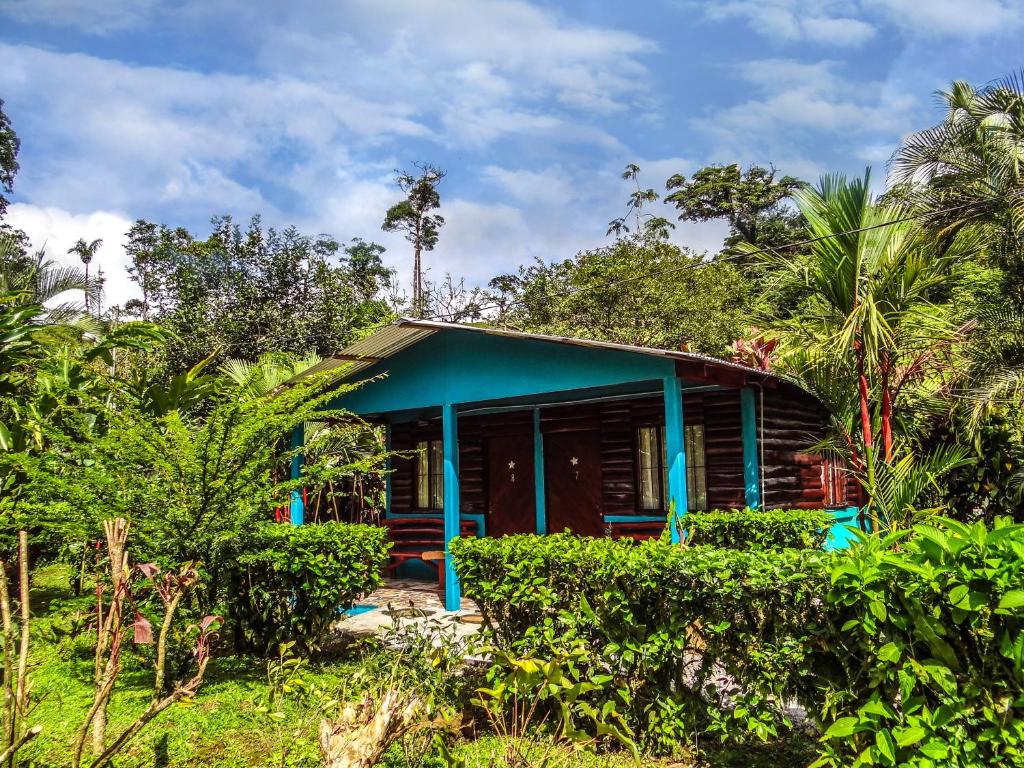
Camping near Rio Celeste
If you prefer a more adventurous stay, there are a few campgrounds near Bijagua:
- Villa Celeste Katira: Scenic camping area with basic facilities.
- Posa del Pedro: Rustic riverside spot popular with locals.
- Doña Ana: Family‑run site offering a simple, authentic experience.
👉 Tip: Bring rain‑ready gear as nights can be damp in the rainforest.
Where to Eat in Rio Celeste
- Soda La Amistad: A local eatery serving authentic Costa Rican dishes (it is the restaurant of Posada La Amistad above).
- Tilapiera Los Laguitos: A great spot for trying local fish in a laid-back atmosphere.
- Restaurant Tapirus Paradise: Ideal for dinner with a more extensive menu.

Mobile Signal in Rio Celeste
Mobile signal around Rio Celeste is decent near the park entrance but drops quickly once you enter the trail or drive deeper into Tenorio National Park.
Wi‑Fi in nearby lodges is usually stable but not super fast.
👉 For reliable data across Costa Rica and the wider region, my Latin America eSIM guide shows which plans stay consistent on multi‑country trips.

Frequently Asked Questions
Can you swim in Rio Celeste?
No. Swimming is prohibited inside Tenorio Volcano National Park to protect the fragile ecosystem.
How many steps lead to the waterfall?
There are 253 steep steps down to the viewing platform. Handrails are provided for safety.
Is Rio Celeste worth visiting?
Yes. The vivid turquoise river, geothermal features, and rainforest wildlife make it one of Costa Rica’s most unique hikes.
What is the best time to see the blue color?
During the dry season (December–April). Heavy rains in the wet season can stir sediment and dull the turquoise effect.
How long does the hike take?
The full trail is ~7 km (4.3 miles) and takes 3–5 hours depending on pace and stops.
Why Tenorio Volcano National Park is Worth Visiting
Looking back, hiking in Tenorio Volcano National Park was one of the most rewarding experiences of my time in Costa Rica. The vivid blue waters of Río Celeste, the variety of wildlife, and the mix of volcanic energy with rainforest calm made every step memorable.
I would return without hesitation. Next time, I plan to explore more of the secondary trails and hire a certified local guide to gain deeper insight into the park’s ecology, geology, and cultural history.
If you are planning a trip to Costa Rica, put Tenorio Volcano National Park high on your list. It is a place where natural science and local legend meet, and where the landscapes are as educational as they are beautiful. I hope this guide has given you a clear picture of how to hike the Río Celeste Trail and what makes it so special.
If you enjoyed this guide, you might also like my detailed itineraries for other nature‑rich destinations:
- Hiking the Caldeira Trails of Sete Cidades and admiring the waterfalls of Nordeste Sao Miguel, Azores
- Exploring the volcanoes and mountain trails of Réunion Island
👉 Planning your own hike? Feel free to drop any questions in the comments — or reach out if you’d like help crafting your Costa Rica itinerary!
Last Updated on 03/02/2026 by Panos
