


Where to Stay in Beijing (2026): My Guide to the Best Areas & Hotels After Multiple Visits
Wangfujing, Dongsi or Qianmen? My guide to the neighborhoods, hotel locations and practical details that make a Beijing stay easier, based on extensive time exploring the city.
Choosing where to stay in Beijing sounds simple until you look at the map. The Forbidden City takes up an enormous block, the Summer Palace is well out to the northwest, and the Great Wall is a day trip. You can stay somewhere central and still spend plenty of time getting around.
After multiple visits and stays in several Beijing hotels, I put two things first: getting to the sights without too much fuss, and enjoying the streets around the hotel when I come back. Wangfujing is my recommendation for a straightforward first visit, Dongsi for a central base with hutong character, and Gulou when the neighborhood is part of the reason for coming. Qianmen is another strong option for traditional streets and evening food stops. Below, I explain the differences, what to budget and which hotels suit each kind of stay.
Some hotel links are affiliate links: I may earn a commission if you book, at no extra cost to you. I have stayed at Happy Dragon Imperial Garden, The Orchid, East Sacred Hotel and Happy Dragon Alley. The other hotels below are researched alternatives, chosen for their location, setting and room options; I have not stayed at all of them.
Where should a first-time visitor stay in Beijing?
For a first visit, my recommendation is to stay near Wangfujing, Jinyu Hutong or Dengshikou stations. If you want hutong streets as well as useful transport, add Dongsi to the search. Choose Qianmen or Zhushikou for traditional shopping streets and southern Beijing sights, or Gulou for a courtyard stay. For four or five days, keep one hotel and explore the other neighborhoods from there.
Choose the route home, not just the landmark nearest your hotel
Being close to a famous sight is useful, but there is another question: where will I eat tonight, and how will I get back? A hotel beside a landmark is less appealing if every dinner means another trip across town.
My 8pm test is simple: imagine coming back after the Forbidden City, Jingshan and dinner. Would you still be happy with that walk from the station? Then imagine arriving with your suitcase. A lovely courtyard down a narrow lane might be worth the extra effort, so check the final approach before paying.
Check the hotel entrance, a walkable station exit and the nearest road for a taxi pickup. Dongcheng is a large district, not one compact neighborhood. Even two hotels described as “near Wangfujing” can suit quite different trips.

Best Areas to Stay in Beijing: Quick Comparison
My starting point for a first trip. Stations: Wangfujing (1/8), Jinyu Hutong (8), Dengshikou (5). Trade-off: the shopping streets are commercial; choose the exact address carefully.
A compromise between a useful central base and older streets. Station: Dongsi (5/6). Trade-off: “Dongsi” and “Dongsi Shitiao” are different stations; check the map.
Traditional streets and food around Qianmen and Dashilan. Stations: Qianmen (2/8), Zhushikou (7/8). Trade-off: pedestrian streets can complicate luggage and taxi access.
My choice if the hutongs are a big part of the trip. Stations: Nanluoguxiang (6/8), Gulou Dajie (2/8). Trade-off: a hotel deep in the lanes can be a substantial walk from either.
Lake walks and courtyard stays. Station: Shichahai (8), depending on the address. Trade-off: Houhai has lively bar streets; a lakeside location does not guarantee quiet.
Sanlitun for dining and nightlife; Guomao for larger business hotels. Trade-off: these are separate parts of Chaoyang, and both involve journeys to the imperial sights.
Late arrivals, early flights and one-night stopovers. Trade-off: A poor sightseeing base.
Four Beijing hotels I’ve stayed in
I have stayed at all four of these hotels. They give you different ways to experience Beijing: Imperial Garden for a central courtyard, The Orchid for the Drum Tower hutongs, East Sacred for a simpler central base, and Happy Dragon Alley for the northern Dongsi lanes. The details below help you choose between them; room categories and prices can change.

Happy Dragon Imperial Garden Courtyard
Choose Imperial Garden for courtyard character at 50 Yanle Hutong while keeping a central base. Compare its rate with boutique hotels, not just budget rooms: the setting and larger room categories can carry a premium.
See rooms & prices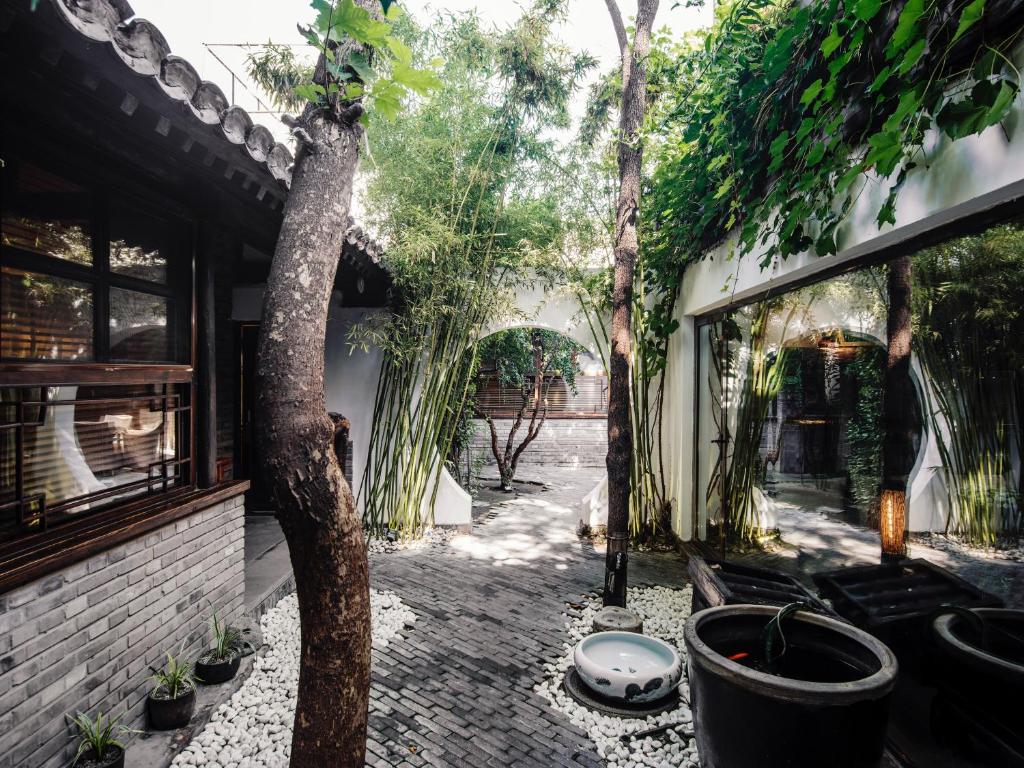
The Orchid Hotel – Old Town & Drum Tower
Choose The Orchid when staying around the Drum Tower matters as much as ticking off the sights. The main courtyard and separate residences offer different layouts; choose the room as carefully as the hotel.
See rooms & prices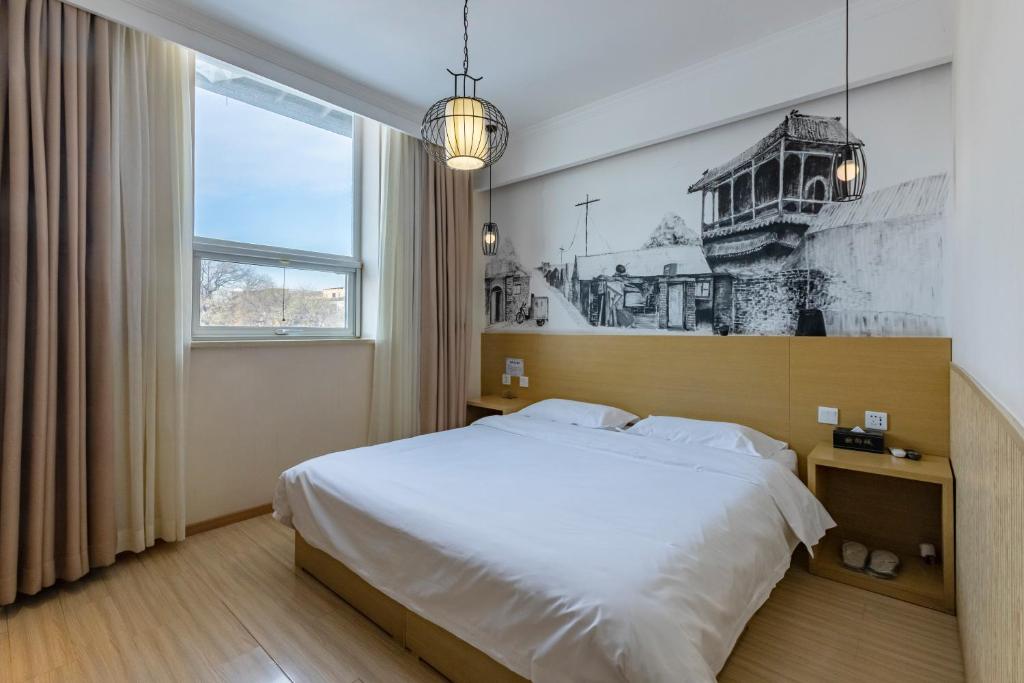
Happy Dragon Alley Hotel Beijing
Choose Happy Dragon Alley for the lanes around Dongsi Jiutiao, farther north than Imperial Garden. It is worth comparing for value, but these are separate hotels with different locations and room choices.
See rooms & prices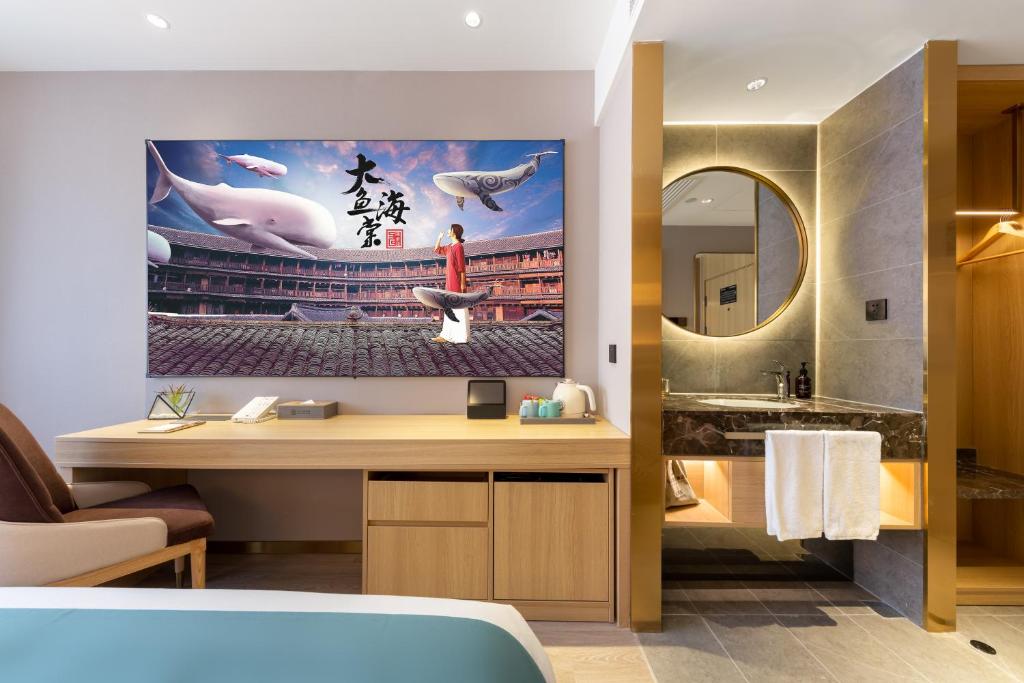
East Sacred Hotel
Choose East Sacred for a simpler room in a useful central location. Match the Dongdan Third Alley address to the booking page, then compare the exact room and total price; the name also appears on other Beijing listings, like Dongdan Third Alley branch. Check the address before booking: similarly named East Sacred listings also appear in Chaoyang. Then compare the room, windows and total rate.
See rooms & pricesMy Advice for a Four- or Five-Day Beijing Stay
For a 4–5 day first visit, one well-placed hotel is enough. Wangfujing, Dengshikou and Dongsi all give you a useful central base. A smaller courtyard can be an excellent choice if you enjoy the setting, provided the room and luggage access suit you.
Visit Qianmen, Gulou, Shichahai and Sanlitun without changing hotels just to experience them. Beijing is already large enough that changing hotels usually adds more hassle than it saves.
If the hutongs are a major reason you are visiting, Gulou deserves a place at the top of your shortlist. There is no need to treat atmosphere as a luxury reserved for a second trip; just be realistic about the walk to the metro and the room you are booking.
See how that base choice works against a real sightseeing route in my 5 Days in Beijing itinerary.

Wangfujing, Dongsi or Qianmen: the deciding difference
Choose this for a conventional central hotel with shopping and dining nearby. It is my default recommendation for a first trip.
Choose this for older streets and smaller hotels around a useful central metro interchange. It is the compromise between convenience and neighborhood character.
Choose this for traditional storefronts and an after-dinner wander around Dashilan. Check the luggage approach if the hotel sits inside a pedestrian lane.
How Much Should You Budget for a Beijing Hotel?
For a comfortable central private room, CNY 600–1,200 [about US$90–180] per night is a useful starting budget. You can spend less, especially on a compact room, or much more for a courtyard suite or luxury hotel. I would rather pay for a location that works every day than save a little on a room that adds two tiring journeys.
These are planning ranges for one private room for two adults, per night—not per person or guaranteed offers. They reflect publicly available hotel listings and accommodation guides checked in October 2026. US dollar amounts are rounded estimates; compare the final total for your dates, including taxes, breakfast and cancellation terms.
[about US$45–90]
A tighter budget: simpler hotels and compact rooms. Start around Dongsi or Qianmen / Zhushikou and compare the precise station walk. Check that the cheapest category has a private bathroom and the windows you expect; this range becomes harder to find on busy dates.
[about US$90–180]
A comfortable central stay: a useful search range for conventional hotels and some smaller boutique properties. Compare East Sacred and Happy Dragon Alley for your dates, then see what the same budget buys around Wangfujing and Qianmen. Neither hotel is guaranteed to fall in this band.
[about US$180–300]
More room or a more distinctive hotel: upscale properties, courtyard boutiques and larger room categories. Compare The Orchid and Imperial Garden on the exact room and setting, rather than assuming a hutong address means a cheap stay.
[about US$300+]
A luxury stay: compare Waldorf Astoria and Mandarin Oriental Wangfujing. Entry rooms, suites and sought-after dates can sit far apart in price. Pay the premium when the room, facilities and time spent in the hotel justify it.
Where I look first for better value
Start with Happy Dragon Alley and East Sacred, then compare the Xana and Orange options around Qianmen. Those are starting points for a price comparison, not a promise that one hotel is always cheapest. A central room with fewer extras often makes more sense than a larger room well outside your daily route.
For an even tighter budget, compare hostel dorms separately: a bed price is not comparable to the private-room ranges above. For holidays, especially the Lunar New Year, early May and early October, check availability early and keep a refundable reservation if the terms suit you. My China travel budget guide covers the rest of the trip.
The Best Base for Your Kind of Trip
Start around Wangfujing or Dengshikou for a conventional central hotel. Waldorf Astoria lists room types sleeping four; Pan Pacific in Xidan is another option to compare for family space. For hutong surroundings, The Orchid’s two-bedroom Family Suite deserves a look. Enter every child’s age and confirm the beds, occupancy and building before paying.
Choose Dongsi for central courtyard character or Gulou for hutong wandering. Compare Imperial Garden and The Orchid; for a hotel-focused splurge, look at Waldorf Astoria or Mandarin Oriental Wangfujing. The deciding question is whether you want the neighborhood or the hotel facilities to be the bigger part of your stay.
Wangfujing and Dongsi make useful starting points when you want plenty of places to eat and a manageable return after dark. A compact private room can be enough; compare East Sacred and Happy Dragon Alley before paying for space you will barely use. Choose a staffed arrival arrangement that matches your flight.
Prioritize vehicle access to the entrance and a room reached without stairs. A larger conventional hotel is a sensible place to start, but its size does not guarantee accessibility. Ask the property to confirm the exact route from drop-off to room, elevator access, bathroom layout and any thresholds. A short map distance can still hide steps or an awkward station exit.
Keep your base near Wangfujing, Dengshikou, Dongsi or Qianmen if sightseeing is the priority. Choose the airport only when the connection or flight time justifies it. For a very short stay, the arrival and departure transfers matter as much as being near one attraction.
Before You Book a Beijing Hotel
- Check the exact hotel entrance. The final walk can matter more than the neighborhood label, especially with luggage or after a long sightseeing day.
- Check the nearest useful metro station and line. “Near the metro” is not enough if the station does not help with the journeys you repeat.
- Save the hotel name and address in Chinese. It makes Didi rides, taxi journeys and asking for directions much easier.
- For courtyard hotels, check luggage access and room details. Some lanes are inaccessible to cars, and room size, stairs and soundproofing can vary.
- Arriving after midnight? Confirm reception hours and which night to reserve. If you want a room immediately on arrival, you will usually need the preceding night, not a booking that starts at afternoon check-in later that day. Tell the hotel your arrival time so it knows you are coming.
- Check the railway station on your onward ticket. Beijing South, West, Railway Station, Fengtai and Chaoyang are different places. A hotel near “Beijing station” may be nowhere near your train.
- Compare the same room and conditions. Check windows, private bathroom, breakfast, cancellation deadline and payment terms. A cheaper non-refundable room is a different purchase from a flexible rate.
- Traveling with children or needing step-free access? Enter everyone’s ages and ask about bed arrangements, elevators and the route to the room. A family-friendly area does not make every courtyard accessible.
You do not need to hunt for a special “foreigner hotel” label
Older China advice can make hotel booking sound more complicated than it needs to be. The July 2024 national guidance says local authorities and booking platforms should not restrict hotels from receiving overseas guests on qualification grounds. Bring your passport; hotels handle accommodation registration at check-in. For a small property, confirm late arrival or passport-based self-check-in before booking; automated systems can differ.

Wangfujing & Dengshikou: Best for a Straightforward First Visit
Wangfujing is my default recommendation for a first Beijing trip. There are plenty of hotels and places to eat, and you stay east of the Forbidden City rather than out in a distant suburb. Its main strength is the location: the shopping street is convenient, but it is not the most interesting part of Beijing.
The important detail is which end of Wangfujing you are booking. Wangfujing station has Lines 1 and 8; Jinyu Hutong is on Line 8 farther north; Dengshikou is on Line 5 to the east. A hotel near one is not automatically near the others. Line 5 is handy for the Temple of Heaven’s east gate and the Lama Temple; Line 8 connects the central shopping area with Qianmen and the northern hutong neighborhoods.
Does “near the Forbidden City” mean an easy walk?
Not necessarily. Visitors enter the palace through the Meridian Gate on the south side; the main route ends to the north, near Jingshan. A hotel beside the north wall is convenient after the visit but is not beside the visitor entrance. Check the walking route to the right gate and allow time for security; a distance to the middle of the palace on a booking map can be misleading. My Forbidden City guide explains the entrance and walking route.
Is Wangfujing too touristy?
Yes, parts of it are commercial and touristy. I still think it works extremely well as a first-trip base. The most interesting neighborhood to explore is not always the best neighborhood to sleep in.

East Sacred Hotel
I’ve stayed here. A useful starting point when you want a simpler central room and plan to spend most of the day out. For this location, match No. 33A Dongdan Third Alley, Dongcheng to the listing; other East Sacred names appear elsewhere in Beijing. Compare the room’s windows and size before choosing the cheapest rate.
See rooms & prices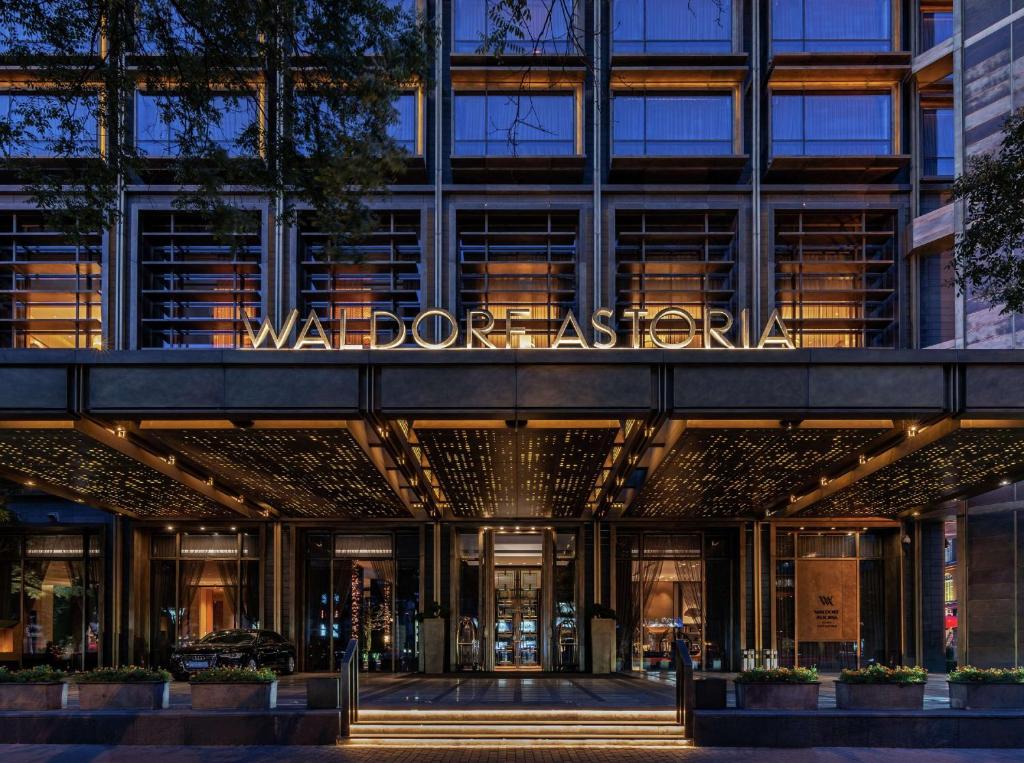
Waldorf Astoria Beijing
On Jinyu Hutong, east of the Forbidden City, with an indoor pool and spa. The published room choices include Double Queen Premier and Deluxe Family rooms sleeping four, alongside separate hutong suites and villas. Compare those layouts carefully if traveling with children.
See rooms & prices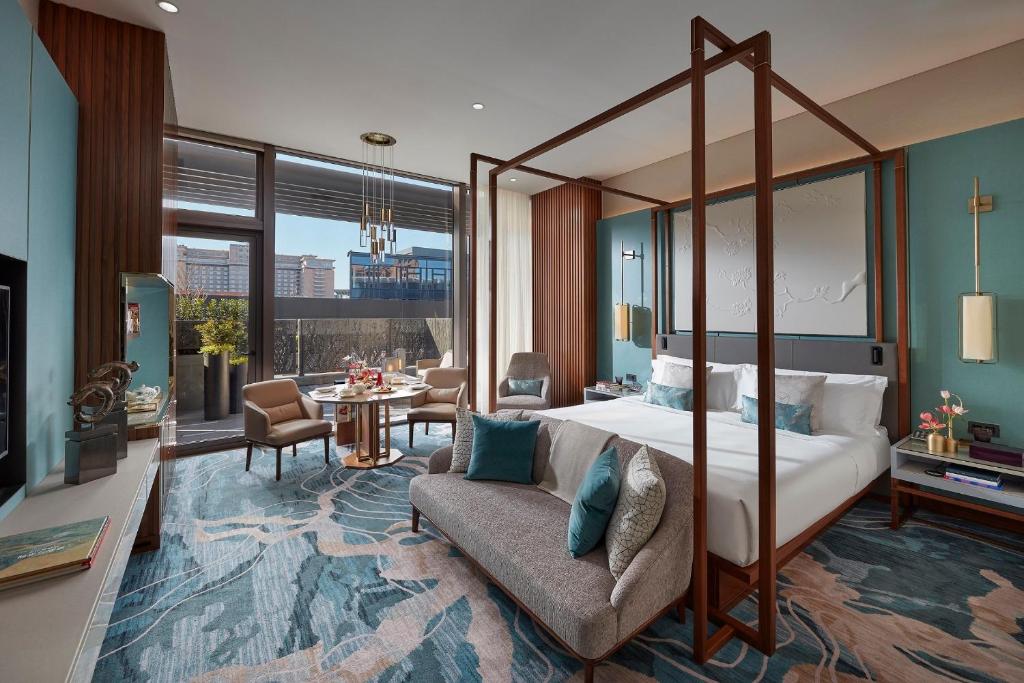
Mandarin Oriental
For a Wangfujing splurge, check that the listing is Mandarin Oriental Wangfujing, at WF CENTRAL. Beijing also has a separate Mandarin Oriental Qianmen. The settings are different, so match the property name and address to the stay you want.
See rooms & pricesDongsi & Nearby Hutongs: Central Convenience with More Character
If Wangfujing sounds a little too commercial but Gulou seems less convenient for your plans, Dongsi is a strong alternative. Older lanes, smaller places to stay and a useful metro interchange make it a good balance between sightseeing convenience and a neighborhood you can enjoy outside the hotel.
Dongsi station has Lines 5 and 6. Line 5 serves the Lama Temple and Temple of Heaven East Gate; Line 6 runs west through Nanluoguxiang. You will still need to walk or change lines for some sights, but that is true of almost any Beijing base. Dongsi Shitiao and Zhangzizhonglu are different stations, so check the one that actually serves your hotel.
The three hotels below occupy different parts of these central hutong streets: Imperial Garden is on Yanle Hutong, Dasein Youlan is on Bensi Hutong toward Dengshikou, and Happy Dragon Alley is farther north on Dongsi Jiutiao. They belong in this wider neighborhood section, but they do not all share the same nearest station. Compare the actual room and walking route as well as the courtyard photographs.
Hotels in Dongsi and the nearby hutong streets
Happy Dragon Imperial Garden Courtyard
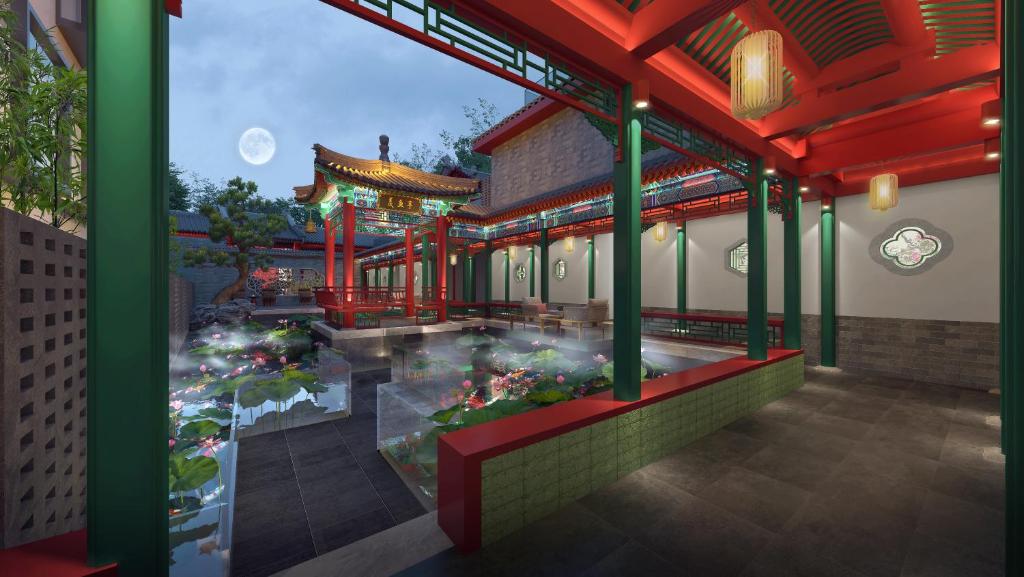
I’ve stayed here. My recommendation to compare when you want courtyard character without giving up a central base. The address is 50 Yanle Hutong, in the wider Dongsi area. It can cost considerably more than a basic hotel, especially for larger rooms, so compare the actual layout and total rate. This is a different property from Happy Dragon Alley.
See rooms & prices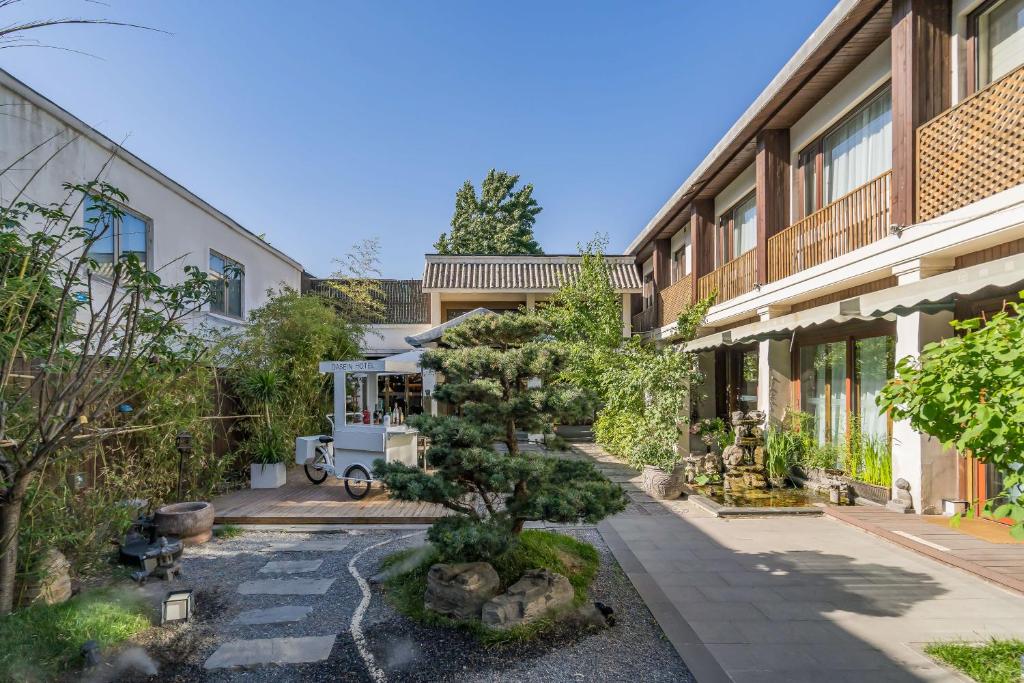
Dasein Youlan Hotel
For a smaller courtyard hotel toward Dengshikou and Wangfujing, compare Dasein Youlan at 75 Bensi Hutong. It offers a different address from the two Happy Dragon hotels farther north. The appeal is the setting; the deciding details are the room layout, natural light and walk to the station.
See rooms & prices Happy Dragon Alley Hotel Beijing
I’ve stayed here. A good option to compare for the northern Dongsi hutongs and a more modest room budget than some courtyard boutiques. It is at 78 Dongsi Jiutiao, with Zhangzizhonglu worth checking for your metro route. Standard rooms can be compact; a lower price does not necessarily buy the same space as Imperial Garden.
See rooms & pricesQianmen: Best for Central Sightseeing with More Old-Beijing Character
Qianmen is my recommendation for traditional shopping streets, food and evening wandering around Dashilan. Parts of Qianmen are busy and restored for visitors, so expect a popular historic district rather than an untouched hideaway. But I find the surrounding streets more appealing for a wander than choosing a hotel purely for a shopping mall.
Wangfujing vs Qianmen: which suits your trip?
Compare the hotel addresses before choosing the neighborhood. A Qianmen hotel close to Zhushikou can be more practical than a “Wangfujing” hotel a long walk from a station. Wangfujing is my starting point for a conventional central stay; Qianmen suits a stay with traditional streets outside the door. Dongsi offers something between the two.

Qianmen or Zhushikou: which end suits your trip?
Qianmen station is at the northern end of the pedestrian street, on Lines 2 and 8. Zhushikou is farther south, on Lines 7 and 8. Line 7 is useful for Beijing West Railway Station, while Line 8 takes you north toward Wangfujing and the hutongs. The walk from the hotel to either station matters more than a broad “Qianmen” label.
For a Temple of Heaven visit, this part of Beijing can make sense. For the Forbidden City, leave time for the actual south-side approach and security; a hotel south of Tiananmen Square does not mean the palace entrance is just around the corner.
My luggage check: ask the hotel where a Didi can stop, whether staff can help with bags and how far you will carry them. A lane can be part of the appeal, but a pedestrian-only approach is something to know about before stepping out of the taxi.
Beijing Xiaofengxian Former Residence Hotel
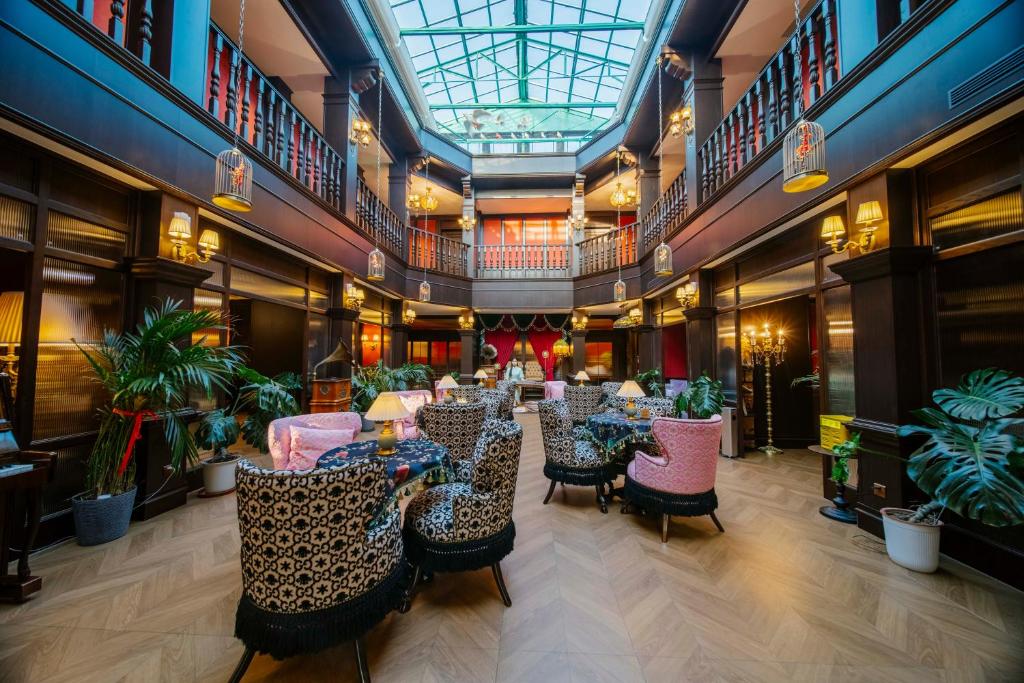
For a stay with traditional character around Qianmen, this belongs on the shortlist. Choose it for the setting rather than the facilities of a large international hotel. Compare the room size and bathroom, and ask where a taxi can stop with your bags.
See rooms & prices
The Yard Hotel
A boutique option for making Qianmen’s older streets part of your stay. It makes more sense for travelers who enjoy the neighborhood than those who need a big hotel with extensive facilities. Match the full address carefully—“The Yard” is a generic name—and compare the route to Qianmen or Zhushikou station.
See rooms & prices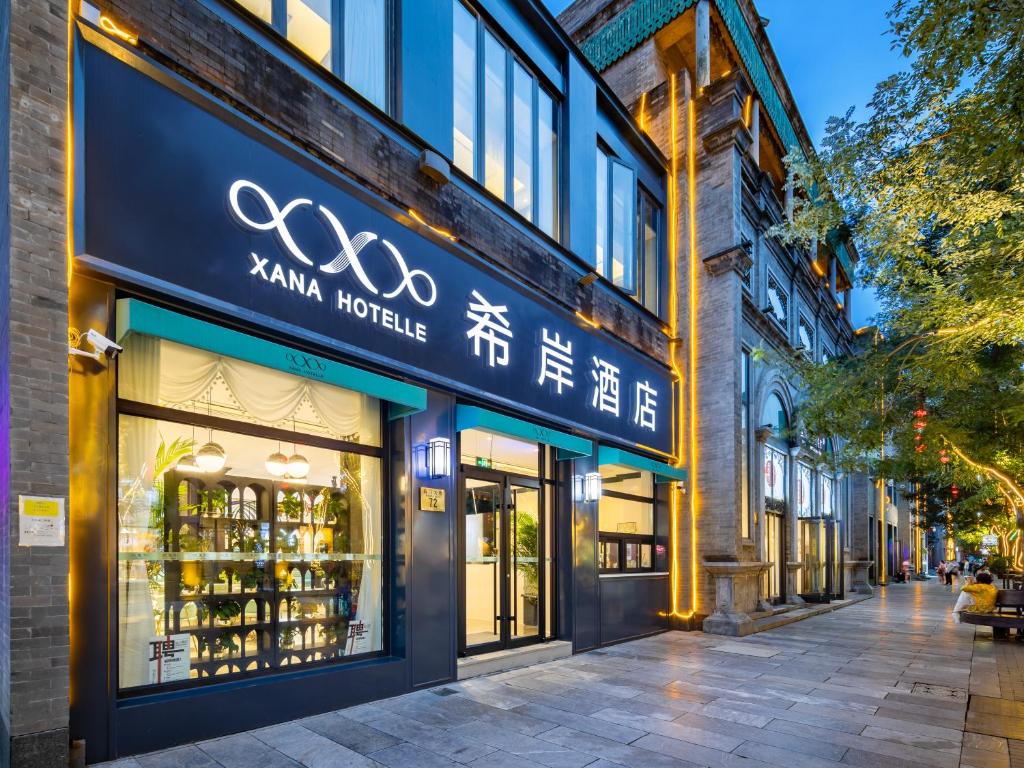
Xana Hotel
Compare this Qianmen option when price and a conventional private room matter more than courtyard atmosphere. It is worth checking alongside Orange for your dates. Xana has multiple branches, so match the exact Qianmen address and compare the same cancellation terms.
See rooms & prices
Orange Hotel
A practical alternative for travelers who want to spend on Beijing itself rather than a boutique setting. Compare the Qianmen branch with Xana on the total room price, windows and station walk. The Orange name alone does not identify the location; Beijing has several branches.
See rooms & prices
Liuli Tile Courtyard Hotel
For courtyard atmosphere in the older streets, add this to your Qianmen comparison. The setting is the reason to consider it; room size, temperature control and noise are the details that decide whether it suits you. Confirm the luggage drop-off before arriving.
See rooms & pricesGulou & Nanluoguxiang: Best for Hutongs and Courtyard Hotels
Gulou and Nanluoguxiang are among the best places to stay if the hutongs are not just something you want to visit, but part of how you want Beijing to feel when you leave the hotel.
I spent a lot of time walking these lanes. Nanluoguxiang itself can be busy, but the side streets are the real appeal. My recommendation is to look beyond the busiest stretch and check how far the nearest useful station actually is. You are already well placed for some northern sights; the inconvenience is usually the last walk or a particular cross-city journey, rather than the hutongs being a bad base altogether.
Hotel access matters more here too. A beautiful courtyard property deep in the lanes can mean carrying luggage the final stretch after a Didi drops you on a larger road.

The Orchid Hotel – Old Town & Drum Tower
I’ve stayed here. This is my recommendation to compare when the Drum Tower hutongs are a priority. At 65 Baochao Hutong, The Orchid offers rooms in the main courtyard and separate nearby residences. Its Studio Loft is 30 m² [323 sq ft], with the bed upstairs; the Family Suite has two bedrooms. Confirm which building and layout you are booking, especially with luggage or children.
See rooms & prices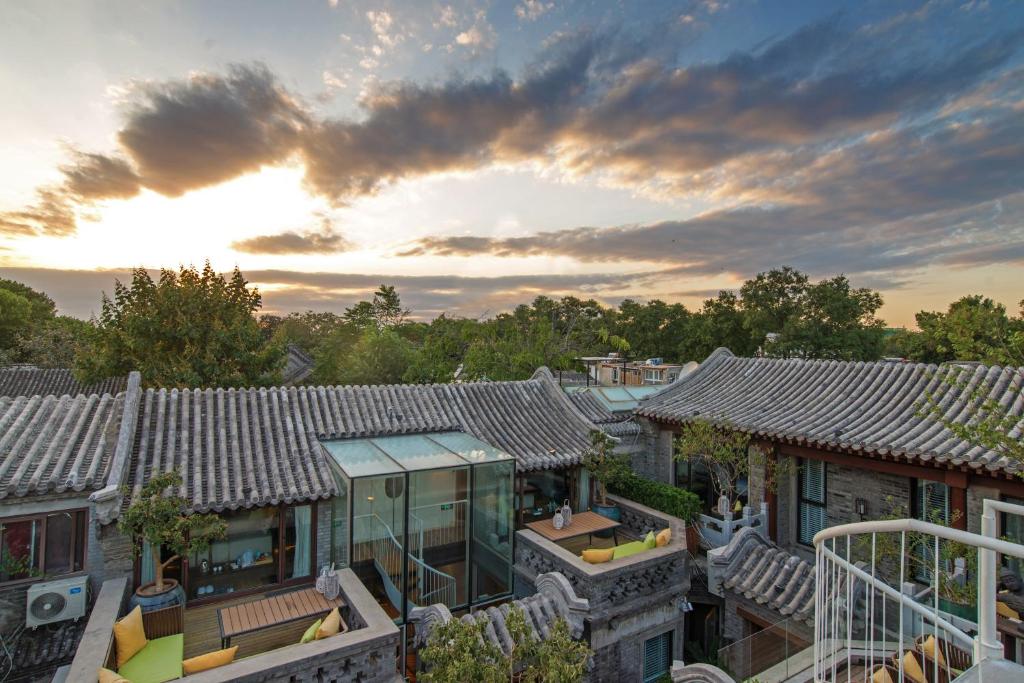
Beijing Lezai Nanluo Courtyard Hotel
Compare Lezai with The Orchid if your priority is a courtyard stay around the northern hutongs. The neighborhood is a strong reason to stay here, while the specific room and its access matter more than the overall hotel photographs. Check stairs and recent noise comments before booking.
See rooms & pricesSanlitun, Guomao & Liangmaqiao: Three Different Modern Bases
Sanlitun is the best choice when modern Beijing is part of the reason you are visiting. The area feels polished and international, with restaurants, shopping, bars and cafés making the end of the day much easier than in quieter historic districts.
The trade-off is transport to the historic core. Wangfujing remains my default for a first Beijing trip, but Sanlitun is more realistic than older guides suggest: Beijing Subway Line 3 now serves Workers’ Stadium, improving access to central Sanlitun and toward Chaoyang Railway Station.
Treat Sanlitun, Guomao and Liangmaqiao as separate locations when searching. They all sit in Chaoyang, but they are not one walkable hotel district. Sanlitun is my choice for restaurants and evenings around Taikoo Li; Guomao is the business-hotel and skyline option; Liangmaqiao suits a stay around the diplomatic district and Liangma River.
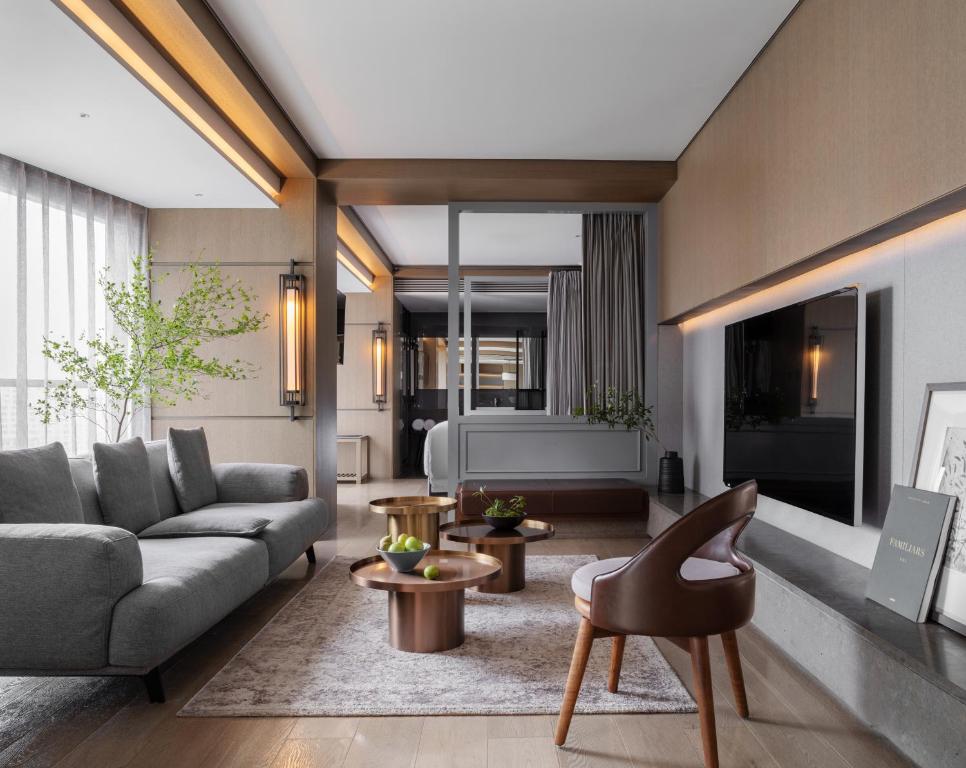
CHAO Sanlitun Beijing
A choice for a Sanlitun-focused trip, with modern surroundings, dining and evenings nearby. Expect to travel to the Forbidden City rather than walk there. Check the route to Workers’ Stadium station against your plans.
See rooms & prices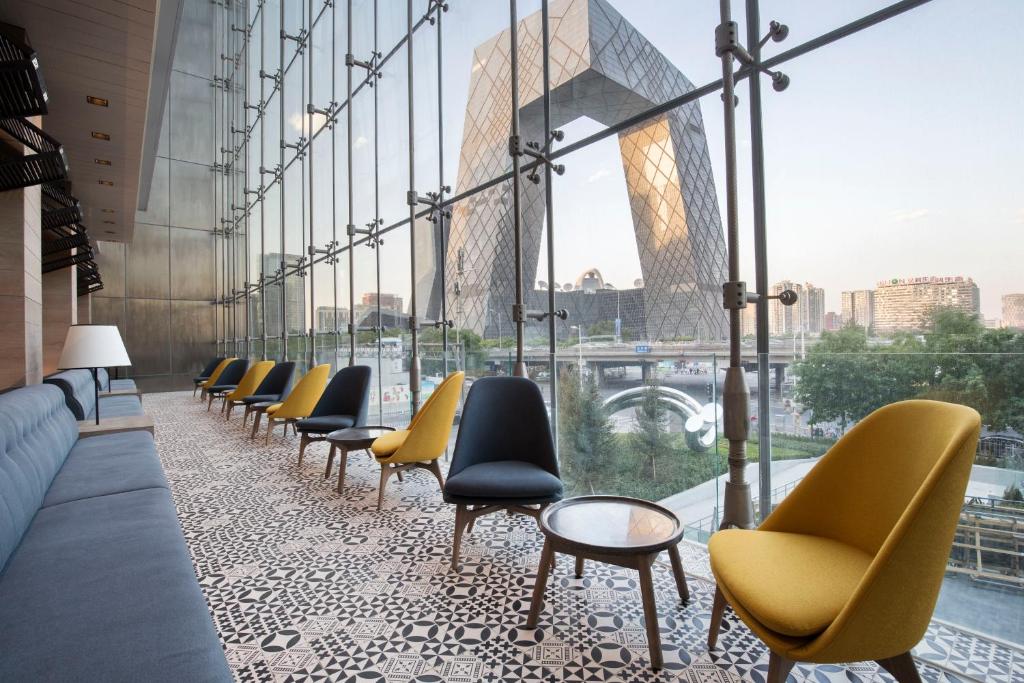
JEN Beijing by Shangri-La
This is a Guomao / CBD option, not a Sanlitun hotel. The gym and pool make it worth a look if you want facilities you will actually use. Weigh those facilities against the journeys to Beijing’s older neighborhoods.
See rooms & prices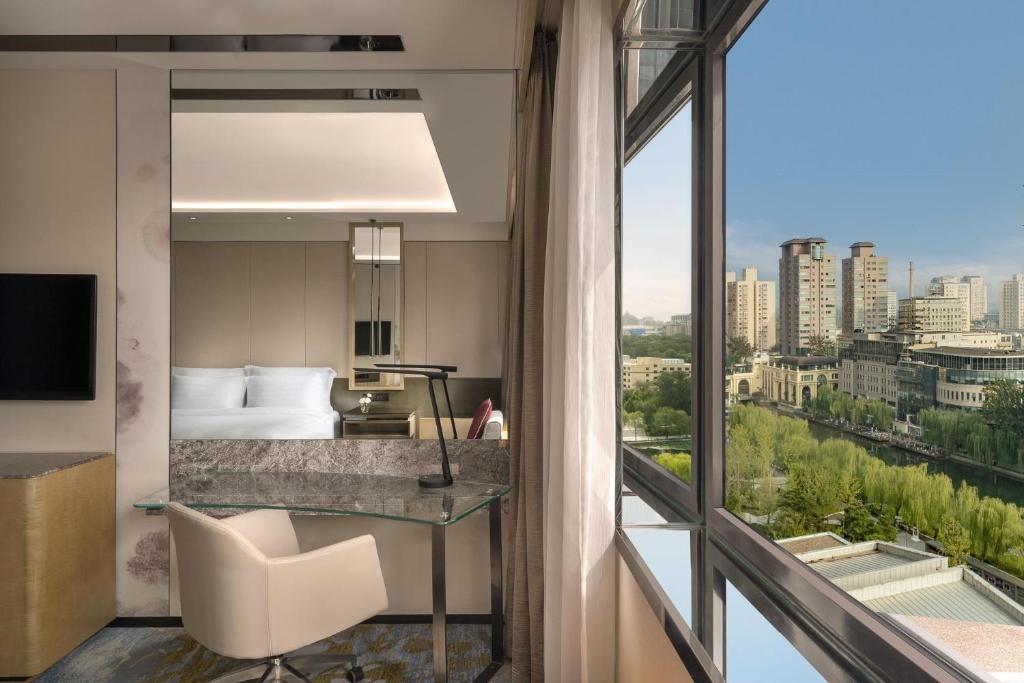
Kempinski Hotel Beijing Yansha Center
At Liangmaqiao, with access to Line 10 and the Liangma River area. The Capital Airport Express connection via Sanyuanqiao is useful for PEK arrivals. Its appeal is that eastern Beijing setting; the historic sights still require a journey.
See rooms & pricesShichahai & Houhai: Lake Walks, Courtyards and a Noise Check
I especially liked wandering around Shichahai in the evening. The lakes and older lanes are a good reason to stay for the neighborhood itself. But Houhai’s bar streets can be lively: the quieter side lanes and the lakefront nightlife are different experiences.
Look at the exact address and read recent reviews for noise before choosing a room. Shichahai station on Line 8 is useful, but a property on the far side of the lakes can still involve a long walk. Stay here because lake walks and a courtyard appeal to you, then make sure the access works for your sightseeing days.
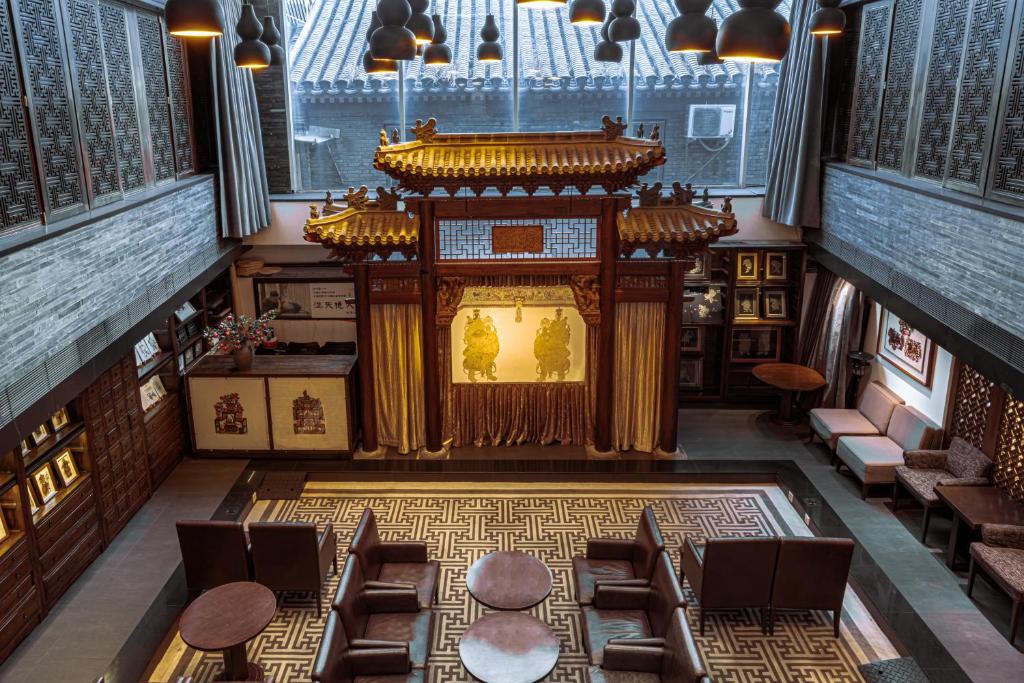
Shichahai Shadow Art Performance Courtyard Hotel
A courtyard alternative when lake walks and the Shichahai neighborhood appeal more than a large modern hotel. Check the room and station route, and ask about any current performances if those are part of the attraction—the hotel name is not a guarantee of an event during your stay.
See rooms & pricesTwo More Central Options: Xidan and Chongwenmen
Wangfujing, Dongsi and Qianmen cover most first trips well, but there are two more areas worth comparing when a particular hotel offers a better room or rate.
Xidan: shopping and larger hotels west of the center
Xidan [西单] suits travelers who prefer a conventional hotel and shopping nearby. It is a different base from the eastern hutongs, so compare your actual journeys rather than treating everything inside central Beijing as interchangeable. Pan Pacific Beijing, at 2 Huayuan Street, is a researched alternative: its Deluxe rooms are 45 m² [484 sq ft], and it also lists a Family Room. Compare the room and access with Wangfujing before choosing.
Chongwenmen: a practical alternative near southern sights
Chongwenmen [崇文门] is worth a look for a more conventional hotel base east of Qianmen. New World Beijing Hotel, at 8 Qinian Street, is a researched option with an indoor pool. It may suit you better than a small courtyard if hotel facilities matter, but check the hotel-to-station walk and the route to each attraction. I have not stayed at either of these two hotels.
Beijing Capital Airport & Daxing Airport: Transit Stays Only
An airport hotel makes sense for a very early departure, a short overnight connection, or an arrival where getting into town would leave almost no time to sleep. A late flight alone does not make an airport stay necessary: compare a direct transfer to a central hotel with the extra check-out and move the following day. PEK and PKX are different airports, far apart; match the hotel to your flight code.

Lotus Art Inn PEK Airport
A PEK-area option to compare for an overnight. Confirm the terminal, pickup point and whether any shuttle runs at your actual arrival or departure time. “Near the airport” does not mean a walk from the terminal.
See rooms & prices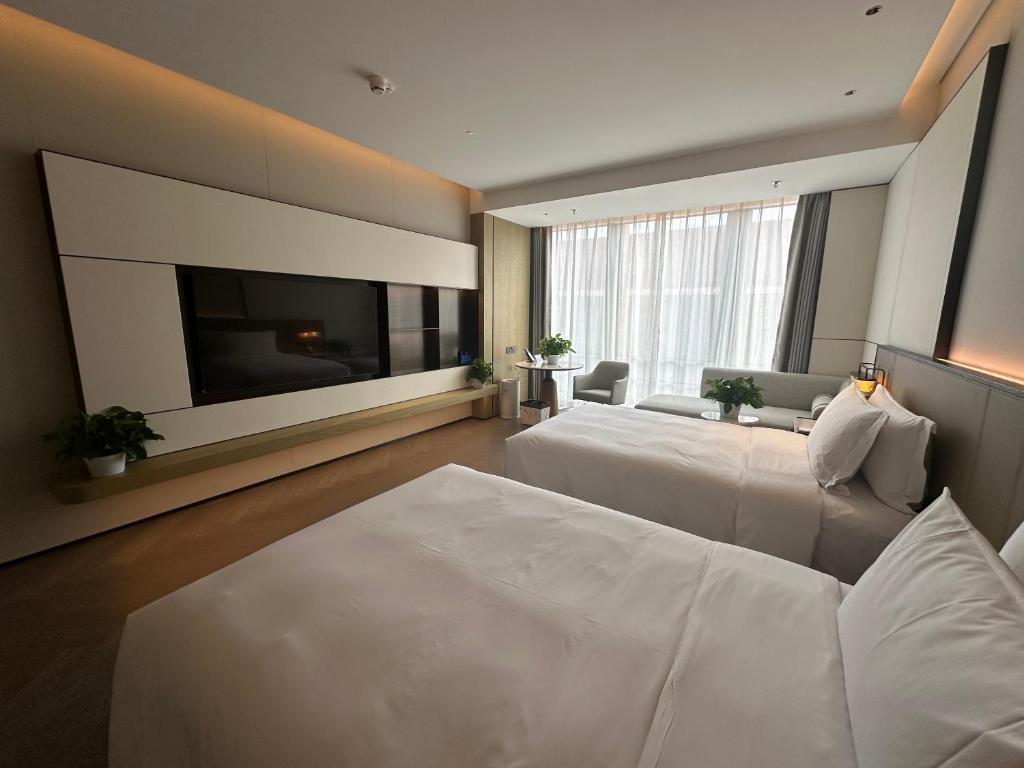
Capital International Exhibition & Convention Center Hotel
Another PEK-side option, but check the full address and transfer before booking. Exhibition-area hotels can suit a trade-fair stay without being the simplest choice for an overnight flight connection.
See rooms & prices
Mumian Beijing Daxing International Airport
One to compare specifically for Daxing / PKX. Confirm the walking or transfer route from your terminal arrival point and the check-in hours for your dates. It makes little sense for a flight using PEK.
See rooms & pricesFor the actual transfer decision, use my Beijing airport-to-city guide. The best option depends on which airport, arrival time, luggage and where you are staying.
Areas I Skip for a First Sightseeing Stay
Excellent hotels and skyline views, but not my default unless business or modern Beijing matters more than the historic core.
Useful for western Beijing, but too far out for the classic first-time sightseeing mix.
Keep a central hotel for one Universal day, particularly near a useful Line 7 or Line 1–Batong connection. A dedicated park stay makes more sense for two park days or when the hotel and entry benefits are part of the plan; verify the package you book.
One night only unless your trip is literally a stopover.

Match Your Hotel Location to Your Beijing Days
Do not let one outing dictate the hotel for the entire trip. These are the location checks that matter for the days in my five-day Beijing itinerary:
Plan the south-side entrance and north-side finish. Wangfujing or Dongsi is a sensible central shortlist; Gulou can suit the afternoon and evening if you continue north.
Dengshikou or Dongsi gives a Line 5 connection to the east gate. Qianmen / Zhushikou is another sensible southern base, depending on which park entrance you use.
Expect a trip to northwest Beijing from the central areas. Staying in Haidian for one visit can add longer journeys to all the other days.
Check the actual bus or tour departure point. For public transport, Dongzhimen matters; for an organized transfer, the operator’s meeting point matters. Neither is a reason to move hotels for the whole stay.
Gulou or Shichahai puts more of the neighborhood at your door. Dongsi is my compromise if you also want a central metro interchange. Check noise street by street.
I used an organized transfer for my own Great Wall visit; members of our team tried the DIY route. My Mutianyu public transport guide covers that option, while my Beijing tours guide helps you decide when a booked transfer is worth it. Confirm pickup coverage before assuming a particular hotel is included.
What to Know Before Choosing Your Beijing Base
The biggest mistake is choosing a hotel that looks good on a map but adds friction to every day. Beijing is too large for “central” to be a useful answer by itself.
Arriving by train?
Check the station on the ticket, not just “Beijing”. South, West, Fengtai and Chaoyang are different places. If Xi’an is next, see my Beijing to Xi’an train vs flight guide before arranging the hotel departure.
Metro + Didi
Judge a base by the combination of metro access, Didi pickup and the final walk to the hotel door. Those details work together.
Mobile data
Have maps, Didi, translation and hotel messaging ready before landing. My China eSIM comparison explains which plans we used and the difference between roaming data and mainland hotel Wi-Fi.
For the full transport system, read my Beijing metro and transport guide. For traveling the wider country without a tour, my independent China guide and China planning guide cover the broader setup.
Hotel Wi-Fi and your first taxi are separate things
A room with free Wi-Fi does not solve your arrival outside the hotel. Save the Chinese address offline and have mobile data working for the transfer. Also, normal mainland hotel Wi-Fi may block Google, Gmail and WhatsApp even when they work on an internationally routed travel eSIM. If an app stops working after joining Wi-Fi, switch back to your mobile data and check it there.
My China eSIM guide explains the plans we used on real trips, including my own journey. Choose the exact package carefully; app access depends on its routing. For navigation and Didi, see my China travel apps guide; for a hotel balance, deposit or your first meal, my China payment guide covers cards, Alipay, WeChat Pay and cash.

Hotel location also changes how heavy your sightseeing days feel. I keep the detailed attraction logistics in the dedicated guides for the Forbidden City, Temple of Heaven, Summer Palace and Mutianyu Great Wall.
If you are combining Beijing with a longer trip, my 4-week China itinerary shows how the city fits into the route. If you are still choosing the travel month, see my best time to visit China.

Frequently Asked Questions
These are the questions that matter before committing to a room.
What is the best area to stay in Beijing for a first trip?
My default recommendation is near Wangfujing, Jinyu Hutong or Dengshikou station; Dongsi is a strong alternative for older streets nearby. Qianmen is another good central choice. The exact walk to a useful station matters more than which neighborhood name appears in the listing.
Should I stay in Wangfujing, Dongsi or Qianmen?
Wangfujing is my starting point for a conventional central hotel; Dongsi offers hutong surroundings and Lines 5/6; Qianmen suits traditional shopping streets and southern sightseeing. A good address in any of the three can beat a poorly located hotel in the supposedly best area.
Where should I stay in Beijing for four or five days?
Keep one central hotel. Moving just to experience another neighborhood costs time you could spend exploring it. My five-day itinerary shows how I organized the sightseeing.
How much does a hotel in central Beijing cost?
Budget roughly CNY 600–1,200 [about US$90–180] per private room per night for a comfortable central stay. Simpler rooms can cost less; courtyard boutiques and luxury hotels can cost considerably more. These are planning estimates, not quotes for your dates. See the budget comparison above.
Is a hutong hotel a good choice for a first visit?
Yes, if the room and access suit you. Dongsi offers a central compromise; Gulou suits a more neighborhood-focused stay. Ask about stairs, luggage drop-off, heating or air conditioning and noise; courtyard hotels differ considerably.
Is Shichahai or Houhai quiet at night?
Some side lanes are, but the lakefront bar streets can be lively. Check the exact address and recent noise reviews rather than assume every lakeside hotel is quiet.
Which Beijing area is best for families?
Start with Wangfujing or Dengshikou, then compare the actual room. Waldorf Astoria lists options sleeping four; Pan Pacific in Xidan offers a Family Room. The Orchid has a two-bedroom Family Suite for a hutong stay. Confirm occupancy, bed arrangements and stairs for your children’s ages; neighborhood choice alone does not settle those details.
Should I stay near the Great Wall?
For a single Mutianyu day trip, keep your Beijing hotel. A Wall overnight makes more sense if you specifically want sunrise, longer hiking or a separate countryside stay. Check the tour meeting point or public transport departure rather than move hotels purely for that day.
Should I book an airport hotel for a late arrival?
Only if the flight timing and onward plans make it worthwhile. Compare the sleep you gain against moving hotels the following day. Match PEK or PKX to the correct airport and verify late check-in and any shuttle. My Beijing airport transfer guide covers the arrival choices.
Can foreign tourists stay in ordinary Beijing hotels?
National guidance says qualification restrictions should not be used by local authorities or platforms to prevent hotels receiving overseas guests. Hotels register your accommodation at check-in, so bring your passport. For a small property or automated check-in, confirm the arrival arrangements in advance.
Planning a bigger China trip and not sure the route works?
I can review your existing China plan before you book everything and send practical feedback on route order, pacing, transport logic and hotel-area choices.
- Route order check
- Pacing and travel-day review
- Train vs flight logic
- Tibet and altitude planning notes
- Hotel area suggestions
- eSIM, apps and payment setup notes
€79 introductory price. This is a focused second opinion, not a full custom itinerary.
Request a China Route AuditWhere I Recommend Staying in Beijing
My recommendation is simple: start with Wangfujing or Dengshikou for a straightforward first stay, Dongsi for central convenience with more character, or Qianmen for traditional streets and evening food stops. Gulou is the stronger choice when the hutong setting is a big part of why you are coming.
The hotel does not need to be beside every attraction. A room you like, dinner nearby and a manageable journey home count for more than a famous neighborhood name. In a city this big, that is already a good result.
My 5 days in Beijing itinerary shows the exact route I followed, while my best Beijing tours guide covers the places where I think paying for help can improve the trip.

Last Updated on 14/10/2026 by Panos


