

Figuring out where to stay in Djerba was less obvious than I expected. On the map, Houmt Souk, Midoun, Erriadh and the northeast coast look close enough to be interchangeable. After staying in Houmt Souk, Midoun and Erriadh and exploring the resort coast, however, I found that each creates a noticeably different trip. Markets and evening street life shape one base; elsewhere, beaches, village lanes, murals or simple local convenience take priority. Booking platforms often blur these distinctions, particularly between Midoun and the Zone Touristique. Below, I explain what each area is like, the trade-offs I noticed firsthand and the four hotels I would shortlist for different kinds of Djerba stay.
Where to Stay in Djerba
Start with these two very different options: Dar Lola for a small, atmospheric stay in Houmt Souk or Iberostar Selection Eolia for a beachfront resort holiday. I checked the locations, facilities and recent guest feedback again in August 2026.

Dar Lola
Best for: Independent travellers who want markets, restaurants and the historic streets of Houmt Souk within walking distance.
Why choose it: This small guesthouse places you in the heart of the medina and adds a rooftop terrace and local breakfast without the separation of a large resort.
Location: In central Houmt Souk, close to the souks, cafés, traditional architecture and the town’s evening street life.
Watch out for: There is no swimming pool or proper beach in town. You will need a taxi or car when you want a beach day.
Check Prices & Availability
Iberostar Selection Eolia Djerba
Best for: Couples and families who want direct beach access, pools, spa facilities and simple resort logistics.
Why choose it: This five-star resort has a beachfront setting, indoor and outdoor pools and a dedicated thalassotherapy centre.
Location: On Djerba’s northeast resort coast in the Zone Touristique, separate from inland Midoun.
Watch out for: The self-contained resort experience offers less local atmosphere. Visiting markets and heritage sites requires a taxi, tour or rental car.
Check Prices & AvailabilityTwo More Excellent Djerba Stays
This section contains affiliate links. If you book through them, I may earn a commission at no extra cost to you.
Table of Contents
Best Areas to Stay in Djerba at a Glance
Houmt Souk, Midoun and the northeast resort coast may look close on a map, but they create very different trips. Remember that inland Midoun and the Zone Touristique are not the same area.
| Area | Best for | Car? | Main advantage | Watch out for |
|---|---|---|---|---|
| Houmt Souk | First visits, culture and evenings on foot | No | Walkable markets, restaurants and historic streets | No proper swimming beach in town |
| Zone Touristique / Sidi Mahres | Beaches, families, pools and spa stays | Optional | Direct beach access and extensive resort facilities | Least local atmosphere outside the hotels |
| Midoun | Value, longer stays and practical amenities | Helpful | Shops, restaurants and more space for the price | Inland location; always check the hotel map |
| Erriadh / Djerbahood | Art, heritage, photography and quiet | Helpful | Village atmosphere after most mural visitors leave | No beach and limited evening dining |
| Aghir, Arkou and Quieter Coasts | Privacy, villas and return visits | Yes | More space and a quieter coastal or rural setting | Greater dependence on the hotel, taxis or a car |
Quick decision: choose Houmt Souk for an independent first trip, the Zone Touristique for a beach holiday, Midoun for value with a car, or Erriadh for murals and village atmosphere.
How to Choose Where to Stay in Djerba
Djerba is larger than many visitors expect. The distances are not huge, but villages, beaches and cultural sites sit in separate pockets rather than along one continuous strip. Your base therefore affects how often you need a taxi or car, what you can do on foot and whether your evenings revolve around local streets or the hotel.
Your base can also affect which excursions are easiest to arrange. If you are considering a Sahara day trip, cultural island tour or boat trip, my guide to the best tours in Djerba explains which experiences I found most worthwhile.

First, Midoun Is Not the Zone Touristique
This is the distinction most likely to cause confusion when booking. Midoun is Djerba’s second town and sits inland. It has a market, shops, restaurants and everyday local life, but it is not the island’s main beachfront resort area.
The Zone Touristique follows Djerba’s northeast coast, particularly around Sidi Mahres and Sidi Bakour. This is where most large resorts, private beach sections, pools and thalassotherapy hotels are concentrated.
Hotel platforms sometimes use “Midoun” as a broad location for properties across the surrounding area. A hotel described as being in Midoun may therefore sit on the resort coast, or several kilometers inland. Always check the map rather than relying on the location name.
There is a similar naming issue with Erriadh and Djerbahood. Erriadh is the village; Djerbahood is the open-air street-art project within it. Accommodation may appear under either name.
In practical terms, Djerba has four main bases:
- Houmt Souk for markets, architecture, restaurants and local evenings.
- Zone Touristique for beaches, pools and resort convenience.
- Midoun for value, practical amenities and longer stays with a car.
- Erriadh for murals, heritage and quiet village atmosphere.
Each creates a different rhythm. In Houmt Souk, I could wander through the medina and go out again after dinner. Along the resort coast, the beach and hotel shape the day. Midoun is more practical than atmospheric, while staying in Erriadh lets you experience the village after most Djerbahood visitors have left.
In the sections below I compare those trade-offs in detail and explain which base—and which hotel—fits each kind of Djerba trip.

The Four Djerba Hotels I Would Shortlist
I stayed in Houmt Souk, Midoun and Erriadh and also explored the northeast resort coast. I then narrowed the choice to four properties that best match those different stays, rechecking their locations, facilities and recent guest feedback in August 2026. This is a practical shortlist, not a ranking of every hotel on Djerba.

Best overall
Dar Lola in Houmt Souk
Dar Lola is my overall pick for an independent first visit: a small guesthouse in the historic centre, within easy walking distance of the souks and cafés.
Its rooftop terrace and local breakfast suit a town-focused stay without the separation of a large resort.
- Choose it for
- Central location, atmosphere and evenings on foot.
- Know before booking
- There is no pool, and reaching a swimming beach requires a taxi or car.

Best boutique/local stay
Dar Naël in Erriadh
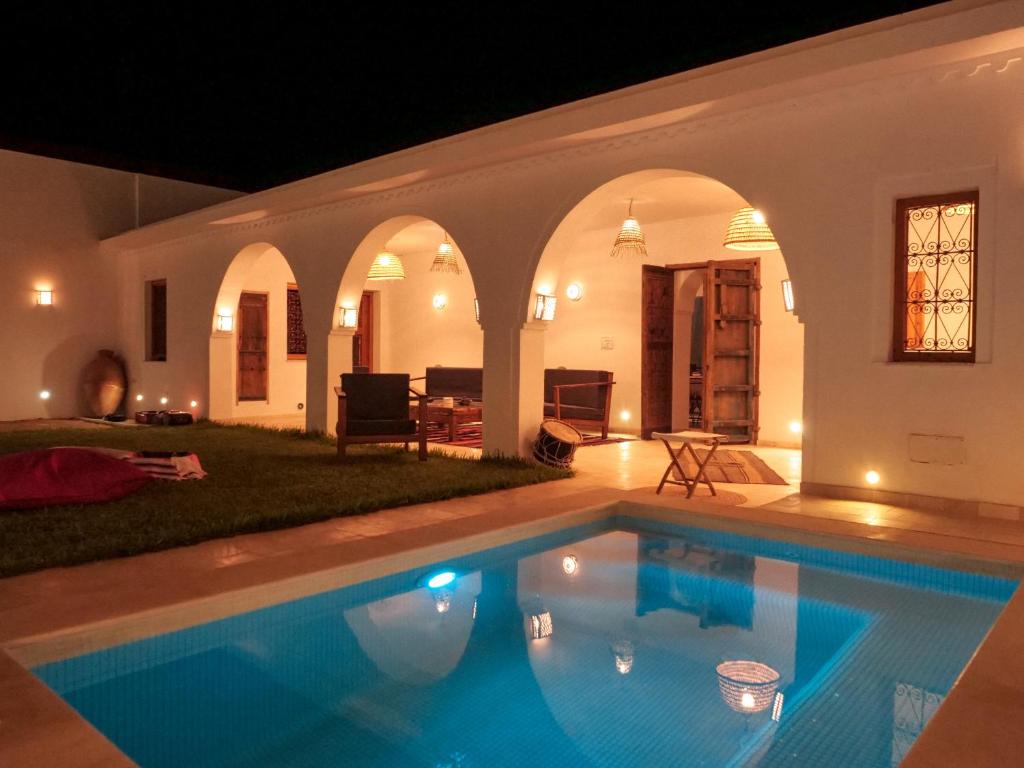
Dar Naël is a small guesthouse in Erriadh with a courtyard pool, terraces and a rooftop hot tub, surrounded by Djerbahood’s village lanes.
It is the most characterful choice for experiencing the village after most mural visitors have left.
- Choose it for
- Design, quiet, street art and an intimate village stay.
- Know before booking
- Erriadh has no beach and fewer evening dining choices than Houmt Souk.
Best beach resort
Iberostar Selection Eolia Djerba
Iberostar Eolia is a refurbished five-star resort directly on Djerba’s northeast coast, with indoor and outdoor pools and a thalassotherapy centre.
It is the easiest choice for couples or families who want the beach and hotel facilities to shape the stay.
- Choose it for
- Direct beach access, pools, spa time and simple logistics.
- Know before booking
- This is the most self-contained option and has the least local atmosphere.
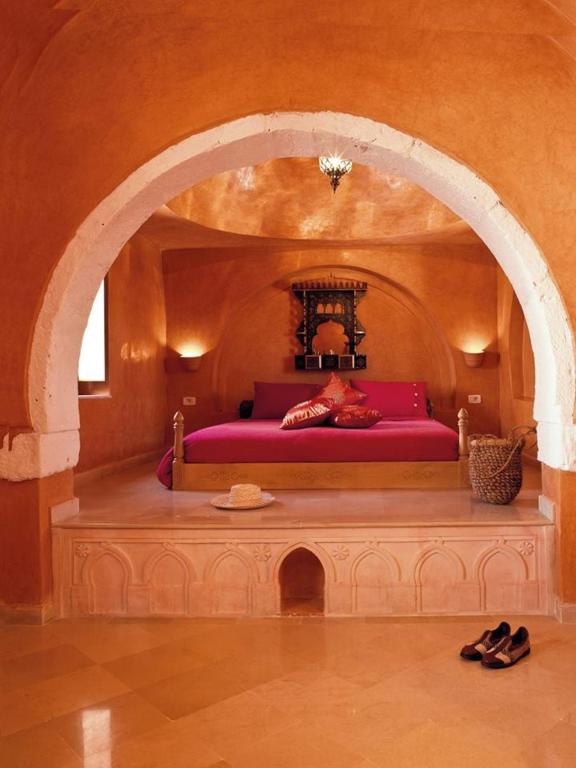
Best value
Maison Leila near Midoun
Maison Leila has eight spacious suites with kitchenettes, plus a pool, breakfast and free parking opposite Fadhloun Mosque.
Its position between Houmt Souk and Midoun makes it a strong-value base when you have a rental car.
- Choose it for
- Space, a pool, free parking and longer stays.
- Know before booking
- It is outside Midoun’s centre and is not a beachfront property.
1. Houmt Souk: the Best Base for Culture and Evenings on Foot
Houmt Souk is the best area to stay in Djerba if you want the island itself—not only its beaches—to shape the trip. The old centre is compact enough to explore on foot, with souks, cafés, whitewashed lanes and former trading inns clustered between the market and the port. In the morning, the streets gradually fill with shoppers and traders; later in the day, cafés and restaurants become part of the town’s evening rhythm.
Staying here made it easy for me to go out without planning every journey. I could walk through the medina, stop for food and return to the same streets after dinner instead of spending the evening inside a resort. Borj Ghazi Mustapha, the fishing port and the market all fit naturally into a day on foot.
Parts of Houmt Souk’s historic centre form one component of Djerba’s UNESCO World Heritage property, inscribed in 2023 for the island’s distinctive settlement pattern. That is more accurate than describing the whole medina as UNESCO-listed, and it also explains why the town’s architecture matters beyond being picturesque.
Who Houmt Souk is Best for
Choose Houmt Souk for a short independent visit, local restaurants, markets and evenings on foot. It is particularly well suited to couples and travelers who prefer small guesthouses to all-inclusive hotels. It is also a practical base for exploring the rest of Djerba by taxi or rental car.
The trade-off is the beach. Houmt Souk has a waterfront, but it is not a proper swimming-beach destination. If you expect to walk from your room directly onto the sand, stay in the Zone Touristique instead.
Where to Stay in Houmt Souk, Djerba


2. Zone Touristique and Sidi Mahres: the Best Area to Stay in Djerba for Beaches
The Zone Touristique follows Djerba’s northeast coast, with the greatest concentration of beachfront resorts around Sidi Mahres and Sidi Bakour. This is the Djerba of broad sandy beaches, hotel pools, kids’ clubs and thalassotherapy centres—and it should be treated as a separate base from inland Midoun.
The appeal is straightforward. You can wake up, have breakfast and walk directly to the beach without arranging transport. Most resorts provide restaurants, entertainment and spa facilities on site, making this the easiest part of Djerba for families, beach-focused couples and anyone who wants a low-effort holiday.
The contrast with Houmt Souk is immediate. The resort coast is designed around hotels rather than a walkable town, so there is less local life outside the property and fewer spontaneous choices in the evening. It is perfectly possible to visit the island’s markets, villages and heritage sites from here, but you must make the effort to leave the resort.
Why Stay at Zone Touristique, Djerba
Choose this area if direct beach access, pools, family facilities or spa time matter more than having traditional streets outside your door. It also works without a rental car when most days will be spent at the hotel and you are comfortable using taxis for occasional sightseeing.
However, think carefully about the meal plan. All-inclusive is convenient and can be good value, but half-board makes it easier to spend some evenings eating elsewhere. If local atmosphere is the main reason you chose Djerba, Houmt Souk or Erriadh will suit you better.
Where to Stay in Sidi Mahres & Zone Touristique, Djerba
3. Midoun: the Best Base for Value and Longer stays
Midoun is Djerba’s second town and sits inland from the northeast beaches. It is a working town with a weekly market, shops, supermarkets and local restaurants, not the resort strip that accommodation websites sometimes imply when they use “Midoun” as a broad location.
The town makes the most sense when practicality and value matter more than atmosphere. Apartments and small guesthouses can provide more space for the money than the beachfront resorts, while the market and everyday services are close at hand. With a rental car, Midoun also gives you a useful position for reaching the beaches, Houmt Souk, Erriadh and the island’s southern villages.
I found Midoun more functional than beautiful. It offers a clearer view of ordinary island life than the Zone Touristique, but it does not have the architectural character or evening atmosphere of Houmt Souk. For a short first visit without a car, I would choose one of those other bases. For a week or longer with your own transport, Midoun becomes much more convincing.
Who Midoun is Best for
Choose Midoun if you are watching the budget, staying longer or want shops and restaurants nearby while exploring by car. It also works for travelers who prefer a suite, apartment or kitchenette over a conventional hotel room.
Always check the property map before booking. “Midoun” can describe the town, its outskirts or accommodation closer to the coast, and those are very different locations in practice.
Where to Stay in Midoun, Djerba
4. Erriadh and Djerbahood: the Best Area for Art and Village Atmosphere
Erriadh is the village that contains Djerbahood, the open-air street-art project that brought murals by international artists to its whitewashed lanes. The two names are often used interchangeably on hotel websites, but Djerbahood is the project; Erriadh is where you actually stay.
Murals are only part of the appeal. Traditional houses, small courtyards and quiet streets give Erriadh a slower and more intimate atmosphere than either of Djerba’s towns. The El Ghriba Synagogue is nearby, adding another layer to the village’s Jewish history and cultural importance.
What changed the experience for me was being there beyond the busiest visiting hours. Once many day-trippers had left, the village became quieter and the murals felt less like individual attractions and more like part of the streets around them. This makes Erriadh especially appealing to photographers, couples and travelers who enjoy slow mornings and evenings.
Who Erriadh is Best for
Djerbahood suits travelers who want creativity, quiet, and a sense of being part of a village rather than a tourist zone. It’s ideal for photographers, couples looking for something intimate, and those who prefers character over coastline.
Where to Stay in Erriadh
5. What About Aghir, Arkou and the Quieter Coasts?
Aghir and the southeast coast are alternatives to the busier Sidi Mahres resort strip. The hotels are more spread out, the surroundings are quieter and some travelers prefer the calmer coastal setting. The trade-off is greater dependence on the hotel, a rental car or taxis, particularly when you want to visit Houmt Souk or eat somewhere different in the evening.
Arkou and the inland villages near the east coast suit private villas, rural guesthouses and travelers who value space over walkability. On the west side of Djerba, areas around Mezrane and Ajim feel quieter again and can be useful if you are arriving via the mainland ferry, but they are less convenient for a first visit focused on the island’s main sights.
I would consider these areas for a return trip, a longer stay or a deliberately quiet holiday with a car. I would not expand the hotel shortlist for them: the four properties recommended above cover the strongest choices for culture, beach access, value and village atmosphere without turning this guide into another accommodation catalogue.
Where to Stay in Mezrane

Where to Stay in Arkou

Where to Stay in Aghir
Should You Split Your Stay in Djerba?
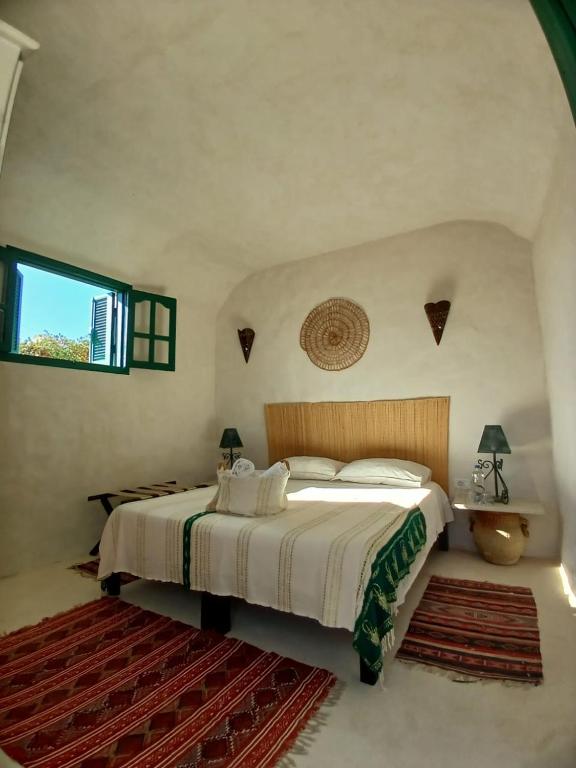
If you have a few extra nights, I highly recommend splitting your stay rather than choosing just one base. Djerba is easy to explore, but staying in different parts of the island lets you experience two very different sides of it.
Start with two nights in Houmt Souk, where you can settle into the island’s traditional side: wandering the medina, visiting the markets, eating at local restaurants, and getting a feel for everyday Djerban life.
Then spend three or four nights in the Zone Touristique, giving yourself time to slow down and enjoy the beaches. For a more intimate stay, Dar Lola in Houmt Souk is a lovely choice for the first part of the trip, followed by Iberostar Eolia for a more relaxed beach-focused stay.
This combination gives you the best of both worlds: local atmosphere first, then a few days of sea, sand, and complete relaxation. It also means you don’t have to choose between experiencing Djerba’s culture and enjoying its beaches; you can have both.

Frequently Asked Questions
Choosing where to stay in Djerba depends on whether you want local atmosphere, direct beach access, better value or a quieter village stay. These answers use the actual location of each base—not the broad labels sometimes shown by hotel platforms.
What is the best area to stay in Djerba for a first visit?
For a first independent visit, Houmt Souk is the strongest all-round base for markets, restaurants, traditional architecture and evenings on foot. If the holiday is mainly about direct beach access, pools and resort facilities, choose the Zone Touristique around Sidi Mahres instead. Erriadh is the better fit for Djerbahood, heritage and quiet village atmosphere.
Is it better to stay in Houmt Souk or Midoun?
Choose Houmt Souk for atmosphere, culture, restaurants and evenings you can enjoy on foot. Choose inland Midoun for better value, its market, everyday shops and a practical longer stay—especially when you have a rental car. Neither is the obvious base for a beachfront resort; for that, look in the Zone Touristique.
Is Midoun the same as Djerba’s Zone Touristique?
No. Midoun is Djerba’s inland second town, while the Zone Touristique follows the northeast resort coast around Sidi Mahres and Sidi Bakour. Some hotel platforms use “Midoun” as a broad address for properties across the surrounding area, so check the map and actual distance from the beach before booking.
Where should I stay in Djerba for the best beach?
The Zone Touristique around Sidi Mahres is the most practical base for a beach holiday, with the island’s greatest concentration of beachfront resorts, pools and family facilities. Aghir and the southeast coast suit travelers who prefer a quieter coastal setting, but hotels are more spread out and you will be more dependent on taxis or a car.
Is Erriadh the same as Djerbahood?
Not exactly. Erriadh is the historic village where you stay; Djerbahood is the open-air street-art project spread through its lanes. Accommodation websites may use either name, but choosing a hotel “in Djerbahood” normally means staying in or around Erriadh.
Do I need a car in Djerba?
Not necessarily. You can stay without a car in Houmt Souk if town life is your priority, or in a Zone Touristique resort if most days will revolve around the beach and hotel. A rental car becomes much more useful for Midoun, Erriadh, Aghir and the quieter coasts, or whenever you want to explore several parts of Djerba without relying on taxis.
How many nights should I spend in Djerba?
Five nights is a good minimum for experiencing Djerba without rushing. With five or six nights, you can spend two nights in Houmt Souk and three or four nights in the Zone Touristique, combining markets, heritage and local evenings with proper beach time.

My Final Recommendation
There’s no single best place to stay in Djerba. It really depends on the kind of trip you want.
- For an independent trip, I’d choose Dar Lola in Houmt Souk for its medina atmosphere, local restaurants, and everyday island life.
- For a beach holiday, Iberostar Eolia in the Zone Touristique is the easiest choice, with the beach and resort facilities close by.
- For good value, stay around Midoun, close to beaches, restaurants, and local conveniences.
- For art and quiet, choose Erriadh, where Djerbahood’s murals and peaceful streets offer a different side of Djerba.
- For a first trip, I’d combine two nights in Houmt Souk with three or four nights in the Zone Touristique.
If you want help turning your base into a full trip, my Djerba itinerary walks through the island day by day and shows how to link these areas into a smooth, balanced route. And if you want to add one or two guided experiences without overplanning, my guide to the best tours in Djerba explains which Sahara trips, cultural tours, and local activities are most worth considering.

Last Updated on 11/09/2026 by Panos


