

Gyumri is one of my favorite stops in my Armenia itinerary for historic architecture, small museums and the feeling of exploring a city that still revolves around local life rather than tourism. Once known as Alexandropol and later Leninakan, Armenia’s second-largest city after the capital Yerevan is filled with black-and-red tuff buildings, cobbled streets, churches and reminders of its Russian Imperial and Soviet past.
You can see the main things to do in Gyumri in one full day, although I recommend staying overnight if your Armenia itinerary allows it. Most of the historic center is easy to explore on foot, while the Black Fortress and Mother Armenia are slightly farther out.
If you have limited time, I would prioritize the Kumayri Historic District, Vartanants Square, Holy Saviour’s Church, the Museum of National Architecture and Urban Life, Gyumri’s market and the Black Fortress.
Gyumri at a glance
Short on time? These are my key recommendations for planning a first visit to Gyumri.
| Gyumri at a glance | My recommendation |
|---|---|
| Time needed | 1 full day; staying overnight is better |
| Best overall experience | Kumayri Historic District |
| Best landmark | Black Fortress (Sev Berd) |
| Best museum | Museum of National Architecture and Urban Life |
| Best for local life | Gyumri Bazaar |
| Best area for walking | Kumayri, Abovyan and Rijkov streets |
| Getting around | Mostly on foot |
| Is Gyumri worth visiting? | Yes — especially for history, architecture and local culture |
1 full day; staying overnight is better
Kumayri Historic District
Black Fortress (Sev Berd)
Museum of National Architecture and Urban Life
Gyumri Bazaar
Kumayri, Abovyan and Rijkov streets
Mostly on foot
Yes — especially for history, architecture and local culture
Table of Contents
1. Explore the Kumayri Historic District, Abovyan and Rijkov Streets
The Kumayri Historic District is the part of Gyumri I would prioritize above everything else. Rather than a single attraction, it is a whole neighborhood of old streets, churches, museums, workshops and cafés where you can simply wander and get a feel for the city. This is where Gyumri’s character became clearest to me, and it is the best place to start exploring on foot.
Much of Kumayri’s distinctive architecture dates from Gyumri’s prosperous 19th-century period, when the city was known as Alexandropol. Black and red volcanic tuff stone gives the district its unmistakable appearance, while ornate façades, carved details and balconies show a mix of Armenian traditions and Russian Imperial influences. Despite the destruction caused by the 1988 earthquake, many historic buildings survived or have since been carefully restored.
What I liked most was that Kumayri never felt like a preserved district emptied of everyday life. I found myself paying as much attention to the houses, courtyards and small architectural details between the official sights as to the landmarks themselves. Museums and churches are scattered throughout the neighborhood, but much of the experience comes simply from walking without rushing and seeing how the historic fabric of the city is still being used.

Abovyan and Rijkov Streets are particularly good for slowing down. Along Rijkov Street, I stopped at a café, ordered a strong Armenian coffee and watched the street for a while rather than immediately moving on to the next sight. Students chatted nearby, older residents lingered outside, and the cafés and restored stone buildings gave this part of Gyumri a relaxed, lived-in atmosphere. Abovyan Street is also worth exploring for its historic architecture, galleries and cafés, and the two streets fit naturally into a walk through central Kumayri.
If you do only one thing in Gyumri, spend time wandering Kumayri rather than rushing between individual monuments. The historic streets are the attraction.

Want a hands-on experience in Gyumri?
Gyumri has several bookable artisan workshops, including traditional door-making, miniature painting and local cooking experiences.


2. Vartanants Square: The Heart of Gyumri
Vartanants Square is Gyumri’s main civic space and one of the easiest places to begin exploring the city. At its center stands the equestrian statue of Vartan Mamikonian, commemorating the Armenian commander associated with the Battle of Avarayr in 451.
The square is framed by some of Gyumri’s most important architecture. The Cathedral of the Holy Mother of God, better known as Yot Verk, stands directly on the square, while Holy Saviour’s Church dominates its southern side and immediate surroundings. Cafés, shops and everyday city life fill the spaces between them, so the square feels more like part of Gyumri’s daily rhythm than a formal monument.
I returned here more than once while walking through central Gyumri, particularly later in the day when people gathered around the square and the surrounding tuff-stone buildings caught the softer light.
My take: Vartanants Square is the natural starting point for sightseeing in Gyumri. Several of the city’s main sights are only a few minutes away on foot, so you will probably pass through it more than once.


3. Holy Saviour’s Church: Gyumri’s Great Survivor
Holy Saviour’s Church, or Amenaprkich, is one of Gyumri’s most striking landmarks. Built in the 19th century from the city’s characteristic black and red tuff stone, it was inspired by the medieval Cathedral of Ani and reflects the prosperity of Alexandropol at the time.
The church was badly damaged during the 1988 Spitak earthquake, when its dome collapsed and large sections of the building were left in ruins. When I visited Gyumri, restoration work was still underway and scaffolding surrounded parts of Holy Saviour’s Church. That long reconstruction has since been completed, and the church was re-consecrated in December 2024.
Seeing the restoration in progress made the scale of the reconstruction especially tangible to me. Today, the completed church once again forms one of the defining architectural landmarks around Vartanants Square.
Even if you are short on time, Holy Saviour is worth seeing for its architecture alone, especially combined with nearby Vartanants Square and Yot Verk.

4. Yot Verk: Gyumri’s Living Cathedral
The Cathedral of the Holy Mother of God, better known as Yot Verk, is one of Gyumri’s most important churches. Its name means “Seven Wounds” and refers to the Seven Sorrows of the Virgin Mary. Built in the 19th century, the cathedral’s dark tuff stone, carved details and prominent domes make it one of the defining buildings around Vartanants Square.
Yot Verk was damaged in both the 1926 earthquake and the devastating 1988 Spitak earthquake, but it remained an important place of worship. Inside, the atmosphere is much more intimate than the exterior suggests.
If Holy Saviour is Gyumri’s architectural showpiece, Yot Verk feels much more like a living neighborhood church. When I visited, locals were lighting candles and praying, which made it feel very different from visiting a museum or monument. Look closely at the stonework and the contrast between the solemn interior and the busy square outside. I consider Yot Verk worth visiting not just for the architecture, but because it still feels very much like an active part of everyday life in Gyumri.

5. Black Fortress in Gyumri: Sev Berd’s History and Panorama
One of the most atmospheric places I visited in Gyumri was the Black Fortress, known locally as Sev Berd. Standing on a windswept plateau just outside the city center, this circular 19th-century fortress of dark volcanic tuff has a striking presence and feels very different from the churches and streets of central Gyumri.
Built by the Russian Empire in the 1830s after the Russo-Turkish War, Sev Berd was designed to protect what was then an important frontier near the Ottoman Empire. Its thick walls and circular layout reflect its original military purpose, although today the fortress is used for cultural events and visits rather than defense.
During my visit, I unexpectedly came across a children’s beauty pageant taking place beside the fortress. It was such an odd contrast with the massive black walls that it became one of the moments I remember most clearly from Gyumri. It also showed how places like Sev Berd are not simply preserved monuments but still form part of contemporary city life.
The elevated setting gives you broad views across Gyumri and the surrounding landscape, so it is worth allowing some extra time rather than treating the fortress as a quick photo stop. Sev Berd was one of the most memorable places I visited in the city, and I would combine it with nearby Mother Armenia while you are in this part of Gyumri.


6. Walk to Mother Armenia and Victory Park
Just beyond the Black Fortress, Mother Armenia rises above Gyumri from Victory Park, making it an easy stop to combine with Sev Berd. The Soviet-era monument commemorates Armenia’s role in World War II and stands on one of the highest points around the city.
The setting is at least as worthwhile as the monument itself. From the plateau, you get broad views across Gyumri and the surrounding landscape, which gives you a much better sense of the city’s scale after spending time in the compact historic center.
Because Mother Armenia and the Black Fortress sit so close to one another, I would visit them together rather than making two separate trips from central Gyumri. The combination works particularly well later in the day, when the elevated position and open views make this part of the city feel very different from the narrow historic streets below.

7. Experience Local Life at Gyumri Bazaar
Gyumri Bazaar is one of the best places in the city to see everyday life up close. The market is filled with fresh fruit and vegetables, spices, cheeses, bread, and other local products, with plenty of color and activity from the moment you walk in.
What I enjoyed most was the atmosphere. Vendors chatted with regular customers, families stopped to compare produce, and the whole place felt geared toward local shopping rather than tourism. I sampled some cheese and sweet gata while walking through the stalls, which made the visit feel much more personal than simply browsing.
You will also find handmade goods such as carpets, pottery and textiles mixed in among the food stalls, adding another layer to the market without turning it into a souvenir-focused attraction.
I enjoyed the bazaar precisely because it felt like somewhere residents were actually shopping rather than a market arranged for visitors. Even if you are not planning to buy anything, it is worth spending 20–30 minutes here while exploring central Gyumri.
8. Visit the Museum of National Architecture and Urban Life (Dzitoghtsyan Museum)
The Museum of National Architecture and Urban Life, housed in the Dzitoghtsyan mansion built in 1872, gave me one of the clearest impressions of what life was like in old Alexandropol. The mansion itself is worth seeing: built from local red tuff stone, it is one of the city’s finest surviving examples of 19th-century residential architecture.
Inside, the museum recreates the domestic life of a prosperous Alexandropol family during the city’s growth under the Russian Empire. Rooms are furnished with carved wooden furniture, copper kitchenware, embroidered clothing and household objects, so the displays feel more like a preserved home than a conventional museum.
The Dzitoghtsyan family were wealthy merchants from Western Armenia, and their house reflects the mixture of Armenian, Russian and European influences that shaped Gyumri at the time. Walking through the rooms helped me understand the city’s architecture and social history in a way that simply seeing the façades from outside could not.
The building also survived periods when many of Gyumri’s historic homes were damaged or lost, which makes its preservation particularly valuable today.
If you visit only one museum in Gyumri, this would be my choice for understanding how prosperous Alexandropol families lived and how the city’s distinctive architecture developed.

9. Visit the Aslamazyan Sisters Gallery
Set inside a restored 19th-century house in Gyumri’s historic center, the Gallery of Mariam and Eranuhi Aslamazyan Sisters is one of the city’s most distinctive museums. It is dedicated to two of Armenia’s most important 20th-century women artists and displays paintings, ceramics and works influenced by the sisters’ extensive travels.
Mariam Aslamazyan is best known for her colorful still lifes and portraits, while Eranuhi worked extensively with ceramics and decorative art. What stood out to me was how international their work feels: African patterns, Indian textiles and Mediterranean colors appear throughout the collection, while the Armenian influence remains clearly visible.
The gallery itself adds a lot to the experience. Sunlit rooms, arched doorways and the intimate scale of the historic house make the collection easy to explore without feeling overwhelming. I was also surprised that the sisters are not better known outside Armenia, given both the quality of their work and the unusual careers they built during the Soviet period.
If you are more interested in art than historic interiors, I would choose the Aslamazyan Sisters Gallery over the Dzitoghtsyan Museum. The two complement each other well, but they offer very different ways of understanding Gyumri’s cultural history.
10. Mher Mkrtchyan Museum: Gyumri’s Beloved Film Star
On Rustaveli Street, the Mher Mkrtchyan Museum is dedicated to one of Armenia’s best-known actors. Affectionately known as Frunzik, Mkrtchyan became a major figure in Soviet cinema and theater, known for combining comedy with more melancholic roles.
The museum brings his career to life through costumes, photographs, letters, awards and personal belongings. Among the more unusual exhibits are props from films such as Tango of Our Childhood and The Orchestra Boys. The collection grew substantially after his granddaughter Iren Terteryan donated around 1,500 additional items in 2007.
This is a fairly specialized museum, but it is a good stop if you are interested in Armenian or Soviet cinema, and it also helps explain why Mkrtchyan remains such an important cultural figure in Gyumri.

11. S. D. Merkurov House Museum: Death Masks and Soviet Sculpture
The S. D. Merkurov House Museum is one of Gyumri’s more unusual museums. Sergey Merkurov was born here in 1881 and later became one of the Soviet Union’s best-known sculptors, but the museum is especially memorable for his collection of death masks.
Among the faces preserved in plaster are figures such as Lenin, Tolstoy and Gorky. Seeing them at close range is quite different from encountering these people through monuments or history books, and the collection gives the museum an unexpectedly intimate atmosphere.
The museum also covers Merkurov’s larger sculptural works and his career beyond Gyumri, including his later role as director of the Tretyakov Gallery in Moscow. The house itself is modest, which makes the contrast with his international career even more striking.
If you enjoy unusual museums or Soviet history, this is one of the more distinctive stops in Gyumri and worth prioritizing over some of the city’s more conventional small museums.
12. Shirak Museum of Regional Studies
The Shirak Museum of Regional Studies offers a deeper look at the history of Gyumri and the wider Shirak region, with collections covering archaeology, ethnography and local culture from prehistoric times onward.
Its archaeological displays include stone tools, pottery, jewelry and burial finds that help trace the development of early communities in the region. The ethnographic collections focus more on everyday life, including traditional crafts, clothing, household objects and agricultural practices.
The burial artifacts were among the most interesting exhibits for me, as they offer a glimpse into the rituals and beliefs of much earlier societies that lived in this part of Armenia. This is a good museum to choose if you are particularly interested in archaeology or regional history, rather than architecture or art.
13. See Saint Michael the Archangel Church (Plplan Zham)
Perched on the “Patvo Blur” platform near Gyumri’s Gorky Park, Saint Michael the Archangel Church, known locally as Plplan Zham or the “Shimmering Chapel,” is one of the city’s most recognizable landmarks. Consecrated in 1886 by Archbishop Poghos of the Greek‑Russian Orthodox Church of Georgia, it is instantly identified by its gleaming tin dome that catches the sunlight and defines the skyline.
Built from locally quarried black tuff stone, the church reflects 19th‑century Russian ecclesiastical style. Its clock tower once served as a community marker, though it fell silent after the Soviet takeover in 1920. In the 1980s, the building was repurposed as a museum of Armenian‑Russian friendship, a reminder of its layered role in Gyumri’s history.
14. Independence Square: Soviet History and the 1988 Earthquake
A few blocks from Vartanants Square, Independence Square—Azatutyan Hraparak—is a quieter stop that reflects a different period of Gyumri’s history. During the Soviet era it was known as Lenin Square, before being renamed after Armenia gained independence.
At its center stands the Armenian Girl monument, dedicated to the victims of the devastating 1988 Spitak earthquake. The memorial gives the square a more solemn character than Vartanants Square and connects it closely with one of the defining events in modern Gyumri’s history.
When I visited, families were strolling through the square, students sat along the edges, and an elderly man scattered breadcrumbs for pigeons near the fountain. Those ordinary scenes made the space feel less like a formal memorial and more like part of everyday city life.
Independence Square is worth seeing if you are already walking through this part of Gyumri, but I would not prioritize it over Vartanants Square, Kumayri or Sev Berd if your time is limited.
15. See Gyumri’s Iron Fountain
One of Gyumri’s strangest landmarks sits away from the historic center on the grounds of the former Polytechnic University. The Iron Fountain, sometimes nicknamed the “UFO Fountain” because of its unusual shape, is a striking example of Soviet modernist architecture.
Designed by Armenian architect Artur Tarkhanyan and completed in 1982, the fountain once formed the centerpiece of the university campus. When the 1988 Spitak earthquake devastated this part of Gyumri, much of the surrounding complex was destroyed, while the heavy cast-iron fountain remained standing. It has not functioned since, and today its isolated setting makes it look even more surreal.
The fountain is around 3–4 km north of central Gyumri, so I would not walk there unless you specifically enjoy longer urban walks. A taxi from the center is the easiest option.
If you are interested in Soviet architecture, abandoned places or unusual landmarks, I would prioritize the Iron Fountain over some of Gyumri’s smaller conventional sights.

One Day in Gyumri: My Suggested Itinerary
Gyumri is compact enough that you can see its main highlights in one full day without rushing too much. I would spend the morning around Vartanants Square and the historic center, choose one museum before lunch, and save Mother Armenia and the Black Fortress for later in the day when you have more time for the views.
The route below keeps most of the walking fairly logical and avoids unnecessary backtracking.
If you only have half a day, I would skip most of the smaller museums and concentrate on Kumayri, Vartanants Square, Holy Saviour, Yot Verk and Sev Berd.
| Time | What I’d do |
|---|---|
| Morning | Vartanants Square → Yot Verk → Holy Saviour |
| Late morning | Walk through Kumayri, Abovyan and Rijkov streets |
| Before lunch | Dzitoghtsyan Museum or Aslamazyan Sisters Gallery |
| Lunch | Historic center or bazaar area |
| Early afternoon | Gyumri Bazaar + remaining central sights |
| Late afternoon | Mother Armenia → Black Fortress |
| Evening | Return to Kumayri for dinner and a final walk |
Vartanants Square → Yot Verk → Holy Saviour
Walk through Kumayri, Abovyan and Rijkov streets
Dzitoghtsyan Museum or Aslamazyan Sisters Gallery
Historic center or bazaar area
Gyumri Bazaar + remaining central sights
Mother Armenia → Black Fortress
Return to Kumayri for dinner and a final walk
Bonus Side Trip: Harthashen Megalithic Avenue
If you have extra time in Gyumri, Harthashen Megalithic Avenue makes one of the most unusual side trips in the region. Located about 34 km from Gyumri, roughly a 45-minute drive each way, it feels worlds apart from the city’s churches, museums and black-tuff architecture.
The site consists of hundreds of basalt steles arranged across an open landscape. Their exact purpose is still debated, which is part of what makes Harthashen so intriguing. Rather than presenting one interpretation as fact, it is better to experience the site for what it is: a remote archaeological landscape that still raises more questions than it answers.
What I liked most was how untouched it felt. There is very little tourism infrastructure, no sense of a staged attraction, and the stones simply stretch out across the landscape. That gives Harthashen a very different atmosphere from Armenia’s better-known archaeological sites.
I would only add it if you have a second day in Gyumri or your own transport, but for travelers who enjoy obscure archaeological places, it is a memorable detour.

Brief History of Gyumri
Gyumri traces its history to ancient Kumayri, but much of the city travelers see today developed during the 19th century under the Russian Empire, when it was known as Alexandropol. It became an important military, commercial and cultural center, and many of the distinctive black-and-red tuff buildings in the historic center date from this period.
The city was renamed Leninakan during the Soviet era and became an important industrial center. The devastating Spitak earthquake of December 7, 1988 destroyed large parts of the city and remains central to Gyumri’s modern history.
After Armenian independence, the city reclaimed the name Gyumri. Today, the preserved Kumayri district and its churches, museums and historic homes make it one of Armenia’s most distinctive urban destinations.

Why Gyumri is Worth Visiting
Gyumri is worth visiting if you are interested in architecture, history and cities where everyday life still feels closely connected to the sights. It has a very different atmosphere from Yerevan: smaller, slower and more cohesive around its historic center.
What makes Gyumri memorable is not one blockbuster attraction, but the combination of Kumayri’s black-tuff streets, Vartanants Square, churches, small museums, the bazaar and the Soviet-era landmarks around Sev Berd. Much of the city still feels lived-in rather than arranged around tourism, which was one of the things I enjoyed most about exploring it.
One full day is enough to see the main sights, but I would stay overnight if your itinerary allows it. That gives you time to wander Kumayri without rushing and to visit the Black Fortress and Mother Armenia later in the day.
Gyumri also fits naturally into a wider Armenia itinerary. You can continue toward the monasteries of Haghpat, Sanahin, Odzun and Akhtala, before heading toward Dilijan and its surrounding monasteries and forests for a broader journey through northern Armenia.
Practical Information
How Many Days Do You Need in Gyumri?
One full day is enough to see the main sights in Gyumri, especially if you follow the one-day itinerary above. The historic center is compact, so you can cover Kumayri, Vartanants Square, the main churches, one museum and the bazaar without spending much time in transit.
That said, I recommend staying one night rather than visiting as a rushed day trip from Yerevan. Gyumri can certainly be done as a day trip, but an overnight stay gives you time to explore the historic streets at a slower pace and visit Mother Armenia and the Black Fortress later in the day. If you are still deciding how to use your time from the capital, see my guide to the best day trips from Yerevan
If you have two days, you can add more of Gyumri’s smaller museums or use the second day for a side trip such as Harthashen Megalithic Avenue.
Prefer to Visit Gyumri on a Guided Day Trip?
If you don’t want to organize the train or shuttle yourself, there are full-day tours from Yerevan that combine Gyumri’s historic center, the Museum of Urban Life, Black Fortress and Harichavank Monastery, with transport and a guide included.

How to Get to Gyumri
Gyumri is around 120 km (75 miles) northwest of Yerevan and can be reached by train, marshrutka, shared shuttle or car.
By Train
Direct trains run between Yerevan and Gyumri every day. The journey takes just over three hours on most services, making the train slower than traveling by road but comfortable and easy if you are not renting a car. Armenia’s official tourism site currently lists four daily services.
The route crosses open countryside and villages between the two cities, so I would choose the train if you prefer a relaxed journey and are not in a hurry.
Tickets and current departure times can be checked through the official South Caucasus Railway website.
Tip: Check the timetable shortly before your trip rather than relying on departure times quoted in travel blogs, as schedules can change.
By Marshrutka
Marshrutkas run from Yerevan’s Southern Bus Station to Gyumri throughout the day. Armenia’s official tourism website currently lists departures approximately hourly between 10:00 and 18:00, with the journey taking around 2.5 hours.
They are inexpensive and useful if you want a straightforward local transport option, although they offer less space and comfort than the train or shared shuttle.
Tip: Arrive a little early and carry some Armenian dram rather than relying on card payment.
By Shared Shuttle
Another useful option is a shared shuttle from Yerevan to Gyumri. Services such as GG Shuttle and Yev-Yev can be booked through their apps and currently depart from around Barekamutyun Metro Station.
The journey typically takes around 1.5–2 hours, making this one of the quickest public-transport options between Yerevan and Gyumri.
This can be a good compromise if you do not want to rent a car but would prefer something faster and more comfortable than a marshrutka.
By Car
If Gyumri is part of a wider Armenia road trip, driving is the option I prefer. The journey from Yerevan takes roughly two hours, depending on traffic, and having your own car makes it much easier to combine Gyumri with places elsewhere in Shirak or northern Armenia.
The route itself is straightforward, while having a car gives you much more flexibility for places outside the city, including Harthashen and other less accessible sights.
You can see how I incorporated Gyumri into my Armenia road trip itinerary.
I recommend Discover Cars for comparing rental-car prices. I have used them many times with success.

Getting Around Gyumri
Central Gyumri is very easy to explore on foot. Most of the main attractions around Vartanants Square and the Kumayri Historic District are within a 10–20 minute walk of one another, so there is little reason to use transport while sightseeing in the center.
Walking is also part of the experience here. Some of the most interesting architecture, courtyards and street scenes are found between the formal sights, particularly around Abovyan and Rijkov streets.
The main exceptions are Mother Armenia and the Black Fortress, which lie farther from the historic core. You can walk there if you have the time and energy, but taxis are cheap and easy to arrange by app. The Iron Fountain is another sight where I would use a taxi, as it sits around 3–4 km north of the historic center on the former Polytechnic University grounds.
The most useful taxi apps in Armenia are Yandex Go and GG. I would download both before your trip. Yandex Go officially operates in Gyumri and is usually the easiest option: open the app, confirm your pickup point on the map, enter your destination—such as “Black Fortress” or “Mother Armenia”—choose a car category, and the app shows the estimated fare before you confirm the ride. You can normally pay by cash or a card added to the app.
GG is Armenia’s homegrown ride-hailing app and works in much the same way: set your pickup point and destination and request a nearby car. It is useful to have as a backup if Yandex has a long wait or surge pricing. GG offers several ride categories including its standard and economy options.
For a short ride from central Gyumri toward Sev Berd or Mother Armenia, I would budget roughly 700–1,200 AMD (€1.50–€2.50) under normal conditions, although the actual app price will vary with demand and your exact pickup point. Always check the displayed fare before booking rather than negotiating with a taxi on the street.

Best Time to Visit Gyumri
For sightseeing on foot, I would choose late spring or early autumn, when the weather is generally more comfortable for spending most of the day outside.
Summer is also a good time to visit, particularly if you enjoy spending evenings outdoors and want to see the city at its liveliest. Gyumri sits considerably higher than Yerevan, so conditions can feel different from the capital even on the same trip.
Winter gives the city a completely different atmosphere, often with snow and freezing temperatures. It can be beautiful, but you will need proper winter clothing and should expect shorter sightseeing days.

Where to Stay in Gyumri
For a first visit, I recommend staying in or close to the Kumayri Historic District and Vartanants Square. This keeps you within walking distance of most of the attractions in this guide, as well as cafés and restaurants, and means you can enjoy the historic center again in the evening after day-trippers have left.
These are four central options worth comparing:
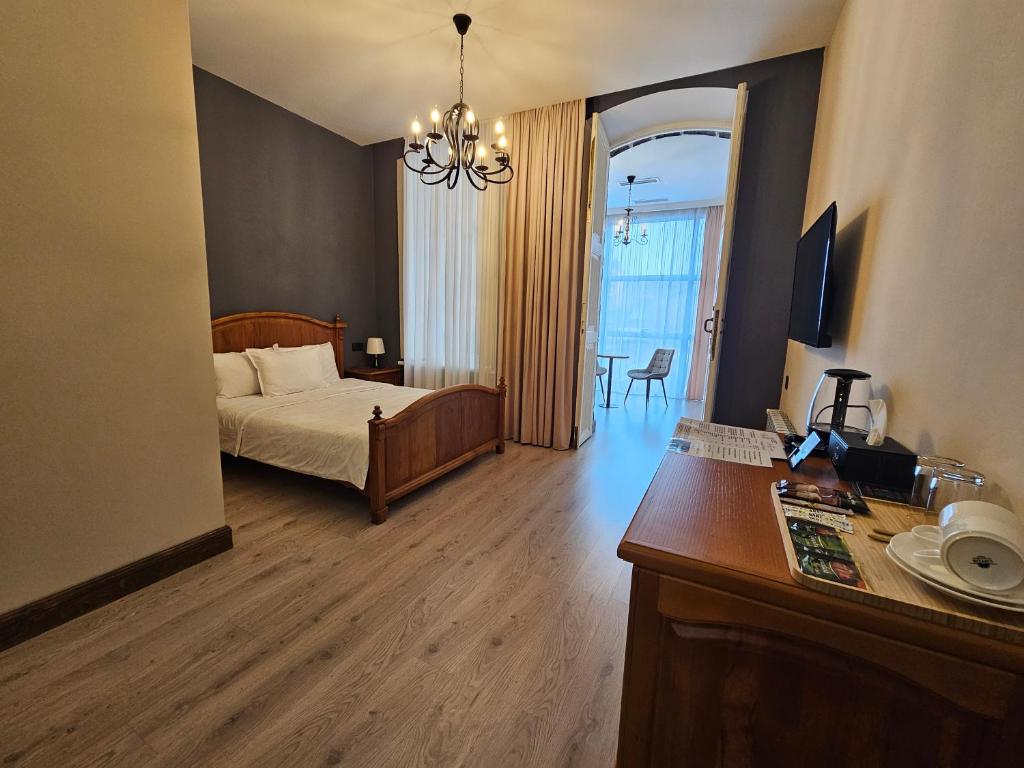

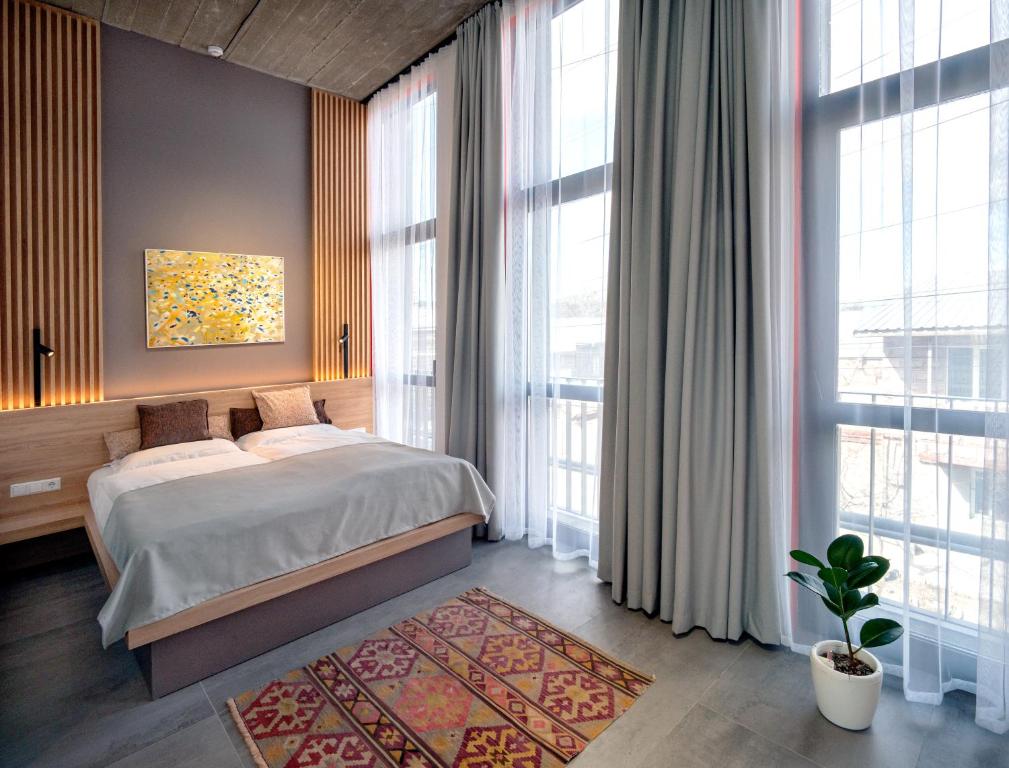
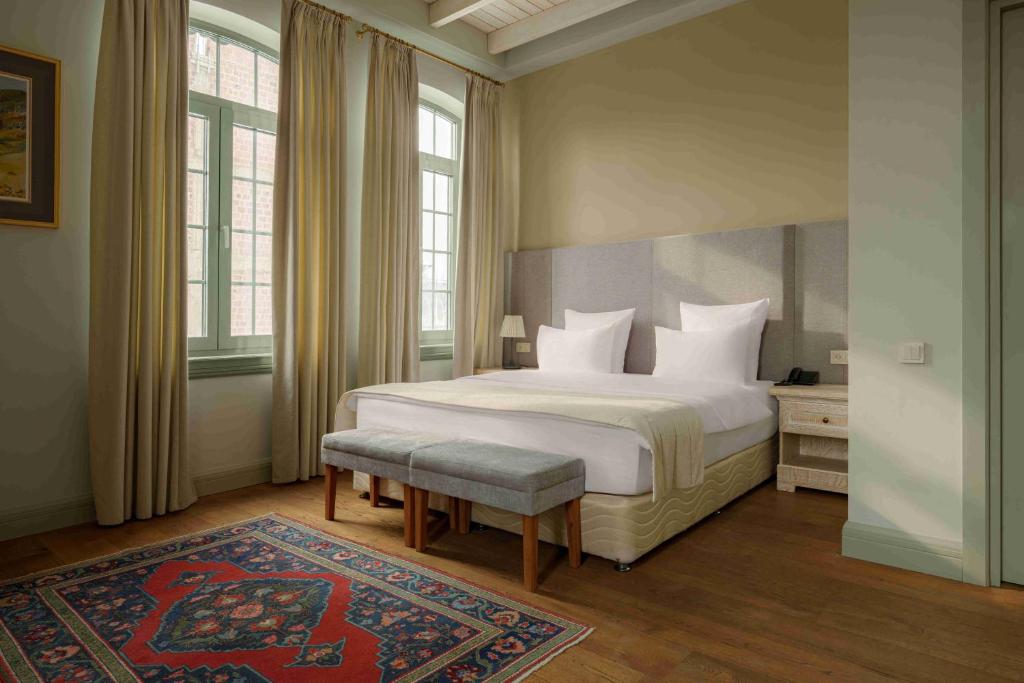
Still Deciding Where to Stay in Gyumri?
Compare more hotels, guesthouses and apartments in Gyumri, check current prices and availability, and find the option that best fits your budget and travel style.
Compare All Hotels in Gyumri →Where to Eat in Gyumri
Gyumri is a good place to explore Shirak’s regional food, rather than simply eating the same dishes you will find throughout Armenia. Local specialties include hearty breads, cheeses and dishes designed for the colder climate of northwestern Armenia.
Three places I recommend looking at are Gwoog Gastrohouse, Cherkezi Dzor and Somali. Gwoog is particularly convenient while sightseeing in the center, while Cherkezi Dzor is outside the historic core and works better as a destination meal.
Gyumri is also a great city for simply stopping for Armenian coffee and something sweet. Rijkov Street is particularly pleasant for a café break while walking through Kumayri.

Is Gyumri Safe?
I felt comfortable walking around central Gyumri, including in the evening, and crime levels in Armenia are generally considered low. Normal travel precautions still apply: keep an eye on valuables, use reputable taxis and avoid leaving belongings unattended.
The more important consideration in Armenia is the regional security situation, which can change. Current travel advisories warn against travel close to parts of the Armenia–Azerbaijan border, so always check your government’s latest Armenia travel advice before traveling elsewhere in the country.
SIM Cards and Internet in Gyumri
Wi-Fi is widely available in hotels and cafés in Gyumri. If you want a local SIM card, Viva and Ucom are two of Armenia’s main mobile operators; the former VivaCell-MTS brand is now simply Viva.
Local prepaid plans can be inexpensive. Ucom, for example, currently offers tourist and prepaid data packages, although prices and allowances change regularly.
If you would rather have mobile data working as soon as you arrive in Armenia, an eSIM avoids having to visit a mobile shop or replace your physical SIM.
For a hassle-free option, I often use Airalo. You can get your Armenia eSIM here.

Need Help Planning a Visit to Gyumri?
I create personalized itineraries tailored to your travel style, interests and available time. If you want help fitting Gyumri into a wider Armenia trip, I can build a route around what matters most to you.
Last Updated on 19/08/2026 by Panos


