
During my road trip through Armenia, the drive through Lori Province to Odzun, Haghpat, Sanahin and Akhtala became one of my favorite cultural days of the entire trip. The route combines the UNESCO-listed monasteries of Haghpat and Sanahin with early-Christian Odzun Church, fresco-filled Akhtala and the dramatic landscape of the Debed Canyon.
I visited these sites while staying in Vanadzor rather than making the long return journey from Yerevan. That made the route much more relaxed. You can visit them from Yerevan in one day too, but expect a very long 11–12 hour excursion.
Below I’ll show you the route I drove, the order I would recommend if I did it again, realistic timings at every stop, how to visit independently or by tour, and which monasteries I thought were most worth seeing.
Haghpat & Sanahin Day Trip at a Glance
| Route | Odzun → Sanahin → Haghpat → Akhtala |
|---|---|
| UNESCO sites | Haghpat and Sanahin |
| Best base | Vanadzor or Alaverdi |
| From Vanadzor | Around 6–8 hours |
| From Yerevan | Around 11–12 hours |
| Best transport | Rental car, private driver or tour |
| Odzun | 30–45 minutes |
| Sanahin | 45–60 minutes |
| Haghpat | Around 1 hour |
| Akhtala | 45–60 minutes |
| My favorite stop | Akhtala |
My Northern Armenia Monastery Route
I visited the monasteries in the order Odzun → Haghpat → Sanahin → Akhtala.
If I were doing the drive again from Vanadzor, however, I would slightly change the order to Odzun → Sanahin → Haghpat → Akhtala. It follows the route north through the Debed Canyon more naturally and reduces backtracking.
Either route works, so don’t worry if your tour or driver visits Haghpat before Sanahin.
Approximate Driving Times from Vanadzor
- Vanadzor → Odzun: around 45 minutes
- Odzun → Sanahin: around 20–30 minutes
- Sanahin → Haghpat: around 20 minutes
- Haghpat → Akhtala: around 20–25 minutes
These are approximate driving times rather than fixed schedules. Road conditions, traffic, weather and photo stops in the Debed Canyon can all affect the journey.
Table of Contents
Haghpat & Sanahin From Yerevan: Is It Worth the Long Day?
Yes, you can visit Haghpat, Sanahin, Odzun and Akhtala from Yerevan in one day, but this is one of the longest day trips you can realistically make from the Armenian capital.
Once you factor in the drive north through Lori Province, time at all four sites and the journey back to Yerevan, expect the full trip to take around 11–12 hours.
If you’re already road-tripping through Armenia, I think staying in Vanadzor or somewhere around the Debed Canyon is the better way to do it. That’s how I visited these monasteries, and it turns the route into a much more relaxed sightseeing day rather than spending a large part of it driving to and from Yerevan.
If you’re based in Yerevan and only have one day available, however, this is one of the occasions where I think booking a private driver or organized tour genuinely makes sense. You can visit all four monasteries, enjoy the scenery through the Debed Canyon and avoid having to drive several hours back to Yerevan yourself at the end of an already long day.
If you’re still deciding whether the long journey into northern Armenia is worth it, compare this route with the other options in my best day trips from Yerevan guide.

How to Visit Haghpat, Sanahin, Odzun & Akhtala
There are three realistic ways to visit the monasteries of northern Armenia: by rental car, with a private driver or guided tour, or by combining public transport with local taxis. Which one makes the most sense depends mainly on whether you’re traveling around Armenia independently or making the trip from Yerevan.
By Rental Car
I visited the monasteries by car as part of my wider Armenia road trip, and for an independent itinerary this is the option I would choose again.
Having your own car gives you the most flexibility to stop around the Debed Canyon, spend longer at whichever monastery interests you most, and continue onward through northern Armenia rather than having to return to Yerevan at the end of the day.
It also makes it much easier to combine Odzun, Sanahin, Haghpat and Akhtala in a logical route without worrying about connections between individual villages and monastery sites.

By Private Driver or Guided Tour
If you’re visiting Haghpat and Sanahin as a day trip from Yerevan, I think a private driver or guided tour is the more comfortable option.
The full four-monastery route is a long day, so having someone else handle the driving means you can concentrate on the scenery and the monasteries rather than facing several more hours behind the wheel on the return journey.
A guide can also add useful historical and architectural context at Haghpat and Sanahin, where many of the most interesting details are easy to miss if you simply walk through the churches without knowing what you’re looking at.
For the option I recommend from Yerevan, see the private four-monastery tour above, which covers Haghpat, Sanahin, Akhtala and Odzun in one day.
By Public Transport
Public transport can get you to towns such as Vanadzor and Alaverdi, with local taxis or minibuses covering some of the onward journeys to individual monasteries.
I would not choose this method if you’re trying to visit all four sites in a single day, however. Coordinating several separate transfers can quickly eat into your sightseeing time, especially once you add Odzun and Akhtala to Haghpat and Sanahin.
If you’re traveling slowly through northern Armenia, public transport combined with local taxis can work. For a concentrated one-day monastery route, though, a rental car, private driver or tour is much more practical.
Stop 1: Odzun Church – A Serene Sanctuary with Ancient Roots
I began the day at Odzun Church, the first stop on my monastery route through Lori Province. A short drive from Vanadzor brought me to a quiet plateau above the Debed Canyon, where the church rose from the morning mist with sweeping views across the surrounding hills.
Arriving early made a difference. With the sun still low and the air crisp, Odzun felt less like a major tourist attraction and more like a quiet introduction to the centuries of Armenian religious architecture I would encounter throughout the day.
Odzun has early Christian origins, with the surviving church generally associated with the early medieval period and later reconstruction. Its long basilica form feels noticeably different from the more complex medieval monastery ensembles of Sanahin and Haghpat, making it a useful architectural starting point for the route.
One of the most distinctive features stands just outside the church: an unusual funerary monument formed by two carved stone pillars beneath an arched structure. Nearby, old khachkars and carved stones are scattered around the grounds, adding another layer of history to what is otherwise a remarkably peaceful site.
For me, Odzun’s appeal came as much from its setting as from the church itself. The open plateau, views toward the Debed Canyon and lack of crowds made it an atmospheric first stop before continuing deeper into northern Armenia.

Is Odzun Worth Visiting?
Yes, especially if you’re interested in Armenian architecture rather than simply collecting UNESCO sites.
Odzun gives the route an earlier historical starting point before you move on to the great medieval monastic complexes of Sanahin and Haghpat. It also feels sufficiently different from the other stops that I wouldn’t consider it repetitive, even on a day already packed with churches and monasteries.
📍 Entrance: Free when I visited
🕰️ Time spent: 30–45 minutes
Stop 2: Sanahin Monastery – Medieval Scholarship in Stone
From Odzun, I continued deeper into the Debed Canyon toward Sanahin, one of northern Armenia’s two great UNESCO-listed monastic complexes.
Sanahin developed into one of medieval Armenia’s major religious and educational centres. The complex includes churches, gavits, a scriptorium, academy and belfry, reflecting the fact that monasteries like this were centres of scholarship as well as worship.
What struck me most was how dense the complex feels. Rather than one dominant monument, doorways and passages connect a series of dark stone spaces built and altered over centuries. Walking through them feels very different from approaching a single monumental church: Sanahin gradually reveals itself as a whole network of religious, educational and communal buildings.

The Church of St Astvatsatsin is among the oldest buildings in the complex, while St Amenaprkich belongs to the monastery’s great period of expansion in the 10th century. Around them, gavits, carved portals, inscriptions and khachkars give you a sense of how the site continued to evolve over generations.
Sanahin became particularly associated with scholarship, manuscript production and calligraphy, which makes it easier to understand why UNESCO treats Sanahin and Haghpat as much more than simply two attractive medieval churches. These were places where religion, education and cultural life overlapped.
For me, Sanahin felt slightly more enclosed and introspective than Haghpat. The interconnected chambers, worn stone surfaces and shaded courtyards give it a quieter atmosphere that rewards wandering slowly rather than rushing from one “main sight” to another.

Haghpat or Sanahin: Which Is Better?
I would visit both. They’re close enough that choosing only one doesn’t save much time once you’re already in Lori.
Sanahin felt denser and more introspective to me, while Haghpat felt more monumental and open to the surrounding landscape. Seeing them as a pair also makes far more sense historically, since together they form the UNESCO-listed monastic ensemble.
📍 Entrance: Free when I visited
🕰️ Time spent: 45–60 minutes
Bonus Stop: Sanahin Bridge
If you have another 10–15 minutes, stop at the medieval Sanahin Bridge across the Debed River. It is easy to think of the two monasteries as the entire UNESCO site, but Sanahin Bridge is actually the third component of the World Heritage property, alongside Haghpat and Sanahin monasteries.
It’s a small stop, but it adds useful context to the historic routes that once connected communities through the Debed Canyon.

Stop 3: Haghpat Monastery – A Golden Age of Scholarship
From Sanahin, I continued north through the Debed Canyon toward Haghpat, the second of Lori’s two UNESCO-listed monastic complexes.
Founded in AD 976 by Queen Khosrovanush, wife of King Ashot III, Haghpat grew into one of medieval Armenia’s most important religious and intellectual centers. Monks lived and worshipped here, but the monastery was also a place of teaching, manuscript production and scholarship.
At the heart of the complex stands the Church of Surp Nshan, completed in the late 10th century. Its restrained stone interior and massive proportions set the tone for the rest of Haghpat, where churches, chapels and monastic buildings are connected through courtyards and passages rather than arranged around a single monumental façade.
What I liked most about Haghpat was the sense of space. Compared with Sanahin, the complex felt more open and monumental, with the surrounding landscape becoming part of the experience. Walking between the buildings, you repeatedly catch glimpses of the hills and valleys beyond the monastery walls.
The gavit and scriptorium are particularly worth exploring because they help explain Haghpat’s role as a centre of learning rather than simply a place of worship. The heavy stone vaults and quiet interior spaces make it easy to imagine the monastery functioning as a working religious and educational community centuries ago.


What Not to Miss at Haghpat
Don’t rush straight through the main church. Take time to explore the gavit, scriptorium, belfry and the khachkars around the complex.
One particularly important example is the 13th-century Amenaprkich, or All-Saviour, khachkar, one of the finest carved cross-stones at Haghpat. Looking closely at details like this makes the monastery much more rewarding than treating it as a quick photo stop.
For me, Haghpat felt more monumental than Sanahin, while still retaining the quiet, scholarly atmosphere that made both monasteries such important centres of medieval Armenian culture.
📍 Entrance: Free when I visited
🕰️ Time spent: Around 1 hour
Stop 4: Akhtala Monastery – A Fortress Filled with Frescoes
Akhtala was the final monastery of my route through northern Armenia, and it ended up being my favorite stop of the day.
The atmosphere is noticeably different as soon as you arrive. Set on a rocky hilltop, Akhtala is surrounded by thick defensive walls and the remains of medieval fortifications, giving the complex the appearance of a fortress rather than a conventional monastery. That makes what you find inside even more striking.
Step into the Church of the Holy Mother of God and the austere stone exterior gives way to an extraordinary medieval fresco cycle covering large sections of the walls, arches and apse. After spending much of the day among the dark stone interiors of Odzun, Sanahin and Haghpat, the sudden appearance of painted figures and rich color felt almost startling. The contrast between fortress outside and painted sanctuary inside is what makes Akhtala so memorable.

What makes Akhtala particularly interesting is the cultural mixture visible inside the church. Armenian architecture is combined with an extraordinary medieval fresco cycle, while surviving inscriptions reflect the Armenian, Georgian and Greek influences that intersected in this part of the Caucasus.
That broader cultural context made the site particularly interesting to me. Akhtala doesn’t simply feel like another variation on the Armenian monasteries earlier in the route; it reveals how northern Armenia sat within a much wider medieval Caucasian world of shifting political, religious and artistic influences.
Before leaving, take some time to walk around the fortified complex as well as the church itself. The elevated setting gives you views across the surrounding hills and Debed Valley and reinforces just how strategic this location once was.


Is Akhtala Worth the Detour?
Absolutely. In fact, Akhtala was my favorite stop of the route. After several predominantly stone monastery interiors, the frescoes make it feel completely different. If you’re starting to worry that Armenia’s monasteries will blur together, Akhtala is precisely the one I would not skip.
For me, it was the perfect final stop: visually different, historically layered and dramatic enough to stand apart even after a full day of exploring Armenian religious sites.
📍 Entrance: Free when I visited
🕰️ Time spent: 45–60 minutes
Driving Through Debed Canyon
Driving through the Debed Canyon was as memorable as the monasteries themselves. The road followed the river’s curves, hemmed in by steep cliffs and forested slopes that shifted in color with the light. Villages clung to the hillsides, their stone houses and church spires appearing suddenly between bends. At times the canyon narrowed into sheer rock walls, then opened again to wide valleys where orchards and fields stretched toward the horizon. It felt less like a transfer between sites and more like a journey through Armenia’s living landscape, where history and daily life unfold against dramatic natural scenery.

One Day or Two Days in Debed Canyon?
From Vanadzor, one day is enough to visit Odzun, Sanahin, Haghpat and Akhtala at a comfortable pace.
From Yerevan, you can still cover all four in a single day, but I would think of it as a long excursion rather than a relaxed day trip. Once you add the drive north, time at each monastery and the return journey to the capital, it becomes a very full day.
If you have more time, I would stay overnight in northern Armenia. That gives you much more freedom to explore the Debed Canyon slowly, stop for viewpoints and potentially add places such as Kobayr Monastery rather than immediately turning around and driving back to Yerevan.
On my own Armenia road trip, visiting Lori as part of a continuous route made far more sense than treating it as an out-and-back excursion from the capital. It also made the monasteries feel like part of the wider journey through northern Armenia rather than an isolated sightseeing day.

Where to Stay for Haghpat & Sanahin
If you’re visiting Haghpat and Sanahin as part of a wider Armenia road trip, staying in northern Armenia makes the day considerably easier than traveling all the way from Yerevan and back.
I would focus on either Vanadzor for a more convenient town base or Alaverdi and the Debed Canyon if you want to stay as close as possible to the monasteries.
Vanadzor
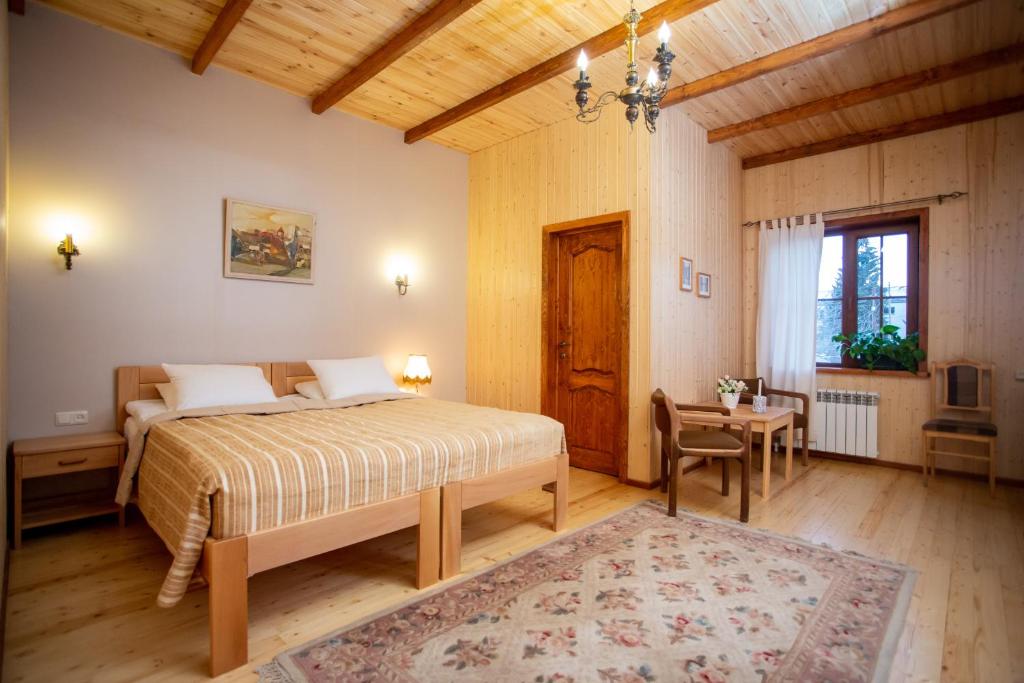
Vanadzor worked well for my itinerary because I was continuing through Armenia by car. It has a much wider choice of accommodation, restaurants and everyday services than the smaller settlements around the Debed Canyon, while still keeping the monastery route manageable as a normal sightseeing day.
From here, you can leave in the morning, visit Odzun, Sanahin, Haghpat and Akhtala without rushing, and either return to Vanadzor or continue north depending on your wider Armenia itinerary.
If you prefer having restaurants and other facilities close to your hotel rather than staying somewhere more isolated, Vanadzor is the more practical base.
Alaverdi & Debed Canyon
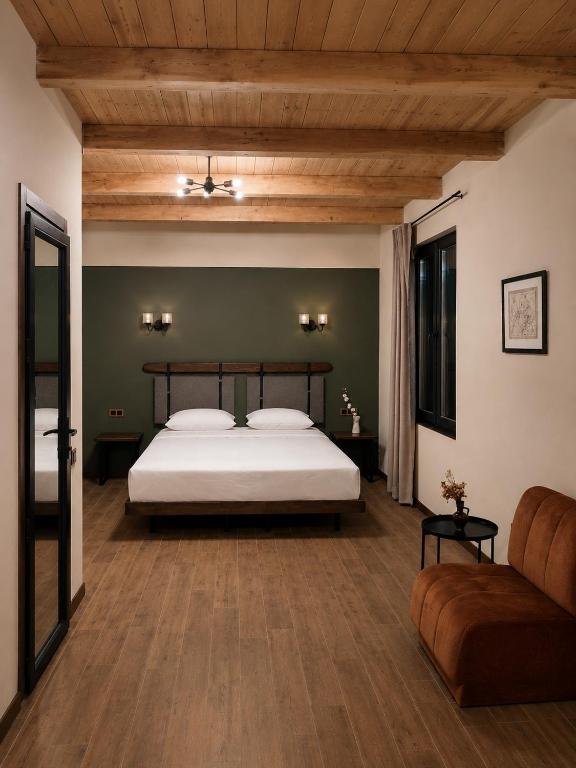
Stay around Alaverdi or elsewhere in the Debed Canyon if Haghpat, Sanahin and the surrounding landscape are a major priority.
You’ll dramatically reduce the amount of driving on your sightseeing day, which means more time at the monasteries, more flexibility for stops around the canyon and the possibility of adding another nearby site without turning the day into a marathon.
This is also the option I would choose if you want a quieter stay surrounded by northern Armenia’s mountain scenery rather than using a larger town purely as a practical base.
Yerevan
If you prefer not to change hotels, you can stay in Yerevan and visit Haghpat, Sanahin, Odzun and Akhtala on a guided or private day trip instead.
This is the simplest option if northern Armenia is only one part of your itinerary and you would rather keep the same base in the capital. Just keep in mind that it will be a long day compared with staying in Vanadzor or Alaverdi.
For help choosing the right area and hotel in the capital, see my where to stay in Yerevan guide.
Practical Tips for Visiting Haghpat, Sanahin, Odzun & Akhtala
Especially if you’re coming from Yerevan. This is a long route, and leaving early gives you more time at the monasteries without rushing the final stop.
These are full UNESCO-listed monastic complexes, not single churches, so give yourself time to explore the gavits, courtyards, khachkars and smaller buildings.
The monastery grounds include worn stone floors, uneven steps and old pathways that can become slippery in wet weather.
Lori is populated and you’ll find places to eat around towns such as Alaverdi and Vanadzor, but carrying something with you makes a full sightseeing day easier.
Haghpat, Sanahin, Odzun and Akhtala are historic monuments, but they are also religious sites, so modest clothing is appropriate.
Knowing what you’re looking at makes Haghpat and Sanahin far more interesting. A gavit is the traditional Armenian narthex or gathering space attached to a church, while khachkars are intricately carved Armenian cross-stones.
It was my favorite stop of the route, and the fresco-covered interior feels completely different from the predominantly stone spaces at Haghpat and Sanahin.
Mountain weather, road conditions and unexpected photo stops in the Debed Canyon can all affect how long the route takes.

Haghpat & Sanahin FAQ
Are Haghpat and Sanahin UNESCO World Heritage Sites?
Yes. Haghpat and Sanahin together form a UNESCO World Heritage property representing an important period of medieval Armenian religious architecture and scholarship. Odzun and Akhtala are historically important sites, but they are not part of the same UNESCO inscription.
Can you visit Haghpat and Sanahin in one day from Yerevan?
Yes. You can visit Haghpat, Sanahin, Odzun and Akhtala from Yerevan in a single day, but expect the complete four-stop route to take around 11–12 hours. It is a long excursion rather than a relaxed day trip.
How long do you need at Haghpat Monastery?
I recommend allowing around 1 hour at Haghpat. That gives you enough time to see the main church as well as the gavit, scriptorium, belfry, khachkars and smaller buildings around the complex.
How long do you need at Sanahin Monastery?
Allow approximately 45–60 minutes at Sanahin. The monastery is a complex of interconnected churches, gavits, courtyards and other medieval buildings rather than a single church.
Should I visit Haghpat or Sanahin if I only have time for one?
If I absolutely had to choose one, Haghpat probably makes the stronger standalone visit because of its scale, setting and variety of buildings. However, I strongly recommend visiting both. They are close together, feel noticeably different and together form the UNESCO-listed monastic ensemble.
Is Akhtala worth visiting?
Absolutely. Akhtala was my favorite stop of the route. Its fortified setting and fresco-covered church interior feel completely different from the predominantly stone spaces at Haghpat and Sanahin. I would not skip it simply because it is not UNESCO-listed.
Do you need a guide for Haghpat and Sanahin?
No. You can visit both monasteries independently, especially if you have your own car. A guide is useful, however, if you want deeper historical and architectural context or help understanding features such as the gavits, khachkars, scriptoria and different stages of the monastery complexes.
What is the best time to visit Haghpat and Sanahin?
Late spring through autumn is the easiest time for this route, with longer daylight hours and generally better conditions for driving through the Debed Canyon. Spring and autumn are especially attractive for the scenery. The monasteries can also be visited in winter, but snow and icy mountain roads can make the journey less predictable.
Where Haghpat & Sanahin Fit Into an Armenia Itinerary
I wouldn’t build an Armenia itinerary around Haghpat and Sanahin alone, but they fit beautifully into a wider route through northern Armenia.
On my own trip, Lori formed part of a continuous journey rather than a standalone excursion from Yerevan. That’s how I would recommend approaching this region if you have enough time: combine the monasteries with other stops in northern Armenia rather than repeatedly returning to the capital.
If you’re planning a longer trip around the country, start with my Armenia road trip itinerary. If you’re staying in Yerevan and deciding whether the long journey north is worth it, compare this route with my best day trips from Yerevan guide. And if Armenian religious architecture is one of your main interests, see my guide to the best monasteries in Armenia. And if you’re continuing east through northern Armenia, Dilijan makes a natural next stop after Lori, with forest scenery, Haghartsin and Goshavank.
For me, Akhtala was the individual highlight, but seeing all four sites together — from early-Christian Odzun through medieval Haghpat and Sanahin to fresco-filled Akhtala — is what made this one of the most rewarding cultural days of my Armenia trip.
Last Updated on 21/08/2026 by Panos


