
A Lake Sevan day trip from Yerevan is easy to plan, but I wouldn’t drive there just to visit Sevanavank and turn around. I followed a fuller self-drive route combining Sevanavank, Hayravank and Noratus Cemetery with Arzakan and Tsaghkadzor on the way from Yerevan.
Below is the route I drove, what I would keep if I had less time, and the practical details I wish I’d had before setting off.
Lake Sevan Route at a Glance
I’d think of this as two versions of the same trip: a focused Lake Sevan circuit for most visitors, and the longer route I actually drove through Arzakan and Tsaghkadzor.
My recommendation: stick with Sevanavank, Hayravank and Noratus if Lake Sevan is your priority. Add Tsaghkadzor — and then Arzakan — only if you enjoy long road-trip days and want the journey itself to be part of the experience.
The closest tour match I found to the route I recommend visits Sevanavank, Hayravank and Noratus with a local guide.
Check the Lake Sevan Day Trip
Table of Contents
Arzakan: An Optional Forest and Monastery Detour
Arzakan was the most offbeat stop on my route. I came here for the monasteries hidden in the forest rather than the village itself, and it felt completely different from the much easier-to-visit sights later in the day.
I parked at the edge of the forest and followed a narrow trail through the trees. The path brought me first to Neghutsi Vank, a partly ruined 10th-century monastery where carved stones and early khachkars are still visible among the remains. Farther into the woods, Ghuki Vank felt even more isolated: a 13th-century monastery with no ticket booth, visitor centre or obvious tourist infrastructure.
I spent around 1–2 hours here including the walk. If you’re short on time, this is the first stop I would cut. If you enjoy obscure ruins and forest walks, though, it was one of the most unusual parts of the route.
🕒 Time spent: 1-2 hours
📍 Entry: Free
Tsaghkadzor: Kecharis Monastery and Mountain Views
The road climbs from Arzakan toward Tsaghkadzor, Armenia’s best-known ski resort. I stopped here because it breaks up the journey to Sevan nicely and gives the day a completely different mountain feel before the landscape opens toward the lake.
When I visited, the centre felt relaxed rather than resort-like: families around the fountains, people heading into the hills and noticeably cooler air than I had left behind in Yerevan.
Kecharis Monastery: A Well Preserved Medieval Complex
Kecharis Monastery stands just above the main street and is one of the most accessible monasteries in central Armenia. Founded in the 11th century, the complex once served as an important educational and religious center during the Bagratuni and Zakarian periods. For those interested in Armenian architectural styles, the preserved domes, arches, and stone carvings offer clear examples of medieval design.
I entered along the stone path through the trees. Inside the complex, several churches sit close together in pale volcanic stone, with khachkars leaning against the walls and candles burning inside. It is an easy stop rather than somewhere you need hours: I would allow around 30–45 minutes if you’re combining it with Lake Sevan.


Tsaghkadzor Ropeway: High Altitude Views Toward Lake Sevan
After Kecharis I drove up to the Tsaghkadzor Ropeway. This is an open chairlift rather than an enclosed gondola, climbing the slopes of Mount Teghenis toward a maximum altitude of 2,819 metres.
The ropeway is worth adding mainly for the mountain views. On a clear day, Lake Sevan appears in the distance from the upper sections, but I would skip it if visibility is poor or you’re already running behind schedule. It can easily turn Tsaghkadzor into a 1–2 hour stop.
As of August 2026, the official ropeway website lists daily operating hours of 10:00–19:00. Hours can still change with conditions, so check the official site before setting out.
🕒 Time spent: 1.5 hours
📍 Ropeway: Check current fares on the official website; ticket types vary by season

Sevanavank Monastery: The Classic Lake Sevan View
After Tsaghkadzor, the forested landscape opens suddenly into the Sevan basin. This was the point where the day changed character for me: Lake Sevan finally appeared ahead, broad and blue at roughly 1,900 meters (6,230 ft) above sea level.
Sevanavank (literally meaning “Sevan Monastery”) sits on a hill above the lake on what was historically an island, before Soviet-era water management lowered Lake Sevan and connected it to the shore. The surviving churches date from the 9th century and are built from dark volcanic stone.
The churches themselves are compact, so most of my 45 minutes here went into climbing the steps, walking around the hilltop and looking across the lake from different sides. Compared with Hayravank, Sevanavank feels much more set up for visitors, with shops and facilities around the base.
If you’re following only the core route, I would make Sevanavank your first stop. On the longer route through Arzakan and Tsaghkadzor, you’ll naturally reach it later in the day.
🕒 Time spent: 45 minutes
📍 Entry: Free


Hayravank Monastery: A Quieter Stop on Lake Sevan
Hayravank is much smaller than Sevanavank, but that was part of the appeal for me. When I visited, it felt noticeably quieter, with the lake almost immediately below the monastery rather than spread out beneath a busy viewpoint.
A short gravel path leads from the parking area to the church. The thick basalt walls, weathered khachkars and exposed lakeside setting make it feel much rougher and less polished than Sevanavank. There are no real visitor facilities at the monastery, so bring water and expect uneven ground. I would allow 30–45 minutes here.
Unless you’re seriously behind schedule, I wouldn’t cut Hayravank. It requires relatively little time and gives this route a completely different atmosphere from Sevanavank.
🕒 Time spent: 30–45 minutes
📍 Entry: Free
If Armenia’s medieval monasteries are one of your main interests, I compare Sevanavank and Hayravank with the country’s other major monastic sites in my guide to the best monasteries in Armenia.


Noratus Cemetery: Armenia’s Great Field of Khachkars
For me, Noratus was one of the most atmospheric stops of the day. Instead of another monastery, you suddenly find yourself walking through a huge field of carved stones with the modern village continuing around it.
Khachkars are Armenian carved cross-stones, often created as memorials. Noratus contains the largest surviving khachkar cemetery, with stones from many different periods. What struck me most up close was how individual they are: some are covered in dense rosettes, vines and geometric patterns, while others are much simpler and heavily weathered.
There is also a local legend that villagers once placed helmets and swords around the khachkars so that, from a distance, an approaching army would mistake them for soldiers. Treat it as folklore rather than literal history, but it adds another layer to a place already full of symbolism.
The ground is uneven, so wear decent shoes. Near the entrance, I also saw local sellers with small carvings inspired by the khachkars. I would give Noratus 45–60 minutes rather than rushing through for a few photographs.
🕒 Time spent: 45–60 minutes
📍 Entry: Free


How to Plan Your Lake Sevan Day Trip
Practical information checked in August 2026. Driving times are approximate and conditions or opening hours can change.
Lake Sevan Route, Distance and Driving Time
Lake Sevan is only about an hour’s drive from Yerevan, but a proper day trip covers considerably more ground once you continue beyond Sevanavank to Hayravank and Noratus.
Core Lake Sevan Route
For most travelers, this is the route I recommend. It covers roughly 200 km (125 miles) and involves around 3 hours of driving without sightseeing stops.
A realistic breakdown is:
- Yerevan → Sevanavank: about 1 hour
- Sevanavank → Hayravank: about 25–30 minutes
- Hayravank → Noratus: about 15 minutes
- Noratus → Yerevan: about 1 hour 20 minutes
Allow 7–9 hours for the complete day trip once you include the monasteries, Noratus Cemetery, viewpoints and a stop for lunch.

Extended Route I Drove
This is the longer route I followed. Depending on exactly where you stop around Arzakan, expect roughly 240 km (150 miles) and around 3.5–4 hours behind the wheel.
The additional driving isn’t what makes this itinerary long. Arzakan involves walking through the forest to its lesser-known monasteries, while Tsaghkadzor can easily take another 1–2 hours if you visit Kecharis Monastery and ride the ropeway.
I would therefore allow 10–12 hours for the full route rather than trying to rush all five stops.
How Much Can You Realistically Fit into One Day?
Sevanavank, Hayravank and Noratus comfortably fit into a normal Lake Sevan day trip from Yerevan. You’ll have time to explore each stop properly, enjoy the lake views and have lunch without constantly watching the clock.
Adding Tsaghkadzor is still realistic if you’re happy with a longer sightseeing day. Adding both Tsaghkadzor and Arzakan, as I did, turns the excursion into a proper full-day road trip.
If you prefer a relaxed pace, stick with the core route. You won’t miss the essential Lake Sevan sights and you’ll spend more time enjoying the lake rather than driving between stops.
How to Get from Yerevan to Lake Sevan
You can reach Lake Sevan by rental car, organized tour or public transport. For the complete route in this guide, however, a rental car or tour is considerably easier because Hayravank and Noratus are spread along the western shore rather than clustered around Sevan town.
By Rental Car
Self-driving is my preferred way to do this route. The main roads between Yerevan, Sevanavank, Hayravank and Noratus are straightforward, and having your own car means you can decide how long to spend at each stop.
A car becomes even more useful if you follow my extended route through Arzakan and Tsaghkadzor, where the flexibility to stop, walk and continue when you’re ready makes a big difference.
I often use Discover Cars to compare rental companies and prices before booking:

If you’re renting specifically for this trip, I would take the car for the whole day rather than trying to combine public transport with taxis around Lake Sevan.
By Organized Lake Sevan Tour
If you would rather not drive, look for a tour that continues beyond Sevanavank. Many short Lake Sevan excursions visit the famous peninsula and then move on elsewhere, while I think Hayravank and Noratus are what make this into a much more complete Lake Sevan day.
The private tour I recommend includes Sevanavank, Hayravank and Noratus, closely matching the core route in this guide:

For most first-time visitors who don’t want to rent a car, this is the simplest way to follow the itinerary without having to arrange separate taxis between the sights.
By Public Transport
You can reach Sevan town from Yerevan by bus or minibus, so public transport is perfectly workable if your main goal is seeing Sevanavank.
It becomes much less convenient for the full route. Hayravank and Noratus require additional onward transport, and public services are not designed around travelers making sightseeing stops along the lakeshore.
You can combine public transport to Sevan with local taxis, but by the time you arrange several separate journeys, a rental car, private driver or organized tour is usually much simpler.
For that reason, I would use public transport for a simple Yerevan → Sevan → Sevanavank trip, but not for the complete itinerary in this guide.
Best Time to Visit Lake Sevan
The best time for a Lake Sevan day trip from Yerevan is from late May to early October, when the days are longer and road conditions are generally straightforward.
June and September are my preferred months for this kind of road trip. You still have plenty of daylight and usually comfortable sightseeing weather, without relying on the hottest and busiest weeks of midsummer.
July and August are also good if you want to combine sightseeing with time beside the water, but expect more visitors around Sevanavank and the main beaches.
One thing that is easy to underestimate is the altitude. Lake Sevan sits at around 1,900 metres (6,230 ft), so it can feel noticeably cooler and windier than Yerevan. I would carry a light jacket even if the capital is hot when you leave.
Winter trips are possible, but snow, ice, colder temperatures and shorter daylight make the longer itinerary less predictable. If visiting in winter, I would keep the route simpler and check road and weather conditions before leaving Yerevan.

Where to Eat During Your Lake Sevan Day Trip
Lake Sevan is particularly known for ishkhan, the local trout, so lunch beside the lake fits naturally into this itinerary. I had the trout during my visit and it was excellent; fresh, simply prepared and easily one of the most memorable meals of the day.
The easiest place to stop is around Sevan after visiting Sevanavank, before continuing south toward Hayravank and Noratus. This breaks up the sightseeing well and avoids having to look for food later in the more rural parts of the route.
If you want to eat immediately after Sevanavank, Mirans Restaurant & Hotel in Sevan town is the more logical stop. Tarsus Sevan in Tsovazard makes more sense later in the route as you continue south along the lake. Both serve Armenian food and fish, so choose according to where lunchtime falls rather than doubling back.
I would allow around an hour for lunch on the core itinerary. If you’re following the longer Arzakan–Tsaghkadzor route, don’t linger too long — the additional sightseeing already makes this a very full day.

Should You Stay Overnight at Lake Sevan?
You don’t need to stay overnight to follow the itinerary in this guide. Sevanavank, Hayravank and Noratus work comfortably as a day trip from Yerevan, and even my longer route can be completed in one day if you start reasonably early.
I recommend staying overnight if you want to swim, spend a relaxed evening beside the lake, or continue north toward Dilijan instead of returning to Yerevan.
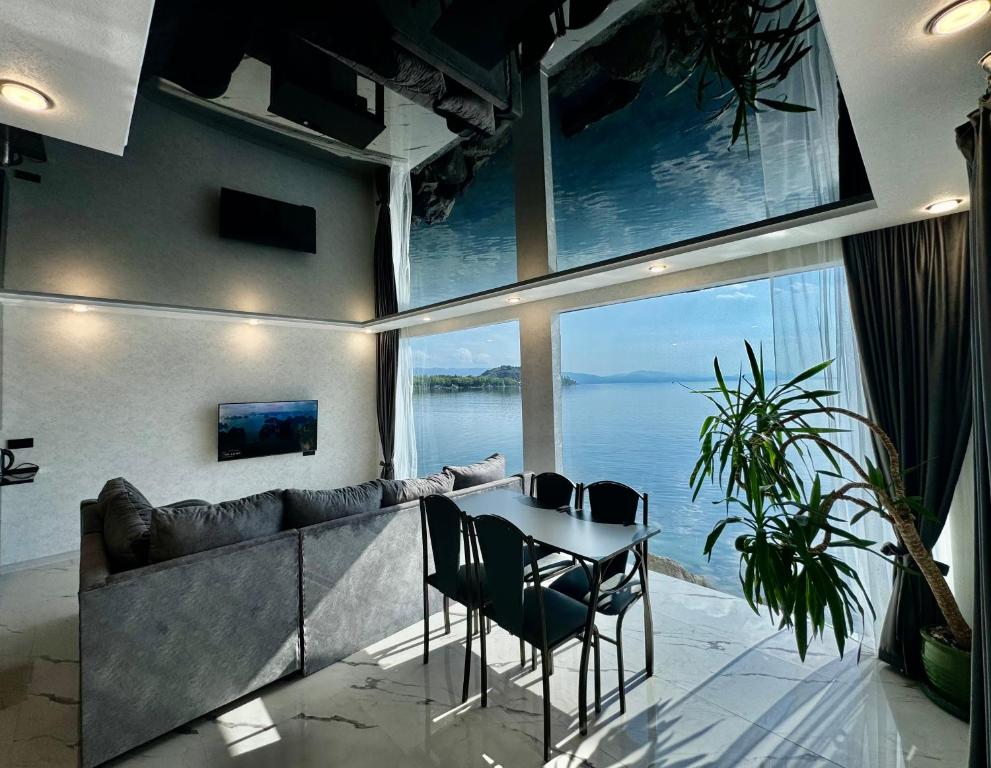
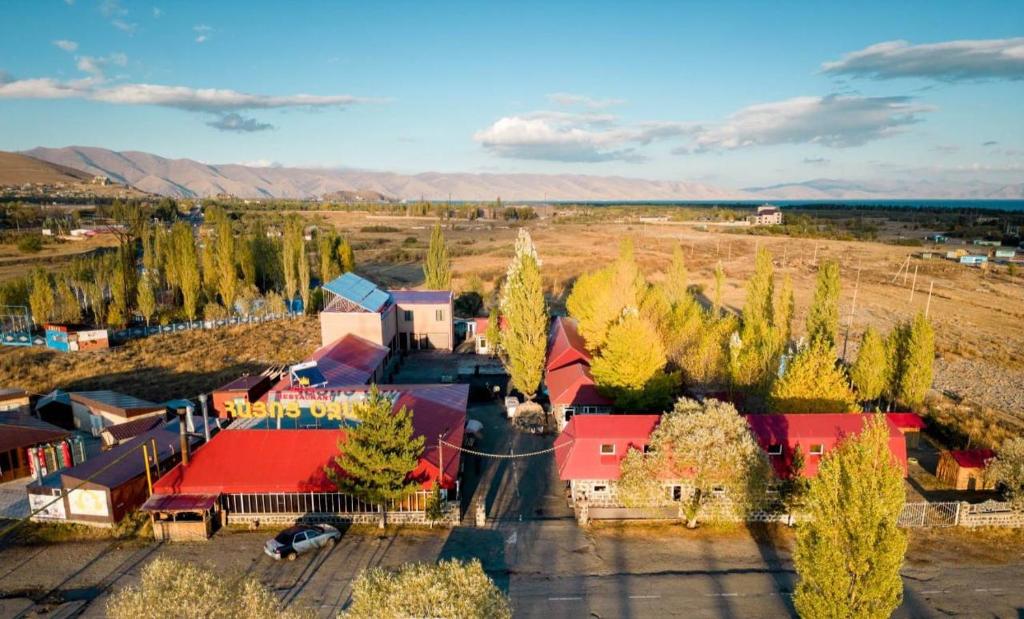
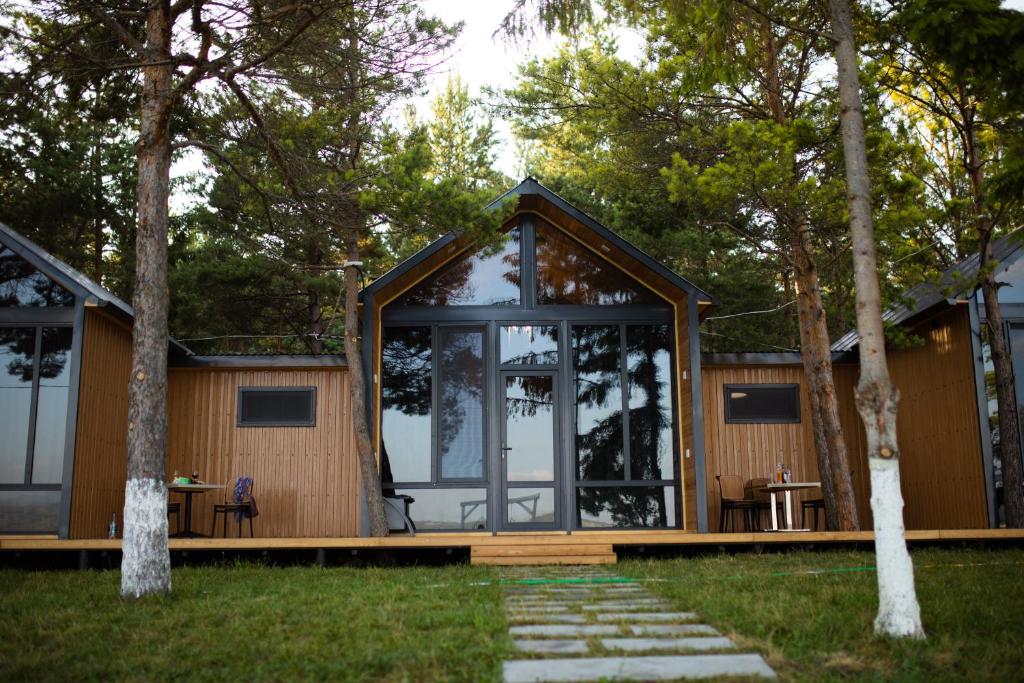
If you’re continuing your trip through northern Armenia, this can be a particularly good option: spend the day around Lake Sevan, stay overnight, and continue to Dilijan the following morning. If you do stay, these are the properties I would keep on the shortlist:


Is a Lake Sevan Day Trip from Yerevan Worth It?
Yes, but I think Lake Sevan becomes much more worthwhile once you go beyond Sevanavank.
Sevanavank has the iconic elevated view and is understandably the busiest stop. Hayravank gives you a quieter experience directly beside the lake, while Noratus adds something completely different through its huge field of Armenian khachkars.
If you only have 7–9 hours, I would stick to those three stops. If you enjoy longer road-trip days, adding Tsaghkadzor — and, for something genuinely offbeat, Arzakan — turns the journey from Yerevan into part of the experience rather than simply the drive to the lake.
If Lake Sevan is one part of a longer trip through the country, see my complete Armenia road trip itinerary for how I incorporated it into a wider route. If you’re still deciding where to spend your days outside the capital, compare this route with my guide to the best day trips from Yerevan.

Lake Sevan Day Trip FAQs
These are the practical questions I often get about planning a day around Sevanavank, Hayravank and Noratus from Yerevan.
Is a Lake Sevan day trip worth it from Yerevan?
Yes. From Yerevan, Lake Sevan is worth giving a full day if you go beyond Sevanavank. Adding Hayravank and Noratus gives you a much better mix of lake scenery, medieval architecture and khachkar heritage without making the route difficult.
How far is Lake Sevan from Yerevan?
Sevanavank, the usual first stop at Lake Sevan, is roughly an hour’s drive from Yerevan. The complete circuit is much longer because Hayravank and Noratus lie farther south along the lake. My recommended core route covers roughly 200–205 km (124–127 miles) including the return to Yerevan.
How long do you need at Lake Sevan?
Allow around 7–9 hours for Sevanavank, Hayravank, Noratus, viewpoints and a lunch stop from Yerevan. If you follow the longer route I drove through Arzakan and Tsaghkadzor before reaching the lake, plan on a 10–12 hour day rather than trying to rush all the stops.
Can you visit Sevanavank, Hayravank and Noratus in one day?
Yes. These three stops form the core Lake Sevan route I recommend and fit comfortably into one day from Yerevan. Sevanavank needs roughly 45 minutes, Hayravank around 30–45 minutes and Noratus about 45–60 minutes, leaving enough time for the drives between them, lake views and lunch.
What is the best way to get from Yerevan to Lake Sevan?
For the complete itinerary, I prefer self-driving because it gives you complete control over the stops and makes continuing from Sevanavank to Hayravank and Noratus straightforward. An organized tour is the easiest alternative if you do not want to drive. Public transport is better suited to a simple Sevan or Sevanavank visit.
Can you visit Lake Sevan without a car?
Yes, but the full route is less convenient. Public transport can get you from Yerevan to Sevan, after which you would need additional transport for Hayravank and Noratus. If you only want to see Sevanavank, travelling without a car is much easier. For the complete circuit, I would choose a tour or private driver instead.
Can you swim in Lake Sevan?
Yes, swimming is possible during the warmer summer months, particularly at established beaches around the lake. The water can remain cool even when Yerevan is hot because Lake Sevan lies at roughly 1,900 metres (6,230 ft). If swimming is a priority, allow extra time rather than squeezing it into the monastery-focused itinerary.
What is the best time to visit Lake Sevan?
Late May to early October is the easiest period for this day trip, with longer daylight and generally straightforward road conditions. I particularly like June and September for sightseeing because temperatures are comfortable and the main stops can be less busy than in midsummer. Even in summer, bring an extra layer for the lake’s cooler, windier weather.
Are Sevanavank and Hayravank free to visit?
Yes. Sevanavank and Hayravank are free to enter, and Noratus Cemetery can also be visited without an admission fee. Donations may be possible at religious sites, but you do not need to budget for entrance tickets to these three main stops. That makes this a relatively inexpensive sightseeing day once transport and food are covered.
What should you wear at Lake Sevan?
Wear comfortable shoes with decent grip for Sevanavank’s steps and the uneven ground around Hayravank and Noratus. I would also carry a light jacket or extra layer, even in summer. Lake Sevan’s high altitude means temperatures and wind can feel very different from Yerevan on the same day.

Last Updated on 24/08/2026 by Panos


