


Galápagos Island Hopping by Ferry: Routes, Mistakes & What the Speedboats Are Like
I took the Santa Cruz–Isabela speedboat in September. The sea was choppy, the engines were loud, and the first surprise came before we even boarded. Here’s what matters before booking a Galápagos ferry.
Our Santa Cruz–Isabela ferry trip began with a surprise: the speedboat was anchored offshore, so we first paid for a little water taxi at Puerto Ayora pier. Then came the engine noise and a bumpy September crossing. The return was smoother, but neither journey resembled a leisurely cruise.
For Galápagos island hopping by ferry, the boat ride is only part of the planning. Santa Cruz connects to Isabela and San Cristóbal, but traveling between those two islands means changing boats in Puerto Ayora. Below are the routes, current fare categories, small harbor charges, boarding steps and practical details that shaped our trip.
Affiliate disclosure: Some ferry, hotel and eSIM links are affiliate links. If you book through them, I may earn a commission at no additional cost to you.
What You Need to Know Before Booking a Galápagos Ferry
Puerto Ayora on Santa Cruz is the main ferry hub. Regular passenger speedboats connect Santa Cruz with Isabela and San Cristóbal. There is no regular direct ferry between Isabela and San Cristóbal, so that trip involves changing boats on Santa Cruz. Allow two to three hours on the water for each crossing, plus check-in, luggage inspection and transfers between the pier and the boat.
January to June generally brings calmer seas than the second half of the year, according to the Galápagos National Park. February to May is the period to prioritize if a calmer crossing is especially important. We traveled in September and definitely felt the swell. Even in the calmer months, it’s open ocean: conditions can change from one day to the next.
2–3 hours depending on sea conditions
Depends on operator; check the fare for your date
Bring small cash for short harbor boat rides
Arrive 45–60 minutes early, or as instructed
What the Santa Cruz–Isabela Speedboat Was Really Like
Our boat from Santa Cruz to Isabela was choppy rather than frightening. It rocked, bounced over the swell and occasionally came down hard enough to make everyone pay attention. The return journey was a little calmer. After a couple of hours, I was certainly ready to be back on solid ground.
These are small speedboats, often carrying around 20 passengers, rather than conventional ferries. Seating is close together and the engines are loud, especially when the boat picks up speed. You won’t be strolling around with a coffee. Some vessels are more enclosed than others, and the experience changes with the boat and the weather.
Pack earplugs. The engine noise was one of the things I hadn’t anticipated. A cheap pair of foam earplugs makes the trip more comfortable. Keep them handy in your daypack and wait until after the crew has given any safety instructions before putting them in.

A rough crossing can take longer than advertised
Allow around two to two-and-a-half hours for a typical Santa Cruz–Isabela crossing, with up to three hours possible in rougher conditions. The National Park itself gives a two-to-three-hour range. The traveler we met who had crossed in heavy seas the day before us spent around three hours on the boat.
That uncertainty makes a light arrival afternoon sensible. By the time you’ve come ashore, collected your bag and checked into your hotel, you’ll probably be happier walking around Puerto Villamil or Puerto Ayora than rushing to a prepaid excursion.
A useful look at inter-island speedboat travel in the Galápagos. This is a third-party video, not footage from our crossing.
Where the boats actually goGalápagos Ferry Routes: Santa Cruz–Isabela, San Cristóbal and Connections
The usual passenger routes radiate from Puerto Ayora on Santa Cruz. You can travel directly from there to Puerto Villamil on Isabela or Puerto Baquerizo Moreno on San Cristóbal. Traveling between Isabela and San Cristóbal by sea means going via Santa Cruz.
| Route | Direct ferry? | Typical crossing | What to check |
|---|---|---|---|
| Santa Cruz ↔ Isabela | Yes | About 2–3 hours | Puerto Ayora ↔ Puerto Villamil; departure and check-in time on your ticket |
| Santa Cruz ↔ San Cristóbal | Yes | About 2–3 hours | Puerto Ayora ↔ Puerto Baquerizo Moreno; water-taxi arrangements |
| Isabela ↔ San Cristóbal | No regular direct ferry | Two boat journeys plus a Santa Cruz connection | Both legs, time between sailings and separate harbor charges |
| Santa Cruz ↔ Floreana | Limited services | Roughly 2–3 hours | Operating days and whether service is running during your dates |
Santa Cruz ↔ Isabela
- Direct ferry?
- Yes
- Typical crossing
- About 2–3 hours
- Arrival and booking detail
- Puerto Ayora ↔ Puerto Villamil; check-in and departure time on the ticket
Santa Cruz ↔ San Cristóbal
- Direct ferry?
- Yes
- Typical crossing
- About 2–3 hours
- Arrival and booking detail
- Puerto Ayora ↔ Puerto Baquerizo Moreno; confirm water-taxi arrangements
Isabela ↔ San Cristóbal
- Direct ferry?
- No regular direct ferry
- Typical crossing
- Two boat journeys plus a Santa Cruz connection
- Arrival and booking detail
- Coordinate both legs, layover and separate harbor charges
Santa Cruz ↔ Floreana
- Direct ferry?
- Limited services
- Typical crossing
- Roughly 2–3 hours
- Arrival and booking detail
- Check operating days and whether service is running for your dates
Published ferry schedules aren’t as consistent as you might expect. The National Park website lists the established routes and older departure windows, while operators currently advertise other sailings, including morning and afternoon departures. Check the sailing shown for your exact travel date, and follow the meeting-point and check-in instructions on your confirmation. Do not build the day around a departure time copied from an old blog post.
If you’re still choosing your island bases, my Santa Cruz vs Isabela vs San Cristóbal guide compares the atmosphere, wildlife and practical differences between the three islands.
Can you travel from Isabela to San Cristóbal in one day?
It can be done on the same day when the sailings line up. You take an early boat to Santa Cruz, wait in Puerto Ayora and board a second boat in the afternoon. That means two fares, two boardings and most of a day in transit. A ferry booking sold as an Isabela–San Cristóbal connection still involves two separate crossings.
The same applies in the opposite direction. Leave enough time between sailings, because rough seas or a delayed arrival can put the second boat at risk. For a sensible order of islands and number of nights on each, see my Galápagos itineraries for 7, 10 and 14 days. If your transfer includes an overnight stop, my Santa Cruz accommodation guide compares Puerto Ayora locations around the waterfront and farther inland.
Book the actual journeyHow to Book Galápagos Ferry Tickets Online or at the Pier
I booked our Santa Cruz–Isabela ferry tickets online before traveling and paid roughly US$30 per person at the time. That was our trip price, not today’s published fare. Booking ahead gave us confirmed seats for the day we needed to change islands.
There are online tickets for both main routes below. Check the direction, date and departure time before paying. A booking marked “to/from” may let you select either direction; it doesn’t necessarily include the return trip.
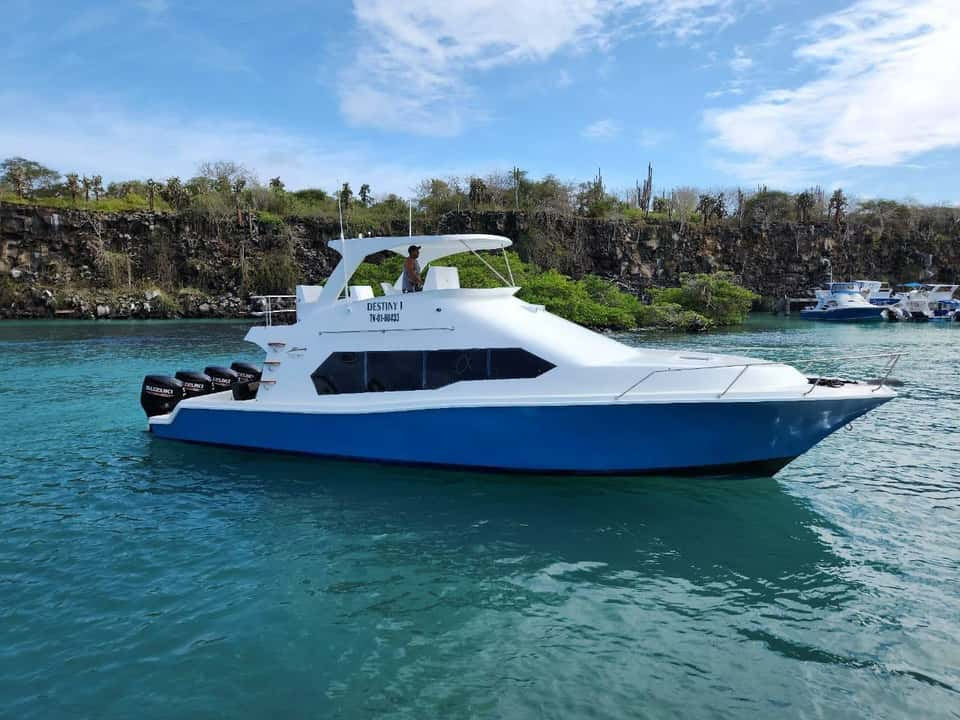
Santa Cruz ↔ Isabela Ferry Transfer
The direct boat between Puerto Ayora and Puerto Villamil. Booking ahead is useful when your Isabela hotel is already arranged and you need to travel on a particular day.
Check the direction, sailing time, luggage allowance and whether the water taxis are included.
Check Isabela Ferry Tickets & Dates →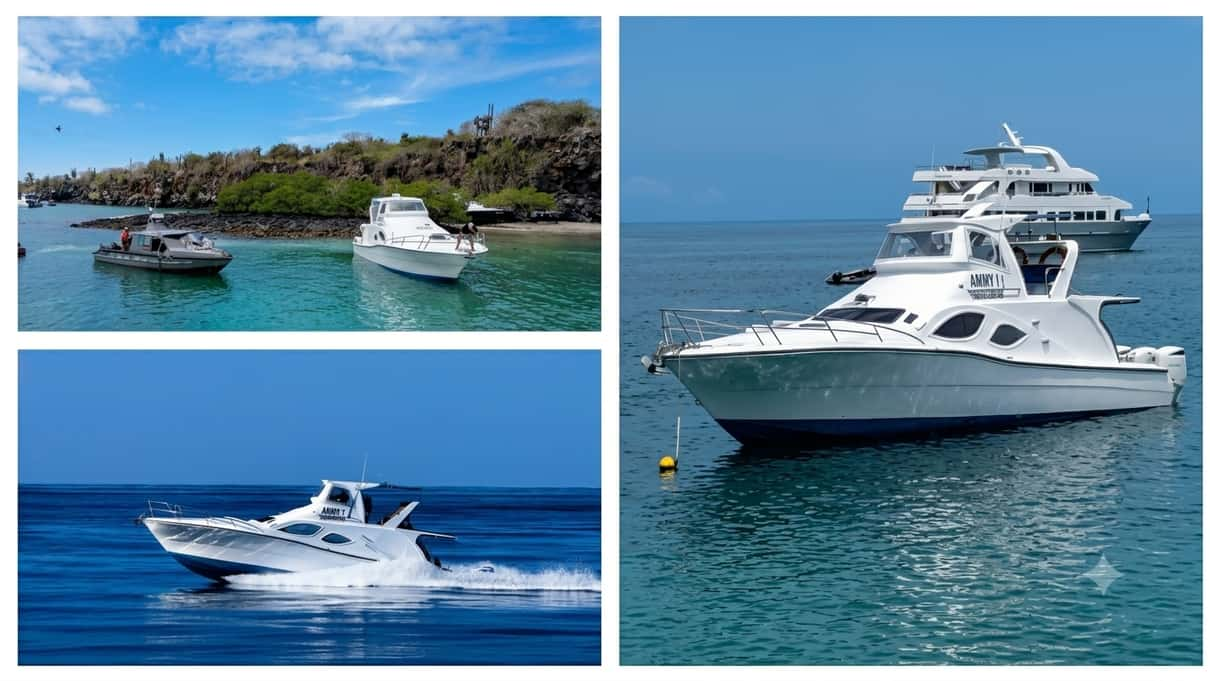
Santa Cruz ↔ San Cristóbal Ferry Transfer
The regular connection between Puerto Ayora and Puerto Baquerizo Moreno. A convenient way to move between Santa Cruz and San Cristóbal without flying.
Choose the correct travel direction and check the operator’s meeting-point instructions.
Check San Cristóbal Ferry Tickets →Book ahead or buy at the port?
You can do either. Ferry tickets are sold by travel agencies around Puerto Ayora’s waterfront, and some operators sell directly online. Local prices can be lower, especially when compared with international resellers. Booking ahead is worth considering if your hotel nights or onward flights leave little room to change plans.
Compare the same date, sailing and direction, rather than assuming the most expensive listing means a better boat. Check the luggage allowance, the operator’s cancellation policy and the arrangements if weather cancels a sailing. Download the confirmation before going to the pier.
The price beyond the ticketGalápagos Ferry Prices: Tickets, Water Taxis and Extra Fees
As of November 2026, the updated published tourist fares are US$50 for regular service and US$65 for special service, per person and one-way crossing. Ecuador introduced the tariff change in August 2026 under Resolution MIT-SPTM-2026-0126-R. Actual listings still vary: La Perla Ferry continues to advertise US$35 on its website, while other booking services list US$50 or more. The National Park’s transport page still shows the older US$30 reference, so check the fare and service type for your specific departure rather than assuming that figure is current.
The boat ticket isn’t the only expense to allow for:
- Ferry fare: per passenger and per direction; check live pricing before paying.
- Water taxis: small cash payments to reach or leave an anchored speedboat, often at both ends.
- Isabela municipal entry fee: operators currently quote US$10 for non-Ecuadorian visitors, collected separately on arrival.
- Extra luggage or operator-specific charges: confirm what your ticket includes, especially if you carry oversized bags.
For example: at the updated US$50 regular-service fare, a return journey between Santa Cruz and Isabela totals US$100 per person, or US$200 for two travelers. At US$65 per leg, the same return costs US$130 per person. Add water taxis at the harbors and Isabela’s local entry charge where applicable. The final total depends on the service and ticket seller.
Compare the total return price, not only the headline single-leg fare. On Isabela, operators also quote a US$10 local arrival fee for foreign visitors, collected separately from the speedboat ticket. Carry small US-dollar notes for that and the water taxis. The local charge is separate from the Galápagos National Park admission fee on arrival in the archipelago.
The $1 surpriseGalápagos Water Taxis: The Extra Ride Before the Ferry
At Puerto Ayora, our ferry was anchored a few hundred meters from the pier. We boarded a small lancha, paid about US$1 and rode out to the speedboat. The same thing happened on Isabela. By the time we came back to Santa Cruz, the short water-taxi ride no longer seemed unusual.
A local jokingly described the extra ride as a way of creating jobs. Whatever the history behind it, the practical reason was clear: the larger boat was offshore rather than alongside the dock. That last little stretch across the harbor is part of the journey, even though it usually isn’t included in the ferry fare.
Carry dollar notes and coins. The US$1 we paid isn’t a fixed price everywhere. Ferry operators now list charges around US$1–1.50 for some harbor transfers, and it’s sensible to have enough change for both embarkation and arrival. Don’t assume you can tap a card for the short ride.

Do you also need a water taxi on San Cristóbal?
Yes, you should allow for one. Operators selling the San Cristóbal–Santa Cruz crossing also list a small water-taxi fee, typically around US$1, when the speedboat is anchored away from the pier. Operator booking instructions confirm that small cash is useful and the exact boarding point should be checked on your voucher.
This is separate from the Itabaca Channel ferry used when traveling between Baltra Airport and Santa Cruz. The airport transfer and the inter-island speedboat are two different journeys.
September taught me thisWhen Is the Sea Calmest for Galápagos Island Hopping?
September gave us a good reminder that Galápagos sea conditions aren’t always gentle. The outbound crossing to Isabela was moderately rough and the return slightly calmer. The sea alone needn’t dictate a Galápagos itinerary, but seasonal conditions deserve attention when choosing travel dates.
According to the Galápagos National Park, conditions are generally more settled from January to June and the swell tends to be stronger from July to December. The cooler garúa season can bring rougher water, particularly around August and September. For the best seasonal odds of a gentler crossing, prioritize February to May.
Those are seasonal tendencies, not a forecast. A September crossing can be smooth and a March crossing can be rough. Morning sailings may be preferable when winds build through the day, but the actual marine forecast and the boat operator’s advice matter more than the month on your calendar.
How to Reduce Seasickness on a Galápagos Speedboat
- Ask a pharmacist or clinician about an appropriate motion-sickness remedy before travel; some medicines cause drowsiness or have contraindications. Follow the product’s timing instructions.
- Eat lightly before boarding and avoid excess alcohol the night before.
- Try for a seat toward the back and near the centerline, where the motion can feel less pronounced. Follow the crew’s seating instructions.
- Look toward the horizon when possible rather than reading or staring at a phone.
- Keep water, a small bag and earplugs in a pocket or daypack you can reach without rummaging through stored luggage.
- Don’t plan a tight flight connection or nonrefundable excursion immediately after a boat crossing.
My main advice is to treat ferry day as a transfer day, not another full sightseeing day. Even a normal crossing can leave you tired, and a late arrival is much less stressful when nothing important is booked for that afternoon.
From the pier to your seatBoarding the Ferry in Puerto Ayora and Puerto Villamil, Step by Step
Boarding isn’t difficult, but there are a few steps before you reach your seat:
- Arrive early: aim to be at the stated meeting point 45–60 minutes before sailing, or earlier if your operator tells you to.
- Show your ticket and ID: confirm which boat you’re on and how luggage will be handled.
- Pass the biosecurity inspection: bags may be checked to prevent seeds, plants, pests and other organisms from spreading between islands. Don’t pack fresh produce to carry between islands without checking the restrictions.
- Pay the harbor transfer if required: small water taxis normally take cash, separate from the ferry voucher.
- Board the larger speedboat: crew members may move heavier bags into a luggage area. Keep essentials, medicines and valuables in a small bag with you.
- Repeat the shore transfer at arrival if required: allow a few minutes to get from the anchored boat to the pier, retrieve bags and reach your hotel.
The luggage inspection matters. The Galápagos islands are unusually vulnerable to introduced pests and plant species, which is why the Galápagos biosecurity authority (ABG) restricts what can move between islands. Check the rules before carrying fresh food, plants or other organic products.

Seven Galápagos Ferry Mistakes Worth Avoiding
1. Assuming every island has a direct boat to every other island
There is no regular direct passenger boat between Isabela and San Cristóbal. Traveling by sea means changing on Santa Cruz, with a ticket for each leg.
2. Treating a two-hour crossing as two hours door to door
A two-hour boat ride can take half a day once you add check-in, baggage inspection, water taxis and the trip from the pier to your hotel.
3. Forgetting small cash for the harbor boats
We had to find the water-taxi money at the pier. Keep a few small US-dollar notes somewhere easy to reach, and bring extra for Isabela’s local arrival charge if you’re going there.
4. Booking a tour for the hour after you arrive
A rough crossing or slower boarding can throw off the afternoon. Avoid expensive, nonrefundable excursions immediately after the ferry. Save outings such as Los Túneles on Isabela or a Bartolomé day trip from Santa Cruz for a full day when you’re already settled.
5. Buying the cheapest ticket without checking the departure
The cheapest fare isn’t much use if it leaves at the wrong time. Check the exact route, date, operator and cancellation terms before paying.
6. Ignoring seasickness because the boat ride looks short
Our September crossing was manageable, but uncomfortable enough that Prepare for motion sickness before boarding rather than waiting for the swell to build.
7. Leaving the return crossing until the day of an important flight
The ferry lands in Puerto Ayora, not at Baltra Airport. From there you still have the drive across Santa Cruz and the Itabaca Channel transfer. With a flight at stake, Return to Santa Cruz the previous day.
Keep ferry day simple: travel between islands, check in, have something to eat and explore nearby if you’re feeling up to it. Save the main wildlife tours for days when you’re already settled on the island.
Galápagos Ferry vs Inter-Island Flight: When Flying Helps
Small inter-island flights are worth comparing if you get badly seasick, have limited time or need to travel between Isabela and San Cristóbal. Airlines such as Emetebe operate on selected routes between island airports, and the flying time is much shorter than traveling by sea.
The trade-off is price, baggage and airport access. These are small aircraft with weight restrictions, and on Santa Cruz the airport is on Baltra, not in Puerto Ayora. Getting there requires a drive across the island and a separate channel crossing. For our Santa Cruz–Isabela journey, the speedboat was still the more practical choice.
If you’re considering a flight, compare the full journey from hotel to hotel, including airport transfers and luggage rules. The National Park’s transport page lists inter-island flights alongside the boats.
What to sort before sailingHotels, Phone Data and the First Night on Each Island
Arrange the first night’s accommodation before fixing ferry dates, particularly for a short stay on Isabela. After a couple of hours on the water, having a hotel ready and knowing how to reach it makes arrival much easier.
Find Hotels on Santa Cruz, Isabela or San Cristóbal
For easy ferry arrivals, start with the port towns of Puerto Ayora, Puerto Villamil and Puerto Baquerizo Moreno. The best location depends on whether the pier or your days exploring matter more. I compare the practical neighborhoods in my Santa Cruz hotel guide and the beach and village options in where to stay on Isabela.
Compare Galápagos Hotels →Mobile data helps with ticket confirmations, messages to your hotel and last-minute changes, but don’t count on reception in the middle of the crossing. Save your voucher, accommodation address and an offline map while you’re still on land. In Puerto Villamil, sandy streets and the distance from the pier can make a seemingly short walk with luggage surprisingly slow; my Isabela accommodation guide explains those trade-offs.
For mobile data on land, you can compare Nomad Ecuador eSIM plans if your phone supports eSIM. Coverage depends on the local network and can be limited away from the main towns.
What to Download Before Boarding the Galápagos Ferry
- Ticket confirmation and operator WhatsApp/phone number
- The exact departure pier and check-in time
- Hotel address, contact number and offline map
- Small cash for water taxis and local arrival charges
- Motion-sickness supplies, water and earplugs
- Time to spare before the next nonrefundable booking
Galápagos Ferry FAQ
How long is the ferry from Santa Cruz to Isabela?
Allow two to three hours on the water. Around two to two-and-a-half hours is common, but larger swells can slow the boat. Add check-in, water taxis and the transfer to your hotel.
How much is the Galápagos ferry in late 2026?
Under the August 2026 tariff update, published tourist rates are US$50 per one-way regular-service trip and US$65 for special service. Some operators still advertise lower prices, so check the actual sailing, service category and final checkout amount. Water taxis and Isabela’s local arrival charge are separate.
Are Galápagos ferry crossings rough?
Yes. The boats cross open water, and the ride can be bumpy, particularly during the cooler, windier months. Our September trip to Isabela was moderately rough; the return was a bit smoother.
Which months are best for a calmer Galápagos ferry crossing?
The National Park says January to June generally has calmer sea conditions than July to December. February to May offers better seasonal odds for a calmer crossing, although no month guarantees smooth water.
Can I take a direct ferry from Isabela to San Cristóbal?
No regular direct passenger service connects those two islands. You normally travel through Santa Cruz, with a morning ferry and an afternoon onward boat when the schedules line up. You’ll need two paid legs.
Do I have to pay for a water taxi at the ferry pier?
Usually. Passenger speedboats often anchor offshore, so a small water taxi takes you out from the pier. We paid about US$1 on Santa Cruz and Isabela. Some operators now list around US$1–1.50 per ride, so bring small cash for each harbor transfer.
Is there a water taxi in San Cristóbal?
Yes, it can be part of the trip. San Cristóbal–Santa Cruz ferry operators list a separate water-taxi transfer of around US$1 when boats are anchored offshore. Confirm the exact boarding arrangement with your operator. I didn’t personally make this crossing.
Should I book Galápagos ferry tickets in advance?
For fixed travel dates, yes. Tickets are also sold locally near the waterfront, sometimes at lower prices. Either way, compare the same departure time, baggage allowance and cancellation terms.
Can I take luggage on the inter-island speedboats?
Yes. Ordinary suitcases are carried, but space is limited and allowances vary by operator. Some services include a checked bag of around 20–23 kg plus a smaller bag. Ask ahead if you’re carrying extra luggage or large equipment.
Does the Santa Cruz ferry leave from Baltra Airport?
No. Ferries to Isabela and San Cristóbal leave from Puerto Ayora on Santa Cruz, not Baltra Airport. From Baltra you first cross the Itabaca Channel, then travel by road to Puerto Ayora. Allow for those transfers when arriving by air or connecting to a mainland flight.
Can I catch a mainland flight immediately after the ferry?
Avoid a tight same-day connection. A ferry arriving in Puerto Ayora leaves you an additional trip across Santa Cruz and the Itabaca Channel before you reach Baltra Airport. Delays at sea can easily make a same-day flight connection stressful.
The Ferry Was Worth It—With a Few Changes Next Time
Isabela was worth the crossing, even with the swell and the noise. Next time, the water-taxi cash and earplugs go straight into my daypack, and the arrival afternoon stays free. February to May also offers better odds of calmer water than our September journey.
The boats aren’t luxurious, but they do the job. Once you know to expect a noisy crossing, small harbor transfers and the possibility of rough water, it’s much easier to plan around them—and enjoy the islands when you arrive.
For the wider trip, my two-week Ecuador itinerary follows the journey from Quito and Yasuní to the Galápagos. My Galápagos cruise vs land-based guide compares two very different ways to travel, while my Santa Cruz day-tour guide helps with the excursions best saved for a full day on the island.
Last Updated on 21/11/2026 by Panos


