


4 or 5 Days in Yasuní? My Amazon Lodge Experience
Five days at a community-run rainforest lodge took me from misty canopy towers to macaw clay licks and silent blackwater creeks. Here is how much of that experience fits into four days—and when a fifth is worth it.
On my first afternoon in Yasuní, I walked past the school in the Kichwa Añangu community and spotted a sloth feeding in a tree. Not long afterward, I was climbing a watchtower above the rainforest canopy, looking out across an enormous stretch of green while toucans and monkeys moved through the trees below.
I had wanted to visit the Amazon for years, but I wasn’t prepared for how much I would enjoy the small moments: a misty river at dawn, the sound of insects after dark, a narrow creek where branches almost meet overhead, and the silence of waiting for a flock of macaws to land at a clay lick.
I spent five days and four nights at Napo Cultural Center, the community-run lodge now also marketed as Yasuní Ecolodge. This is the journey I took—not a brochure itinerary—with practical advice for choosing a four-day or five-day Yasuní Amazon lodge trip. The important difference is not just one more hotel night: it is how much time remains in the forest after the flights and boat transfers.
Affiliate disclosure: This guide includes booking links. If you book through one, I may earn a commission at no additional cost to you. The featured four-day tour is an alternative booking option, not the five-day package I personally took.
Is a 4–5 Day Yasuní Lodge Trip Worth It?
Yes, particularly if you love wildlife, forests and learning about local cultures. My five days in Yasuní remain one of my favorite travel experiences. The community-run lodge combined the wildlife excursions I had come for with comfortable accommodation and meaningful contact with the community running the lodge.
Four days is a good minimum; five days gives you more breathing room. One extra night matters when you want time for forest walks, canoe outings, canopy towers, clay licks and cultural activities without packing everything into a short stay. Neither length guarantees sightings of rare animals, but both are long enough to experience much more than a quick jungle excursion.
5 days / 4 nights
Yasuní Ecolodge / Napo Cultural Center
Quito → Coca → Napo River
Flight, dock transfer and canoe
2 full activity days
Plus arrival and departure
3 full activity days
More time between excursions
Inside Yasuní Ecolodge, Formerly Napo Cultural Center
Yasuní is one of the most biologically rich corners of the Amazon basin. The wider UNESCO Yasuní Biosphere Reserve includes lowland rainforest, waterways and Indigenous territories. A short visit can only reveal a fraction of that biodiversity, which makes choosing where to stay important.
I chose Napo Cultural Center—now also known as Yasuní Ecolodge—because it is run by the Kichwa Añangu community, not simply because it was a convenient base for wildlife tours. The community also runs the more secluded, upscale Napo Wildlife Center, which is a different property. I liked staying somewhere residents are directly involved in hosting visitors, guiding excursions and deciding how tourism supports the community.
On a walk through Añangu I saw elevated wooden houses, gardens, livestock and solar panels. Our visit also included a chance to meet residents, learn about cultural traditions and see community projects. That gave the experience a dimension that would have been missing if I had spent all five days moving between a lodge room and a boat.
The lodge itself was comfortable, but the surroundings were unmistakably Amazonian. The first time I looked out from the watchtower, I understood why people travel such a long way to reach this part of Ecuador.

One important naming detail: Yasuní Ecolodge (formerly Napo Cultural Center) and Napo Wildlife Center are two different lodges run by the Kichwa Añangu community. I stayed at the former. Their locations, itineraries, cabin types and prices are not interchangeable.
What I Did During Five Days in Yasuní
This is how my trip unfolded, not a timetable that every visitor should expect to follow. Activity order depends on your package, weather, river conditions and what the guides think offers the best chance of seeing wildlife. The lodge’s current four-day and five-day itineraries cover many of the same highlights but may arrange them differently.
Leaving Quito and Entering the Amazon
A short flight, a long river journey, and a sloth before the first afternoon was over.
I left Quito early and flew to Puerto Francisco de Orellana, better known as Coca. The flight was short, but arriving in Coca felt like a different world. From the town we continued by motorized canoe down the broad Napo River, with dense forest stretching along the banks. The boat journey was already part of the experience, not merely transport.
Near Añangu we left the main river, then walked roughly 15–20 minutes past the edge of the community to the lodge. I remember houses raised above the ground, gardens and the surprise of seeing solar panels in such a remote place. We were welcomed with a cool guayusa drink, made from a plant that has an important place in Amazonian Kichwa culture.
We had barely started our first forest walk when we saw a sloth in a tree near the community school. Then the trail led onto an elevated wooden walkway over damp ground. The forest was loud with birds and insects; there was no need to travel far from the village to feel completely surrounded by it.
After around 15 minutes of walking, we reached a watchtower built beside a huge tree. We climbed to roughly 30 meters above the forest floor and spent time scanning the canopy. Monkeys, toucans and other birds were moving in the treetops, with rainforest extending for kilometers in every direction. That first view is still one of my strongest memories of Ecuador.


Walking Through the Forest Above a Misty Napo River
Rain during the night, a riverbank departure at dawn and a second view over the treetops.
We were up early again. Heavy rain had fallen overnight, and the river and forest were still partly covered in mist. After breakfast, we walked across a sandbank to our boat and traveled farther downstream. From a small landing, we followed a forest trail to another observation tower, this one on higher ground.
We stayed for a long time, using binoculars to search the treetops. On days like this, the dramatic view is only half the pleasure. You learn to look slowly, listen carefully and follow the movements that a guide spots long before you do.
Back on the trails, I was fascinated by the vegetation as much as the wildlife: huge trunks, roots spreading out like stilts, fungi and plants growing almost everywhere. Some palms are nicknamed “walking trees” because of their conspicuous stilt roots, though that doesn’t mean they literally roam around the forest.
In the afternoon, we walked through the Añangu community. I had imagined that the village would be much quieter for wildlife than the forest, but monkeys and birds appeared around the houses and trees too. We finished the day with the light fading over the Napo River and another excellent meal at the lodge.


Silent Canoes, Hoatzins and a Tarantula After Dark
The contrast between the busy Napo River and the narrow blackwater creek was extraordinary.
We took a motorboat along the Napo River to the entrance of Añangu Creek, which leads toward Añangu Lake. The creek was too shallow for our larger powered boat, so we changed to a smaller canoe and continued by paddle. The journey took roughly two hours in each direction and covered around five kilometers one way.
The water was dark, and in places the branches on opposite banks almost met overhead. Without the constant engine noise, I could hear movement in the trees and calls from birds hidden in the vegetation. We saw monkeys, birds and caimans, sometimes at surprisingly close range.
My favorite bird that day was the hoatzin. Its unruly crest, unusual call and almost prehistoric appearance make it hard to forget. We watched hoatzins perched near the creek while our canoe moved slowly past.
That evening, after dinner and a rest, we headed into the forest with our guide. The atmosphere changed completely after sunset. Our first memorable encounter was a large tarantula on a tree trunk. Farther along we spotted a green iguana resting on a branch and a slender green snake among the leaves. We kept our distance and let the animals be. Darkness revealed a completely different side of the jungle.


Macaws at the Clay Lick — My Favorite Morning in Yasuní
Three hours watching brilliantly colored birds, followed by an afternoon with the Añangu community.
We left early for one of the excursions I had most looked forward to: the parrot clay licks. First we approached an exposed riverbank where brightly colored parrots began arriving. At first the area was almost empty. Then a few birds landed, more joined them, and suddenly the riverbank was alive with movement and noise.
We continued downstream and walked into the forest to a second mineral-rich site beside a small pool. This was where we waited for the macaws. For a while, nothing much happened. Then large red macaws appeared in the trees and descended toward the ground and water. Watching them behave naturally was far better than any wildlife display.
The birds visit these sites to consume mineral-rich clay or water. Scientists have explored both mineral supplementation and detoxification as explanations; evidence varies by species and setting, so it is more accurate to say the behavior is biologically important than to pretend there is one settled explanation for every parrot.
Across the two viewing areas, we spent around three hours simply watching birds. Our guides also explained that predator activity can disturb a clay lick and temporarily keep birds away. Good sightings are never guaranteed; on our morning, we were fortunate.
Later, we visited the community’s cultural center, where Añangu women shared traditions, crafts and local foods. I tried roasted cacao, heart of palm and chontacuro larvae cooked on skewers. The larvae tasted buttery and a little like pumpkin seeds. Not everyone in our group wanted to try them, which I completely understood! We were also encouraged to join in the dancing; I was considerably better at eating than dancing.
This blend of biodiversity and local life was one of the reasons I was so happy with my choice of lodge. We were learning about a place from people who know and live in it, not only from a visiting guidebook description.


Leaving the Amazon Was Harder Than Arriving
An optional dawn ritual and the return journey along the Napo River.
The lodge offered an optional wayusada ceremony starting around 4:30 a.m. This traditional early-morning practice involves guayusa, songs and the passing on of knowledge within Kichwa culture. Ask your guide the night before whether the ceremony is offered during your stay and how visitors can take part respectfully.
After our last breakfast, we traveled back by boat to Coca and flew to Quito. By that point, the contrast with the city was striking. Five days earlier I had been looking forward to my first proper Amazon experience; now I was already thinking about when I could return.
Could I have stayed longer? Easily. But five days felt substantial: enough time for different habitats, excellent birdwatching, daytime and nighttime wildlife, and time in the community without feeling that I was constantly packing and moving on.
Wildlife in Yasuní: Think Birds, Monkeys and the Small Details
Yasuní is famous for its biodiversity, but that does not mean a jaguar or giant otter will conveniently walk past every visitor. My most memorable encounters included a sloth, monkeys, hoatzins, macaws, parrots, toucans, a tiny kingfisher, caimans, snakes and a tarantula. The landscapes and sounds were just as important as the species list.
For birdwatching, the towers and clay licks were exceptional. I photographed toucans and aracaris in the treetops, colorful parrots at the clay licks and an American pygmy kingfisher. Several of these birds would have been difficult to pick out without the guides’ experience. Binoculars are worth bringing even if you are not a dedicated birder.
You’ll hear about jaguars, tapirs, giant otters and many other rare species associated with the region. They live in the wider ecosystem, but seeing them is far from certain on a four- or five-day lodge visit. I would book this trip for the extraordinary range of habitats and opportunities to observe wildlife, not for a guarantee of one famous mammal.


A photography tip: Take a telephoto lens if you have one, and carry binoculars even if you mostly shoot with your phone. Many animals stay high in the canopy. The best moment is often when your guide spots something you would have walked straight past.
Four Days or Five Days in Yasuní: Which Is Better?
I spent five days and that extra night mattered. But a 4-day/3-night Yasuní Amazon tour still works well when the rainforest is one part of a larger Ecuador trip. The key is to compare full wildlife days, not just calendar days.
| 4 days / 3 nights | 5 days / 4 nights | |
|---|---|---|
| Good for | Travelers with limited time | Wildlife lovers who can spare one more night |
| Time at lodge | Arrival day, two main activity days, departure morning | Arrival day, three main activity days, departure morning |
| What to prioritize | Clay lick, forest walk, canoe excursion, community visit | Those highlights plus more time for towers, wildlife and quieter moments |
| Trade-off | A fuller schedule; less flexibility | Higher package cost and an extra day away from other Ecuador stops |
| My choice | A worthwhile minimum | The duration I chose |
The crucial difference is that arrival and departure occupy parts of two days. A four-day stay typically leaves two full days for guided activities; five days usually gives you three. That is a 50% increase in full activity days, not merely another night in the cabin. Five days makes more sense for birdwatching, photography and the pleasure of waiting quietly for wildlife; four days remains a strong option for a two-week Ecuador itinerary that also includes the Andes and Galápagos.
Four days can still cover the principal highlights at Napo Cultural Center. The lodge’s published four-day Ancestral Tour includes forest activities, clay licks and community experiences, but the order and selection of outings depend on the program you book.
I counted time on the trails the same way in Costa Rica. On my Sirena day trip in Corcovado, the boat took up a good part of the day. That’s one reason an overnight at Sirena can be worth considering if you want more time in the forest.
Book the rainforest experience, not just the lodgeFour-Day Yasuní Tour or Five-Day Lodge Stay: How to Book
For a shorter visit, an organized Amazon tour can simplify the river transfers, accommodation, guiding and excursions. The important question is which lodge and transfer arrangements the booking actually includes; the four-day option below is not necessarily the same property as my five-day stay.
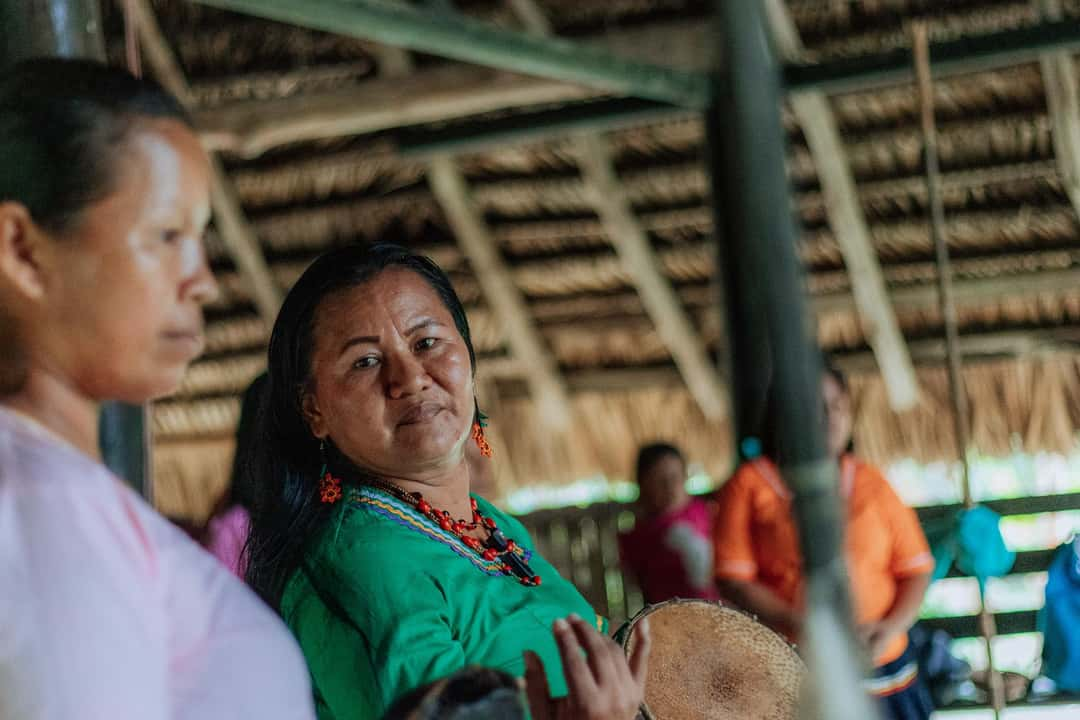
From Quito: Shared 4-Day Amazon Nature & Kichwa Culture Tour
A convenient option for fitting rainforest excursions and local cultural experiences into a four-day Ecuador itinerary. Check availability for your dates and review the included transfers and accommodation before confirming.
Important: This four-day listing is not the five-day stay I personally took. Check the current provider, lodge name, room type, activities and whether Quito–Coca flights are included on the listing.
See the 4-Day Amazon Tour & Availability →
Compare Flights From Quito to Coca
The flight between Quito (UIO) and Coca (OCC) is a short hop across the Andes. If your jungle lodge booking does not include flights, compare options before choosing the lodge arrival date.
Ask the lodge which flight times connect with its scheduled canoe transfer. A cheaper flight is no bargain if it arrives too late for the boat.
Don’t buy separate flights until you’ve confirmed whether your lodge or tour operator already arranges them. Some “from Quito” packages include more services than others.
Check Quito–Coca Flights →For a 5-day/4-night stay at the lodge I used, Yasuní Ecolodge / Napo Cultural Center advertises its longer program on the official tour page. Compare duration and inclusions before choosing rather than assuming different websites sell identical itineraries.
The day-to-day realityWhat the Amazon Jungle Lodge Was Like
There are rustic Amazon lodges and there are very comfortable ones. Napo Cultural Center felt comfortable without losing the sense of being in the rainforest. The cabins were surrounded by vegetation, meals were genuinely enjoyable and we regularly returned to fresh juice and good food after morning excursions. The guides were central to the experience: their knowledge turned slow walks and long waits into opportunities to understand what we were seeing.
Rooms, meals and Wi-Fi
I liked having a pleasant room to return to after hours in the heat and humidity. This wasn’t a survival exercise. The combination of excursions, proper meals and comfortable accommodation made it possible to keep going for several days without feeling worn out.
Mobile phone reception at the lodge was effectively nonexistent during my stay, so an Ecuador eSIM would not have solved connectivity deep in the forest. It can still be useful in Quito, Coca and other parts of Ecuador. We did have good internet access at the lodge itself. Current package descriptions sometimes list internet as a separate charge, so confirm the arrangement rather than assume Wi-Fi is included in every room rate.
Early starts, humidity and wet trails
A typical day started early because that is when birds and other animals are often most active. There were boat journeys, walking trails, tower climbs and periods of waiting quietly for wildlife. Tropical rain was part of the experience; on one morning the forest was still shrouded in mist after a heavy night shower.
Rubber boots and rain ponchos are generally provided under the lodge’s standard program, which saves packing space. Even so, bring clothes that dry relatively quickly. The humidity will find its way into everything eventually.
What community-run tourism added
For me, the community experience was not an optional extra tacked onto a wildlife trip. Walking through Añangu, seeing how people live, learning about traditions and tasting locally prepared foods all added substance to the stay. I particularly appreciated knowing that tourism is an important part of how the community supports employment and local projects.
These encounters are organized for visitors, of course, and they are not the same as living in the community. But I found them warm, interesting and much more rewarding than spending the whole trip isolated inside the lodge grounds.
Planes, road transfers and motorized canoesHow to Get to a Yasuní Lodge From Quito
For most travelers staying at Napo Cultural Center, Coca is the gateway to the rainforest. The usual route is Quito → Coca by domestic flight, followed by a short road transfer to the departure dock and a motorized canoe down the Napo River.
- Fly from Quito to Coca. Direct flights generally take around 35–40 minutes. Routes and departure times change, so line up flights with the lodge’s boat schedule before booking.
- Meet the lodge representative. Your tour usually includes arrangements for the transfer from Coca to the dock, although exact flight and airport-assistance inclusions vary.
- Travel down the Napo River. The covered boat transfer to Napo Cultural Center is generally around two hours, subject to river conditions and the lodge’s arrangements. This was one of my favorite parts of arriving.
- Settle in and join your first activity. Depending on arrival time, you may have an afternoon forest walk, community visit or watchtower excursion.

Do not assume that the phrase “from Quito” on a tour listing automatically includes a return flight. The lodge’s own package description normally treats Quito–Coca air tickets as an additional expense, even when river transport, meals and guided activities are covered. Check your booking conditions line by line.
How to Fit Yasuní Between Quito and the Galápagos
Quito → Coca → Yasuní → Quito → Galápagos is a natural sequence for an Ecuador itinerary, but the Amazon is not a day-trip detour. Protect four or five consecutive days for the lodge, and use Quito as the connection point for onward flights.
Keep the Amazon to four days if the Galápagos and Andes are equally important. My Ecuador itinerary shows how the regions fit together.
Give Yasuní five days, then use my Galápagos island-hopping itineraries to decide where the remaining nights belong.
Decide whether day tours from Santa Cruz provide the wildlife experiences you want, rather than assuming you need a cruise.
In case you are still comparing the two Amazon regions, my Yasuní vs Cuyabeno comparison explains how the wildlife outings, travel time and costs differ.
Connection advice: Leave room for delays on the Coca flight and the river transfer; a same-day, separately ticketed international or Galápagos flight is an unnecessary gamble.
What Does a Yasuní Amazon Lodge Trip Really Cost?
Yasuní lodge prices vary with room category, number of nights, occupancy and whether you book directly or through an operator. For a realistic comparison, look at the total cost from Quito to the lodge and back, not just the headline price per person. A four-day package can be excellent value, but an extra night may deliver considerably more time in the forest.
| Cost component | Common arrangement | What to confirm |
|---|---|---|
| Lodge, meals and guides | Often included in the lodge program | Cabin category, number of nights, meals and guided activities |
| Coca–lodge river transfer | Usually included | Dock pickup, the boat’s departure time and return connection |
| Quito–Coca flights | Frequently an extra cost | Whether flights and airport assistance are bundled |
| Entrance and specialist activities | Many scheduled activities are included | Clay licks, community visits, equipment and any optional outings |
| Personal extras | Often excluded | Drinks, tips, insurance, laundry and internet access |
What you are paying for: The boat journey, community and naturalist guides, excursions into different habitats, lodge staff, food and the infrastructure needed to stay deep in the forest. The best value is a program that leaves enough time for those experiences without cutting essential transport or activities.
The lodge lists its core inclusions and exclusions on the five-day program page. You can also compare its package descriptions, but request a quote for your actual departure dates rather than relying on a cached price table.
Four days or five: where the extra money goes
With four days, you normally get two full activity days between arrival and departure. Five days usually gives you three. Rather than treating the fifth day as a luxury upgrade, think of it as a full extra day of guided wildlife time—especially valuable for a second forest habitat or an outing that could be affected by rain.
Check the total package, including flights and cancellation terms, before paying. A cheaper-looking tour can become more expensive when essential transfers or meals have been excluded.
Practical things that matterWhat to Pack and When to Visit Yasuní
Best time to visit Yasuní
Yasuní is hot, humid and rainy throughout the year. There isn’t a reliably dry season like the one many travelers imagine when planning a safari. August and early September can be relatively less rainy in parts of the Ecuadorian Amazon, but our own trip included heavy overnight rain and thick morning fog. I would choose your dates around the overall Ecuador journey and lodge availability rather than postpone a visit in search of guaranteed sunshine.

Wildlife, weather and realistic expectations
Rain changes what you see and how you travel. Some animals become easier to spot; others vanish into thick vegetation. A clay lick can be quiet for hours and then suddenly fill with birds. You need patience, and a good guide is more valuable than an overambitious checklist of species.

Health precautions for a lowland Amazon trip
Check travel-health guidance well before departure, particularly for yellow fever vaccination, mosquito protection and malaria prevention. The CDC’s Ecuador travel guidance lists specific precautions for low-elevation areas east of the Andes, including Orellana Province. Recommendations depend on your medical history and itinerary; discuss them with a travel-health professional rather than relying on advice from a lodge review.
What to pack for the Amazon
- Lightweight long sleeves and trousers for trails and evenings
- Insect repellent and sunscreen suitable for tropical conditions
- A waterproof bag for phone, camera and documents
- Binoculars and, if available, a telephoto camera lens
- Comfortable shoes plus socks for the lodge-provided rubber boots
- Personal medication and any travel-health supplies advised by your clinician
- A headlamp for nighttime walks and power for your camera
- Some US-dollar cash for tips, crafts and small purchases
I’d also download any important documents and contacts before leaving Coca. Good Wi-Fi at the lodge does not mean you’ll have mobile signal on the river or in the forest.
Why the place matters beyond tourismWhy Conservation and Community Tourism Matter Here
One reason Yasuní moved me was the sense of how much life exists in a relatively small area. The conservation pressures are real: Ecuadorian voters backed ending oil extraction in Block 43-ITT, a particular oil block within Yasuní, rather than imposing a nationwide ban on drilling.
What happens after a vote is complicated, and protecting the rainforest remains an ongoing challenge. Visitors need not master Ecuadorian energy policy to appreciate why local stewardship and responsible tourism matter here. Ecuador’s Constitutional Court explains the underlying referendum.
Staying with a community-run lodge gave my visit a more personal dimension. Tourism alone will not decide the future of Yasuní, but supporting responsible local operators and respecting the environment are worthwhile choices.

Yasuní Amazon Lodge FAQs
Are four days enough for Yasuní National Park?
Four days and three nights are enough for a worthwhile first experience if your package includes the principal rainforest excursions. Remember that arrival and departure take up part of two days. I stayed five days and appreciated having three full activity days.
How much does a Yasuní Amazon lodge tour cost?
The total depends on the lodge, room category, trip length and whether your Quito–Coca flight is part of the package. Compare the total quote, including river transfers, guides, meals, activities and any single supplement, rather than relying on the headline lodge rate.
How do you reach Napo Cultural Center from Quito?
Usually fly from Quito to Coca, meet the lodge’s representative, then travel roughly two hours by covered motorized canoe down the Napo River. The lodge organizes the river leg; confirm the flights and airport transfer are included in your own package.
Is Yasuní Ecolodge the same as Napo Cultural Center?
Yes. The lodge I visited under the name Napo Cultural Center is also marketed as Yasuní Ecolodge. Do not confuse it with the separate Napo Wildlife Center, which is another community-run property with different accommodation and excursions.
Can I visit Yasuní from Quito without joining a group?
Yes. Arrange a lodge package and its transfers directly; the guide, boat and scheduled activities are still organized locally. Confirm Quito–Coca flights and the shared departure boat before buying separate tickets.
Which animals did you see in Yasuní?
Among my highlights were a sloth, monkeys, hoatzins, macaws, parrots, toucans, an American pygmy kingfisher, caimans, snakes and a tarantula. Wildlife sightings are unpredictable; don’t book solely for the chance of seeing a jaguar.
Is there Wi-Fi or mobile reception in the jungle?
During my stay, mobile reception at the lodge was effectively zero, but the lodge’s internet connection worked well. Current packages may charge extra for internet. Download essential documents and check connectivity arrangements before you go.
Are meals and excursions included in a Yasuní lodge package?
At Napo Cultural Center, the published lodge program generally includes meals, lodging, river transfers from Coca, guides and scheduled activities. Quito–Coca air tickets and personal extras may cost more. Other operators can structure their packages differently.
When is the best time to visit Yasuní?
The rainforest is warm and wet year-round, with fluctuating rainfall and no guaranteed dry window. August and September can be relatively less wet, but heavy showers still occur. Choose dates based on your overall Ecuador itinerary and accept that rain is part of the Amazon experience.
Is visiting a parrot clay lick guaranteed to produce sightings?
No. Clay licks are natural wildlife sites. Weather, animal behavior and predator activity affect whether birds appear and how many. I was lucky to watch macaws and parrots for around three hours, but quiet mornings also happen.
Can I combine Yasuní with Quito and the Galápagos?
Yes. The rainforest works well as a multi-day stop in a broader Ecuador trip. Keep a sensible connection margin in Quito between independently booked flights. My separate Ecuador itineraries cover the countrywide routing in detail.
Five Days Gave Me the Amazon Experience I’d Hoped For
I’ve traveled through plenty of remarkable landscapes, but those five days in Yasuní have stayed with me. The sloth near the school, the first view across the treetops, the quiet canoe ride on Añangu Creek and the arrival of the macaws are memories I still think about. The Kichwa Añangu community and the people who guided us through the forest made the experience much richer than simply staying in a nice lodge surrounded by greenery.
If I were planning the same trip again, I’d choose five days if the budget and time allowed. Four days would still be well worth it, especially as part of a longer Ecuador itinerary. Either way, go for the entire experience—wildlife, river journeys, community encounters, early mornings and all—not for a checklist of animals you expect to see.
Yasuní fits naturally between the Andes and the Galápagos in my two- and three-week Ecuador itinerary. If you continue to the islands, start with my 7-, 10- and 14-day Galápagos itineraries, then compare cruise versus land-based travel. For an independent trip, Santa Cruz, Isabela or San Cristóbal is the next big decision, followed by where to stay on Santa Cruz.
Ready for the rainforest? The shared four-day Amazon nature and Kichwa culture tour from Quito is a convenient place to compare dates and booking conditions. For a five-day stay like mine, compare it with Napo Cultural Center’s longer program before you decide.

Last Updated on 17/11/2026 by Panos


