

Ithaca Greece Travel Guide: How the Island Works Best
The home of Odysseus is easier to plan once you stop treating it as one tiny island and start thinking in four pieces: Vathy and the south, the northern harbors, the mountain spine, and the coastline you often understand better from a boat.
Most Ithaca Greece travel guides begin with Homer. I understand why — you cannot separate Ithaca from the Odyssey — but the thing that surprised me most when traveling around the island was much more practical: Ithaca looks compact on a map and feels considerably larger once you start driving it.
Vathy and Kioni are not interchangeable bases. Northern beaches do not naturally fit into a south-Ithaca day. Several beautiful coves are easier by boat than by road. And some of the places routinely presented online as “Homeric sights” are archaeological hypotheses, traditional identifications, or sites you cannot currently enter at all.
I am Greek and have traveled extensively around Greece, including Ithaca itself. The photographs in this guide include places I visited, archaeological material I saw and meals I ate on the island. I have also rechecked practical information against current municipal and national tourism sources rather than simply repeating older travel-guide claims.
That combination — first-hand travel plus a more skeptical look at access, geography and archaeology — is how I would plan Ithaca today.
Updated and fact-checked October 2026.

What I would know before planning Ithaca
Give Ithaca at least three full days; five is much better if you like hiking, boats or archaeology. I would stay in Vathy for the easiest first trip, rent a car if I wanted to explore independently, group the north into one or two dedicated days, and keep at least one day for the sea.
And I would treat Homer as context rather than turning every landscape feature into archaeological proof.
Ithaca is small, but it is not one travel zone
The island is better understood geographically than as a list of “must-see” attractions.
Vathy & the south
Harbor life, museums, Filiatro, Sarakiniko, Perachori, southern walks and the easiest access to many boat excursions.
The northern harbors
Stavros, Polis, Frikes, Kioni, Platrithias, Afales and the island’s strongest concentration of archaeological context.
The mountain spine
Anogi, Exogi, Kathara and old walking routes connecting upland Ithaca to the northern coast.
Ithaca from the sea
Gidaki, hidden coves and parts of the east coast make much more sense by boat than through repeated road detours.
The roads themselves are generally good, but they wind around steep terrain. That is why the island’s dimensions are deceptive. My own accommodation guide goes much deeper into how choosing Vathy, Kioni or Stavros changes your days: where to stay in Ithaca .
Do not drive Vathy → Kioni → south beach → Stavros → Vathy because everything looks close on Google Maps. Give the south, north and mountain interior their own blocks of time and let the boat cover coastline that is awkward overland.
A very short history of Ithaca
Ithaca’s human history reaches well beyond the literary fame of the Odyssey. Archaeological finds show occupation from prehistoric and Mycenaean periods, while later remains document continued settlement through Classical, Hellenistic and Roman times.
The island later passed through Byzantine, Norman and Venetian spheres. Venetian rule brought a period of greater stability after centuries in which raids and depopulation had repeatedly disrupted life in the Ionian.
In the 19th century, Ithaca formed part of the British-protected United States of the Ionian Islands before the islands united with Greece in 1864.
The catastrophic Ionian earthquake of 1953 reshaped much of the built environment, particularly around settlements such as Vathy. The island you see today is therefore a mixture of older settlement patterns, rebuilding and remarkably persistent village life.

Getting to Ithaca: plan the arrival, not just the crossing
Ithaca has no airport. Most international visitors therefore arrive through Kefalonia, Lefkada or mainland Greece and complete the journey by ferry.
The important detail is that a ferry ticket saying “Ithaca” does not necessarily mean you step off in Vathy. Pisaetos is a functional ferry port on the west side of the island. Frikes also handles seasonal services in the north.
If you are traveling without a car, I would arrange your onward transfer rather than assuming you can improvise at the dock in peak season.
Kefalonia to Ithaca
Kefalonia is the easiest air gateway for many visitors. Services commonly connect Sami and Ithaca’s Pisaetos port, with routes and frequency varying by season.

Check current ferry schedules
Compare live departure times and ferry operators before locking your flight and hotel sequence.
Search Kefalonia–Ithaca ferries
Ithaca to Astakos ferry
Astakos is especially useful if the island is part of a mainland road trip rather than a fly-in/fly-out Ionian vacation.
Search Ithaca–Astakos ferriesFerryhopper links are affiliate links. Schedules change seasonally, so I would always confirm the exact arrival port and current sailing before arranging a connection.
Lefkada and northern Ithaca
Seasonal services can connect Lefkada with Frikes or Pisaetos. Frikes is particularly convenient if your accommodation is around northern Ithaca, while Pisaetos works better for Vathy and the south.
Astakos and mainland Greece
Astakos is the mainland route I would look at first if I were driving through western Greece. It avoids forcing the trip through an airport island and can connect naturally with a longer road itinerary.
South Ithaca: Vathy, easy beaches and the practical side of the island
Vathy is the capital, largest settlement and the easiest logistical base on a first trip. It wraps around a deep natural harbor and gives you the largest choice of restaurants, everyday services and boat departures.
I would not mistake practical for boring. Vathy is where Ithaca feels most like a lived-in island rather than a succession of scenic stops.
Dexia: easy swimming with Homeric tradition attached
Dexia is close to Vathy and traditionally associated with the harbor where Odysseus returned home. Whether you accept the literary identification or not, it is an easy place to combine swimming with the island’s Homeric narrative.

Filiatro: the simplest proper beach day near Vathy
Filiatro is easy to reach by road and has enough facilities to work when you want a straightforward swim without hiking, boat logistics or a long detour.
Sarakiniko: quieter and less structured
Sarakiniko is the sort of place I would choose when I wanted a natural swim rather than facilities. It is calmer in character than Filiatro and works well as part of an easy southern day.
Perachori: south Ithaca above the sea
Perachori changes the perspective completely. Above Vathy, it is associated with vineyards, old paths and access toward Paliochora, Ithaca’s medieval settlement ruins.
This is one of the places I would add when the trip needs a break from harbor villages and swimming.
North Ithaca: Stavros, Polis, Frikes and Kioni
Northern Ithaca has enough substance that I would not treat Kioni as a quick photo stop from Vathy.
The north combines the island’s strongest concentration of archaeological context with its most photogenic harbor villages and some of its wildest coastline.
Stavros: the useful northern hub
Stavros is where I would begin if archaeology matters. The Archaeological Collection of Stavros gathers important material from northern Ithaca, including finds associated with Pilikata and Loizos Cave.
It is more useful for understanding the island’s ancient history than simply driving to every place carrying an Odyssean name.
Polis Bay: swimming beside real archaeological context
Polis works well because the Homeric discussion here is not merely a modern tourism label. Nearby Loizos Cave produced cult material spanning long periods of antiquity, including evidence connected to the veneration of Odysseus.
Frikes: a working little harbor rather than a showpiece
Frikes is small, practical and strongly connected to the sea. It also works as a gateway to northern beaches and seasonal ferry connections.
Kioni: the village I would save for late afternoon and dinner
Kioni is the most obviously romantic settlement on Ithaca. Houses fall toward a sheltered harbor, yachts fill the waterfront in summer and the village makes much more sense when you stay long enough for the day-trip rhythm to soften.
The mountain spine: Anogi, Exogi and Kathara
Ithaca’s interior explains why road distances feel different from map distances. Villages rise above the coast, old paths cross ridges and many settlements historically connected vertically rather than through today’s road network.
Anogi
Anogi is one of the oldest villages on the island and is known for its church, old frescoes and unusual standing monoliths in the surrounding landscape.
Kathara Monastery
The Monastery of Kathara sits high above the island and makes sense as part of an upland day rather than as an isolated photo stop.
How to choose beaches in Ithaca?
Access, wind, road condition and whether you have a boat matter more than a generic ranking.
| Beach | Access | Facilities | Best for | What to know |
|---|---|---|---|---|
| Filiatro | Easy road access | Organized in season | Simple beach day | One of the easiest choices from Vathy |
| Dexia | Road | Some facilities | Easy swim + Homeric context | Close to Vathy |
| Gidaki | Boat or footpath | Seasonal canteen | Clear water + scenery | No normal road access |
| Skinos | Road / walk depending point | Minimal | Quiet water near Vathy | Good with Minimata or a boat day |
| Polis | Road | Seasonal canteen | North day + archaeology | Easy to combine with Stavros |
| Kourvoulia | Road | Limited | Quick swims | Useful between Frikes and Kioni |
| Afales | Road to bay area | Very limited | Dramatic north coast | North-facing and more exposed to wind |
| Marmaka | Rougher road / boat / hike | Very limited | Adventure + isolation | A suitable vehicle can matter |
| Platynammos | Boat | None | Remote swimming | Treat it as a sea excursion |
Gidaki: beautiful precisely because access filters visitors
Small boats run from Vathy in season, while a footpath also reaches Gidaki. I would choose the boat unless the walk itself is part of what I wanted from the day.
Skinos and Minimata: quieter coves near the capital
These work well when you want clear water without turning the day into a cross-island expedition.

Afales: let the wind decide
Afales is spectacular, but its north-facing position makes it more exposed. I would never schedule it simply because a “best beaches” article ranked it highly. Look at conditions first.
Boat trips and day tours that add something to an Ithaca trip
I would not book four different sightseeing tours here. A good boat day is the paid experience most likely to change what you can realistically reach.
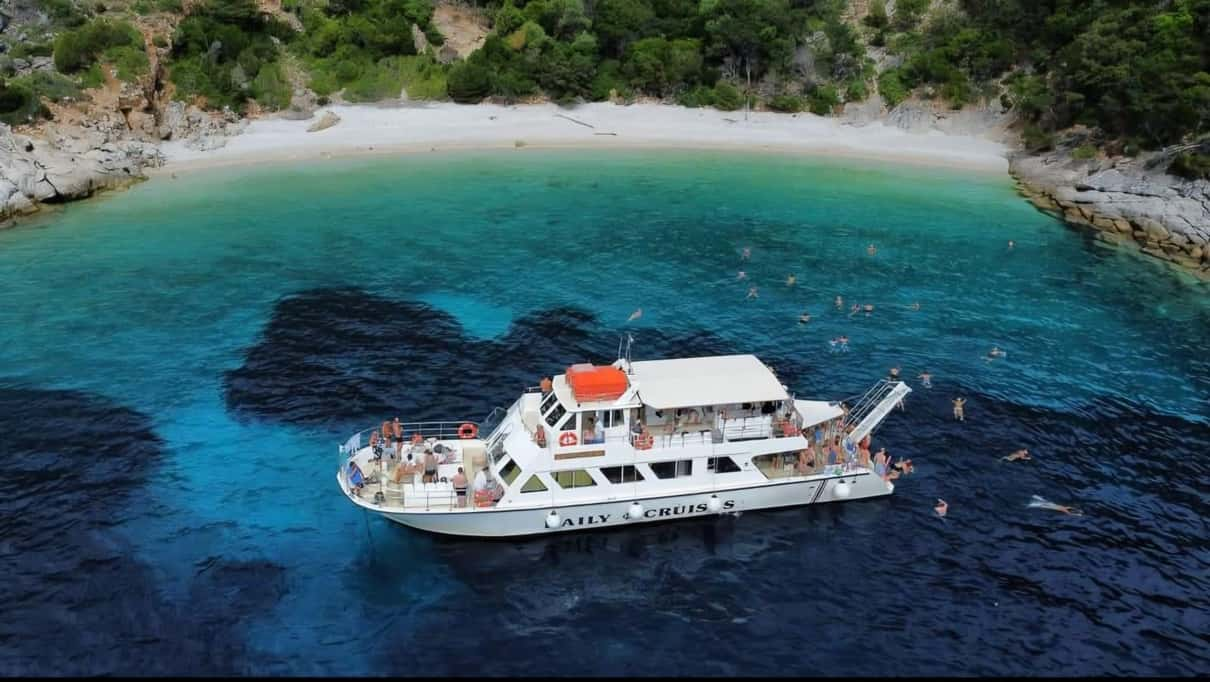
Kefalonia: Ithaca Full-Day Cruise with Swimming Stops
Best if you are sleeping on Kefalonia and want an easy taste of Ithaca without arranging your own ferry, car and beach logistics.
Check cruise availability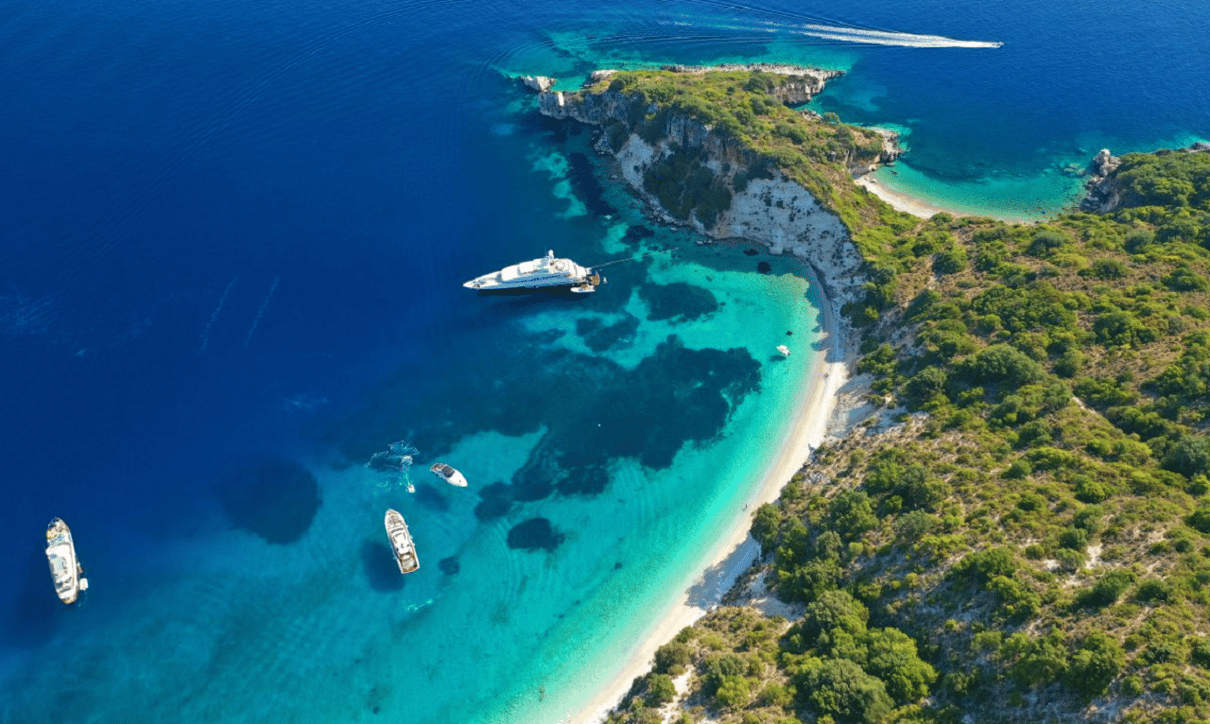
Ithaca Island Boat Cruise with Swim Stops & Snacks
A structured full-day option from Sami combining swimming, coast views and time around Ithaca without an overnight stay.
View Sami cruise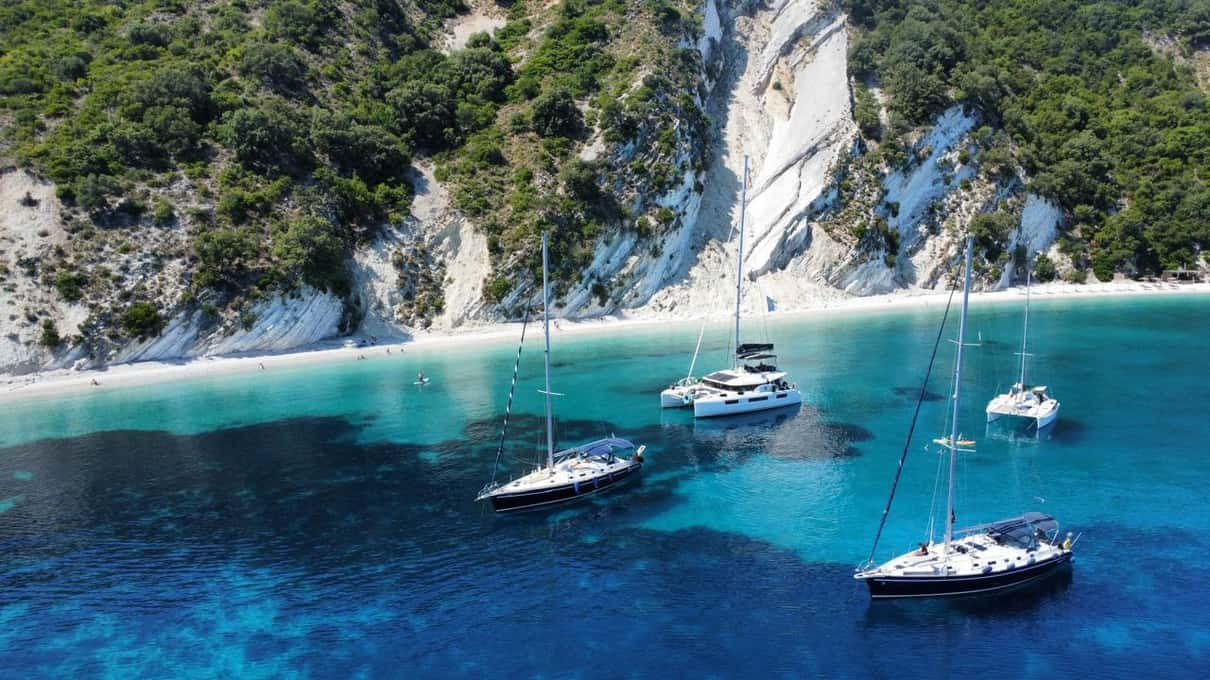
Exclusive Small-Group Ithaca Cruise with Food & Hidden Bays
The premium choice: a smaller sailing group, food on board and a day built around eastern Ithaca’s bays and swim stops.
Check small-group cruise
Ithaca: Full Day Discovering Mythology, Culture & Flavors
Better suited to travelers who want the Odyssey, villages and local culture interpreted rather than spending the whole day swimming.
Check cultural-tour availabilityThe tour links above are affiliate links. If you book through them, I may earn a commission at no additional cost to you.
Homer’s Ithaca: archaeology, tradition and what you can actually visit
Ithaca’s connection to the Odyssey is real as a cultural and historical tradition. That does not mean every place carrying the name of Odysseus has been archaeologically proven to be the location described by Homer.
I find the uncertainty more interesting than pretending the debate has been settled.
| Place | What is real | Homeric connection | Visitor reality |
|---|---|---|---|
| Stavros Archaeological Collection | Excavated artifacts from northern Ithaca | Important context for the long-running Odysseus debate | Visit the collection |
| Pilikata | Prehistoric and Mycenaean settlement remains | Proposed by some researchers as the center of Odysseus’ kingdom | Archaeological context; access is not straightforward |
| School of Homer / Agios Athanasios | Major archaeological complex excavated near Exogi | Excavators have argued for a palace identification | Archaeological site currently closed to visits |
| Cave of the Nymphs / Marmarospilia | Excavated cave with cult material | Traditionally linked to Odyssey Book 13 | Currently not open to visitors |
| Loizos Cave / Polis | Important ancient cult finds, including Odyssean material | One of the strongest archaeological connections to Odysseus worship | Understand it through the collection and Polis landscape |
| Alalkomenes / Aetos | Ancient settlement and fortification remains | Historically proposed as a possible palace area by some researchers | Archaeological landscape rather than polished attraction |
| Arethousa Spring | Natural spring reached on foot | Traditionally linked to Eumaeus | Accessible as a hike |
The Municipality of Ithaca currently states that the Cave of the Nymphs cannot be visited and that the School of Homer archaeological site is not open while restoration and preservation work is pending. I would not build a day around entering either site.
Arethousa Spring: myth works best when the landscape is still part of the experience
South of Vathy, the walk toward Arethousa is a much more satisfying way to engage with Homeric tradition because the landscape itself becomes part of the visit.

Stavros Archaeological Collection: where I would spend my archaeology time
If you care about the Odyssey but also want actual excavated evidence, this is the most useful stop in northern Ithaca.

School of Homer: historically important, but not a normal visitor attraction right now
The archaeological complex above northern Ithaca is genuinely important, and the excavators have argued that it may represent the palace associated with Odysseus. That claim remains part of an archaeological debate rather than a universally settled identification.
More practically: the official municipal archaeology page currently says the archaeological site is not open to visits.
Hiking Ithaca: choose a trail that fits the geography
Ithaca’s old mule paths are not an afterthought. They connect mountain settlements, beaches and older movement routes that existed long before the modern road.
If I were hiking here, I would choose one or two routes that deepen the trip rather than try to collect trails.
| Route | Distance | Time | Difficulty | Why do it? |
|---|---|---|---|---|
| Kathara → Anogi | About 4-5 km (2.5–3.1 miles) one way | 1–1.5 hours | Easy | Mountain landscape without committing to a long hike |
| Anogi → Kioni | About 5 km (3.1 miles) one way | 1.5–2 hours | Easy–moderate | Best village-to-coast transition |
| Anemothouri → Arethousa Spring | About 3 km (1.9 miles) round trip | 1–1.5 hours | Easy–moderate | Mythology + landscape |
| Exogi → Rousano → Polis area | About 7-9 km (4.3–5.6 miles) depending on route | 2–3 hours one way | Moderate | Big views over northern Ithaca |
| Frikes → Marmaka → Afales | About 10-12 km (6.2–7.5 miles) | 4–5 hours | Challenging | Long coastal day with swimming potential |
Anogi to Kioni: the route I would pick if I only did one
It joins two completely different versions of Ithaca: an old mountain village and one of the island’s most beautiful harbors.
Exogi, Rousano and Polis: for a bigger northern day
This is where the landscape opens and the island’s archaeology, terraces and coastline begin to connect in a way you cannot understand from a car alone.
Kayaking
Kayaking makes particular sense around the indented eastern coast, where the distance between small coves can be more rewarding by water than by road.
Scuba diving
Ithaca’s clear water also supports diving around reefs, caves and wreck sites. Visibility can reach roughly 65–98 feet in good conditions.
Where to stay in Ithaca
| Base | Choose it for | Trade-off |
|---|---|---|
| Vathy | First trip, services, boat departures, flexible days | Longer drives to the far north |
| Kioni | Atmosphere, harbor evenings, romantic stay | Less central for south-Ithaca exploration |
| Stavros | North, archaeology, hiking | Less waterfront atmosphere |
| Frikes | Small harbor, north-coast beaches, seasonal ferry access | Limited compared with Vathy |
I have a separate guide because this decision deserves more than a paragraph: where to stay in Ithaca: Vathy, Kioni, Stavros and quieter bases .

Eating in Ithaca: where I would slow the day down
Ithacan food is still fundamentally island food: fish and seafood, olive oil, vegetables, local meat dishes, pies and recipes that make sense in a place shaped by small-scale agriculture and the sea.
Things worth looking for
- Rovani — local honey and semolina cake.
- Rabbit stifado — slow-cooked with onions, tomato and spices.
- Local Perachori wine — small-scale island production.
- Wild-green pies — seasonal greens and cheese.
- Fresh octopus and fish — obvious choices in the harbor villages.
- Lobster pasta — particularly associated with summer seaside dining.
- Pastitsada — part of the broader Ionian culinary tradition.

Restaurants from my Ithaca notes
North
- Frikes: Revithaki — my favorite restaurant in Ithaca.
- Kioni: Souvlakeri .
- Platrithias: Myrtia Ithaca .
- Stavros: Delicious .
- Stavros: Kanenas Taverna .
Vathy
South / upland
- Perachori: Veranda sto Ionio .
If your itinerary already involves a lot of driving, I would prioritize eating near wherever you are ending the day rather than crossing the island for a restaurant reservation.


Practical Ithaca: car, buses, cash and mobile coverage
Do you need a car?
I would rent one if I wanted to see most of Ithaca independently. The main road network is generally paved and in good condition, but some remote beach approaches become rough enough that a normal rental car is not appropriate.
You can travel without a car, but that creates a different trip: Vathy becomes a much more logical base and taxis, boats and the limited bus network matter more.
Bus
Public transportation links Vathy with northern settlements, but service is limited enough that I would not build a dense sightseeing schedule around it.
Taxis and ferry ports
If you arrive at Pisaetos or Frikes without your own vehicle, arrange transport ahead in peak season. The ferry port is not automatically the same place as your hotel base.
Money and ATMs
Cards are widely usable, but cash still helps at small canteens, remote beaches and family-run businesses. I would not begin a hiking or boat day assuming an ATM will appear later.
Mobile data in Ithaca
The main villages are the easy part. Coverage becomes more relevant on mountain roads, remote beaches and trails where terrain blocks the signal.
For a Greece-wide comparison, read my Greece eSIM guide . If your trip includes Kefalonia, Lefkada, Paxos or other islands in this region, my Ionian Islands eSIM guide is the more useful companion.
Nomad Greece eSIM
Nomad is usually the first travel eSIM I compare for Greece because it balances reasonable pricing with plans that work across mainland and island itineraries. Check the live network and plan details before buying because these change.

Best time to visit Ithaca
Spring is particularly good if hiking matters. The island is greener, temperatures are friendlier for exposed trails and the landscape feels very different from late summer.
July and August bring the most life, warm water and village festivals, but also the greatest pressure on boats, accommodation, parking and waterfront tables.
September and early October are an excellent compromise if your priority is swimming plus quieter roads and villages.
I would not reduce the decision to a generic “best time to visit.” A hiking-heavy Ithaca trip and a swimming-heavy Ithaca trip have different ideal windows.
How I would structure a first Ithaca trip
I would use geography rather than a rigid “Day 1 must always be X” formula. The sequence below keeps unnecessary driving down and leaves room for weather.
Vathy and southern Ithaca
Settle into Vathy, understand the harbor and museums, then add an easy southern beach such as Filiatro, Dexia or Sarakiniko. Keep the first day geographically tight.
See Ithaca from the water
Make this the Gidaki / hidden-cove day. Use a taxi boat, rental boat or organized cruise rather than spending the whole day chasing inaccessible beaches by road.
North Ithaca without rushing
Stavros Archaeological Collection → Polis → Frikes → Kioni. This is the day where archaeology, village life and swimming fit naturally together.
Go inland
Kathara and Anogi, followed by a hike toward Kioni if conditions and energy are right. This gives you a completely different Ithaca from the harbor-and-beach days.
Let weather decide
Afales and the north coast if conditions are good; Arethousa or Paliochora if hiking is better; another boat day if the sea is calm; or simply return to the place that made you slow down.
Keep Day 1 south, Day 2 boat/coast and Day 3 north. I would sacrifice completeness before I sacrificed route logic.
Ithaca also works well for families with older children who enjoy swimming, boats and smaller harbor villages. I include it in my guide to Greek islands for families .
What comes from experience, and what I verify separately
My judgments about route flow, bases, villages, food and the feel of the island come from my own travel in Ithaca and broader experience traveling around Greece.
Archaeological access, official road guidance, beach access and trail information can change. For those, I cross-check against primary or official sources rather than pretending my last visit permanently settles the question.

Where to go after Ithaca
Ithaca is particularly easy to combine with other Ionian islands because each nearby option changes the trip rather than merely repeating it.
| Next stop | What it adds |
|---|---|
| Kefalonia | A much larger road-trip island with dramatic beaches, mountains, caves and an airport. |
| Lefkada | Big west-coast beaches, more activity and direct road access to mainland Greece. |
| Meganisi | Even quieter harbor life and sheltered bays. |
| Kalamos | Forested landscapes, very little tourism and simple village life. |
| Kastos | A tiny-scale island where doing very little is the entire point. |
For the wider regional comparison, read my guide to quieter Ionian islands .

If you eventually continue south toward the Peloponnese, another very different Greek island that fits an independent overland route is Kythira .
Ithaca Greece FAQ
How many days do you need in Ithaca Greece?
Three full days is the minimum I would recommend for a first trip. Five days gives you enough time to separate the south, north, a boat day and the mountain interior without constantly driving across the island.
Is Ithaca worth visiting if I am not interested in Homer?
Yes. The island works equally well for harbor villages, swimming, hiking, small-scale food and boat trips. The Odyssey adds a fascinating historical layer, but it does not need to dominate the vacation.
Do I need a car in Ithaca?
A car is very useful if you want to explore both north and south independently. You can manage without one by staying in Vathy and combining buses, taxis and boats, but that becomes a different and less flexible trip.
What is the best base for a first trip to Ithaca?
I would choose Vathy for the widest range of services, restaurants and transport options. Kioni is more atmospheric but creates more driving if you want to explore the south. My Ithaca accommodation guide compares the bases in detail.
Can you visit the Cave of the Nymphs?
The Municipality of Ithaca currently states that the Cave of the Nymphs is not open to visitors. Older travel guides that describe entering it should not be treated as current access information.
Can you visit the School of Homer?
The archaeological site is historically important, but the Municipality currently states that it is not open to visits while restoration and preservation work remains necessary.
What is the best beach in Ithaca?
I would not choose one permanent winner. Gidaki is one of the most striking and works especially well by boat. Filiatro is easier. Polis fits a northern archaeology day. Afales is dramatic but more condition-dependent.
Can you visit Ithaca as a day trip from Kefalonia?
Yes. Several organized cruises leave Kefalonia and combine swimming with Vathy or other Ithacan stops. A day trip gives you a taste of the island, but staying overnight is far better if villages, archaeology or hiking are priorities.
Is Gidaki accessible by car?
No normal road takes you directly to Gidaki. Seasonal boats from Vathy are the simplest option, and the beach can also be reached on foot.
Is Ithaca good for hiking?
Yes. The old trail network is one of the island’s strongest features. Anogi to Kioni is a particularly satisfying first route because it connects the mountain interior directly with the coast.
The Odyssey is the invitation, not the whole island
Ithaca is easy to romanticize because Homer has already done half the work for us.
But the island became more interesting to me once I stopped asking which cave, harbor or ruined wall “really belonged to Odysseus” and started paying attention to how the modern place works.
Vathy gives you one Ithaca. The north gives you another. Anogi and the old paths reveal a third. Then a boat rounds the coast and rearranges the map again.
That is the Ithaca I would plan for: not a mythology checklist, but an island whose geography, archaeology and daily life still make you work a little to understand it.
Last Updated on 02/10/2026 by Panos


