


One Day in Sousse: Medina, Ribat, Mosaics & Food
Sousse is much more interesting than its beach-resort reputation suggests. I found a compact UNESCO medina that still works as part of the city, some of Tunisia’s strongest early Islamic architecture, Roman mosaics that deserve far more attention, and excellent seafood — all close enough to build into one genuinely satisfying day.
If I had known Sousse only from resort brochures, I would have underestimated it badly. The beach hotels are real, but they are not the reason I would tell an independent traveler to come.
The medina is the reason. It is fortified, historic and UNESCO-listed, yet it still has commercial energy and ordinary life inside it. Add the Ribat and Great Mosque — two unusually austere pieces of early Islamic coastal architecture — then walk uphill to Roman mosaics inside the Kasbah and you get a city whose historical layers are much deeper than the “beach base” label implies.
What makes Sousse especially good for a first visit is that it remains manageable. Tunis has the more labyrinthine medina; Monastir is calmer and more compact; Mahdia is slower and more maritime. Sousse sits in the middle: bigger, busier and more layered than Monastir, but still easy to understand in a day.
Is One Day in Sousse Enough?
Yes. One full day is enough for the best of central Sousse if you focus on the medina, Great Mosque, Archaeological Museum, Dar Essid, Ribat and a late-afternoon waterfront walk.
The order matters. I would visit the Great Mosque early because non-Muslim visitor hours are concentrated in the morning, then spend the middle of the day moving through the medina and museum. The Ribat is open much later, so it works beautifully as a late-afternoon final monument before Boujaffar Beach.
Enough for the fortified Islamic core, but you miss the museum and slower food stops.
Medina, mosque, mosaics, Dar Essid, food, Ribat and the waterfront without turning the day into a race.
Add Monastir, El Jem, Kairouan or Mahdia while keeping restaurants and the sea within easy reach at night.
Why Sousse Is Worth Visiting Even If You Do Not Want a Beach Resort
Sousse works because its strongest sights are part of one coherent historic city rather than isolated attractions.
UNESCO describes the medina as an exceptional surviving example of an early Islamic coastal town shaped by the threat of attack from the sea. That defensive logic is still visible: the Ribat, Great Mosque, Kasbah and ramparts belong to the same fortified urban system rather than being unrelated monuments.
But Sousse is not frozen in that period. Beneath the Kasbah are the remains of ancient Hadrumetum, reflected in the Roman mosaics now displayed in the Archaeological Museum. Around the monuments, today’s medina continues to trade and function. Outside the walls, the city opens immediately onto the Mediterranean.
That combination is what gave Sousse more depth than I expected: Roman Africa, early Islamic Ifriqiya and contemporary coastal Tunisia all fit within a very walkable radius.

My One-Day Sousse Itinerary
This order protects the Great Mosque’s morning visitor window and saves the Ribat’s panoramic tower for softer late-afternoon light.
Great Mosque first
Non-Muslim access is normally in the morning and outside prayer times, so this is the one sight I would not casually leave until later.
Walk the lower medina and souks
Move away from the monument square and let Sousse become a working old city rather than a UNESCO checklist.
Climb to the Kasbah & Archaeological Museum
The mosaics provide the Roman and early-Christian half of Sousse’s history. The museum is closed Mondays, so use the fallback route below if needed.
Dar Essid + Zaouia Zakkak
Shift from monumental history into domestic life and a later Ottoman architectural layer inside the medina.
Lunch
Fresh fish at Le Poisson d’Or or a more traditional spread at El Soffra Chez Fredj. Do not waste a coastal Tunisian city on a generic resort buffet.
Optional catacombs or extra medina time
Choose the catacombs if early Christianity interests you; otherwise stay inside the walls and slow the day down.
Ribat tower
Finish the historical route with the medina, Great Mosque and sea laid out below you.
Boujaffar Beach
Walk by the Mediterranean rather than making Port El Kantaoui mandatory. The central beach is the natural decompression after the medina.
Visiting on Monday?
The Archaeological Museum is normally closed Monday. I would not remove Sousse from the itinerary because of that. Give the medina longer, add Dar Essid and Zaouia Zakkak, consider the catacombs, have a proper lunch, and keep the Ribat for later. If mosaics are a major priority, make sure your overnight schedule gives you another morning for the museum.
Walk the Medina as a City, Not Just a Route Between Monuments
Sousse is more manageable than Tunis, but it still rewards leaving the fastest line between pins on Google Maps.
The medina of Sousse is compact — roughly a walkable walled city rather than an endless maze — but I never found it sterile. Spice sellers, workshops, household errands, quiet residential lanes and busier commercial streets all sit inside the same fortifications.
I liked that balance. Tunis feels more sprawling and immersive; Sousse gives you many of the pleasures of a lived-in North African medina without demanding that you surrender the entire day to navigation.


The medina itself does not have “opening hours”
The streets remain part of the city. What changes through the day are shop hours and the opening times of individual monuments and museums. Morning is my favorite time because the temperature is easier, local activity is already underway, and the larger visitor groups have not fully arrived.
Great Mosque of Sousse: A Mosque Built Like a Fortress
Put this before the Ribat in your schedule because its visitor window is more restrictive.
The Great Mosque of Sousse was founded in the 9th century and looks strikingly defensive from outside. Crenellated stone walls and round corner towers make much more sense once you understand that this was a vulnerable Mediterranean frontier city.
What interested me was the restraint. After richly decorated mosques elsewhere in Tunisia, Sousse’s Great Mosque feels almost severe. That is part of its identity, not an absence of something better.
Non-Muslim visitors are normally admitted to the courtyard rather than the prayer hall, during morning visiting hours and outside prayers. Dress with shoulders and knees covered and treat posted local rules as authoritative on the day.

Sousse Archaeological Museum: The Sight Too Many Beach Visitors Skip
If you care about Roman Tunisia, this museum substantially changes the city.
The Archaeological Museum occupies the Kasbah at the upper end of the medina and contains one of Tunisia’s most important Roman mosaic collections. Most pieces come from ancient Hadrumetum and the surrounding Sahel, so the museum is not simply a smaller copy of the Bardo in Tunis.
The Triumph of Neptune and Medusa are the obvious showpieces, but I also liked the way funerary and Christian material carries the story forward from pagan Roman Africa into late antiquity.
If you visit both museums, I would think of the Bardo in Tunis as the great national synthesis and Sousse as the more compact regional collection. They reinforce one another rather than duplicate each other.


Dar Essid, Zaouia Zakkak & the Smaller Sousse I Liked
The city’s secondary sights are useful because they stop the day becoming fortress → mosque → museum → fortress.
Dar Essid
Dar Essid gives you traditional domestic life instead of military or monumental architecture. Furnished rooms, decoration and the rooftop make the old city feel inhabited by individuals rather than only by dynasties.


Zaouia Zakkak
Zaouia Zakkak is worth a look when you want to see how later Ottoman influence softened the architectural vocabulary of a medina dominated by much heavier Aghlabid stonework.

The catacombs
Sousse’s catacombs take the historical story in yet another direction: early Christianity in Roman Africa. They are atmospheric rather than spectacular, so I would add them because the subject interests you, not because every one-day itinerary needs another ticketed stop.

Ribat of Sousse: Climb the Tower When the Stone Softens
The Ribat is the essential monument — but that does not mean it has to be your first stop.
The Ribat of Sousse combined religious retreat with coastal defense. The architecture explains that dual purpose immediately: a fortified courtyard, narrow cells, a prayer space and a watchtower looking across the city and Mediterranean.
I would still rank it as the single monument not to miss. But because the Ribat remains open substantially later than the Great Mosque, I prefer saving it for the afternoon when the stone is warmer in the light and the tower gives you a final overview of the route you just walked.
The stairs are narrow. Take your time and let people pass rather than trying to turn the climb into a competitive event.


Heritage of Sousse: Medina, Ribat & Museums — Half Day
Sousse is easy to explore independently, so I would book a guide for interpretation rather than transport. This half-day format makes sense if you want the military, religious and urban history explained while still keeping the rest of your day free for food and the waterfront.
Check Price & AvailabilityWhat & Where to Eat in Sousse
Seafood was the obvious strength, but the most interesting food option is getting out of restaurant mode altogether.
One of my favorite meals was at Le Poisson d’Or. Fresh fish is exactly what I want from a city with Sousse’s relationship to the Mediterranean, and I preferred it to treating every meal as generic “Tunisian cuisine.”

I also enjoyed Restaurant El Soffra Chez Fredj, along with Dar Mariem, Restaurant du Peuple and Restaurant Kasbah. Look for brik, seafood couscous, grilled octopus and fish, and order citronnade when you want something cold after several hours inside the medina.


Cook and Connect: Tunisian Culinary Adventure With a Local Family
This is the food experience I would choose if you have more than one day in Sousse. A home setting and cooking with a local family gives you something restaurants cannot: the techniques, conversation and domestic context behind the dishes.
I would prioritize this over another generic sightseeing excursion if food is one of the reasons you travel.
Check Price & AvailabilityBoujaffar Beach vs Port El Kantaoui
They serve different purposes, and neither should steal your medina morning.
Boujaffar Beach: my choice after a city day
Boujaffar is central and easy. I would not sell it as a remote Mediterranean paradise; its value is that you can walk straight out of historical Sousse and suddenly have sand, sea air and space.

Port El Kantaoui: choose it for the resort-marina mood
Port El Kantaoui is polished, planned and resort-oriented. It can be pleasant around sunset, but it is not where I would send someone with only a few hours to understand Sousse.
If you are staying in the resort zone anyway, enjoy it. If you are spending one day specifically on Sousse’s history and local character, Boujaffar is the more natural ending.

Where to Stay in Sousse
Medina, Boujaffar and Port El Kantaoui are not interchangeable versions of the same stay.
For this itinerary, I prefer the medina or central Sousse. You can walk to the major sights and go back out for dinner without turning every movement into a taxi ride.
Beachfront Boujaffar suits travelers who want an easier hotel experience while remaining close to the old city. Port El Kantaoui makes more sense for a resort holiday where historical Sousse is one excursion among several.
I compare those trade-offs, specific areas and hotel options in my where to stay in Sousse guide.

Sousse vs Monastir vs Mahdia: Which Fits You Best?
I would not treat Tunisia’s central-coast cities as substitutes simply because a train connects them.
| City | Choose it for | What it feels like | My use |
|---|---|---|---|
| Sousse | Largest medina experience, Ribat, mosaics, restaurants, beach + day-trip base | Busy, layered, urban | Best all-round base |
| Monastir | Ribat, Bourguiba Mausoleum, marine cemetery, compact waterfront | Calmer, easier, more focused | Easy half/full-day from Sousse |
| Mahdia | Peninsula medina, Fatimid history, working harbor, slower coast | Smaller, maritime, relaxed | Stay if atmosphere matters more than infrastructure |

Best Day Trips From Sousse
Once you have given Sousse itself a proper day, the city’s central position becomes one of its biggest advantages.
| Trip | Best for | My recommendation |
|---|---|---|
| El Jem | Roman archaeology | The standout independent excursion; the amphitheatre and museum deserve their own time. |
| Kairouan | Islamic history | The strongest inland contrast to Sousse, especially paired with El Jem on a private day. |
| Monastir | Easy coastal history | The simplest trip by Sahel rail; calm, compact and complementary to Sousse. |
| Mahdia | Slow coastal atmosphere | Choose it when you want medina, harbor and sea rather than another monumental history day. |
| Tunis + Carthage & Sidi Bou Said | Capital + ancient coast | Possible as a long private day; I prefer staying in Tunis if your wider itinerary is going north anyway. |


From Sousse: Kairouan, Monastir & El Jem Private Day Trip
This is ambitious, but the stops are different enough to justify the long day: Kairouan for early Islamic history, El Jem for Roman monumental architecture and Monastir for the coastal Ribat and modern Tunisian history.
I would book it when you want maximum coverage without self-driving. If you have plenty of time, I still prefer giving El Jem and Kairouan more space individually.
Check Price & Availability
Tunis, Carthage & Sidi Bou Said: Premium Private Day Tour With Pickup
This solves a very specific problem: you are based in Sousse, do not plan to sleep in Tunis, but still want the capital, Carthage and Sidi Bou Said in one long day.
If your wider route already continues north, I would instead stay in Tunis and use my dedicated city and coastal itineraries. That gives both places far more room.
Check Price & AvailabilityHow to Get to Sousse
Sousse is one of the easier Tunisian cities to use without a car.
From Tunis
Trains and louages both connect Tunis and Sousse. I would check the current SNCFT timetable shortly before travel rather than building a trip around an old blog’s exact departure times. Louages generally leave when full and can be faster, but they are less predictable and less comfortable with luggage.
From Monastir or Mahdia
The Sahel suburban rail line is genuinely useful here. It links Sousse, Monastir and Mahdia, which is one reason I think the three cities work so well together in a longer coastal itinerary.
If you are deciding where to sleep rather than just where to visit, compare my Sousse accommodation guide with my where to stay in Monastir guide.
For the bigger picture — louages, rental cars, trains, taxis, money, safety and connectivity — use my Tunisia travel tips guide.
The City Beyond Its Headline Monuments
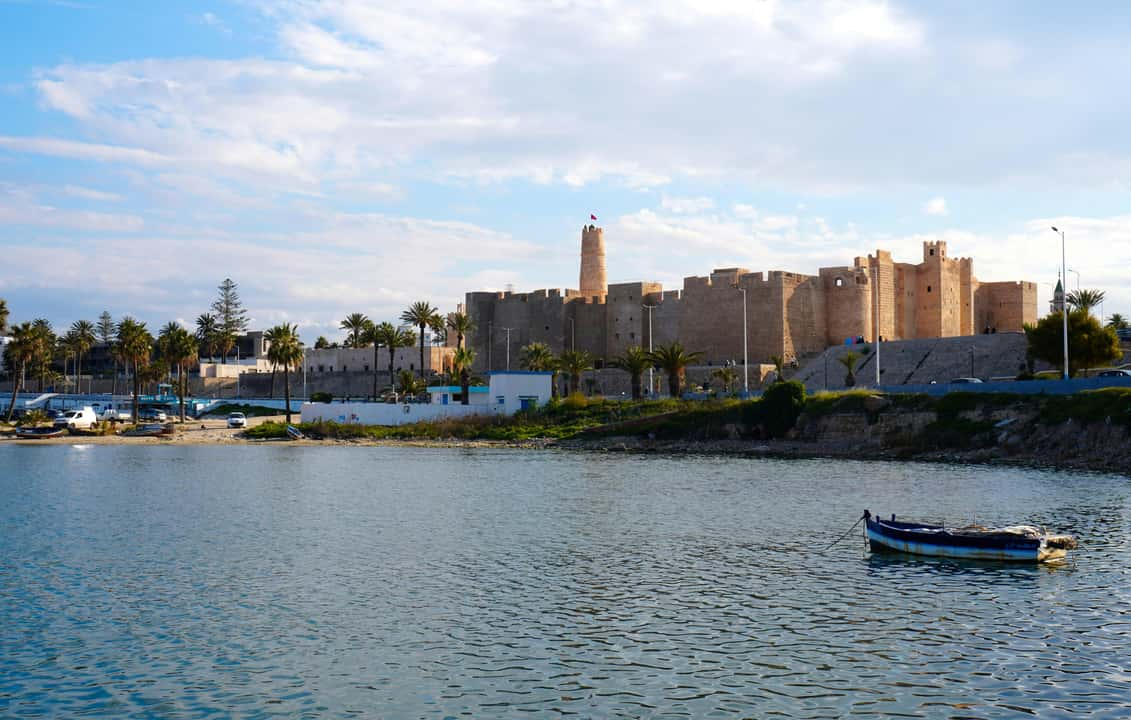
A few of the smaller visual details are part of why I would stay centrally rather than treating Sousse as a resort excursion.

Where Sousse Fits in a Longer Tunisia Route
Sousse works especially well as the hinge between northern Tunisia and the central/southern half of the country.
Northbound, the natural continuation is Tunis, with a separate one-day Tunis itinerary and Carthage + Sidi Bou Said day.
Southbound, I would move through El Jem and potentially Sfax before choosing whether the trip bends toward Tozeur and the oases or continues toward Djerba and the deep south.
My Tunisia itinerary has realistic 7-, 10-, 14- and 21-day versions so you can see which of those transitions fits your available time.

Continue Planning Tunisia
One Day in Sousse FAQ
Is Sousse worth visiting?
Yes. I think Sousse is considerably more interesting than its beach-resort reputation suggests. The UNESCO medina, Ribat, Great Mosque, Roman mosaics and food give it enough cultural depth for a full city day, while the Mediterranean keeps the experience lighter than an inland heritage stop.
Is one day enough in Sousse?
One full day is enough for the Great Mosque, medina, Archaeological Museum, Dar Essid, Ribat and Boujaffar Beach. Stay longer if you want a slower food-focused visit or plan to use Sousse as a base for El Jem, Kairouan, Monastir or Mahdia.
What are the best things to do in Sousse?
My essentials are the UNESCO medina, Great Mosque, Ribat and Archaeological Museum. Dar Essid adds traditional domestic life, while Boujaffar Beach is my preferred place to finish the day.
What should I see first in Sousse?
I would start with the Great Mosque because non-Muslim visitor access is mainly in the morning. The Ribat stays open later, so you can save its tower for softer afternoon light.
Is Sousse Archaeological Museum worth it?
Definitely if you care about Roman Tunisia. Its mosaics give you the ancient Hadrumetum story that is largely invisible when you are walking the Islamic medina. Allow around 60–90 minutes and remember that it is normally closed Mondays.
Is Sousse better than Monastir?
I prefer Sousse for overall depth: the medina is larger, the museum is much stronger and the restaurant/day-trip infrastructure is broader. Monastir is calmer and more compact, with the Ribat and Bourguiba Mausoleum close to the sea. I think they complement each other extremely well.
Should I visit Port El Kantaoui?
Yes if you want a polished marina and resort atmosphere, especially if you are staying there. With only one sightseeing day, I would prioritize central Sousse and finish at Boujaffar rather than spending valuable medina time traveling to the marina.
What are the best day trips from Sousse?
El Jem is my top archaeology trip, Kairouan the strongest Islamic-history trip, Monastir the easiest coastal excursion and Mahdia the best choice for a slower seaside medina. Kairouan and El Jem also combine well on a private tour.
Come for the Medina, Not the Resort Label.
Sousse makes much more sense when you treat the beach as the punctuation rather than the sentence. Give the historic city the day, eat well, climb the Ribat late, and let the Mediterranean finish what the medina started.
Staying in Sousse?
Choose between the medina, central beach and resort zone based on the trip you want outside your hotel door.
Compare Where to Stay in Sousse Continue to MonastirBuilding a Tunisia route?
Sousse slots naturally between Tunis and the central coast before El Jem, Sfax or the south.
See My Tunisia Itinerary Read My Tunisia Travel TipsLast Updated on 08/10/2026 by Panos


