

The approach to Symi is striking. As the ferry rounds the final bend from Rhodes, pastel mansions rise steeply from the water, stacked like an amphitheatre around the harbour. The neoclassical facades reflect in deep blue, almost too perfect to be real. Most visitors only see this for a few hours. I stayed overnight and saw the difference: quiet lanes in Chorio, chapels tucked into hillsides, and beaches only reachable by boat. After the last ferry leaves, the harbour empties, the light softens, and the place feels lived-in rather than staged. This Symi travel guide combines practical planning, historical context, and first-hand experience to help you prepare for a visit to Symi.
Table of Contents
Where Is Symi & Brief History
Symi lies in the southeastern Aegean, part of the Dodecanese island group, close to the Turkish coast and about an hour by ferry from Rhodes. Its location made it both vulnerable and valuable, shaping a long history that still defines the island’s character.
In mythology, Symi was named after the nymph Syme and linked to the Charites, goddesses of charm and beauty. Homer’s Iliad mentions King Nireus, who sailed from here to Troy with three ships. Archaeological finds confirm habitation since the Bronze Age, and in 411 BC, a naval battle between Athenians and Spartans took place off its shores.
During the Classical and Hellenistic periods, Symi developed as a naval and trading hub. It later passed through Roman and Byzantine hands before being fortified by the Knights of St John in 1309. Their castle still overlooks the harbour. When the Ottomans took control in 1522, they granted Symi relative autonomy, allowing it to flourish as a center of shipbuilding and sponge diving. By the 19th century, the island had over 20,000 residents and a fleet of merchant vessels. The neoclassical mansions built during that boom still dominate Gialos. Preservation laws now require new buildings to follow the same style, giving the harbour its distinct painted-house character.
Symi joined Greece in 1948 after Italian and brief German occupation. Today, its layered past remains visible in castle ruins, Byzantine chapels, Ottoman traces, and the annual pilgrimage to Panormitis Monastery.

How to Get to Symi
There is no airport on Symi, so every journey begins by sea. The most common gateway is Rhodes, with frequent ferries from Rhodes Town. Less common routes connect from Athens (Piraeus) or the Turkish coast, but these are seasonal and limited.
From Rhodes to Symi
From Rhodes, you have two main choices:
- High-speed catamarans: The fastest option, taking about 60–70 minutes. These boats are popular with day-trippers, so they can feel crowded in peak season. I used this route on my first visit and found it efficient, though less atmospheric than the slower ferries.
- Conventional ferries: Larger vessels take 90 minutes to 2 hours, depending on stops. They are usually cheaper, more stable in rough seas, and more comfortable if you are carrying luggage.
👉Ferries to Symi depart from Mandraki Port in Rhodes Town. Arrive at least 30 minutes before departure.
Ferry companies: Dodekanisos Seaways and Saos Ferries operate most services, with multiple departures daily in summer and fewer in spring and autumn.
Rhodes to Symi ferry tickets: Prices range from 15 to 25 euros one way. In July and August, book in advance to secure a seat. Outside peak season, I was able to buy tickets directly at the port without any issue.

From Athens to Symi
- Direct ferry: Blue Star Ferries run overnight services from Piraeus to Symi, but the journey takes 13–15 hours. It is only practical if you are already island-hopping through the Dodecanese.
- Flight + ferry: A faster option is to fly from Athens to Rhodes (about 50 minutes) and then continue by ferry to Symi. This is the most efficient route for most travelers.

From Kos, Nisiros and Tilos to Symi
There are regular ferries from Kos, Nisiros and Tilos to Symi with Blue Star Ferries and Dodekanisos Seaways.

From Turkey to Symi
In summer, small boats connect the Turkish port of Datça with Symi. The crossing takes about 45 minutes.
Practical Tips about Ferries to Symi
- If you are prone to seasickness, choose a larger conventional ferry over a catamaran.
- In high winds like the summer meltemi, fast boats may be cancelled while larger ferries still sail.
- Always check return times carefully if you are visiting Symi on a day trip.
Arriving by sea is part of the experience. As the ferry rounds the final bend, the view of Gialos with its pastel mansions stacked above the harbour is one of the most memorable arrivals in the Aegean.
👉 I love Direct Ferries, because they compare different operators for the best price. You can book your cheap ferry tickets to Symi here.
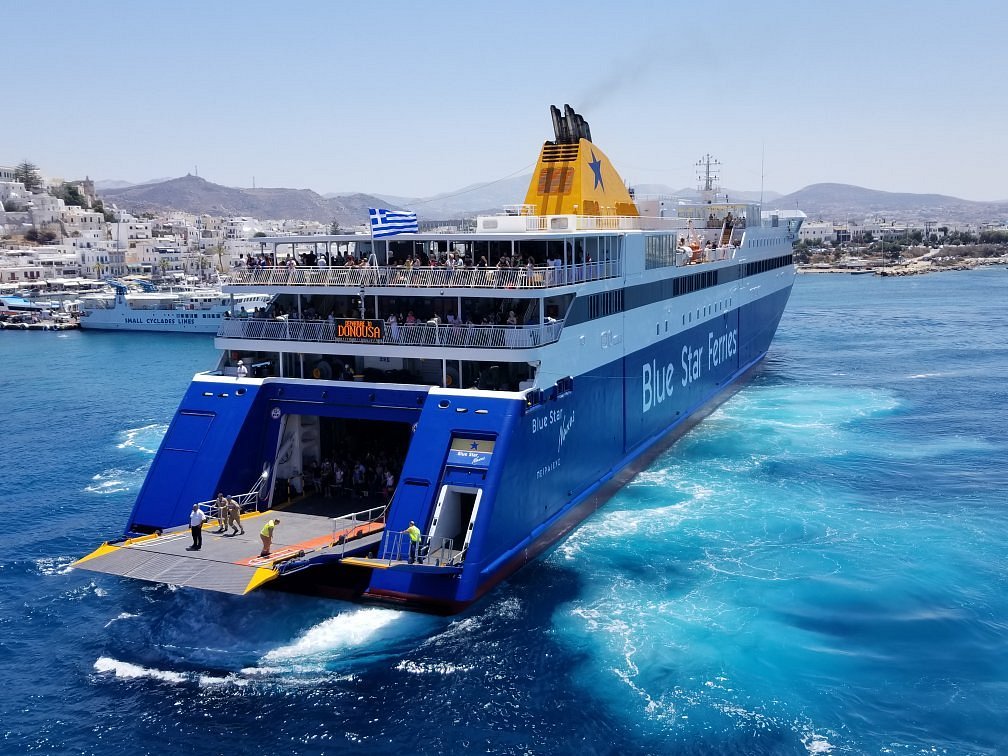
Arrival in Symi Town: Gialos and Chorio
The heart of the island is its main town, made up of two settlements joined together. At sea level lies Gialos, the harbour where ferries arrive. Above it, reached by the long stairway of the Kali Strata, is Chorio (also called Ano Symi). Together they form one of the most distinctive towns in the Dodecanese.
Gialos: The Harbour
Gialos is the first impression most visitors get. The waterfront is lined with neoclassical mansions in pastel shades, many built during the sponge-diving boom of the 19th century when Symi was one of the wealthiest islands in the Aegean. Cafés, tavernas, and small shops cluster along the quay, while fishing boats share space with sleek yachts. The clock tower at the harbour entrance was built in 1881 and still marks the rhythm of daily life.
👉 Tip: walk the full curve of the harbour past the clock tower to see the town from different angles. The further you go, the fewer day-trippers you’ll encounter.


The Kali Strata: Climbing to Chorio
The Kali Strata is the stone stairway linking Gialos with Chorio. It has around 500 steps, broken into short sections with flat stretches in between. Along the way you pass elegant houses, some restored, others left in ruins after World War II bombings, and chapels tucked into corners.
Halfway up, a short detour leads to Pontikokastro, a circular stone ruin thought to date back to the 5th century BC. Believed to be one of the island’s oldest fortifications, it offers a reminder that Symi’s strategic position has been recognized since antiquity.
The climb takes 30–40 minutes at a relaxed pace, with plenty of chances to stop for photos or a cold drink. Comfortable shoes and water are essential in summer.


Chorio (Ano Symi): The Upper Town
At the top, Chorio feels like a different world. Narrow lanes wind between houses, tavernas, and small squares shaded by trees. The ruins of the Venetian castle, built on the site of an ancient acropolis, offer sweeping views over the harbor and the Aegean. Nearby stand the remains of old windmills, reminders of the island’s self-sufficient past.
Chorio is also home to the Symi Archaeological Museum (open Wednesday to Monday 08:30-13:30), housed in a restored mansion. Its collection includes Hellenistic and Roman sculptures, Byzantine icons, and everyday objects that trace the island’s long history. It’s a small museum, but worth a visit to connect the ruins and chapels you see on hikes with the artifacts they left behind.
Chorio is also home to the Church St. Athanasios, one of the settlement’s oldest parish churches, dating back to the 18th century. Its modest exterior hides frescoes and icons that reflect the island’s deep Orthodox tradition, and it remains an active place of worship for the community.

Together with the nearby Symi Archaeological Museum, it anchors the historic Agios Athanasios neighborhood. This quarter developed during the late Ottoman period, when Symi prospered from shipbuilding and sponge diving. The museum itself is housed in restored mansions from the 18th and 19th centuries, including the Farmakidis House and the Chatziagapitos Hall, both reminders of the wealth that once flowed through the island. Inside, the collection spans from prehistoric finds to Byzantine icons and everyday objects, showing how Symi’s role shifted from ancient naval outpost to medieval stronghold and finally to a 19th‑century maritime hub.
Walking through Agios Athanasios today, you see that layered history in the architecture: neoclassical facades beside crumbling stone houses damaged during World War II bombings, narrow lanes that once carried mule caravans, and chapels that still host annual festivals. It’s one of the few parts of Symi where you can sense the continuity of daily life across centuries, from ancient fortifications like nearby Pontikokastro to the lived‑in courtyards of modern families.
Chorio is quieter than Gialos, especially in the evenings, and gives a sense of how the island looked before tourism. Staying here means trading convenience for atmosphere: you’ll climb daily, but the views and silence are worth it.
👉 My local contacts recommended this Symi guided tour with e-bikes. Perfect for those who want to make ascending the hills of the town a bit easier.

👉And if you want to chase the sunset, this Symi sunset tour with e-bikes is great as well.


Symi Villages Outside Chora
Symi is more than its harbour. A handful of small villages and one of the most important monasteries in the Aegean give the island a different rhythm once you leave Gialos.
Pedi
Just a short walk or bus ride from Chorio, Pedi is a quiet seaside village with a narrow beach, a few tavernas, and a slower pace. It works well as a base if you want to be close to town but away from the bustle of the harbour. From here, small boats run to nearby beaches such as Agia Marina and Agios Nikolaos. I walked down from Chorio in the evening and found Pedi almost silent, with only the sound of water and a few locals at the quay.
Nimborio
On the opposite side of the harbour, Nimborio (also called Emborios) is another small settlement with a handful of tavernas and rooms to rent. It is less developed than Pedi and feels more like a retreat, with calm waters and views back across to Gialos. The walk from the harbour takes about 40 minutes, though boats also connect in summer. Nimborio was once a shipbuilding site, and traces of that past remain in the layout of the waterfront.

Panormitis Monastery
On the southern coast stands the Monastery of the Archangel Michael Panormitis, the spiritual heart of the island and one of the most important pilgrimage sites in the Dodecanese. Dedicated to Symi’s patron saint, it has been a place of worship for centuries. The current complex dates mainly to the 18th century, with its baroque bell tower dominating the bay. Inside, visitors find Byzantine frescoes, silver icons, and a museum displaying manuscripts, ecclesiastical treasures, and ship models offered by sailors in thanks for safe voyages.


The monastery is accessible by bus, boat, or car. The bus from Symi town takes about 30–40 minutes, winding through the island’s mountainous interior. Tickets are inexpensive, but schedules are limited and can catch visitors off guard. On my first visit, I took the early bus expecting to return within a couple of hours. Only after arriving did I learn that the return wasn’t until mid-afternoon. It meant an unplanned eight hours at Panormitis. While the monastery is impressive, it doesn’t require a full day, so I walked to nearby Marathounda beach to pass the time. The lesson: always double-check the timetable before you go.
Around November 8, the feast of the Archangel Michael at Panormitis draws thousands of pilgrims. Ferries arrive packed, the bay fills with boats, and the monastery becomes the heart of a festival with processions, music, and food stalls.
Why Panormitis Is Worth Visiting
Panormitis shows a different side of the island. While Gialos is about colour and commerce, the monastery is about faith and continuity. Every year on November 8, thousands of pilgrims arrive for the feast of the Archangel Michael. Boats fill the bay, church services run late into the night, and the usually quiet south coast becomes a festival ground with food stalls, music, and processions. Even outside the feast day, the setting is striking: a sheltered bay, whitewashed buildings, and a sense of tradition that still shapes daily life.

How to Get to Panormitis Monastery from Symi town
The monastery sits on the southern coast, about 18 kilometers from Gialos. There are three ways to reach it:
- By bus: The public bus leaves from the harbour and takes 30–40 minutes, winding through the island’s mountainous interior. Tickets are inexpensive, but departures are limited. We took the bus from this bus stop, opposite the National Bank.
- By boat: Excursion boats run from Gialos in summer, often combining Panormitis with beach stops. This is the most scenic option, but schedules are tied to day-tripper demand.
- By car or scooter: The road is paved and straightforward, though narrow in places. Driving gives you flexibility to combine Panormitis with Marathounda beach or Nimborio on the way back.
Arriving by land or sea, the first sight is the monastery’s bell tower rising above the sheltered bay. Even if you only stay an hour, the journey itself is part of the experience.

The Best Beaches of Symi
Symi’s coastline is rugged, with steep cliffs and hidden coves. Many of the best beaches are only accessible by boat, which is part of their charm. Water taxis leave from the harbour and Pedi, running fixed routes with posted timetables. Prices vary between 10 and 15 euros return depending on distance. Here is a breakdown of the main beaches, grouped by how you reach them.
Walkable beaches
If you prefer not to rely on boats or buses, there are a couple of beaches within walking distance of Symi town. They are convenient rather than spectacular, but they work well for a quick swim or an easy afternoon without planning transport.
Nos Beach
Nos is the closest option, just a ten‑minute walk from Gialos along the coastal road. The beach is small and pebbly, with sunbeds, umbrellas, and a taverna serving simple meals. It can feel crowded in summer because of its proximity to town, but the convenience makes it useful if you want a swim before or after exploring the harbor. The water is clear, though the setting is less dramatic than the beaches reached by water taxi.
Pedi Beach
Pedi sits at the head of a sheltered bay, about a 20‑minute walk or a short bus ride from Chorio. The beach itself is a narrow strip of pebbles, but the calm waters make it good for swimming. A few tavernas line the waterfront, and small boats depart from here to Agia Marina and Agios Nikolaos beaches. If you are staying in Pedi village, the beach is right on your doorstep, making it one of the easiest options for daily swims.

Beaches reached by water taxi
Many of Symi’s best beaches are only accessible by boat. Water taxis leave regularly from Gialos harbour in summer, dropping passengers at a circuit of bays along the coast. Journeys take between 10 and 30 minutes depending on the stop, and return times are fixed, so it’s worth checking the schedule before you set out.
Agios Georgios Dysalonas
This is the island’s most dramatic beach, backed by a sheer cliff that rises 300 meters (1,000 ft) straight from the sea. The contrast between turquoise water and vertical rock makes it one of the most photographed places on Symi. There are no facilities or shade, so you need to bring water, food, and something to cover yourself from the sun. The sense of isolation is part of the appeal, and swimming beneath the cliff is unforgettable.
Nanou beach
Nanou is a long pebble beach framed by cypress trees, giving it a green backdrop unusual for the Dodecanese. Sunbeds and a taverna make it one of the most comfortable choices, especially if you want to spend a full day by the water. The pebbles mean the water is exceptionally clear, and the bay is sheltered enough for relaxed swimming.
Agia Marina
Agia Marina is lively and social, with a beach bar, sunbeds, and music in summer. A small islet with a chapel sits just offshore, and you can swim or paddle across to it in a few minutes. Families like it for the shallow entry and facilities, but it can feel busy in peak season.
St Nicholas (Agios Nikolaos) Beach
A mix of sand and pebbles makes St Nicholas one of the more versatile beaches. It has sunbeds, umbrellas, and a taverna, but still feels relaxed compared to Agia Marina. The small church of Agios Nikolaos gives the beach its name, and the surrounding pines provide some natural shade.
Marathounda beach
Marathounda is known for its crystal-clear water and the goats that wander down from the hills, often mingling with sunbathers. The beach has sunbeds and a taverna serving simple meals, making it easy to spend several hours here. It is also accessible by road, so you may find a mix of visitors arriving by car and by boat.
Lapathos beach
Lapathos is one of the most remote beaches on Symi, tucked into the island’s rugged southern coast. Reaching it requires either a private boat or a long hike, which keeps the crowds away. The reward is a wide sweep of pebbles, turquoise water, and complete silence apart from the wind and waves. There are no facilities here, so you need to bring everything with you, but that’s part of the appeal. If you want to see Symi at its wildest, Lapathos is the place.
Beaches reached by car or bus
Not every beach on Symi requires a boat. A few can be reached by road, either with the local bus or by renting a car or scooter. These spots are less visited than the water‑taxi circuit and give a different perspective on the island.
Toli beach
Toli lies on the north coast and is one of the easiest beaches to reach by road. The drive takes about 20 minutes from Gialos, following a winding route through barren hills before dropping down to the sea. A family‑run taverna sits right on the water, serving grilled fish and simple meze. The beach itself is pebbly, with clear water and a relaxed atmosphere. Because it faces west, Toli is also one of the best places on the island to watch the sunset.
Agios Vasileios
Agios Vasileios is more remote, reached by a rough track that branches off the main road. The beach is small, quiet, and often completely empty. Its isolation has made it a spot sometimes used by nudists, though you may also find it deserted. There are no facilities, no shade, and no taverna, so you need to bring everything with you. The reward is solitude and a sense of Symi at its most untouched.
Panormitis beach
Near the monastery yet very secluded and quiet at the same time. Some goats were curious about us when we visited. 😀


Best Things to Do in Symi Beyond the Beaches
Symi is small, but it offers more than sunbathing. Once you’ve explored the harbour and taken a water taxi to a beach, here are the activities that give the island its character.
Circle-Island Boat Tour
The most popular excursion is the Poseidon boat tour, which circles the island in a day. It stops at remote beaches, sea caves, and the islet of Sesklia, where a barbecue lunch is served on the sand. The highlight is usually a swim at Agios Georgios Dysalonas, where the cliffs rise sheer from the sea.
👉 Tip: book at the harbor the day before, especially in July and August. The boat departs around 10:30 and returns by late afternoon.
Taxi Boats for Beach-Hopping
If you don’t want a full-day cruise, the taxi boats are a flexible way to explore. They run fixed routes from Gialos and Pedi, with boards showing departure times and prices. You can choose a return ticket to one beach or hop between two or three in a day.
Hiking to Chapels and Viewpoints
The interior of Symi is crisscrossed with old mule paths and foot trails that lead to chapels, ruins, and ridges with sweeping views. The terrain is rocky and exposed, so spring and autumn are the best seasons for hiking, when the heat is manageable and wildflowers or autumn light add to the experience.
A popular short route begins in Chorio and climbs past the old windmills to Pontikokastro, a circular stone ruin thought to date back to the 5th century BC. From here, the view stretches across Gialos, the Turkish coast, and the surrounding islets.
Several chapels make rewarding destinations:
- Agios Vasileios tou Kastrou: Perched near the ruins of the Knights’ castle above Chorio, this small chapel offers one of the best panoramas over the harbour.
- Agios Emilianos: Located on a peninsula in the southwest, it can be reached by a long coastal hike or by boat. The whitewashed chapel stands alone by the sea, a striking contrast to the barren hills behind it.
- Panagia Alithini: A hilltop chapel above Chorio, reached by a steady climb. The name means “True Madonna,” and the site is still used for local festivals. The view takes in both sides of the island.
- Agios Nikolaos near Pedi: A shorter walk from Pedi village, combining a swim with a visit to a small chapel by the water.
Hiking here is less about marked trails and more about following stone paths used for centuries. Good shoes, water, and sun protection are essential. The reward is solitude, chapels that still serve local communities, and views that connect Symi’s history with its landscape.

Diving and Snorkeling in Symi
The clear waters around Symi are excellent for diving. Local operators offer trips to reefs, caves, and wrecks. Even with just a mask and snorkel, you’ll find plenty of fish close to shore.
👉 This diving tour in Symi came recommended.

Food and Drink on Symi
Eating on Symi is as much about the setting as the food. Tavernas line the harbour in Gialos, cluster in the lanes of Chorio, and spill onto quiet beaches where tables sit almost at the water’s edge. Prices are a little higher than on larger islands, but the atmosphere makes up for it.
Symi shrimp
The island’s signature dish is Symi shrimp (Symiako garidaki). These are tiny, sweet shrimp fried whole until crisp, eaten shell and all with a squeeze of lemon. They are served as a meze plate in most tavernas and are best enjoyed with a glass of ouzo or a cold beer. It is a dish you rarely find outside the Dodecanese, so it is worth seeking out here. Long-tail keyword: where to eat Symi shrimp.
Other traditional Symi dishes
- Gaelopita / Atherinopita – A savory pie stuffed with tiny fish, baked in pastry. It’s a rustic specialty you’ll only find in local tavernas.
- Kavourmas – Spiced pork preserved in its own fat with cinnamon, cloves, and bay leaves. Served in small portions, often with bread or as part of a meze spread.
- Symi‑style Moussaka – A local twist on the classic, layering eggplant, potatoes, and minced meat, but seasoned with island herbs for a lighter, more aromatic flavor.
- Chickpeas with Mushrooms and Dill – A vegetarian dish that reflects the island’s reliance on pulses and herbs.
- Lachanodolmades – Stuffed cabbage leaves (instead of vine leaves), filled with rice and herbs, sometimes with minced meat.
- Fish Balls (Psarokeftedes) – Fried patties made from minced fish, herbs, and breadcrumbs, a popular meze alongside salads and dips.
- Local Goat Stew – When available, goat is slow‑cooked in casseroles with tomatoes, onions, and spices, offering a hearty alternative to seafood.
Sweets and baked goods
- Akoumia – Small fried dough balls, similar to donuts, often dusted with sugar or honey.
- Ring‑shaped rusks and breads – Crunchy, sesame‑coated breads that are eaten with cheese or olives.
Drinks
- Greek coffee – Served strong and slow, often at the end of a meal while watching the harbour lights.
- Ouzo and Tsipouro – The classic Greek aperitifs, best enjoyed with meze plates.
- Local wines – Symi doesn’t produce much wine itself, but tavernas stock bottles from Rhodes and other Dodecanese islands.

Best restaurants and traditional tavernas in Symi
- Gialos
- Evoi Evan: Waterfront taverna with tables right by the quay, serving fresh seafood and Symi shrimp in a lively, authentic harbor setting.
- O Lyris: Traditional Greek cooking with generous portions, known for grilled meats and a no‑frills, family‑run atmosphere that feels genuinely local.
- Pavone Cafe: A relaxed café‑restaurant mixing Greek and Italian flavors, perfect for a casual lunch or evening drink overlooking the harbor lights.
- Taverna Haris: Classic harbor taverna with friendly service, fresh fish of the day, and a reputation for simple, well‑executed island staples.
- Taverna Neraida: Small and atmospheric, tucked just off the waterfront, offering home‑style dishes and a quieter alternative to the busier harborfront spots.
- Taverna To Spitiko: True to its name (“homemade”), this cozy spot serves hearty, homemade Greek food with a welcoming, family‑kitchen feel.

- Kali Strata
- Agora Symi: Stylish yet relaxed, combining traditional recipes with modern presentation, set along the historic stairway linking Gialos and Chorio.
- Kali Strata Restaurant: A dependable choice on the climb, with shaded outdoor seating and classic Greek plates that reward the effort of the steps. I loved their Symiako garidaki (Symian mini shrimp)!
- The Secret Garden: Hidden courtyard dining surrounded by greenery, offering a romantic, tucked‑away setting with meze and grilled specialties.
- Georgio & Maria: Family‑run taverna known for warm hospitality, generous meze spreads, and a loyal following among both locals and repeat visitors.
- Chorio
- Taverna Zoe: A Chorio institution, serving traditional Symi dishes in a rustic setting, with views across the rooftops and a slower village rhythm.
- Panormos
- O Fournos tou Panormiti (Oven of Panormitis): Not a taverna but a bakery worth the stop, famous for fresh bread, cheese pies, and sweets on your Panormitis day trip.

Symi nightlife
Symi is not a party island, but evenings are lively around the harbour. Cocktail bars like Tsati and Axinos Bar serve drinks with music, while smaller cafés stay open late. The atmosphere is more about conversation and sea views than dancing.

Where to Stay in Symi
The island doesn’t have large resorts or all-inclusive hotels. Accommodation in Symi is mostly small boutique hotels, guesthouses, and apartments run by locals. Where you stay shapes your experience, so it’s worth choosing carefully.
Gialos (Harbour Area): Best for convenience
If you want to be in the middle of the action, Gialos is the place. You’ll step off the ferry and be minutes from your room, with tavernas, shops, and water taxis at your doorstep. It’s ideal if you’re only staying a night or two. Downside: it can feel busy during the day when excursion boats arrive.

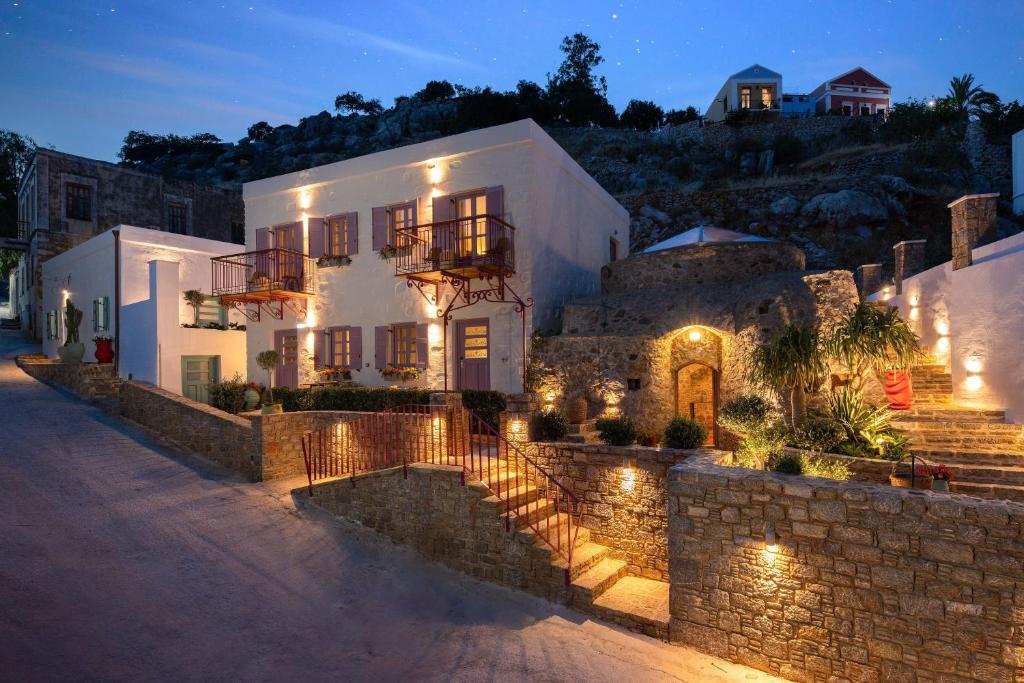
Chorio / Ano Symi (Upper Town): Best for views and atmosphere
Perched above the harbour, Chorio is quieter and more traditional. You’ll find narrow lanes, small squares, and family-run tavernas. Many rooms here have balconies with sweeping views over the bay. Downside: you’ll need to climb the Kali Strata or drive up and down daily, which isn’t for everyone.

Pedi: Best for peace and swimming
This small seaside village is just a couple of kilometres from Chorio. It has a handful of tavernas and a calm beach, plus boats to Agia Marina and other coves. It’s a good choice if you want a slower pace but still be close to town.

Nimborio: Best for retreat and seclusion
On the opposite side of the harbour, Nimborio is even quieter than Pedi. A few tavernas and rooms to rent make it feel like a hideaway. It suits travellers who want to disconnect and don’t mind limited facilities.

Best Time to Visit Symi
Symi has a long season, from April through October, with very different moods depending on when you go. Choosing the right time depends on whether you want heat and energy, or quiet and calm.
April – May
Spring is one of the best times to visit. The hills are still green, wildflowers bloom, and temperatures are mild (18–24°C). It’s perfect for hiking and exploring the Kali Strata without the summer heat. The sea is still cool, but swimmable by late May.
June
The island warms up, ferries run more frequently, and tavernas are fully open. Beaches are lively but not crowded, and evenings are warm enough for outdoor dining. A sweet spot for good weather without peak-season crowds.
July – August
High summer brings heat (30–35°C) and the busiest crowds. Day-trippers from Rhodes flood the harbour between 10:00 and 16:00, and accommodation prices peak. If you come now, plan early mornings and late evenings in town, and escape to beaches during the day.
September
Many consider September the ideal month. The sea is warm, the weather is settled, and the crowds thin out after the first week. It’s still lively, but with a calmer pace.
October
The season winds down. Ferries run less often, some tavernas close, but the island regains a local feel. Temperatures are pleasant (20–25°C), and it’s a good time for walking and photography.
November
Tourism is quiet, but on November 8 Symi fills with pilgrims for the feast of the Archangel Michael at Panormitis Monastery. It’s the island’s biggest religious event, drawing visitors from across Greece. Outside of this, expect a very quiet island with limited services.
Best Time Overall
- For swimming and beaches: June to September.
- For hiking and exploring: April–May or late September–October.
- For culture and tradition: November 8, during the Panormitis festival.

How to Get Around Symi
By bus
There is public transportation in Symi in the form of two bus lines:
- Bus between Gialos, Chorio and Pedi with “Lakis” line. For information about the latest timetables, call (+30) 694 531 6248 or (+30) 697 669 4999.
- Bus between Symi town and Panormitis Monastery: for the latest timetables, call (+30) 22460 71311.
By taxi
Here are the phone numbers of taxi drivers in Symi:
- Charisopoulos Thanasis: (+30) 6946568731
- Kourdoumbas Stamatis: (+30) 6945226348
- Makropoulos Giannis: (+30) 6945531676
- Nikolis Giannis: (+30) 6987569469
- Petridis Georgios: (+30) 6974623492
- Tsavaris Konstantinos: (+30) 6944105596
By car
There are a handful of car rental companies in Symi: Panormitis Travel Car rental and Revel Rentals are the ones with the best reviews. They also rent out scooters.
Renting a boat in Symi
This is also possible in Symi and a good way to move around if you are a group. Symi Coral and Rent Boat Yannis are two well known companies.

Money & ATMs in Symi
Symi is still a cash‑leaning island once you leave Gialos and head into the upper villages. Most restaurants and cafés take cards, but small family tavernas, bakeries and beach boats often prefer cash. ATMs are limited to Gialos and can run low in peak season, so it’s smart to withdraw before heading out for the day. Wise and N26 debit cards work smoothly on Symi, giving you the cheapest withdrawals and payments as long as you always decline the ATM’s “conversion” prompt.


Connectivity and Internet in Symi
Symi has reliable mobile coverage in Gialos and Chorio, with steady 4G/5G that’s perfect for maps, messaging and everyday browsing. Speeds drop on the remote beaches and along the hiking paths, but you rarely lose signal completely. Most hotels offer decent Wi‑Fi, though it’s not built for heavy uploads. A Greece eSIM works smoothly across Symi and is the easiest way to stay connected during your stay.
👉 For the most reliable data around Symi’s bays and inland paths, check my Greece eSIM guide.

Other Practical Tips for Visiting Symi
- Getting around Symi is part of the experience. Water taxis from Gialos and Pedi are the easiest way to reach beaches like Nanou, Agios Georgios, and Marathounda. Fares usually run 10–15 euros return, but the crucial detail is the timetable: return boats are fixed, and missing one can mean an unexpectedly long stay.
- On foot, Symi demands good shoes. The Kali Strata alone has 500 steps, and most beaches are pebbly, so sturdy sandals or trainers are essential, along with sea shoes if you want to swim comfortably.
- Basic services exist — ATMs, pharmacies, and small supermarkets — but opening hours can be irregular outside July and August. Stock up when you can, and don’t assume late‑night shopping is an option.
- Heat shapes the rhythm of the island. In July and August, mornings and evenings are best for exploring; midday is better spent in the shade or by the water.
- You’ll also notice Symi’s unofficial mascots: cats. They wander through tavernas and along the harbour, adding to the island’s charm, though you may need to guard your plate.
- Timing matters too. Around November 8, the feast of the Archangel Michael at Panormitis draws thousands of pilgrims, filling ferries and booking out accommodation. In contrast, on a summer evening after the last day‑tripper ferry departs around 16:00, Gialos transforms into a quieter, more atmospheric town. This is arguably the best time to enjoy it.

Dodecanese Island Hopping
Island hopping from Symi is one of the most rewarding ways to explore the Dodecanese.
- From Symi’s pastel harbor, ferries connect quickly to Rhodes, with its medieval Old Town and the Palace of the Grand Masters. From Rhodes, I highly recommend paying a visit to the remote island of Kastellorizo.
- A bit to the west of Symi, Tilos offers quiet beaches and rare wildlife, while Nisyros impresses with its volcanic crater and traditional villages.
- Further north, Kos blends ancient ruins with lively seaside towns, Nisyros gives you the chnce to walk inside an active volcano, Kalymnos is known for climbing and sponge-diving traditions, Patmos adds a spiritual dimension with the Monastery of St. John, while Leros reflects wartime heritage and a relaxed pace.
- And if you’re looking for something wilder, Karpathos sits further south. It is rugged, windswept, and perfect for travelers who want dramatic landscapes and quiet villages far from the crowds.
Each island has its own character, and the short distances make it easy to combine several in one trip, creating a mosaic of history, culture, and Aegean scenery.

Why Symi Is Worth Visiting
Symi is worth visiting because it offers more than a postcard harbour. The pastel mansions of Gialos are unforgettable, but the island’s real charm appears once the day‑trippers leave. Staying overnight reveals quiet evenings in Chorio, mornings when fishing boats return, and views that stretch across the Aegean.
The island balances variety with intimacy: climb the Kali Strata for history and perspective, take a bus to Panormitis Monastery for tradition, or spend the day beach‑hopping by water taxi. Each cove has its own character, from the dramatic cliffs of Agios Georgios Dysalonas to the goats of Marathounda.
Add Symi shrimp, harbour tavernas, and relaxed nights by the sea, and you have an island that rewards time and attention. That is why Symi is worth adding to you quiet Greek islands itinerary.
Last Updated on 03/03/2026 by Panos


Very nice website with great pictures and good description.
Thanks a lot, Gisela. I try to be helpful and objective.
Spread the word! 🙂