

Kastellorizo Travel Guide: Blue Cave, Kaş Ferry & Life at Greece’s Eastern Edge
Kastellorizo is one of those places where the map explains half the story. Greece’s easternmost inhabited island sits more than 100 kilometres from Rhodes but almost within touching distance of the Turkish town of Kaş. From the harbour you can look across to Anatolia; from Kaş, Kastellorizo looks like a colourful neighbourhood floating offshore.
That geography shapes almost everything about a visit. Some travelers arrive from Rhodes for two or three quiet nights. Others cross from Turkey in the morning, spend a day swimming and walking around the harbour, and are back in Kaş for dinner.
I think Kastellorizo deserves to be understood as both. It is an unusually easy international day trip from Kaş, but staying overnight gives you the island after the ferry traffic disappears: turtles in the harbour, long dinners beside the water, the Blue Cave in the morning, ancient Lycian traces above town and some of the most unusual geography in Greece.

Day trip from Kaş: absolutely worth doing
If you are already staying in Kaş, Kastellorizo is unusually easy to add. The crossing is extremely short, you arrive directly in the main harbour, and almost everything a first-time visitor wants to see is reachable on foot or by local boat.
In a single day you can explore the waterfront, visit the museum if open, see the Lycian Tomb and castle, have a Greek lunch, swim, and — if sea conditions cooperate — take a short boat trip to the Blue Cave.
Stay overnight if Kastellorizo is the destination
If you are flying or ferrying from Rhodes, I would not travel this far simply to rush away again. Two nights give you the harbour after the day traffic leaves; three let you add the Blue Cave, St George Island, Palaiokastro or St George of the Mountain without turning the island into a checklist.
Kastellorizo is tiny, but that is exactly why slowing down works here.
They refer to the same island. Megisti is the official Greek name, Kastellorizo is the name most international travelers use, and Meis is the Turkish name you will see when searching for ferries and day trips from Kaş. If you are planning from Turkey, search both “Meis” and “Kastellorizo”.
Visiting Kastellorizo as a day trip from Kaş
This is the search angle I think many English-language Greece guides underplay. Kaş sits directly opposite Kastellorizo, and the international crossing can take only a fraction of the time required to reach the island from Rhodes.
The important point is that this is still an international border crossing between Turkey and Greece. Bring your passport and make sure you personally meet the current Schengen entry requirements. Ferry schedules and documentation rules can change, so confirm both before travel.

Day Trip to Kastellorizo Island from Kaş
Ferry from Kaş to Kastellorizo with free time to explore the harbour, museums and swimming spots, plus the option to experience the Blue Cave during the day.
This is the easiest option if you are based in Turkey and want the transport organized without building Kastellorizo into a longer Greece itinerary.
Check the Kastellorizo Day Trip
Kastellorizo map
The inhabited part of the island is concentrated around the harbour and Mandraki. The airport, Palaiokastro and St George of the Mountain sit farther inland, while the Blue Cave and offshore islets are reached by boat.
A Greek island shaped by Anatolia, shipping and migration
Kastellorizo has always lived between larger worlds. Its position beside the Anatolian coast brought Greek, Lycian, Byzantine, Hospitaller, Ottoman, Italian and other influences into an island measuring only a few square kilometres.
The Knights of St John fortified the reddish rock above the settlement in the Middle Ages. The name Castello Rosso — Red Castle — is generally linked to the modern name Kastellorizo.
Much later, maritime trade and shipping created considerable wealth. The population once numbered in the thousands, and the neoclassical houses around the harbour reflect that era of prosperity.
War, fire and migration changed the island dramatically during the 20th century. Many Kastellorizians eventually settled in Australia, and that diaspora still shapes the island today through summer returns, restorations and family ties.

Start with the harbour — but do not stop there
Kastellorizo’s horseshoe harbour is one of the most photogenic in the Dodecanese. Pastel houses wrap around the water, fishing boats sit beside visiting yachts, and loggerhead turtles regularly surface between restaurant tables and the quay.
The waterfront is beautiful, but the more interesting part begins when you wander behind it. Half-restored houses, empty plots and quiet lanes show the consequences of depopulation and the gradual rebuilding driven partly by diaspora families.

Kastellorizo Archaeological / Diachronic Museum
The island’s Diachronic Museum sits beside the medieval fortified area and combines archaeological, Byzantine and folklore material. It is small enough to visit without sacrificing half the day, but useful because so many historical layers are otherwise easy to walk past without understanding them.
The official Greek Ministry of Culture currently lists the Diachronic Museum as open 08:30–15:30, with Tuesday closed. Check the official listing again shortly before your visit because small-island opening arrangements can change.

The Historic Collection in the Ottoman Mosque
The former Ottoman mosque houses the Historic Collection of Kastellorizo, with photographs, documents, costumes, household objects and other material focused particularly on the island’s more recent history.
At the time of this update, the Greek Ministry of Culture lists the Historic Collection in the Ottoman Mosque as temporarily closed during the 2026 summer season. Do not rely on older travel guides that still show normal opening hours; check the official museum listing before going.
Saint George at Pigadi
Saint George at Pigadi is one of the churches woven directly into everyday Kastellorizo rather than isolated as a sightseeing stop. It is worth stepping inside when open and then continuing through the surrounding residential lanes.

Where to swim in Kastellorizo
Kastellorizo is unusual among Greek islands because traditional beaches are almost beside the point. Much of the swimming happens from rocks, quays and terraces directly into deep clear water.
A sheltered bay beyond the main harbour and one of the island’s more conventional swimming spots.
Ladders around the waterfront give direct access to the water, often with turtles nearby.
A tiny offshore islet with swimming platforms, sunbeds and a simple café.
Direct sea access at the western side of the harbour.
Swim, stay for a drink and catch the late light across the harbour.

St George Island
A local boat takes only a few minutes to reach St George Island. The chapel, rocky terraces and clear sheltered water make it one of the easiest half-day escapes from town.
The historical sites that make Kastellorizo more than a pretty harbour
The Lycian Tomb
The rock-cut Lycian Tomb above the harbour is one of Kastellorizo’s most revealing monuments because it points directly toward nearby Anatolia. Lycia developed across what is now southwestern Turkey, and Kastellorizo’s tomb is a rare reminder that ancient cultural geography did not follow modern borders.
The walk is short and the view back toward Turkey makes the geographical relationship difficult to miss.


Castle of the Knights of St John
The remains of the Hospitaller castle rise directly above the harbour. The fortification itself is fragmentary, but the reason for building it here is obvious once you reach the viewpoint: sea routes, offshore islets and the Anatolian coast all fall into view.

Palaiokastro
Palaiokastro sits inland on the island’s plateau and preserves layers from antiquity through later fortification. Cisterns, ruined structures and churches remain within and around the site.
The walk there is as important as the monument itself because you leave the colourful harbour behind and see Kastellorizo as a dry, exposed eastern Mediterranean island.


St George of the Mountain
One of the island’s best walks climbs the long zig-zag staircase from the settlement toward the plateau and the Monastery of Agios Georgios tou Vounou. The route contains roughly 400 steps and gains enough height to open wide views over the harbour and Turkish coast.
Go early or late in summer. There is very little reason to prove anything by climbing exposed stone steps at 14:00 in August.

The Blue Cave: the one boat trip I would not skip
Kastellorizo’s Blue Cave sits on the southeastern coast. The opening is low enough that passengers may need to duck or lie back while the small boat slips inside. Once through the entrance, reflected sunlight turns the water an intense electric blue.
The cave is best treated as a weather-dependent morning experience, not something guaranteed by a fixed itinerary. Sea conditions determine whether small boats can enter safely, and morning light usually produces the strongest colour.


Ro Island
Ro lies west of Kastellorizo and is associated with Despina Achladioti, remembered in Greece as the Lady of Ro. Local boat trips sometimes combine Ro with other offshore stops.
Where to stay in Kastellorizo
The accommodation decision here is much simpler than on a large Greek island. Almost everything is concentrated around the harbour or a short walk away, so I would focus less on “which area?” and more on view, swimming access, atmosphere and how far you want to carry luggage uphill.
These are the properties I would shortlist from the island’s limited accommodation stock. I have not personally slept in every property below, so I am keeping the recommendations tied to location and accommodation style rather than pretending otherwise.
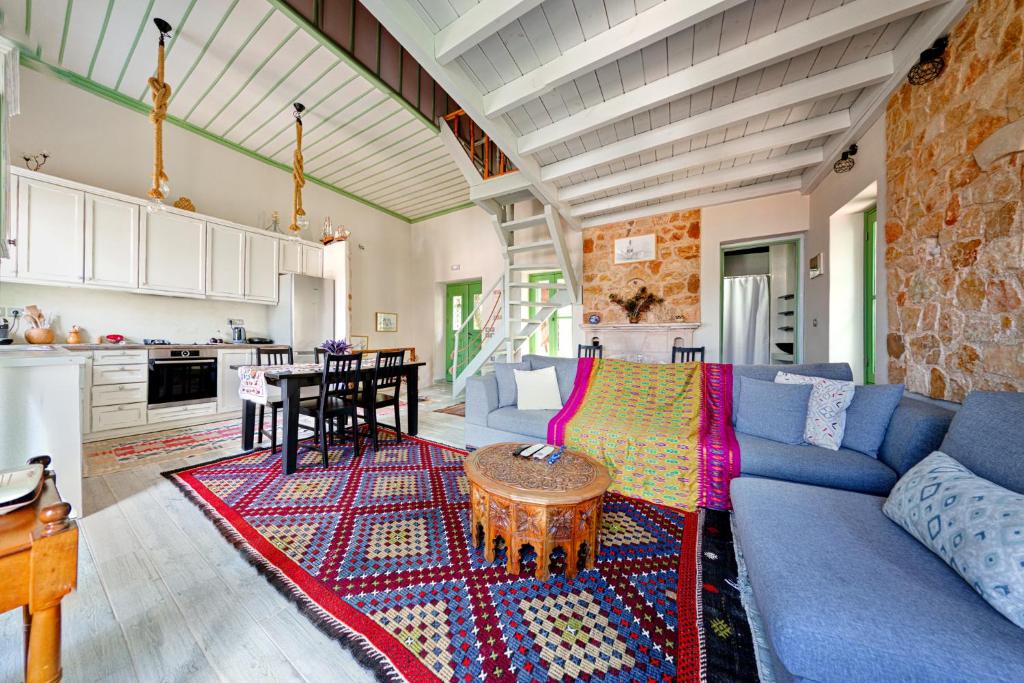
Blue Horizon Kastellorizo
Waterfront guesthouse with balconies over the harbour, a strong fit if sea views and a peaceful setting matter most.
Check Prices & Availability
Casa Mediterraneo Hotel
A small characterful hotel with harbour-facing balconies and a more intimate atmosphere.
Check Prices & Availability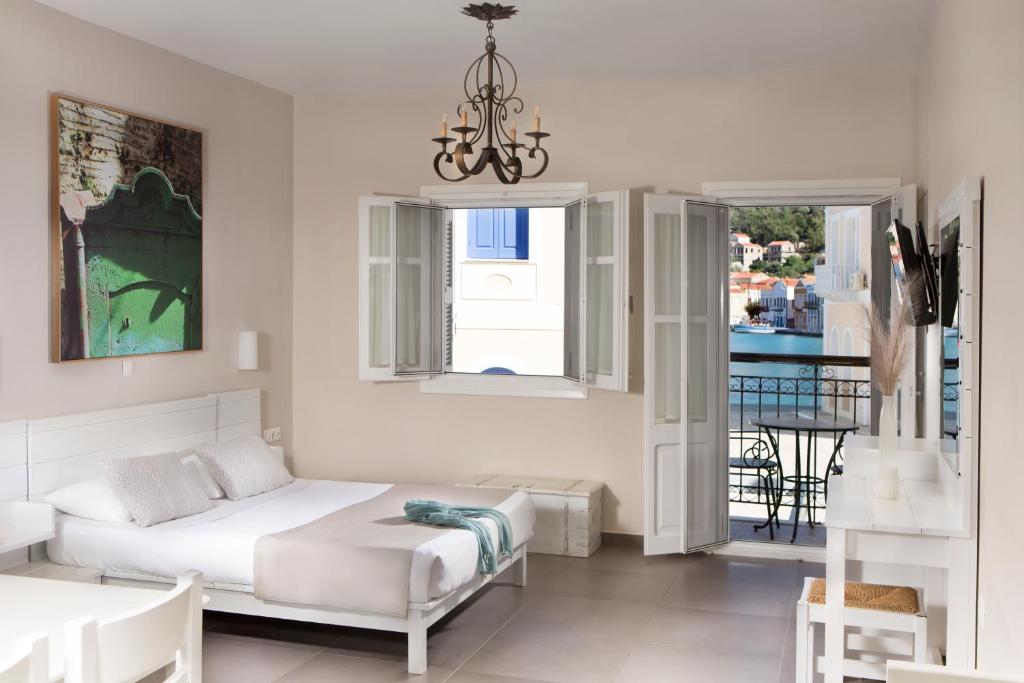
Poseidon Hotel
A harbourfront option with balconies over the sea and easy access to the waterfront.
Check Prices & Availability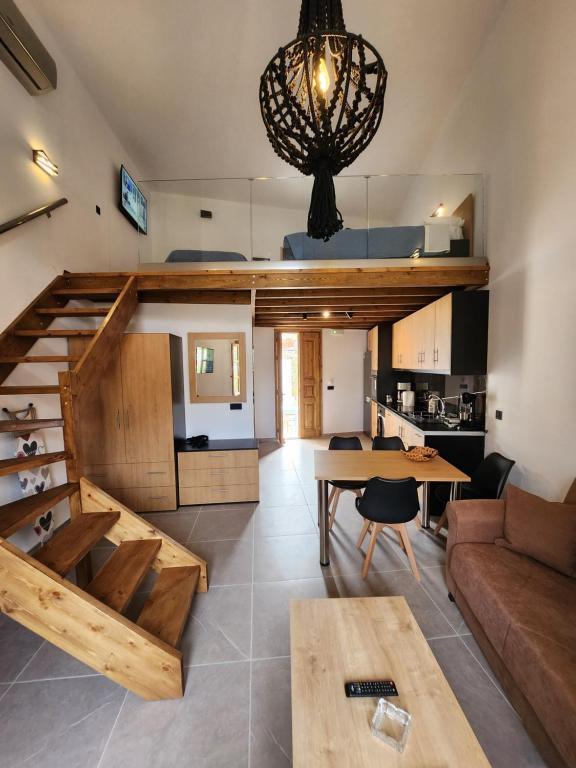
Kastello
A stone-built guesthouse overlooking the harbour, suited to travelers who prefer character over a conventional hotel feel.
Check Prices & Availability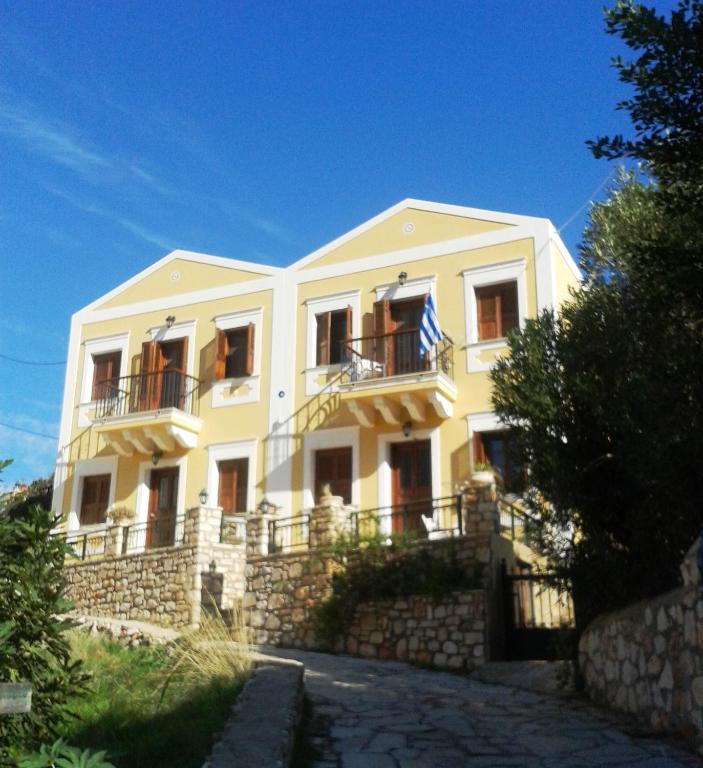
Maria’s Apartments
Simple apartments near the harbour for travelers who prefer extra independence and a less hotel-like stay.
Check Prices & AvailabilityWhat to eat in Kastellorizo
Kastellorizo’s food makes more sense once you remember where you are. Seafood is central, but several recipes also show eastern Mediterranean influences that fit an island sitting immediately beside the Lycian coast.
Onions stuffed with rice, herbs and cumin — one of the most recognizably local dishes.
A spiral fried pastry finished with sugar, cinnamon and clove.
Syrup-soaked pastry rolls with walnuts and spices.
A traditional almond drink associated with celebrations.
Typical harbour-taverna territory, often appearing as meze.
Particularly associated with family cooking and festive meals.

Restaurants and cafés our team enjoyed
- Agora Restaurant — casual, generous and useful when you want something beyond a long seafood dinner.
- Alexandra’s Restaurant — one of the classic waterfront choices, with seafood and turtles often visible directly beside the tables.
- Faros Bar — good for an afternoon swim followed by sunset drinks.
- Meltemi Café — long-running café for breakfast, coffee and easy evening food.
- Ta Platania — family cooking in St George’s Square and a connection with the film Mediterraneo.
- Mourayo — a more polished dinner option beside the water.
- Stratos Café — useful from breakfast through drinks later in the evening.

How many days do you need in Kastellorizo?
| Time | What realistically fits | Who it suits |
|---|---|---|
| Kaş day trip | Harbour, museum or castle, lunch, swimming and potentially the Blue Cave if timing and sea conditions work. | Travelers already based in Turkey. |
| 1 night | The harbour after day visitors leave plus an early Blue Cave attempt the next morning. | A very short add-on from Rhodes or Kaş. |
| 2 nights | Town, Blue Cave, swimming and one substantial walk or offshore excursion. | My minimum if Kastellorizo is a destination in its own right. |
| 3 nights | Everything above at a much more natural pace, with room for St George Island, Ro or Palaiokastro. | Slow travelers and anyone who values atmosphere. |
Best time to visit
May–June and September–October are the easiest months if you want warm conditions without building the entire day around extreme heat. July and August have the fullest summer atmosphere but also the highest temperatures, busiest accommodation and strongest pressure on limited transport capacity.
How to get to Kastellorizo
Fly from Rhodes
Olympic Air operates the small Rhodes–Kastellorizo route. The flight itself is roughly 40 minutes, which makes flying by far the fastest way to reach the island from the Greek side when the schedule suits your dates.
There is no direct international flight network here. If you start in Athens, you normally connect through Rhodes.
Kastellorizo is also included in my guide to quiet Greek islands with airports, because the tiny airport dramatically changes the practicality of visiting such a remote island.
Check whether flying via Rhodes saves enough time to justify choosing it over the ferry.
Compare Flight PricesUseful if you are routing through Rhodes or combining Kastellorizo with other Dodecanese islands.
Compare Ferry TicketsFerry from Rhodes
Conventional ferries from Rhodes take several hours, while faster regional vessels can cut the journey substantially when scheduled. The exact sailing pattern changes seasonally, which is why I would check the actual timetable before fixing non-refundable hotel nights.
Ferry from Piraeus
The long Piraeus–Kastellorizo sailing exists, but this is a very different proposition from hopping between nearby islands. Expect an overnight or all-day journey rather than treating it as a quick transfer.
From Kaş, Turkey
This is geographically the easiest approach. Fast services can make the crossing in well under 20 minutes, although actual crossing time depends on the vessel and border procedures add time at either end.
If you are building a longer Greek island trip rather than visiting from Turkey, use my Greek island-hopping routes and quiet Dodecanese guide before booking the sequence.
How to get around Kastellorizo
On foot
This is the default. The harbour, Mandraki, Lycian Tomb, castle and most restaurants are easily reached on foot.
The walk to St George of the Mountain is a different proposition because of the roughly 400-step ascent and exposed terrain.
Water taxis
Small boats leave the harbour for St George Island, nearby swimming spots and other offshore excursions.
Blue Cave trips are also arranged directly with local boatmen and depend on sea conditions.
Taxi & airport bus
Kastellorizo is small enough that transport really is this limited.
Taxi: Georgios Moraitis — (+30) 6938 739 178
Airport bus information: (+30) 22460 49250
This is not an island where you open an app and watch six cars moving around a map. If you need a taxi for the airport or luggage, arrange it rather than assuming one will appear exactly when you want it.
Money and ATMs in Kastellorizo
When I checked the island, ATM availability was extremely limited — effectively one machine — and I would not build the trip around it always working. Bring enough euros from Rhodes or Kaş to cover boat trips, small purchases and at least some meals.
Cards are increasingly common, but cash is still useful on an island where many services are tiny, seasonal operations.
I use a multi-currency card for foreign spending and withdrawals rather than accepting unnecessary currency conversion at ATMs.
See the Travel Card I UseI also travel with a second card so one banking problem does not become a cash problem on a remote island.
See My Backup OptionMobile coverage and the Turkish-network trap
Kastellorizo’s location creates a mobile problem that does not exist on most Greek islands: your phone can see Turkish networks almost as easily as Greek ones.
If your plan treats Turkey as non-EU roaming, accidentally connecting to a Turkish network can become expensive. I would switch off automatic network selection if necessary and check which carrier your phone is using before turning on heavy mobile data.
I explain this in more detail in my Greece eSIM guide and my Dodecanese eSIM guide, where remote-island network choice matters much more than it does in central Athens.
One option is to install a Greece eSIM before the trip, but check the underlying Greek network as well as the headline price.
Check the Current Greece PlanQuiet hours
Do not assume every small shop or service stays open continuously through the afternoon. A number of businesses observe a mid-afternoon break, roughly around 14:30–17:30. On Kastellorizo, that is not a problem — it is a good excuse to swim or have a long lunch.

Where Kastellorizo fits in a wider Greece trip
Kastellorizo is too remote to add randomly. It works best either as a deliberate stay reached through Rhodes, as a cross-border side trip from Kaş, or as the eastern end of a Dodecanese journey.

Kastellorizo travel FAQ
Is Kastellorizo worth a day trip from Kaş?
Yes. It is one of the easiest international side trips from the Turkish coast. The harbour, castle, Lycian Tomb, lunch and swimming all fit comfortably into a day, while the Blue Cave may also fit if ferry timing and sea conditions cooperate.
How long is the ferry from Kaş to Kastellorizo?
It depends on the vessel. Fast services can make the crossing in well under 20 minutes, while other sailings take around 15–20 minutes. Border processing means the complete port-to-port experience takes longer than the sailing itself.
Is Meis the same place as Kastellorizo?
Yes. Meis is the Turkish name for the island. Megisti is its official Greek name, while Kastellorizo is the name most international visitors use.
How many days should I stay in Kastellorizo?
Two nights are enough for the essentials without rushing. Three nights work better if you want the Blue Cave, swimming, museums, St George of the Mountain and another boat or walking excursion.
Can you visit the Blue Cave on a Kaş day trip?
Potentially, yes, but do not treat it as guaranteed. Blue Cave boats depend on sea conditions and usually work best in the morning, so your international ferry arrival time matters.
Does Kastellorizo have beaches?
Not in the conventional resort-island sense. Most swimming is from rocks, platforms and harbour ladders. Mandraki and St George Island offer more beach-like swimming environments.
Do you need a car in Kastellorizo?
No. The main settlement and most sights are walkable. Boats are more useful than a car for many of the island’s best swimming and sightseeing experiences.
How do you get to Kastellorizo from Rhodes?
You can fly on the small domestic service or take a ferry. Flying is much faster, while the ferry makes more sense if Kastellorizo is part of a Dodecanese island-hopping route.
Where should you stay in Kastellorizo?
Almost all accommodation is around the main settlement, so prioritize harbour views, sea access, room style and walking convenience rather than obsessing over neighbourhoods.
Why Kastellorizo is worth the effort
Kastellorizo’s remoteness is strange because it depends on which direction you approach it from. From Rhodes, it feels like an isolated Greek outpost far to the east. From Kaş, it is the colourful island immediately across the water.
That contradiction is what makes it interesting. The Lycian Tomb points toward Anatolia, the Hospitaller castle toward Rhodes and the medieval Aegean, the Ottoman mosque toward another layer of the island’s past, and the restored neoclassical houses toward the maritime wealth and diaspora that followed.
You can absolutely see Kastellorizo in a day from Turkey. But if you stay, the trip changes character: an early boat into the Blue Cave, a swim from the quay, a long climb above the harbour, dinner while turtles surface beside the tables, and the lights of Turkey appearing across the water after dark.
That is the Kastellorizo I traveled for.
Last Updated on 30/09/2026 by Panos


