

Folegandros Travel Guide 2026: Chora, Beaches, Trails & a 4-Day Plan
The cliffside island that Santorini wishes it still was — but Folegandros makes much more sense once you stop planning it like a flat island.
Folegandros looks tiny on a map. When I was there, what struck me was how vertical it feels in practice: the ferry arrives at sea level in Karavostasis, Chora sits dramatically above the coast, Ano Meria stretches along the rural ridge, and many of the beaches require a descent, a walk or a boat.
That geography changes the entire trip. You do not need a long attractions checklist. You need to know where to base yourself, which part of the island fits each time of day, which beach makes sense in the conditions, and when walking is part of the experience rather than just transport.
I am Greek, I have spent decades traveling around Greece, and I visited Folegandros as part of my own Cyclades travel. This guide combines what I experienced on the island with practical planning: Chora and Kastro, Ano Meria, beaches, hiking, ferries, food, transport and how I would structure four unhurried days.
Updated October 2026.

Is Folegandros worth visiting?
Yes — especially if you care more about atmosphere, landscape and evenings than a huge sightseeing list. I would give it four nights, stay in Chora on a first visit, keep at least one beach day flexible for wind and sea conditions, and use Ano Meria to understand the island beyond its postcard side.
I would not choose Folegandros primarily for large sandy beaches, nightlife or resort facilities. That is precisely why the island works so well for the right traveler.
First understand Folegandros as a vertical island
Most travel guides start with a list of attractions. I think the geography is more useful.
Karavostasis & the coast
The ferry port, practical arrival point and access to nearby beaches and boat trips. Useful, quiet and convenient — but it does not give you the evening atmosphere that defines Chora.
Chora, Kastro & Panagia
This is the social and visual heart of Folegandros: linked squares, pedestrian lanes, Kastro and the zigzag climb toward Panagia above the settlement.
Ano Meria
A scattered agricultural settlement rather than a compact postcard village. Terraces, old paths and the rural landscape explain the island in a way Chora alone cannot.
The beaches then sit below this spine in coves around the island. That is why “only a couple of miles away” does not always translate into effortless access. On Folegandros, vertical distance, wind, heat and the final footpath matter almost as much as the mileage.
Base yourself in Chora, use the bus or a car for the ridge and easy beaches, and treat the harder coves as deliberate excursions rather than assuming you will casually visit three beaches in one afternoon.
If you want to book something in Folegandros, start here
Folegandros does not need a packed tour schedule. These are useful because each solves a different problem: context in Chora, access to the coast, or a food experience beyond choosing another taverna.

Folegandros Cultural & Historical Walking Tour
A sensible choice if you want Chora and the island’s history explained rather than simply walking past whitewashed houses and viewpoints.
Check walking-tour availability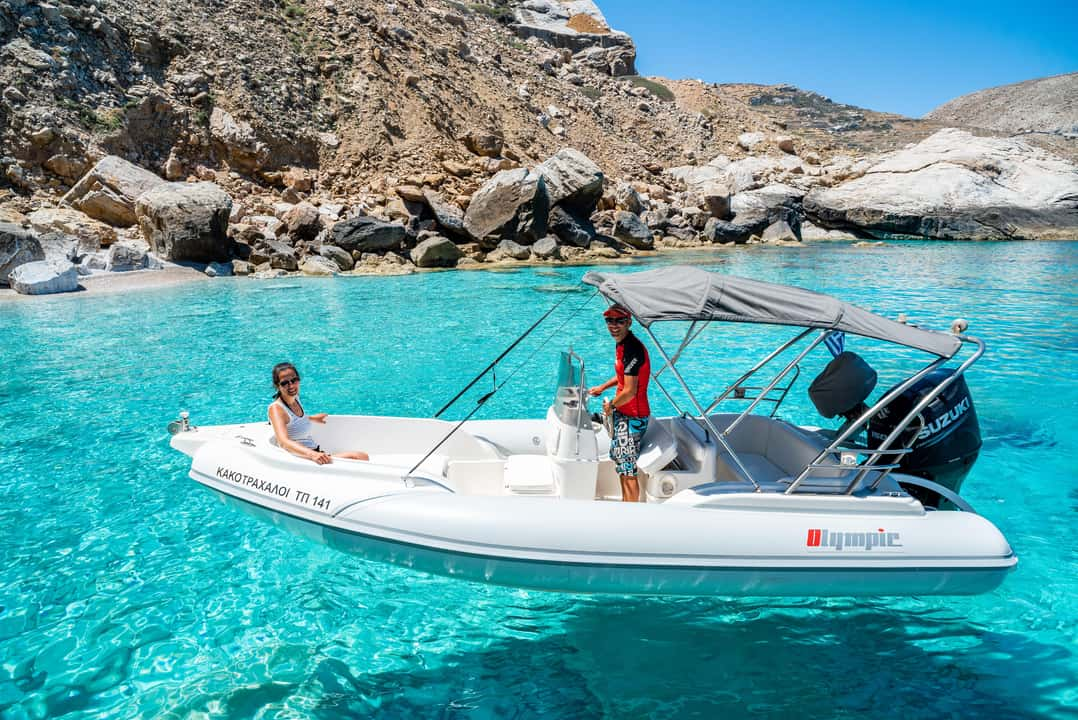
4-Hour Private Folegandros Boat Tour
The most practical splurge if your priority is seeing the coastline and coves that are awkward or time-consuming to reach overland.
Check private boat-tour availability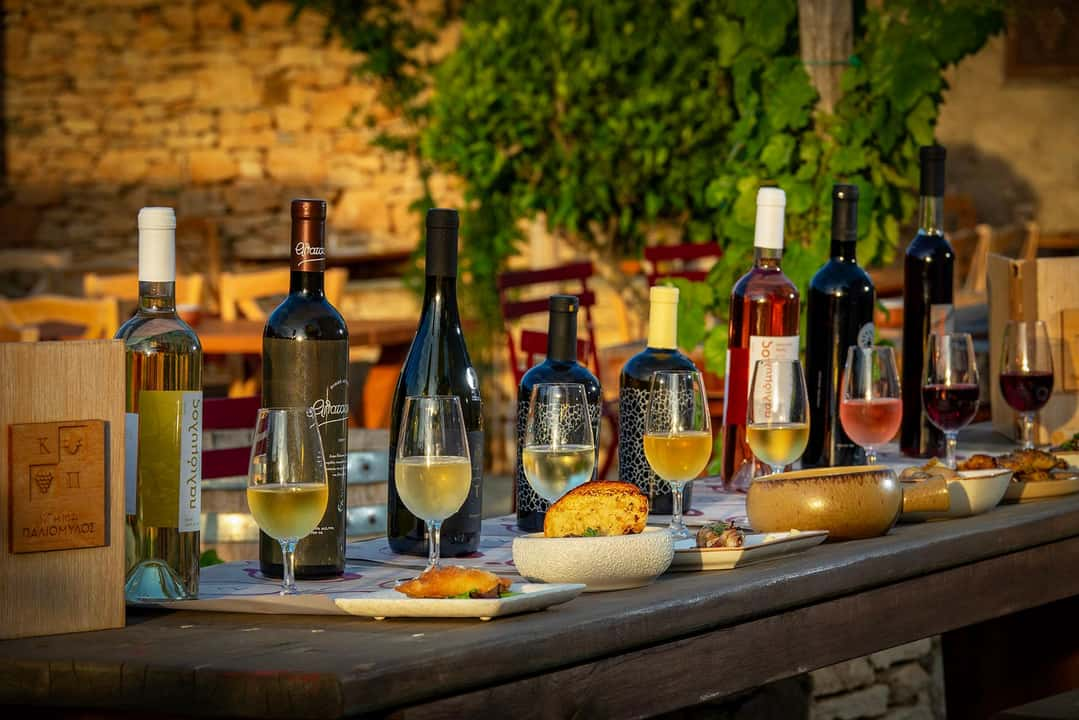
8-Course Food & Wine Pairing Experience
A more structured food evening if you want to go beyond casual tavernas and make one dinner a proper experience.
Check food & wine availabilitySome tour links are affiliate links. If you book through them, I may earn a commission at no extra cost to you. I only place them where the activity fits the way I would actually structure time on Folegandros.
Why Folegandros looks the way it does
The most useful way to understand Folegandros’ history is to look at the landscape you see today. Its rugged terrain, limited water, relative isolation and exposed position shaped a society that had to be defensive and largely self-sufficient.
Ancient sources associated the island with a hard, stony landscape. Folegandros later passed through the Roman and Byzantine worlds before the Venetians incorporated it into the Duchy of the Archipelago in the early 13th century.
The Venetian period left one of the island’s most visible historical layers: Kastro. Rather than a separate castle above the village, houses themselves helped form a defended settlement against raids and piracy.
The Ottoman period, agricultural hardship and centuries of limited investment kept Folegandros peripheral. In the 20th century, its isolation was again used politically when people were exiled here under the Metaxas dictatorship.
Ironically, the same marginality that once made life difficult helped protect the island from the intense development that reshaped parts of Santorini and Mykonos. The terraces around Ano Meria, Kastro and the small-scale Chora survived because Folegandros was never transformed into a large resort economy.

How to get to Folegandros
Folegandros has no airport. You arrive by ferry, usually from Piraeus or another Cycladic island such as Santorini, Milos, Sikinos or Naxos depending on the seasonal schedule.
That is one reason Folegandros still feels different from islands fed by constant flights. The ferry is not merely transport; it is part of the filtering mechanism that keeps the island smaller-scale.
I keep current route combinations, ferry logic, port advice and transfer options in a separate guide so this page does not become an enormous timetable: how to get to Folegandros from Athens, Santorini, Milos and nearby islands .
Chora, Kastro and Panagia: the essential Folegandros evening
I would not treat Chora, Kastro and the Church of Panagia as three separate attractions. They work best as one sequence.
Start in Chora in the later afternoon, when the sun is less harsh. Wander into Kastro, the medieval core, where the logic of the old fortified settlement is still legible in the narrow passages and tightly packed houses.

From there, make your way through the linked Chora squares before climbing the white zigzag path to Panagia. The church itself is simple; the location and the changing view over the island are the point.


That return matters. The squares are a major part of Folegandros after sunset. Dinner and a drink in Chora should feel like the continuation of the day rather than another item on an itinerary.
The cultural and historical walking tour is most relevant here, especially if you want Kastro and Chora explained rather than simply photographed.
Ano Meria explains the island better than another viewpoint does
Ano Meria is not a compact village in the same sense as Chora. It is a dispersed rural settlement stretched along the ridge, surrounded by terraced fields, stone walls and old agricultural plots.
That difference matters. Chora shows you Folegandros as a social settlement; Ano Meria shows you the agricultural landscape that made life possible here.
The Folklore Museum is housed in a traditional rural complex and preserves tools, domestic spaces and agricultural objects associated with a far more self-sufficient way of life. Opening times can be seasonal, so I would check locally rather than build a day around an old timetable.

If you have transport, continue farther toward the western side of the island rather than immediately turning back. This is where Folegandros becomes sparse and exposed, with little visual clutter between the terraces and the Aegean.

Folegandros beaches: choose by access and conditions
Folegandros is not Milos. I would not come here expecting an enormous catalog of easy, organized beaches.
The coast is more interesting as a series of small coves with different access problems. Some are easy. Some require walking. Some work better by boat. Wind can completely change which one makes sense that day.
| Beach | Access | Facilities | Best for | The catch |
|---|---|---|---|---|
| Agali | Bus / car | Tavernas nearby | Easy beach day | Popular because it is easy |
| Agios Nikolaos | Walk or boat from Agali | Taverna | Swim + long lunch | Extra walk or boat connection |
| Galifos | On foot | Very limited | Simple, low-key swimming | Not an organized beach |
| Livadaki | Longer hike or boat | None | Isolation and scenery | Time + exposure |
| Katergo | Boat or exposed hike | None | Wild coastline | Plan access deliberately |
| Vorina | On foot | None | Dramatic setting | Wind can make it a poor choice |
Agali: the easiest choice
Agali is where I would go if I wanted a straightforward beach day without turning access into an expedition. It is reachable by road and seasonal bus, and the tavernas make it easy to stay for several hours.

Agios Nikolaos: beach plus lunch
Agios Nikolaos is the more rewarding extension if you are comfortable walking from Agali or catching a boat. The setting feels more removed and the beach works particularly well if you want swimming followed by a slow lunch.

Galifos: deliberately simple
Galifos is smaller and much less serviced. Choose it because you want that simplicity, not because you expect loungers, beach bars or an organized resort experience.

Livadaki and Katergo: make access part of the day
These are the beaches where I would stop thinking in terms of “squeezing in another stop.” Hiking or boat access is part of the experience. Bring water, sun protection and enough flexibility that the day does not depend on a precise timetable.
A private 4-hour speedboat tour is one of the few paid experiences here that can materially change what you see, because it turns difficult beach access into a coastal day rather than a transport problem.
Vorina: check the weather, not a ranking
Vorina can look spectacular and still be the wrong choice on a windy day. That is the larger lesson for Folegandros beaches: conditions should override a pre-written “best beaches” ranking.

Hiking in Folegandros
Old footpaths connect Chora, Ano Meria and coastal areas. This is one of the best ways to feel how the settlements relate to the landscape, but summer heat changes the calculation quickly.
| Route idea | Character | Best approach |
|---|---|---|
| Chora → Panagia | Short climb, huge payoff | Late afternoon / sunset |
| Chora → Agali | Descending island path | Avoid midday summer heat |
| Ano Meria → Livadaki | Longer, exposed beach route | Water, shoes, early start |
| Ridge walks around Ano Meria | Terraces, rural landscape, views | Best for understanding the island |

Where to stay in Folegandros
Your base changes the trip more than the hotel star rating does.
| Base | Choose it for | Trade-off |
|---|---|---|
| Chora | First visit, dinners, atmosphere, Kastro, Panagia | No beach outside your door |
| Karavostasis | Port convenience, quiet, easy arrival/departure | Less evening atmosphere |
| Ano Meria | Rural landscape, quiet, space | Transport matters more |
| Agali | Beach-first stay | Less practical for Chora evenings |
For my full breakdown of what each base feels like and best hotels, see my dedicated guide: where to stay in Folegandros .

Four days is the sweet spot for Folegandros
Three nights can work. Four nights is where I think the island starts to make sense without turning every weather change or ferry time into a problem.
I would not recommend a day trip from Santorini unless that is genuinely your only option. Seeing Chora for a few hours is not the same thing as experiencing Folegandros after the day visitors and ferry movements stop mattering.
Understand the cliff
Arrive, settle in Chora, explore Kastro, move slowly through the squares, climb to Panagia in late afternoon and return for dinner.
Go down to the sea
Use Agali as the easy anchor. Walk or boat onward to Agios Nikolaos if conditions are good. Make lunch part of the beach day rather than rushing back.
See rural Folegandros
Spend time around Ano Meria, the Folklore Museum and ridge landscape. Add a walk, Chrysopigi or a village meal depending on heat and transport.
Let conditions decide
Boat day to remote coves if the sea works; a longer hike if walking conditions are better; or simply another beach plus one final unhurried evening in Chora.
What to eat in Folegandros
Folegandros is not an island I would reduce to restaurant rankings. The more interesting part is how the food connects to a small agricultural island with limited resources and a strong tradition of homemade dishes.
- Matsáta: the local signature — handmade pasta traditionally served with braised rabbit, goat or chicken.
- Sourotó: soft, tangy local goat cheese.
- Karpouzénia: watermelon pie with flour, sesame and honey.
- Revitháda: slow-cooked chickpea stew, also strongly associated with other Cycladic islands such as Sifnos.

Restaurants I would keep on the map
Chora
- Belegra Aegean Tastes — modern Aegean meze.
- Kyklos — café, breakfast and evening drinks.
- Nicolas Place — relaxed all-day option.
- Pounta — garden setting, breakfast and homemade food.
- The Baker / O Fournaris — pies, bakery food and takeaway coffee.
- To Barbounaki — seafood with a more modern approach.
Elsewhere
- Agali: O Psaromiligkas for a beach-side meal.
- Ano Meria: Ristorante Flore Mimis for rustic village cooking.
- Ano Meria: Sinadisi for traditional dishes including matsata.
- Karavostasis: I Pardalo for a relaxed harbor meal.

The 8-course food and wine pairing experience is a better fit than adding another generic sightseeing tour to the itinerary.
Getting around Folegandros: do you need a car?
No, not for a normal first visit based in Chora. The seasonal bus connects the main useful points, and Chora itself is pedestrian.
A car becomes valuable when you want to explore Ano Meria on your own schedule, drive toward more isolated parts of the island, switch plans quickly because of wind, or avoid structuring every day around the bus timetable.
By bus
Seasonal buses connect Chora with Karavostasis, Ano Meria and Agali. Services are more frequent in peak season and reduce outside summer.
Check the current timetable directly with Folegandros Buses before planning a connection.
By car, scooter or ATV
The roads are mostly straightforward but can be narrow, and you park outside the pedestrian center of Chora.
- ATV Car & Scooter Rental
- Evo Car Rental — Chora
- Kountouris Car Rentals
- Ottomotion
- Evo Rent A Car — Karavostasis

By taxi
Taxi supply is limited, so I would not assume one will always be waiting when you need it. The Folegandros taxi service can be contacted at +30 694 469 3957, including through WhatsApp or Viber.
Current prices and information: Taxi Folegandros .
For official visitor information, also see the Municipality of Folegandros tourism site .
Money and ATMs
Card acceptance is common, but I would still carry cash. A small island gives you less redundancy if an ATM is offline or temporarily empty.
ATMs are concentrated around Chora and Karavostasis rather than remote beaches or walking routes.
Mobile coverage and eSIMs in Folegandros
Chora, Karavostasis and Ano Meria are generally straightforward for normal mobile use. The more meaningful differences appear around cliffs, remote beaches and walking routes, where terrain starts blocking or weakening the signal.
That is why I would not choose a Greece eSIM based only on a speed test in Athens. For a Cyclades trip, I care about how the plan behaves while moving between ports, villages, roads and weaker-signal areas.
For the national comparison, see my best eSIM for Greece guide . For island-specific network behavior and ferry travel, I go into more detail in my Cyclades eSIM guide .
Nomad Greece eSIM
Nomad is the travel eSIM I currently start with for mixed Greece itineraries involving Athens, ferries and islands. Check the live plans because network access and pricing can change.

When Folegandros works best
May, June, September and early October give you the easiest balance of warm conditions and a less pressured island.
July and August are hotter, busier and more expensive. Folegandros is still far smaller-scale than Santorini or Mykonos, but that does not mean its limited room supply, restaurant tables and transport magically remain empty in August.
The meltemi matters as much as crowds. A windy day can make one side of the island uncomfortable while another beach remains perfectly usable. Keep at least one day flexible rather than fixing every beach months ahead.
Winter is a completely different proposition: quiet enough that reduced restaurants, accommodation and ferry frequency become part of the experience rather than just a benefit.
Who should choose Folegandros — and who should not
| Folegandros works especially well for | I would choose another island if you mainly want |
|---|---|
| Couples who care about evenings and atmosphere | Big beach clubs and nightlife |
| Slow travelers | Resort facilities |
| Hikers and walkers | A huge sightseeing checklist |
| Photographers | Endless easy sandy beaches |
| Repeat Greece visitors | A highly serviced family-resort island |
Folegandros is also one of the islands I include in my guide to Greek islands for couples , precisely because the quality of the evening matters as much as the daytime attractions.
Where to go after Folegandros?
I think about Cyclades combinations by contrast and continuity, not by collecting island names.
Folegandros already gives you a cliffside Chora, limited development and slow evenings. The best next island depends on what you want to add to that experience.
For a broader look at less obvious choices around the archipelago, see my quiet Cyclades islands guide .

Santorini + Folegandros
This is the sharpest before-and-after combination. Santorini gives you the caldera, archaeological sites, wineries and intense tourism infrastructure. Folegandros strips almost all of that away.
I like the sequence Santorini first, Folegandros second. After the density of Santorini, Chora feels dramatically calmer rather than merely “small.”
Milos + Folegandros
Milos supplies what Folegandros deliberately lacks: dozens of very different coastal landscapes, road-trip variety, fishing villages and a larger menu of daily excursions.
Together they make a strong cliff-and-coast itinerary. Read my Milos travel guide .


Kimolos + Folegandros
Kimolos is not about adding more famous sights. It extends the small-scale rhythm but changes the geography: compact Chorio, intimate beaches and an island that feels more social and domestic than dramatic.
Read my Kimolos travel guide .
Sikinos + Folegandros
Sikinos takes the same instinct and pushes it further. Fewer rooms, fewer restaurants, fewer people and even less pressure to “do” things.
This pairing is for travelers who leave Folegandros thinking it still feels too busy. See my Sikinos guide .


Sifnos + Folegandros
Sifnos adds a richer culinary scene, pottery tradition, several distinct villages and a very good walking network without jumping into mass-tourism territory.
Read my Sifnos travel guide .
Serifos + Folegandros
Serifos keeps the rugged Cycladic feeling but adds mining history, a different hilltop Chora and a more untamed road-and-beach landscape.
See my Serifos guide .


Amorgos + Folegandros
Amorgos scales everything up: longer distances, higher mountains, bigger hikes, more villages and a stronger sense of moving through an entire island landscape.
Combine them if walking and dramatic terrain are the main point of the trip. Read my Amorgos guide .
Anafi + Folegandros
Anafi sits farther out and feels less integrated into the standard Cyclades circuit. It is the choice if your definition of a successful island trip is walking, empty terrain and very little tourism infrastructure.
See my Anafi travel guide .


Folegandros FAQ
How many days do you need in Folegandros?
I recommend four nights. Three can work if Folegandros is part of a longer Cyclades route, but four gives you enough flexibility for Chora, a beach day, Ano Meria and either hiking or a boat trip without rushing.
Is Folegandros better than Santorini?
They solve completely different travel problems. Santorini has a much larger tourism infrastructure, major archaeological sites and the caldera. Folegandros is smaller, quieter and more about Chora, walking, landscape and unhurried evenings. I like combining them rather than treating one as a replacement for the other.
Do you need a car in Folegandros?
No. If you stay in Chora, buses and occasional taxis can cover the main port, beach and Ano Meria routes. A car is useful if you want more freedom, particularly for the rural ridge and changing beach plans.
Where should a first-time visitor stay?
Chora is my default first-time choice because the best evening atmosphere, restaurants, Kastro and Panagia are all on foot. Read my Folegandros accommodation guide for the trade-offs between Chora, Ano Meria, Karavostasis and Agali.
What is the easiest beach in Folegandros?
Agali is the easiest useful choice because it is accessible by road and seasonal bus and has nearby places to eat. Several more secluded beaches require walking or boat access.
Can you visit Folegandros as a day trip from Santorini?
Ferry schedules can make it technically possible on some dates, but I would not recommend judging Folegandros from a rushed few hours in Chora. The island becomes much more rewarding once you stay for the evening and have time for the ridge or beaches.
Is Folegandros good for couples?
Very much so if your idea of a couples trip is dinner outside, cliff views, walks and a small village rather than luxury resorts and nightlife. It is one of the islands I feature in my Greek islands for couples guide .
Does Folegandros have good mobile coverage?
Coverage is generally straightforward around Chora, Karavostasis and the inhabited ridge, but terrain can weaken signals on cliffs and remote walking routes. My Cyclades eSIM guide focuses specifically on this kind of island travel.
Folegandros is not impressive because there is a lot to do
Its strength is almost the opposite.
Chora still feels like a coherent settlement rather than a line of tourism businesses. Ano Meria gives the island an agricultural landscape and historical depth beyond the postcard. Beaches ask you to think about access and conditions instead of simply following a ranking. And evenings have enough atmosphere that you do not need another attraction after dinner.
That is also why I would resist trying to turn Folegandros into a seven-stop sightseeing day.
Plan it vertically. Give it four nights. Keep one day flexible. Let Chora own the evenings.
Do that, and the apparent lack of “things to do” stops being a weakness. It becomes the reason the island works.
Last Updated on 02/10/2026 by Panos


