

Agistri Greece Travel Guide: Beaches, Ferries, Day Trips & Where to Stay
Agistri is one of the easiest Greek islands to reach from Athens, but it feels much farther away once you arrive. Fast ferries from Piraeus can reach the island in roughly 40–55 minutes, while slower conventional services take around 1.5 hours. Once there, you get pine-covered hills, clear Saronic water, two useful arrival ports and an island small enough to explore without a car.
My short version: Agistri is one of the easiest real island escapes from Athens. A day trip works if you keep it simple, but two nights is better: use Skala for maximum convenience or Megalochori/Myli for a quieter base, then make Dragonera and Aponisos your west-coast priorities.
Choose Your Agistri Trip in 30 Seconds
Use Skala plus Skliri/Chalikiada, or choose one west-coast beach such as Dragonera. Do not try to circle the whole island.
The sweet spot for beaches, village evenings and exploring the west side.
Better for couples and anyone who wants to avoid the busiest part of Skala.

Book the Agistri Ferry Before Summer Weekends Fill Up
Compare both Agistri arrival ports before booking: fast services can use Myli/Megalochori, while other sailings arrive in Skala. Aegina is also an easy connection.

Piraeus to Agistri Ferry
Compare the actual sailing time and arrival port for your date. The fastest Piraeus services can reach Myli in around 40–55 minutes, while conventional crossings to Skala can take about 1 hour 35 minutes.
Check ferry prices
Agistri, Moni/Metopi & Aegina Cruise
A simple alternative if you want a taste of Agistri without arranging ferries or staying overnight.
Check cruise availabilityAffiliate links: I may earn a commission if you book, at no extra cost to you.
Agistri at a Glance
| Planning question | Quick answer |
|---|---|
| Best for | Short Athens escapes, couples, families, beaches, cycling and relaxed weekends. |
| Main ports | Skala and Myli (the port at Megalochori). |
| Ferry from Athens | Roughly 40–55 minutes on the fastest services; around 1 hour 35 minutes on slower conventional sailings. |
| Best base | Skala for convenience, Megalochori for a quieter local feel, Skliri for calm and sea views. |
| Best beaches | Dragonera, Aponisos, Skliri, Chalikiada, Skala and Mariza. |
| Car needed? | No. A scooter, e-bike or bike helps if you want more freedom. |
| Ideal stay | 2 days is the sweet spot; 3 days is better for hiking, cycling or slower beach time. A day trip works if you limit the route. |
Agistri Map: Beaches, Villages & Ports
How Many Days Do You Need in Agistri?

How to Get to Agistri From Athens
Agistri is reached from Piraeus, and the detail that matters most is the arrival port. Ferries use both Skala and Myli, the small port beside Megalochori. The fastest sailings can take around 40–55 minutes, while slower conventional services can take roughly 1 hour 35 minutes. Check the port on your ticket before choosing accommodation or planning your first beach.
| Route | Typical time | Arrives at | Best for |
|---|---|---|---|
| Piraeus → Agistri conventional ferry | About 1 hr 35 min | Skala | Deck space, luggage, bikes and easy access to the main tourist hub. |
| Piraeus → Agistri high-speed | About 40–55 min | Megalochori/Mylos | Fastest crossing and short breaks. |
| Aegina → Agistri | About 5–20 min, depending on port and service | Varies by service | Two-island trips and useful backup connections. |
Skala or Myli (Megalochori): Which Port Should You Choose?
Choose Skala if you want to step off the ferry beside the island’s main sandy beach, restaurants, shops and the widest choice of accommodation. It is the easiest arrival for a first-time day trip.
Choose Myli if the fastest ferry schedule suits you better or you are staying in quieter Megalochori. Myli is the ferry-port name you may see on booking sites; Megalochori is the village immediately beside it.
Summer weekend tip: do not leave the return ferry until the last minute. Agistri is an easy Athens escape for locals too.
Best Beaches in Agistri
Agistri’s best swimming spots are not all conventional sandy beaches. Skala is the easiest choice if you want sand and shallow water; Dragonera and Chalikiada are better for pine-backed scenery; Aponisos is best for sheltered turquoise water; and Mariza is a rocky deep-water swim rather than a traditional beach. Water shoes are useful on much of the island.
| Beach | Best for | Type | Good to know |
|---|---|---|---|
| Skala | Families, day trips | Sandy and organized | The easiest option beside the port, restaurants and hotels. |
| Skliri | Couples, quieter swims | Small pine-framed beach | Walkable from Skala; access is less smooth. |
| Chalikiada | Scenery and seclusion | Wild cove | Steep, rough access; proper footwear matters. It is also known as a naturist-friendly beach. |
| Megali Dragonera | Classic Agistri beach day | Pebbly, pine-shaded | Pine shade, clear water and easier access than Chalikiada; a strong all-round choice. |
| Mikri Dragonera | Fewer people | Small natural cove | More effort to reach. |
| Aponisos | Turquoise water and loungers | Organized swimming area | Sheltered, lagoon-like water; seasonal facilities and any entry charge should be checked locally. |
| Mariza | Snorkeling and deep water | Rocky swimming platform | Better for confident swimmers. |
My Beach Priority for a First Trip
Things to Do in Agistri Beyond the Beaches
Hike Through the Pine Forests
Agistri is unusually good for walking considering how small it is. Old inland paths connect villages, chapels, beaches and pine forests.
Hiking reality: some paths are lightly marked. Carry water, use GPS or offline mapping and wear suitable shoes.
Explore by Bike or E-Bike
Agistri’s compact size makes cycling genuinely practical. Dragonera and Limenaria become easy to reach without committing to a rental car.
Kayaking & Diving
Kayaking lets you explore smaller coves along Agistri’s coast, while local dive operators run trips around the island and nearby Dorousa. Round-island boat trips are another useful option if you want several swimming stops without relying on the road or bus.
Horse Riding Near Aponisos
Horse riding is one of Agistri’s more unusual activities, with rides through pine-covered areas and near the west coast.
Where to Stay in Agistri
The location matters more than the hotel category here. Most accommodation is concentrated along the north coast between Skala and Megalochori. Skala is easiest for ferries, sand, restaurants and a no-car stay; Megalochori is quieter and more local; Skliri works well for sea views and calm if you do not mind a little more walking.
| Area | Best for | Trade-off |
|---|---|---|
| Skala | First visits, beaches, restaurants, no-car stays | The busiest part of Agistri. |
| Megalochori / Mylos | Quieter stays and high-speed ferry access | Less beach-resort atmosphere. |
| Skliri | Couples and quiet sea views | Fewer immediate facilities. |
| Limenaria | Nature and silence | Much easier with your own transport. |
Summer booking tip: Agistri has limited accommodation compared with larger islands, and Friday/Saturday demand from Athens can be strong in July and August. If you want a specific area or hotel, book earlier than you would for a larger destination.
Agistri Hotels I Would Compare First

Hotel Andreas
Relaxed hotel with a pool and convenient access to Skala Beach and the village center.
Check prices & availability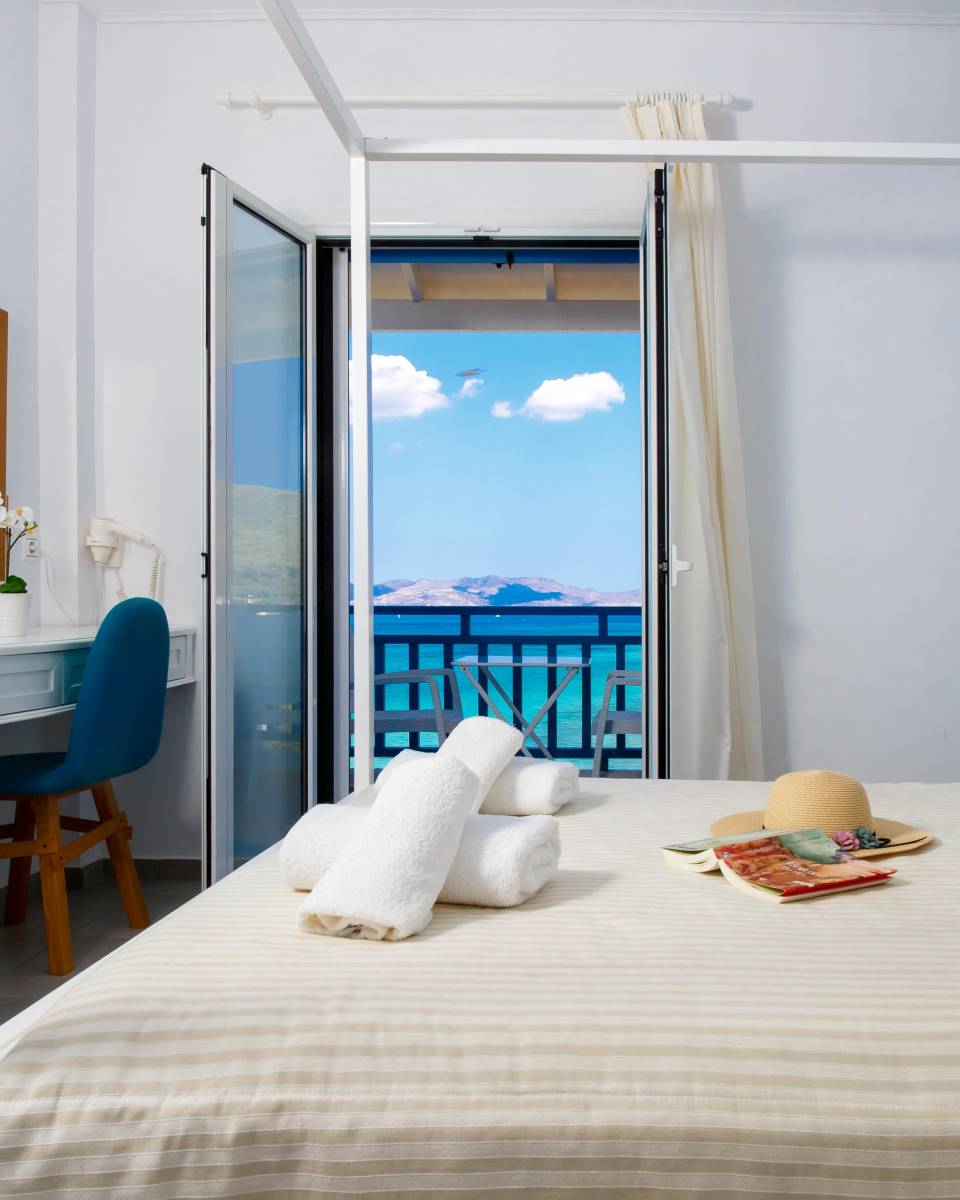
Meltemi Studios
A Megalochori option with sea-view rooms and a quieter setting while keeping Skala within easy reach.
Check prices & availability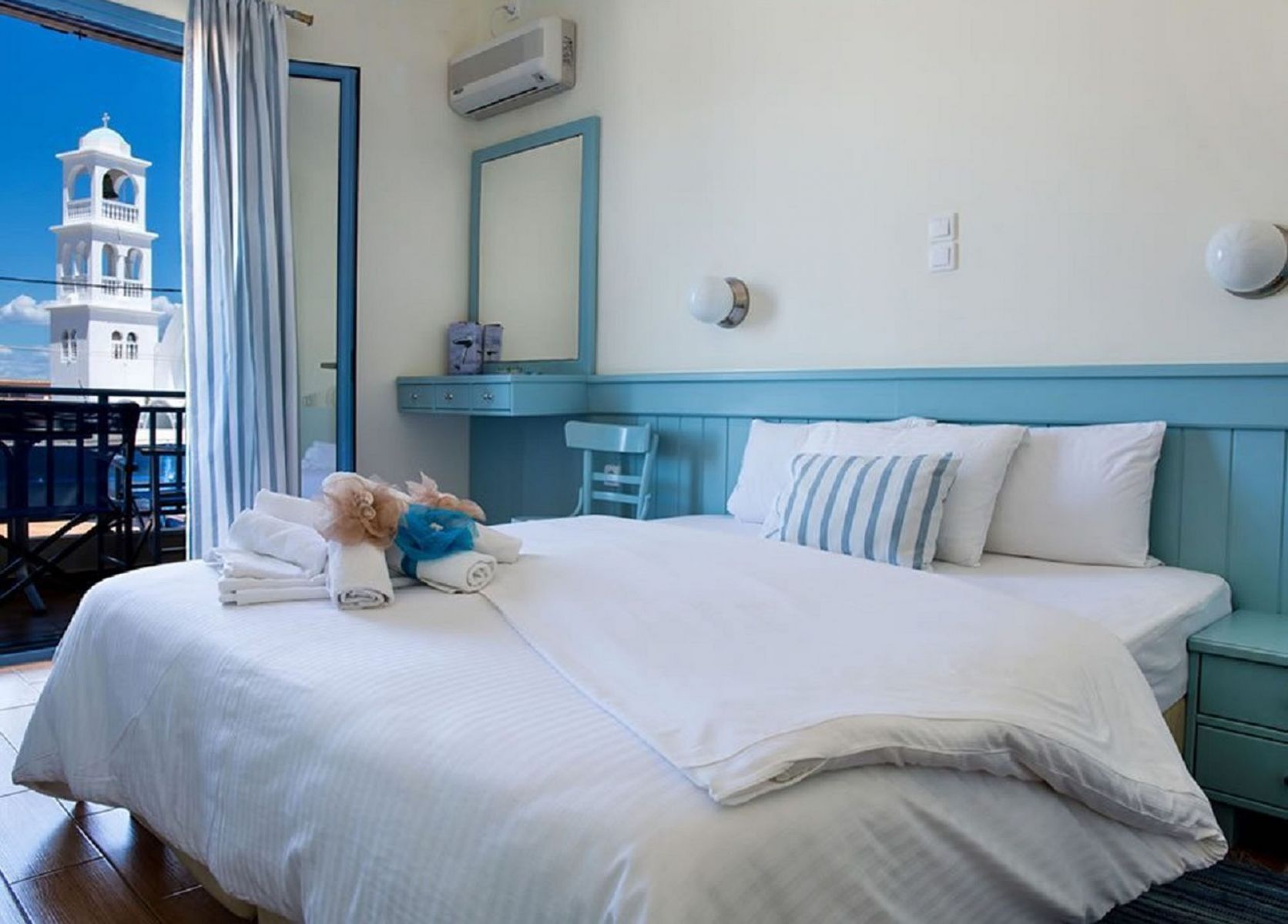
Saronis Hotel
Adults-only stay close to Skala Beach with an excellent no-car location.
Check prices & availability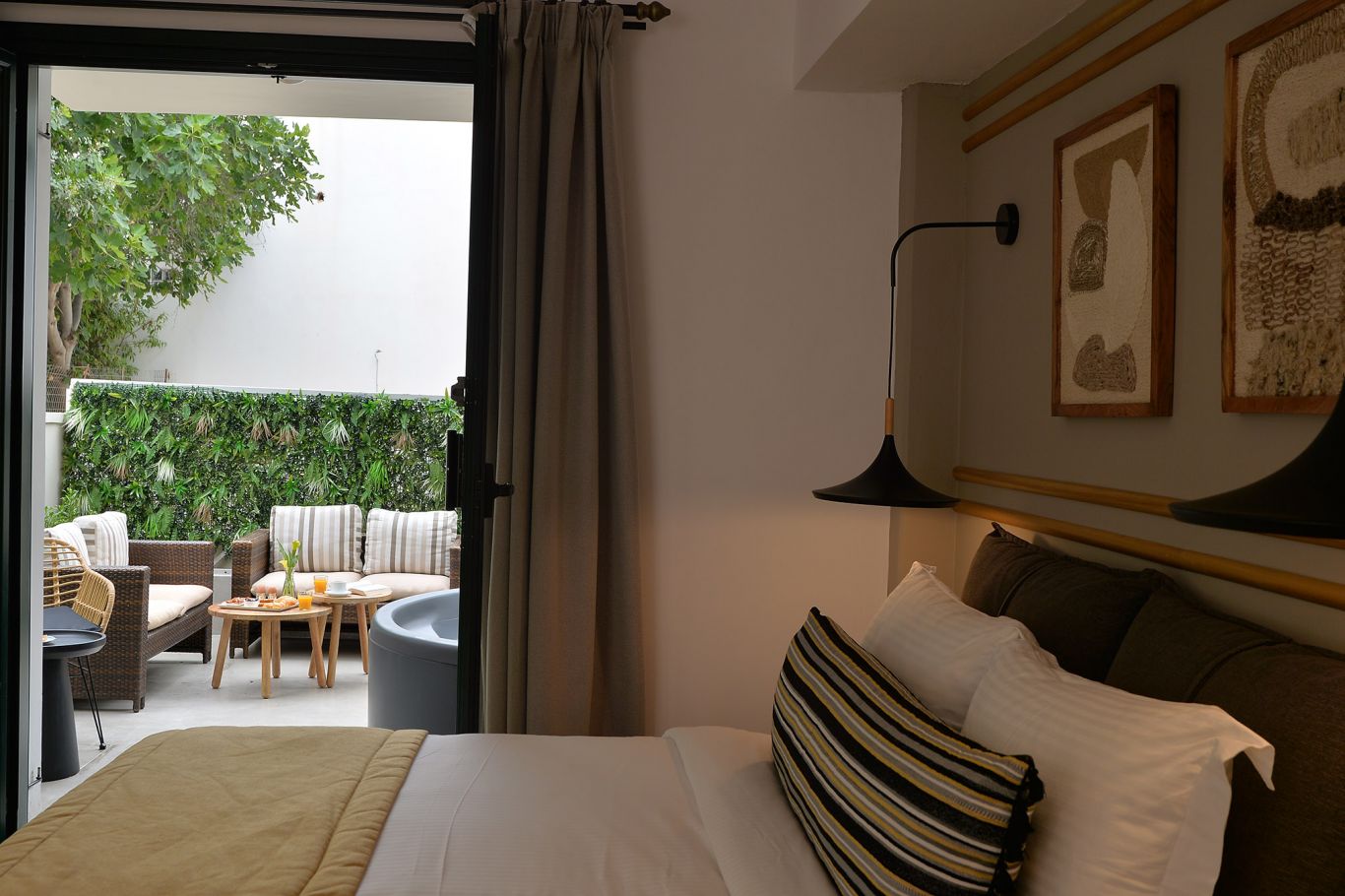
Aktaion Beach Boutique Hotel & Spa
A more polished beachfront choice in Skala with spa facilities and direct access to the waterfront.
Check prices & availabilityAccommodation links are affiliate links. If you book through them, I may earn a commission at no extra cost to you.
Villages in Agistri
Skala
Skala is Agistri’s main visitor hub, with its sandy beach, ferry port, restaurants, cafes, bars and plenty of accommodation within walking distance.
Megalochori / Mylos
Megalochori is the quieter main settlement and feels more residential than Skala, while the high-speed ferry port makes it very practical.
Metochi
Metochi sits above the coast and works better for views and quiet evenings than for travelers who want restaurants and beaches directly outside.
Limenaria
Limenaria is the village to visit if you want the quieter inland side of Agistri. It also fits naturally with Mariza and Aponisos.
Eating & Drinking in Agistri
Agistri is not an island I would visit specifically for fine dining. The appeal is simpler: grilled seafood, Greek home cooking, long lunches and family-run tavernas.
Traditional Foods to Look For
| Type | What to try |
|---|---|
| Greek classics | Grilled octopus, calamari, moussaka, pastitsio, lamb stew, tomato dishes and galaktoboureko. |
| Arvanite-influenced dishes | Musenta greens-and-cornmeal pie, kolokithopita, rooster or goat stew and tiganites. |

Restaurants I Would Keep on the Shortlist


Combine Agistri With Aegina, Poros or Hydra
Aegina is by far the easiest add-on. Some crossings take only around 5–10 minutes, depending on the Agistri port and service, and Aegina adds major archaeological sites, a larger harbor town and pistachio culture.

Poros and Hydra work better as onward stops than rushed day trips. If you are building a longer Saronic itinerary, use my Greek island hopping guide together with the islands near Athens comparison.

What About Epidaurus?
The Ancient Theatre of Epidaurus is geographically tempting, but it works much better as part of a Peloponnese extension than as a casual Agistri excursion.

Best Time to Visit Agistri
| Season | What to expect | Best for |
|---|---|---|
| Spring | Green landscapes, wildflowers and mild temperatures. | Hiking, cycling and quiet weekends. |
| June | Warm weather with less pressure than peak summer. | One of the best overall months: warm, long days and generally less pressure than peak summer. |
| July–August | Warm sea, busiest ferries and liveliest Skala. | Classic summer beach trips. |
| September | Warm sea and fewer peak-summer visitors. | Possibly the best balance: warm sea with fewer peak-summer visitors. |
| Winter | Very quiet with reduced tourist services. | Walking and local atmosphere. |
If you can choose your dates: June and September are the strongest all-round months. July and August deliver full summer conditions, but weekends can feel noticeably busier because Agistri is such an easy escape from Athens.

A Short History of Agistri
Agistri was known in antiquity as Kekrifalia and has long been closely connected with neighboring Aegina.
One of the more interesting strands in the island’s cultural history is its Arvanite heritage. Arvanite-speaking communities settled across parts of southern Greece during the medieval period, and that history forms part of Agistri’s local identity.

Practical Tips for Agistri
Getting Around

Money & ATMs
ATMs are available in Skala and Megalochori, but carrying some cash remains useful for small tavernas, transport and beach facilities.
Mobile Data
Mobile coverage is generally good around the settlements, although forested and remote areas can weaken signal.
Nomad Greece eSIM
Useful if you want data ready before arriving in Greece without buying a physical SIM after landing.
View Nomad Greece eSIM plansMy Greece eSIM Guide
I compare the main eSIM options, networks and practical trade-offs for Greece.
Read the Greece eSIM guideAgistri FAQs
Is Agistri worth visiting?
Yes. Agistri is one of the easiest choices near Athens if you want clear water, pine forests and a relaxed beach trip without a long ferry journey.
Can you visit Agistri as a day trip from Athens?
Yes. The fastest Piraeus crossings can take around 40–55 minutes. For a good day trip, keep the route compact: either stay around Skala, Skliri and Chalikiada or choose one west-coast beach rather than trying to see the entire island.
How many days do you need in Agistri?
Two days is ideal for most travelers. Three days makes sense if you want hiking, cycling, diving or a slower beach trip.
Which Agistri port is better: Skala or Myli?
Skala is easier for the sandy beach, restaurants and a first-time day trip. Myli is the port beside Megalochori and can be the better arrival if your fastest sailing uses it or you want a quieter base.
Is Skala or Megalochori better to stay in?
Choose Skala for convenience and a livelier atmosphere. Choose Megalochori if you want something quieter and more residential.
Do you need a car in Agistri?
No. Walking, buses, taxis, bikes, e-bikes and scooters are enough for most trips.
Which are the best beaches in Agistri?
Choose Skala for sand and easy access, Megali Dragonera for pine-backed scenery, Aponisos for sheltered turquoise water, Chalikiada for a wild cove and Mariza for rocky deep-water swimming.
Is Chalikiada Beach easy to reach?
No. The descent is steep and uneven. Wear proper shoes and avoid the route in bad weather.
Is Agistri better than Aegina?
They suit different trips. Agistri is smaller, greener and more beach-focused. Aegina has more sightseeing, a larger town and important archaeological sites.
Is Agistri expensive?
It is generally easier to keep costs moderate than on Hydra or many famous Cycladic islands, particularly outside peak summer. A short ferry crossing and the fact that you do not need a rental car can also keep a weekend relatively simple.
Is Agistri good for couples?
Yes. Skliri, Megalochori, quiet coves and small hotels make it easy to build a relaxed couples’ trip.
Is Agistri good for families?
Yes. Short distances and the shallow sandy beach at Skala make it one of the simpler Greek islands for a short family break.
What is Myli on Agistri?
Myli is the ferry port beside Megalochori. Ferry booking sites may list the arrival as Myli even when your accommodation describes the area as Megalochori, so treat the two names as the same practical base.
Which Agistri beach is sandy?
Skala is the clearest choice if you specifically want a conventional sandy beach with shallow water and facilities nearby. Many of Agistri’s most scenic swimming spots are pebble or rocky instead.
Where to Go After Agistri
If you want to stay close to Athens, start with my best islands near Athens guide. If Agistri is part of a larger Greece trip, use the 59 quiet Greek islands comparison to narrow down where to go next.
If budget matters, I also compare destinations in my best-value Greek islands guide.
Continue South: Elafonissos & Kythira
If you are combining islands with a Peloponnese road trip, Elafonissos works for Simos Beach and extraordinary shallow water, while Kythira is much larger and better for villages, waterfalls, history and road-trip exploration.

Final Thoughts
Agistri works because it does not ask much of you. You can leave Athens in the morning, reach either Skala or Myli in well under two hours, swim soon after arriving and build the whole trip without renting a car.
For a day trip, keep the route compact around Skala and Skliri/Chalikiada or commit to one west-coast beach. For a proper short break, stay two or three nights and use the extra time for Dragonera, Limenaria, Mariza and Aponisos.
If I had to summarize Agistri in one sentence: it is one of the easiest ways to turn a few spare days in Athens into an actual Greek island trip.
Last Updated on 25/09/2026 by Panos


