

Best Time to Visit the Azores: A Realistic, Field-Tested Guide
The Azores are not the kind of place where you “pick a month and hope for sunshine.” These islands sit alone in the Atlantic, far from any stabilizing landmass, and the weather behaves exactly like you would expect from a remote volcanic archipelago. Clouds roll in fast. Rain appears out of nowhere. A viewpoint can be crystal clear at 10:00 and completely gone by 10:07.
That is part of the charm, but it also means timing matters. Some months give you a much better chance of clear crater lakes and dry trails. Others are better for migrating whales, swimming, island-hopping, hot springs or simply enjoying the islands without peak-season crowds.
This guide is built around the things that have changed my own days in the islands: visibility, wind, trail conditions, sea state, ferry practicality and how quickly I can switch plans when the weather turns. The climate table is useful, but the real value is knowing what I would move, book early, leave flexible or skip in each season.
Updated October 2026. Climate figures are cross-checked against IPMA’s 1991–2020 normals for Ponta Delgada, while the recommendations below reflect how weather behaves in real travel conditions across the islands. Some booking links are affiliate links, at no extra cost to you.
When Is the Best Time to Visit the Azores?
For most travelers, I would choose May, June, September or the first part of October. These months give you the strongest balance of comfortable temperatures, clearer high viewpoints, workable hiking conditions, active whale watching and fewer crowds than the July–August peak.
If I were spending my own money on one first trip, I would book early September. The sea has had all summer to warm, the summer transport network is still useful, hiking is comfortable and the sharpest August pressure has eased. I would choose July or August only if maximizing weather odds mattered more to me than price, crowds and booking flexibility.

Turn the Weather Decision Into an Actual Azores Trip
The next planning question depends on how much of the archipelago you want to see. I would use one of these guides rather than starting from scratch.
I would check May, June and September side by side before committing. A small date shift can matter more to the total trip cost than chasing the absolute “best” weather month.
How Azores Weather Works
The temperature is rarely the problem. The speed and localization of the weather are what change your plans.
The Azores have a mild maritime climate. Around Ponta Delgada, average daytime highs run from roughly 17–18°C (63–64°F) in winter to 25–26°C (77–79°F) in late summer. That sounds gentle, and it is. What catches travelers out is the combination of humidity, wind, elevation and very local cloud.
I have watched clear crater views disappear within minutes while the coast remained bright. Sete Cidades and Lagoa do Fogo are especially vulnerable because the viewpoints sit high enough to catch cloud that never reaches Ponta Delgada. A city forecast that says “partly cloudy” tells you very little about what the crater rim will look like at the same moment.
IPMA’s Ponta Delgada normals show July as the driest month and December as the wettest, but rain and cloud remain possible in every month.
A coast can be sunny while a volcanic rim is completely white. This is why flexibility matters more than trying to predict one perfect day weeks ahead.

My Weather Rule: Keep the High Viewpoints Flexible
I would not build a São Miguel itinerary that says “Tuesday = Sete Cidades, Wednesday = Lagoa do Fogo” and then obey it. I keep at least two days interchangeable. If I wake up and the high ground is clear, I use that window immediately. If the crater is buried in cloud, I switch to Furnas, Ponta Delgada, a coastal drive, tea plantations or thermal pools and try again later. That single habit has more value to me than choosing between two months whose average temperatures differ by one degree.

Use a Rental Car to Chase the Better Weather Window
On São Miguel especially, a car gives you the freedom to abandon a foggy crater and move to a clearer coast instead of losing half the day waiting. I use Discover Cars to compare rental companies and conditions rather than booking the first airport desk I see.
Climate reference: IPMA 1991–2020 climate normals . Ponta Delgada is a useful baseline, not a substitute for checking conditions at altitude or on another island.
Best Time to Visit the Azores by Travel Style
The “best month” changes dramatically depending on whether your priority is hiking, whales, swimming, island-hopping or keeping costs down.
Hiking: May to October
For most hiking trips, I would aim for May through October, with May, June and September especially attractive. Trails are generally easier, daylight is longer and your chances of seeing something from the ridge you just climbed are much better than in midwinter. That does not mean every trail will be dry. The Azores are green for a reason.
Winter hiking is possible, but mud, slick volcanic rock, wind and fog can turn an easy-looking route into something much less enjoyable. On São Jorge, where many walks descend steeply toward fajãs, I would be particularly reluctant to build a hiking-focused trip around the wettest months.

Whale Watching: Year-Round Possibility, Spring for Migrating Giants
Whale watching is more nuanced than a simple March-to-October season. Sperm whales and several dolphin species can be present year-round, while spring is the period I would target if migrating baleen whales such as blue, fin or sei whales are the priority. Summer usually gives you calmer sea conditions and easier boat days, but you should never treat wildlife as guaranteed.
For the full island-by-island decision, species timing and the tours I would book, see my Azores whale-watching guide. Visit Azores also maintains a useful overview of the archipelago’s cetaceans and operators.


Whale Watching Experience from Lajes do Pico
This is the Pico whale-watching tour I would book first. On my own trip from Lajes, I saw sperm whales, several kinds of dolphins and around ten types of marine wildlife. The smaller-boat feel and volcanic backdrop made it one of my strongest experiences in the Azores.
Want to compare islands first? Read my complete Azores whale-watching guide .
Swimming and Natural Pools: July to September
The Atlantic warms slowly. I would choose July through September if swimming, natural pools and long coastal stops matter to you, with August and September normally offering the warmest water. Outside summer, the pools can still be beautiful, but “beautiful” and “I want to stay in for forty minutes” are not the same thing.

Island-Hopping: June to September Is Easiest
If your trip depends on ferries and multiple islands, summer gives you the easiest version of the Azores. Inter-island flights operate year-round, but ferry frequency and the range of practical sea connections are much stronger in the summer timetable. Rough seas also become less of a recurring planning headache.
My 2-week Azores itinerary shows how I connect São Miguel, Terceira, Pico, Faial and São Jorge without wasting too much time in transit.
Budget Travel: November to March, With a Big Weather Trade-Off
Winter can be considerably cheaper for accommodation and rental cars, and the islands never become cold in the continental-European sense. But you are buying that value with more rain, more wind, less reliable viewpoints and a greater chance that a boat or hiking plan needs to change.
For a slow trip built around food, thermal pools, town life and flexible driving, that can be a perfectly reasonable trade. For a once-in-a-lifetime trip built around crater panoramas and five islands, I would pay more and go later in the year.
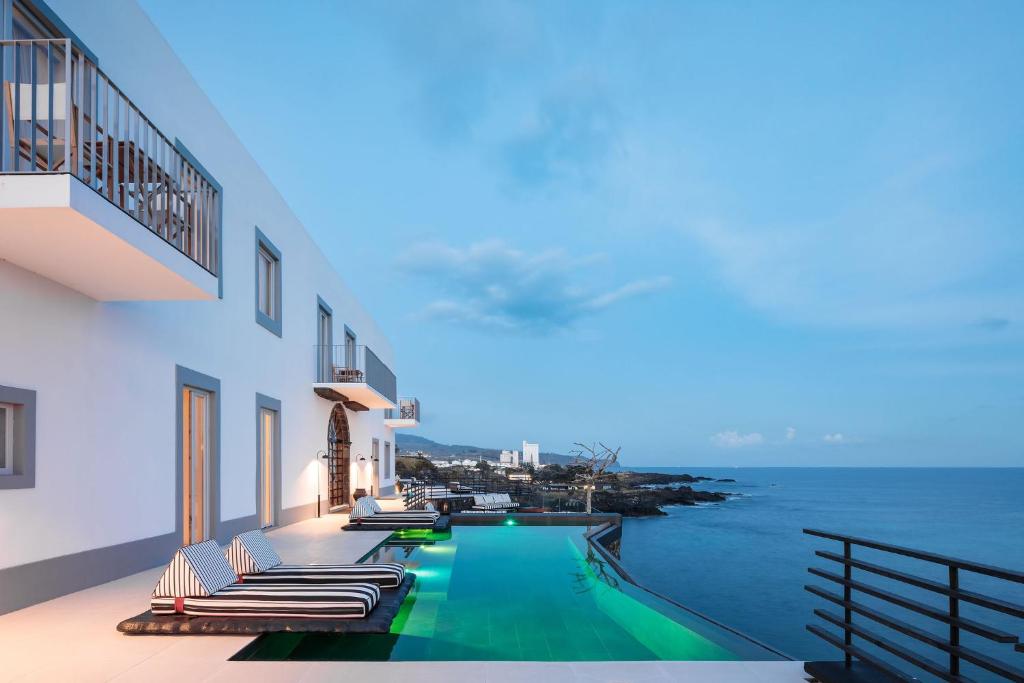
Compare Azores Stays Before Peak-Summer Inventory Tightens
July and August give you better weather odds, but they are also the months when I would least want to leave accommodation until the last minute. On smaller islands, location matters as much as the hotel itself because there may be far fewer practical alternatives once the best places fill.
For São Miguel specifically, see my guide to the best bases and hotels .
Festivals: June to September
Summer and early autumn are the easiest months if local festivals, outdoor events and a livelier atmosphere are part of what you want. That energy can be a major advantage, but it is another reason not to assume July and August will feel like quiet Atlantic-island escapes everywhere.
Best Time to Visit the Azores: Season by Season
The climate averages matter, but this is the part that tells you what kind of trip each season is likely to produce.
Spring: March to May
Spring is one of the most interesting times to visit because the islands are intensely green and the marine calendar becomes more exciting. March can still feel unsettled, with plenty of rain and wind. April improves but remains variable. May is where I become genuinely enthusiastic: longer days, better hiking odds, lower crowds than summer and strong whale-watching potential.
If your priority is migrating baleen whales rather than swimming, I would choose spring over August. If your priority is guaranteed-looking crater photographs, I would wait a little longer.

Summer: June to August
Summer is the Azores at their easiest. June is an excellent compromise: warmer, relatively dry, long daylight and not yet the full intensity of the August peak. July is typically the driest month around Ponta Delgada. August is the warmest, the sea is inviting and practically every seasonal activity is running — but prices and crowds are also at their highest.
If you are planning a first trip with several islands and want to minimize weather friction, this is the safest season. I would still carry a waterproof layer and I would still refuse to promise you a clear crater rim.

Autumn: September to November
September is my favorite all-round month. The sea has had all summer to warm, the days are still long enough for serious sightseeing, most seasonal services are operating and the sharpest August pressure has started to ease. It is the month I would choose when I want a little bit of everything rather than optimizing for one activity.
Early October can still be excellent, but the weather becomes less dependable as the month progresses. By November, the trip has shifted firmly toward slow travel, hot springs and accepting that outdoor plans may need to move.
Winter: December to February
Winter is the rainiest and windiest part of the year. It is not the season I would choose for a viewpoint-heavy first trip, a multi-island ferry itinerary or a holiday built around long mountain walks.
But winter in the Azores is not a write-off. It simply changes the rhythm. The hot springs feel better when the air is cool. Furnas becomes a warm, misty bowl. Poça da Dona Beija turns into the kind of place you stay longer than planned. Villages feel calmer rather than empty, restaurants have space, roads are quiet and the landscapes stay green because the rain never stops feeding them.
Winter is not the season for chasing perfect crater-lake photos. It is the season for slowing down, soaking, eating well and letting the islands breathe around you.
Azores Weather Month by Month
These climate figures use IPMA’s 1991–2020 normals for Ponta Delgada as a consistent baseline. I would not choose a trip from the numbers alone, so the final column is the part that matters to me: what I would use each month for, and what I would not ask it to deliver.
| Month | Avg. high / low | Rainfall | What I would do |
|---|---|---|---|
| January | 17.5 / 12.7°C (64 / 55°F) | 102 mm (4.0 in) | Good for hot springs and quiet travel; poor choice if crater views are the main reason for coming. |
| February | 17.4 / 12.1°C (63 / 54°F) | 87 mm (3.4 in) | Still wintery and changeable. Go for atmosphere and value, not weather certainty. |
| March | 17.9 / 12.6°C (64 / 55°F) | 97 mm (3.8 in) | Interesting for the start of spring whale migration, but hiking and viewpoints remain weather-sensitive. |
| April | 18.8 / 13.3°C (66 / 56°F) | 80 mm (3.1 in) | Better light, greener landscapes and strong whale potential; still too variable for a sunshine-first trip. |
| May | 20.2 / 14.6°C (68 / 58°F) | 61 mm (2.4 in) | One of my top choices. Good balance of hiking, whales, greener scenery and manageable crowds. |
| June | 22.4 / 16.8°C (72 / 62°F) | 44 mm (1.7 in) | Possibly the best pure balance. Long days, improving sea conditions and strong outdoor reliability. |
| July | 24.7 / 18.9°C (76 / 66°F) | 26 mm (1.0 in) | Driest month in the Ponta Delgada normals; excellent outdoors, but noticeably busier and more expensive. |
| August | 26.0 / 19.9°C (79 / 68°F) | 46 mm (1.8 in) | Warmest, busiest and easiest for swimming. Great weather odds if you accept peak-season prices and demand. |
| September | 25.0 / 19.1°C (77 / 66°F) | 78 mm (3.1 in) | My personal all-round pick. Warm sea, good hiking and fewer crowds than August. |
| October | 22.6 / 17.1°C (73 / 63°F) | 118 mm (4.6 in) | Early October can be lovely; the rain risk climbs as the month progresses. |
| November | 19.9 / 14.9°C (68 / 59°F) | 95 mm (3.8 in) | Better for slow travel, food and geothermal stops than ambitious hiking or ferry-heavy routes. |
| December | 18.3 / 13.4°C (65 / 56°F) | 153 mm (6.0 in) | Wettest month in the Ponta Delgada normals. Come for quiet, green scenery and thermal pools. |
Source: IPMA climatological normals 1991–2020 , Ponta Delgada / Observatório Afonso Chaves. These figures are a useful baseline, but conditions vary between islands and change substantially with elevation.

When Do the Hydrangeas Bloom in the Azores?
If the classic roads lined with blue and purple hydrangeas are part of the dream, late June through August is the safest window. Exact timing shifts with elevation, exposure and that year’s weather, so I would never plan an entire trip around one precise flowering date. June and July are the months I would choose if flowers matter but I also want strong hiking and sightseeing conditions.
Best Time to Visit Each Azores Island
This is where a single “best month for the Azores” answer starts to break down. I would time Pico around the mountain, São Jorge around its trails, Flores around transport resilience and São Miguel around having enough days to chase clear crater windows.
São Miguel: May to October
São Miguel rewards you most between May and October. The big sights sit high enough that cloud cover can erase them, so you want months when the weather gives you more windows to work with. Sete Cidades, Lagoa do Fogo and the coastal viewpoints all show their best side when conditions stabilize. Hot springs work year-round, which is why São Miguel is also one of the easier islands to enjoy in winter.
Plan it: 5-day São Miguel itinerary · where to stay · best São Miguel tours

Sete Cidades & Lagoa do Fogo Jeep Tour
If you only book one land tour on São Miguel, this is the one I would look at first. It combines the two headline crater landscapes with off-road access that a normal rental car cannot replicate, while the local guide can adapt the order of stops when cloud moves around the island.
I compare this with seven other experiences in my São Miguel tours guide .
Pico: June to September for the Mountain
Pico is the island where timing changes the trip most dramatically because so much revolves around the mountain. If climbing Mount Pico — or simply seeing the summit clearly — matters to you, I would aim for June through September. Wind, cloud and mountain conditions become less forgiving outside this window, while the vineyards and coastal scenery remain worthwhile for longer.
Plan it: Pico itinerary · where to stay in Pico · best Pico tours


Faial: May to September
Faial is at its easiest from May to September, especially if whale watching and the Pico channel are central to your trip. Capelinhos is impressive in any weather, but it is considerably more pleasant when the wind is not throwing volcanic grit around the landscape. Summer also makes the ferry link to Pico much easier to build into a Central Group itinerary.
Plan it: Faial one-day itinerary · where to stay in Faial

Terceira: One of the Best Year-Round Choices
Terceira holds up better than most islands when the weather shifts because so much of the experience is not dependent on one high panoramic viewpoint. Angra do Heroísmo, food, lava caves and village life still work when the cloud comes down. I would choose late spring through early autumn for the easiest trip, but Terceira is one of my stronger off-season recommendations.
Plan it: 3-day Terceira itinerary · where to stay in Terceira · Angra do Heroísmo guide

Flores and Corvo: June to September
Flores and Corvo are the islands where I would be most conservative with timing. Flights, sea crossings, waterfalls, crater lakes and exposed viewpoints all become easier when the Atlantic settles. I would strongly favor June through September for a first trip, and I would still keep buffer time if a Corvo crossing is important.

São Jorge: May to September
São Jorge is built for good walking weather. The fajãs sit below steep cliffs and many of the island’s best experiences involve descents, exposed paths or long views. I would choose May through September, with June and September particularly appealing if you want good trail conditions without the peak of August.
Plan it: São Jorge itinerary · where to stay in São Jorge

Graciosa: June to September
Graciosa is easiest to enjoy from June through September, when the weather is settled enough for the caldeira, windmills and exposed coastline to feel relaxed rather than interrupted. Because the island is small and open, wind can influence the feel of the day more than the temperature suggests.

Santa Maria: May to September
Santa Maria has the driest, warmest feel in the archipelago and is the island I would look at most seriously if beaches are a major part of the trip. May through September is the strongest window, with summer making the most of Praia Formosa and the island’s comparatively Mediterranean atmosphere.

When Not to Visit the Azores
I do not think there is a universally “bad” month. There are months that are badly matched to specific expectations.
Cloud, rain and wind create too much risk if Sete Cidades, Lagoa do Fogo and mountain scenery are the whole reason for coming.
Do not build a tight multi-island route that collapses if one sea crossing changes.
These are the months when better weather odds come with the strongest demand for cars and accommodation.
Spring is the more interesting period for the major migrating baleen whales, while resident cetaceans keep whale watching relevant beyond that window.
Best Time to Visit the Azores FAQ
The questions I would answer before committing to flights, accommodation and an island-hopping route.
What is the single best month to visit the Azores?
If I had to choose one, I would pick early September. The sea is warm, outdoor conditions are usually strong, most summer services are still operating and the islands tend to feel less pressured than in August. June is a very close second and may be better if swimming is less important.
What is the driest month in the Azores?
In IPMA’s 1991–2020 climate normals for Ponta Delgada, July is the driest month, averaging about 26 mm (1.0 in) of rain. That does not mean the whole archipelago stays dry or that high viewpoints will always be cloud-free.
What is the rainiest month in the Azores?
December is the wettest month in the Ponta Delgada 1991–2020 normals, at roughly 153 mm (6.0 in). Late autumn and winter are generally the wetter, windier part of the year.
When is the best time for whale watching in the Azores?
Whale watching is possible beyond a simple spring-to-autumn window because sperm whales and several dolphin species can be present year-round. I would choose spring if migrating baleen whales are the priority, and summer if calmer seas and easier boat conditions matter more. See my dedicated Azores whale-watching guide for the island-by-island breakdown.
When is the sea warmest for swimming?
August and September are the months I would choose for the warmest sea and the easiest combination of natural pools, coastal swimming and warm air. July is also very good.
When do hydrangeas bloom in the Azores?
Late June through August is the safest period for the classic hydrangea displays, although exact timing varies with elevation and weather. June and July are my favorite compromise if flowers, hiking and sightseeing all matter.
Is October a good month to visit the Azores?
Yes, especially early October. Temperatures remain mild and crowds are lower, but rainfall rises substantially compared with summer. I would keep plans flexible and avoid building a very tight ferry-dependent itinerary.
Is winter worth it in the Azores?
Yes, if you want a slow, green, inexpensive trip built around thermal pools, food, towns and flexible drives. No, if your dream trip depends on consistently clear crater views, long hiking days and easy island-hopping.
How much does the weather vary between the islands?
A lot. The archipelago stretches across the Atlantic and elevation changes conditions again within each island. Santa Maria is typically drier; exposed western islands such as Flores are more weather-sensitive; and high volcanic terrain can sit in cloud while nearby coasts are clear.
So, When Would I Go?
My answer depends on whether this is a first trip or a deliberately off-season one.
For a first Azores trip, I would choose late May, June or early September. Those periods give you the best overall balance of hiking, viewpoints, whales, island-hopping and manageable demand. If I wanted the most reliable summer conditions and did not care about peak-season prices, I would choose July or August. If I wanted quiet roads, thermal pools and a slower trip, I would happily consider winter — but I would change my expectations completely.
The biggest advantage you can give yourself is not simply choosing the “right” month. It is building an itinerary that can react when the Azores change in ten minutes. I keep high viewpoints flexible, refuse impossibly tight ferry connections, build in a wet-weather alternative and use a clear window when it appears instead of waiting for the day I originally assigned to it.
My next step: if this is your first trip, use my 2-week Azores itinerary for a multi-island route or my 5-day São Miguel itinerary if you are focusing on the biggest island.
Last Updated on 07/10/2026 by Panos


