

São Miguel Tea Plantations: Gorreana vs Porto Formoso + My Central Highlands Day Trip
The tea plantations were the part of this São Miguel day that surprised me most. Gorreana and Porto Formoso sit only a few miles apart on the north coast, but they are not identical stops: Gorreana is the larger working estate with the famous factory and an easy self-guided tea-field walk, while Porto Formoso feels smaller and more intimate. I would make tea the anchor of this route, then add Lagoa do Fogo and Caldeira Velha when the highlands are clear rather than trying to force every viewpoint, waterfall and lake into the same day.
If the tea plantations are high on your São Miguel wish list, this is the day I would give them. I combine both surviving tea producers with the central highlands and north coast, while my São Miguel itinerary shows how this day fits into a complete first trip around the island.
Updated October 2026. I rechecked Gorreana visitor hours, official tea-field trails, Caldeira Velha ticketing and the 2026 Lagoa do Fogo access system.
This article contains an affiliate link. If you book through it, I may earn a commission at no extra cost to you.
Gorreana or Porto Formoso?
If you visit only one tea plantation, I would choose Gorreana. It gives you the clearest combination of working factory, tea tasting and fields, and the official PRC28 SMI trail starts right beside it.
If tea culture is one of the reasons you came to São Miguel, visit both. Porto Formoso adds a smaller museum-style visit, guided interpretation and a very different atmosphere rather than simply repeating Gorreana.

Gorreana vs Porto Formoso: What Is the Difference?
São Miguel still has two working tea-production units. They are close enough to visit together, but different enough that I would not describe one as a smaller copy of the other.
| Tea plantation | Why I would go | Visit style | Walk | My verdict |
|---|---|---|---|---|
| Gorreana | Working factory, historic machinery, tasting and broad tea fields above the Atlantic. | Easy to explore independently; allow extra time if the factory is active. | Official PRC28 SMI: 3.3 km (2.1 mi), around 1 hr 30 min, easy. | Choose this if you only have time for one. |
| Porto Formoso | Smaller-scale tea culture, museum interpretation, guided visits and a tasting room/terrace. | More contained and interpretive than Gorreana. | Official PRC26 SMI: 4.8 km (3 mi), around 2 hr, medium. | Add it when tea is a real priority. |
My Tea-First Central São Miguel Day Trip
The easiest way to make this day coherent is to treat the tea plantations as the destination and the highlands as the weather-dependent half of the route. That gives you time to understand what makes Gorreana and Porto Formoso special instead of racing through them after a long checklist of viewpoints.
This route fits naturally into my 5-day São Miguel itinerary. If you are still deciding which parts of the island to combine from the capital, my day trips from Ponta Delgada guide compares the main options.
Pico da Barrosa: Treat the View as a Window, Not a Scheduled Appointment
We left Ponta Delgada and climbed through green pasture into the central highlands. The fog moved quickly enough that the ridge looked completely different within minutes.
Pico da Barrosa is an easy stop when visibility opens. I use the viewpoint and short ridge walk as a quick introduction to the highlands, then continue toward Lagoa do Fogo while the crater is still visible.

Lagoa do Fogo: Go When It Is Clear
Lagoa do Fogo was one of the most dramatic landscapes on our São Miguel trip. Mist moved across the crater and then opened long enough for the lake to appear below the rim.
The important 2026 update is access. São Miguel again used a seasonal shuttle and private-vehicle restriction on the mountain road during the summer visitor-management period. The 2026 service started late, on August 1, after a procurement delay, and ran through September 30. As of October 2026 that seasonal restriction has ended, but the system can change again for future summers.
For the day-by-day weather strategy and how Lagoa do Fogo fits into a full island route, see my São Miguel itinerary.

Caldeira Velha: The Hot-Spring Stop That Fits This Route Best
Descending the north side of the Fogo massif brought us into a completely different landscape: steaming water, mossy rock, huge ferns and warm pools hidden inside dense vegetation.
This is also one of the places where old “just turn up” advice is no longer good enough. Caldeira Velha now uses 1 hour 30 minute time slots. For 2026, the full ticket includes the thermal pools and interpretation center; there is also a cheaper visit-only ticket if you do not want to bathe.
| Caldeira Velha | Current 2026 information |
|---|---|
| May–September | 09:00–20:30 |
| April & October | 09:00–18:30 |
| November–March | 09:00–17:00 |
| Adult full ticket | €10, including thermal pools |
| Adult visit-only ticket | €3, without thermal-pool access |
Online purchases for the following day close at 23:59, and the official online platform does not sell same-day tickets. I therefore reserve this before leaving Ponta Delgada rather than building the whole day around a hopeful walk-in.
Check current Caldeira Velha tickets and availability.


Salto do Cabrito: Short Waterfall Visit or Full 3-Hour Trail
Salto do Cabrito was one of the more memorable waterfall stops on our route, but I now make a clearer distinction between visiting the waterfall and walking the official trail.
The official PRC29 SMI route is a circular 8.6 km (5.3 mi) hike rated medium and takes about 3 hours. It includes geothermal landscapes, old hydroelectric infrastructure, metal walkways, streams and the waterfall. That is a real hike, not a quick detour.
If tea is the priority, I keep Salto do Cabrito short or skip it. If hiking is the priority, I give the PRC29 route the time it deserves and drop one or two later coastal stops.

Porto Formoso Tea Factory: The Smaller, More Intimate Visit
Porto Formoso is where I would slow the pace before Gorreana. The estate is smaller, but that is part of the appeal: the visit is more contained and the museum side puts more emphasis on how tea production developed in the Azores.
Visit Azores describes guided visits during opening hours, followed by tea tasting either in a room modeled on a traditional São Miguel kitchen or on the terrace overlooking the plantation and village.
I recommend checking the current opening schedule directly before you go, because seasonal hours are not published consistently across current sources. The official tourism listing gives the factory contact as +351 296 442 342 and [email protected].
If you want a longer walk, the official PRC26 SMI Chá Porto Formoso route is 4.8 km (3 mi), takes about 2 hours and is rated medium. On a tea-focused day, I would choose that or the longer Gorreana tea walk rather than automatically doing both.


Gorreana Tea Plantation: The One I Would Not Skip
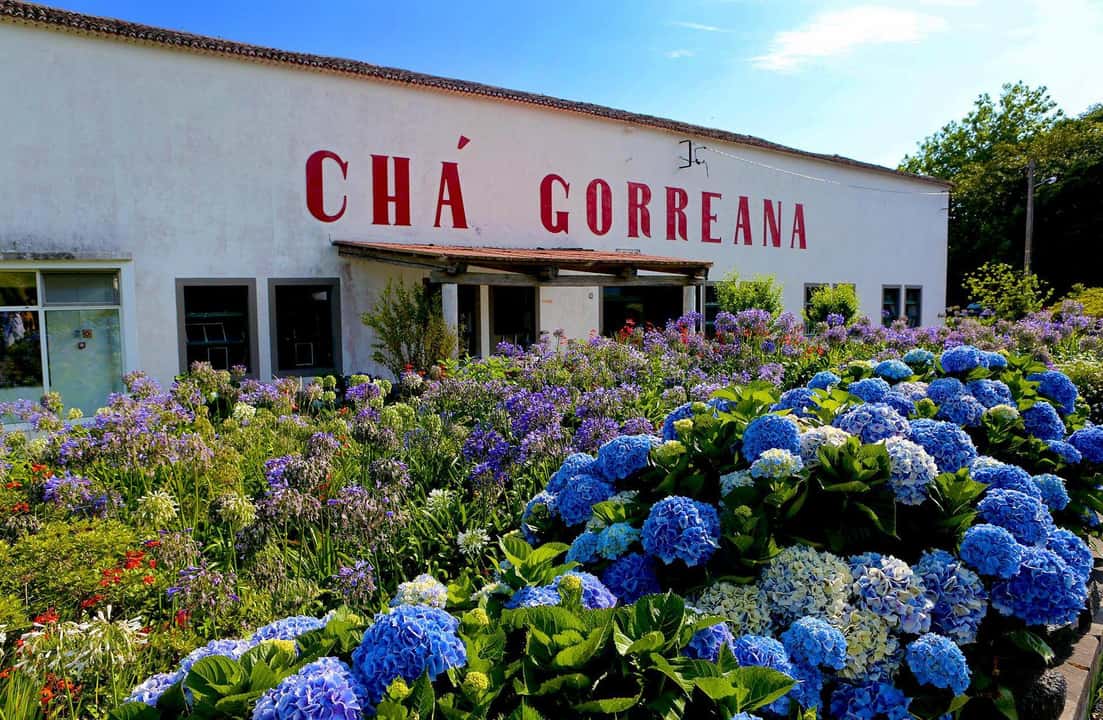
Gorreana has operated continuously since 1883, and official Azores tourism describes it as the oldest tea plantation in Europe. Unlike a reconstructed heritage attraction, it is still a working producer: you are looking at tea fields and production machinery that remain part of the business.
The history is more interesting than the “Europe’s oldest” label by itself. Tea cultivation expanded on São Miguel during the 19th century as the island looked for new agricultural exports. In 1878, Chinese specialists were brought to São Miguel to teach industrial tea-processing techniques. By the early 20th century there were numerous tea plantations and factories; today Gorreana and Porto Formoso are the two surviving production units on the island.
Inside Gorreana I spent time looking at how the leaves are withered, rolled and dried, then tasted the finished tea. That sequence matters: the fields are beautiful, but the reason this stop is more than an Instagram landscape is that cultivation and processing are still connected on the same site.
| Gorreana practical information | Current details |
|---|---|
| Monday–Friday | 08:00–18:00 |
| Saturday–Sunday | 09:00–18:00 |
| Official tea-field trail | PRC28 SMI · 3.3 km (2.1 mi) · about 1 hr 30 min · easy |
| Tea | Green and black tea produced on site; tasting and shop available. |
If I wanted the best chance of seeing production rather than only the fields, I would favor a weekday visit during the active growing/harvest season. If the machinery is quiet, the tea-field walk is still worthwhile.
No Car? This Is the Tea Tour I Would Choose
If you are not driving, the tea-focused tour I like most from my São Miguel tours guide pairs Gorreana with Furnas, geothermal landscapes and lunch. It gives you a substantial tea stop while the driver handles the longer east-island logistics.
Furnas Volcano, Tea Plantation & Lunch Tour
This small-group tour combines São Miguel’s geothermal side with Gorreana and a traditional lunch. It is especially useful if you want meaningful time at a tea plantation without renting a car.
If you are self-driving Furnas rather than joining the tour, I would give the geothermal valley its own day. My Furnas day-trip guide covers the hot springs, fumaroles, cozido and village stops in much more detail.
Optional North-Coast Stops: Add Them Only If You Have Time
We visited all of these places on our original day, and each one is worthwhile. I now treat them as optional additions so you can spend more time at the tea plantations instead of racing from stop to stop.
Praia dos Moinhos, Porto Formoso
A dark-sand beach close to the tea estates. I use it as a short coastal pause, not as a separate beach day.
Miradouro do Cintrão
A quieter cliff-top view west of Porto Formoso. Add it when the coast is clear and you are comfortably ahead of schedule.
Porto de Santa Iria
Worth a short detour for the dramatic north-coast geography, but I prioritize the higher Santa Iria viewpoint if time is tight.
Miradouro de Santa Iria
This is the coastal viewpoint I would keep. On a clear day you can look toward Porto Formoso, Maia and the Gorreana tea landscape.
Lagoa do Congro
Beautiful, quiet and best used as an optional finish if you still have daylight. After the highlands, thermal pools, a waterfall and two tea stops, adding it only makes sense if you are still comfortably ahead of schedule.


Lagoa do Congro: Beautiful and Worth it If You Start the Day Early
We finished our original day at Lagoa do Congro, and I still like it very much. The lake sits inside a maar-type explosion crater formed roughly 3,800 years ago. The surrounding woodland includes species introduced when the neighboring land was landscaped by former owners, which helps explain why the forest feels so different from the open highlands you cross earlier in the day.
The official natural-park information puts the access walk at roughly 700 m (0.4 mi) to the lake. It is a peaceful finish when the rest of the day has moved quickly, but on a normal first visit I would rather protect proper time at Gorreana than rush here just to add another pin.

My Travel Tips for the Tea Plantations and Central Highlands
For seasonality and the reality of Azorean cloud, rain and visibility, see my best time to visit the Azores guide. For Ponta Delgada itself, restaurants and city sights, use my Ponta Delgada guide.
Why the Tea Plantations Are the Part I Would Build the Day Around
São Miguel has enough crater lakes, waterfalls and miradouros to fill several trips. Tea gives this particular route something the other sightseeing loops do not have: a living agricultural story.
Gorreana and Porto Formoso connect the island’s climate, volcanic soils, 19th-century economic history and present-day production in a way that is easy to understand because you can see the crop, the machinery and the finished tea in the same afternoon.
For me, this works best as a tea-and-highlands day. Lagoa do Fogo and Caldeira Velha are excellent additions, but the tea plantations are what give the route its distinctive character.
São Miguel Tea Plantations FAQ
Which is better: Gorreana or Porto Formoso?
If I only had time for one, I would choose Gorreana because it combines the largest tea landscape, working factory, tasting and an official easy trail. Porto Formoso is the better second stop if you want a quieter, more interpretive visit.
How long do you need at Gorreana?
I would allow roughly 45–60 minutes for the factory, tasting and a short field walk. If you walk the full PRC28 SMI tea trail, allow around 1 hour 30 minutes for the trail itself.
Can you visit Gorreana and Porto Formoso on the same day?
Yes. They are close together on São Miguel’s north coast and work naturally as a pair. I only skip one when the day already includes a long hike or a slow Caldeira Velha visit.
What are Gorreana’s opening hours in 2026?
Current Azores tourism information lists 08:00–18:00 Monday to Friday and 09:00–18:00 on Saturday and Sunday. I still check shortly before traveling because working-factory arrangements can change.
Do I need to reserve Caldeira Velha?
I recommend it. Visits operate in 1.5-hour time blocks, and the official online platform does not sell same-day tickets. Reserve before the day if the thermal pools are an important part of your route.
Can I drive to Lagoa do Fogo?
Access changes seasonally. In summer 2026, a shuttle system restricted private tourist vehicles during its operating period; that 2026 service ended on September 30. Check the current official access rules for the dates of your trip rather than relying on last year’s schedule.
Do I need a car for the São Miguel tea plantations?
A car is the easiest way to combine the tea estates with the highlands and north coast at your own pace. Without one, I would use a guided tour rather than trying to stitch the day together with local buses.
Are the São Miguel tea plantations worth visiting if I do not drink much tea?
I think so. The appeal is as much about agricultural history, landscape and seeing a working production process as it is about the tasting itself.
Last Updated on 05/10/2026 by Panos


