

Best Tours in Pico Island, Azores: 6 Experiences Worth Booking
Whale watching, Mount Pico, volcanic wine, lava tunnels, island circuits and food: these are the Pico tours where a good guide can genuinely add something you would miss by simply driving around alone.
Pico is a very easy island to explore independently, so I would not fill every day with organized excursions. But there are a handful of experiences where paying for a guide makes real sense: going out onto the Atlantic in search of whales, tackling Portugal’s highest mountain, understanding Pico’s extraordinary wine culture or getting below the island’s volcanic surface.
I spent several days traveling around Pico, went whale watching from Lajes do Pico and climbed Mount Pico with a guide. What stood out was that the strongest guided experiences were not simply transport from one attraction to another. They gave me context — about whales, volcanoes, wine, whaling history and the way people have adapted to this black-lava island.
This guide is therefore deliberately selective. These are the Pico Island tours I would compare first, who each one suits, where a guide adds genuine value, and when I would simply explore independently instead.
Affiliate disclosure: Some links below are affiliate links. If you book through one, I may earn a commission at no extra cost to you. I only include experiences that fit the way I would personally structure a Pico trip.
Which Pico Tour Should You Book?
Whale Watching from Lajes
The first tour I would look at if wildlife is part of the reason you came to Pico.
See Whale ToursMount Pico Summit Climb
For strong hikers who want the physical challenge of reaching Portugal’s highest point.
See the ClimbPico Wine Tour
The strongest cultural choice if you want the story behind Pico’s extraordinary lava vineyards.
See the Wine TourLagoons & Lava Tunnels
A half-day volcanic experience combining Pico’s high plateau with its underground geology.
See the Lava TourPrivate Pico Highlights
The easiest full-island option if you have limited time or do not want to rent a car.
See the Island TourFull-Day Wine & Food Tour
A slower day for travelers who want wineries, local food and Pico’s cultural landscape together.
See the Food Tour
Best Pico Island Tours at a Glance
| Experience | Best for | Time | Guide value | My take |
|---|---|---|---|---|
| Whale watching from Lajes | Wildlife | About 3 hours | Very high | One of Pico’s signature experiences |
| Mount Pico guided climb | Hiking & challenge | Full day | Very high | Worth guiding if you want support and local mountain knowledge |
| UNESCO vineyard tour | Wine & culture | Full day | High | Much more meaningful with the history explained |
| Lagoons & lava tunnels | Volcanic geology | About half a day | High | A good way to understand Pico below the surface |
| Private island highlights | No car / short stay | Full day | Medium–high | Convenience is the main advantage |
| Wine & food tour | Food, wine & culture | Full day | High | Best when you want tasting without driving |
If I had time for only two: I would combine whale watching with either Mount Pico if you want adventure, or a wine experience if you want culture. That gives you two sides of the island that are difficult to understand from a scenic drive alone.
Scenic drives, villages, natural pools, vineyards and how to structure your days outside the tours.
See My Pico ItineraryMadalena, Lajes, São Roque and quieter areas compared by logistics and travel style.
Compare Pico BasesCompare Pico with São Miguel, Faial and Terceira, including seasons and boat styles.
Compare Whale Watching
Whale Watching from Lajes do Pico or Madalena
Whale watching is the Pico tour I would put at the top of the list for most wildlife lovers. Pico’s history is deeply tied to whales and the sea, and modern whale watching still uses the traditional vigia system: lookouts on land scan the Atlantic and help crews locate activity offshore.
I went out from Lajes do Pico, and it became one of my strongest experiences in the Azores. Dolphins appeared not long after we left the harbor, and later we watched a sperm whale surface ahead of us. Just as important, the crew explained what we were seeing rather than treating the outing as a race to collect sightings.
For this page, I would keep the choice simple: Lajes is my first pick if the location works for your itinerary. Madalena makes more logistical sense if you are staying on the western side of Pico and want to avoid crossing the island for an early departure.
For species, seasonality, boat types and how Pico compares with other islands, see my separate Azores whale-watching guide.

Pico Island: Whale Watching Experience from Lajes do Pico
A roughly three-hour Atlantic outing from Pico’s historic whaling town with a strong educational component and an adventurous small-boat feel.
Check Availability & Prices
Pico Whale Watching from Madalena
A convenient alternative from Pico’s western side with a stronger research-oriented angle for travelers interested in the marine-science side of whale watching.
Check Availability & PricesBooking strategy: put whale watching toward the beginning of your Pico stay if you can. Atlantic conditions can force changes, and an early booking gives you more room to reschedule.
Guided Mount Pico Summit Climb
At 2,351 meters, Mount Pico is the highest point in Portugal and the physical centerpiece of the island. The route is not technically complicated in the mountaineering sense, but it is steep, rough and relentlessly volcanic. The descent on loose rock can be more tiring than the climb up.
I climbed Pico with a guide, and this is one of the experiences where I think guiding can be money well spent even if you are an experienced independent traveler. You do not have to spend mental energy reading the route, the pace is easier to manage, and you have someone who understands how quickly conditions can change on the mountain.
A guide is not a substitute for fitness. You still need to be comfortable with a substantial uphill effort, uneven terrain and a long descent. But if reaching the summit is one of the central goals of your trip, this is not where I would try to save a small amount of money.
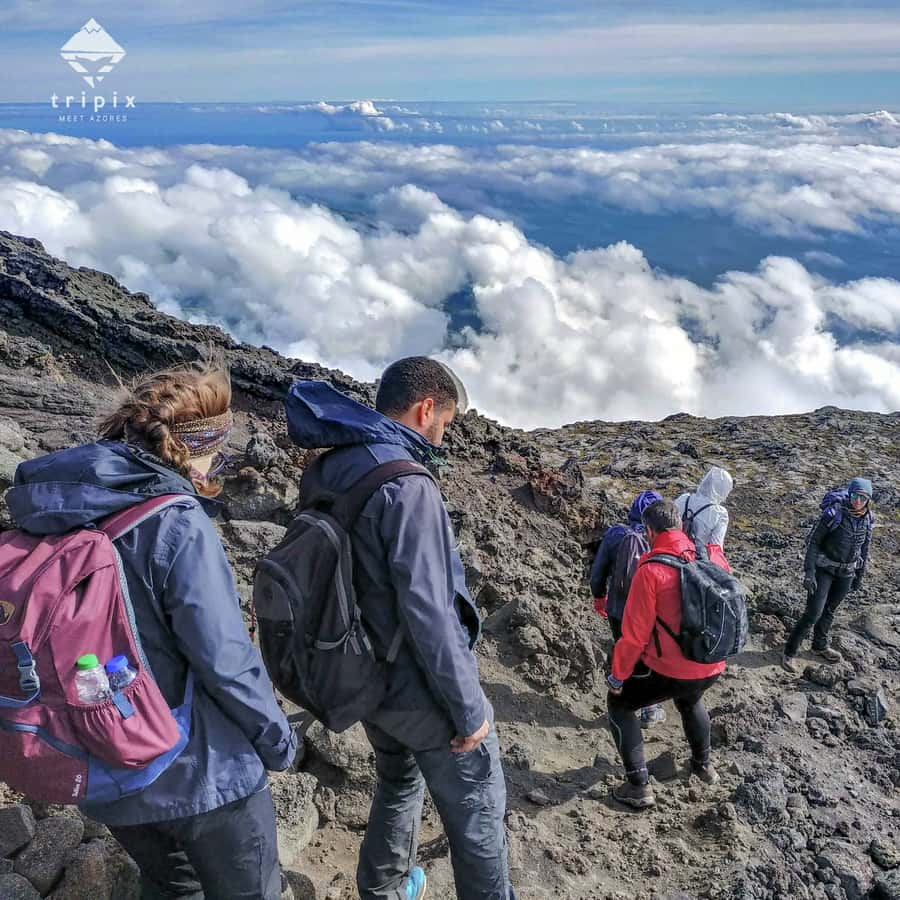
Mount Pico Guided Climb – Summit Portugal’s Highest Peak
A full-day guided ascent for travelers who want help with pacing, route finding and interpreting Pico’s volcanic landscape while attempting the summit.
Check Availability & PricesI would book this one early. The mountain has controlled visitor capacity, good weather windows matter, and summer summit slots are exactly the kind of thing I would not leave until I was already on the island.
Full-Day Pico Wine Tour in the UNESCO Vineyards
Pico’s vineyards are one of those landscapes that become much more interesting once someone explains what you are looking at. Instead of broad rows of vines, thousands of small plots are divided by black basalt walls that protect the plants from Atlantic wind and salt.
That landscape is part of Pico’s identity, not simply a photogenic wine region. A guided wine day can connect the currais, native grape varieties, volcanic soil, family wineries and Pico’s long history of producing wine in conditions that initially seem completely hostile to viticulture.
You can absolutely drive around the vineyard landscape independently, and I recommend doing some of that anyway. What you cannot replicate as easily is tasting wine without worrying about driving and having someone connect the separate pieces into a coherent story.
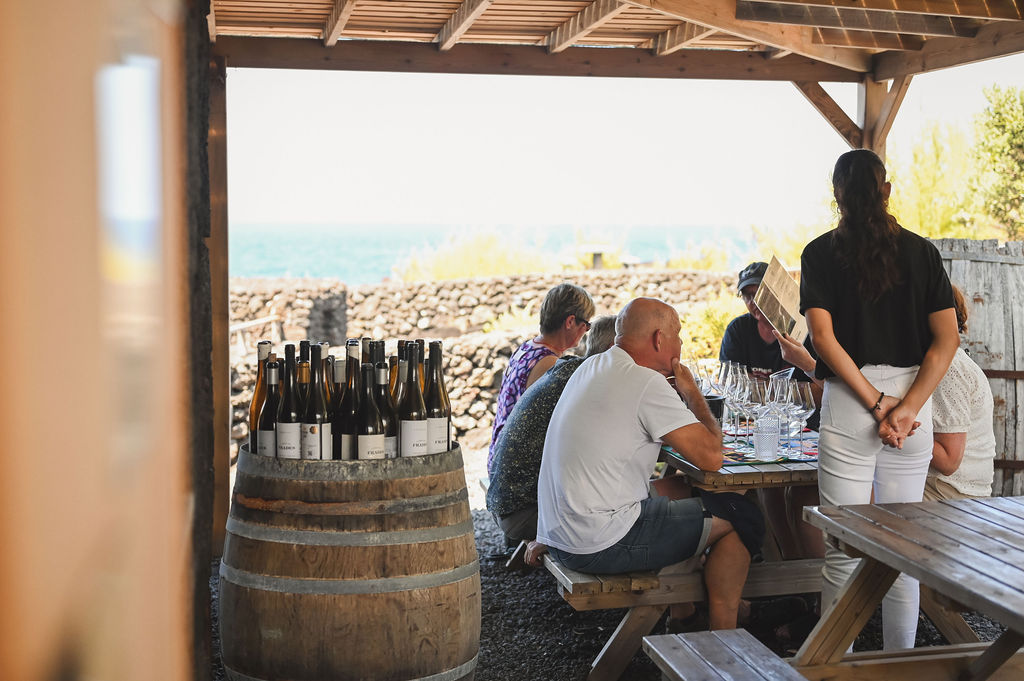
Pico UNESCO Vineyards Tour
A full-day immersion in the lava vineyard landscape with local wine, regional food and the cultural context behind one of Pico’s most distinctive traditions.
Check Availability & PricesLagoons & Mysterious Lava Tunnels Tour
Pico makes more sense once you start thinking of the whole island as layers of volcanic history. The mountain is only the most obvious part. Lava fields, caves, craters and the high plateau all reveal different phases of the island’s formation.
Gruta das Torres is Pico’s famous lava tube and the longest known lava tube in the Azores, but the tour below is useful for a slightly different reason: it combines underground volcanic formations with the island’s plateau and lagoons, giving you more geological context than a cave visit alone.
That makes this the tour I would choose if geology interests you more than simply ticking off one underground attraction.
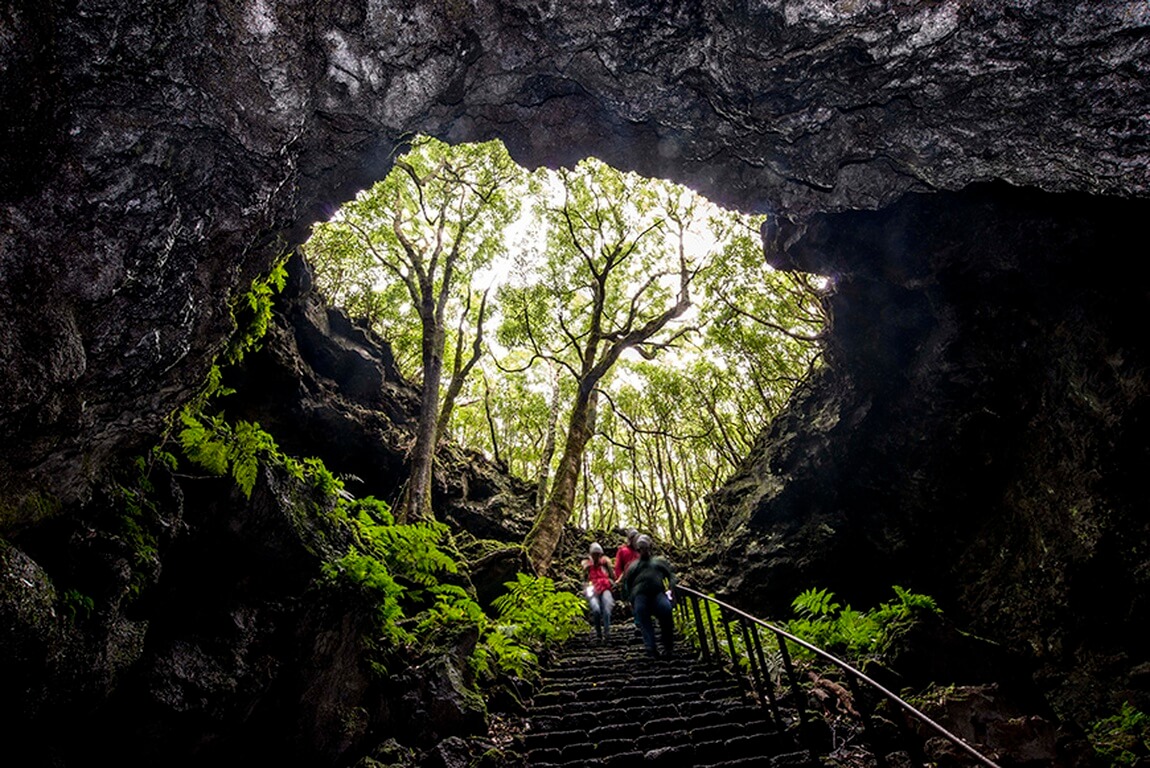
Lagoons and Mysterious Lava Tunnels Guided Tour
A small-group outing combining Pico’s highland lagoons and volcanic plateau with an underground lava-tunnel experience.
Check Availability & PricesImportant distinction: this is a broader lava-tunnel and plateau experience, not simply the standard Gruta das Torres admission. Choose it when you want a guided volcanic half-day rather than only the cave visit.
Private Pico Island Highlights Tour
If you are already renting a car and have several days on Pico, I would generally explore the island independently. The roads are manageable, the scenery rewards spontaneous stops, and there is no need to turn every viewpoint into a guided excursion.
A full-island tour makes much more sense in two situations: you do not want to drive, or you have very limited time and want somebody else to handle the route.
The private format also changes the value equation. Instead of following a large group around a fixed list of stops, you have more room to adjust the pace and spend longer on the parts of Pico that interest you most.

Pico Island Private Highlights Tour
A private full-day circuit through volcanic scenery, vineyard country, viewpoints and traditional settlements, with the route and pace handled for you.
Check Availability & PricesIf you have several independent days, use my Pico itinerary instead to build the route yourself.
6 · Food & wineFull-Day Pico Wine & Food Tour
This is the more relaxed alternative to the pure sightseeing circuit. The point is not to cover as much of Pico as possible. It is to connect the island’s volcanic landscape with what people actually grow, drink and eat there.
A guided format works particularly well for wine because nobody in the group needs to worry about driving after tastings. It also gives you easier access to producers and local context than simply stopping at a restaurant for lunch.
I would choose this over the highlights tour if food and wine matter more to you than maximizing the number of island sights in one day.
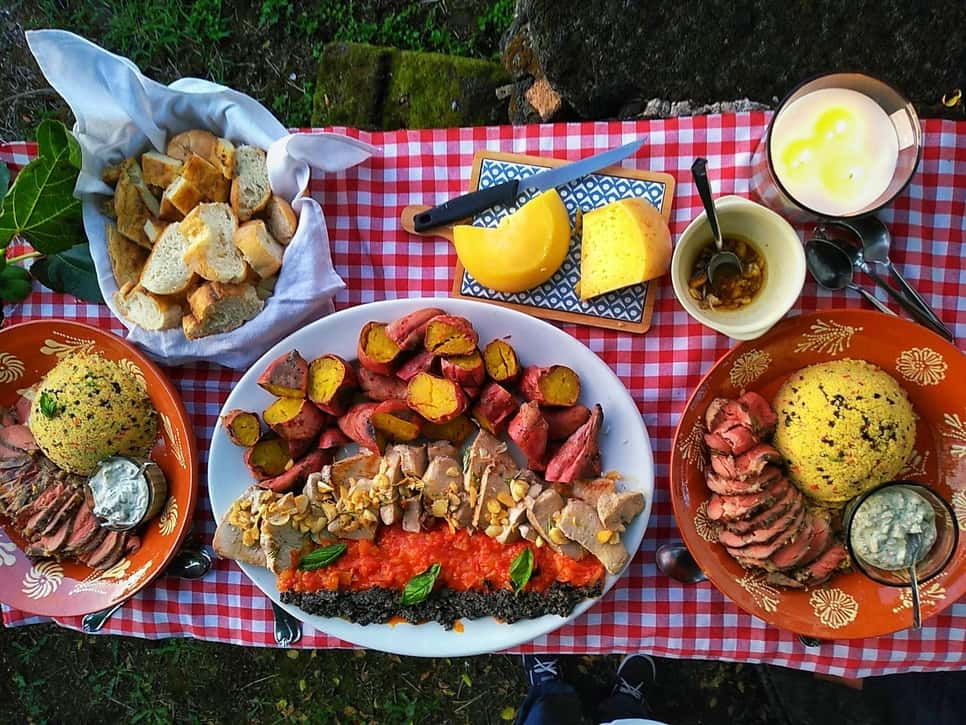
Full Day Wine & Food Tour of Pico Island
A full-day tasting-focused journey through Pico’s vineyards and food culture, combining wineries, regional dishes and the volcanic landscape that shapes both.
Check Availability & PricesWhich Pico Experiences Are Worth Doing with a Guide?
You do not need a guide for everything on Pico. In fact, some of my favorite moments on the island came from simply driving, stopping at viewpoints, exploring villages and swimming when the weather looked good.
The experiences above earn their place for different reasons.
Boat, skipper, lookouts and marine knowledge are fundamental to the experience. This is not something you can recreate independently.
Strong hikers can climb independently, but a guide adds pacing, mountain familiarity and valuable support in changing conditions.
Interpretation, tastings and not having to drive make the guided format substantially more useful than a simple scenic vineyard drive.
Geological interpretation turns dark volcanic formations into a much clearer story of how the island developed.
Great without a car or with limited time. If you enjoy driving and have several days, independent exploration is easy.
Useful when you want curated producers, tastings and meals without researching every stop or assigning someone to drive.
What Should You Book First?
Pico is not a place where I would lock every hour of the trip months in advance. Weather matters too much. But a few experiences are worth reserving before the rest.
My booking order
- Mount Pico: reserve first if reaching the summit is important to you. Capacity and weather windows make this the least flexible activity.
- Whale watching: book it early in your stay rather than on your final day, giving yourself some rescheduling room if the sea does not cooperate.
- Wine or food tour: book ahead in high season, especially if you want a full-day experience rather than a simple tasting.
- Lava-tunnel tour: reserve once your overall Pico schedule is clear.
- Private highlights tour: prioritize this mainly if you know you will not have a rental car.

How Many Tours Do You Need on Pico?
For a short three- or four-day stay, I would normally book one or two tours and leave the rest of the time for independent exploration.
For example, whale watching plus Mount Pico creates a very active trip. Whale watching plus a wine tour gives you a better balance between wildlife and culture. If you are not renting a car, a highlights tour can replace one independent sightseeing day entirely.
What I would not do is book three different full-day road tours that cover the same villages, vineyards and viewpoints. Pico is small enough that repeating the same landscape from several vans adds cost without adding much depth.
For the actual day-by-day structure, natural pools, scenic roads and independent stops, use my Pico Island itinerary.
Your base matters for tour logistics. Madalena is convenient for ferries and western Pico, while Lajes is particularly useful if whale watching is a major priority. I compare the island’s bases in my where to stay in Pico guide.
Best Pico Island Tours FAQ
What is the best tour in Pico Island?
If wildlife appeals to you, whale watching from Lajes do Pico is the tour I would consider first. It combines Pico’s maritime history with a genuine Atlantic wildlife experience and is difficult to reproduce independently. If hiking is your main reason for visiting, a guided Mount Pico climb may be the more important booking.
Do I need to book tours to enjoy Pico?
No. Pico is excellent for independent travel, particularly if you rent a car. I would use guided tours selectively for experiences where expertise, transport or access meaningfully improves the day: whale watching, Mount Pico, wine, volcanic geology and specialist food experiences.
What are the best Pico tours without a rental car?
A private or small-group island highlights tour is the easiest way to cover Pico’s major landscapes without driving. Wine and food tours are also particularly useful without a car because transport between tastings is handled for you.
Should I whale watch from Lajes do Pico or Madalena?
I personally favor Lajes for the classic Pico whale-watching experience, and that is where I went myself. Madalena is the more convenient choice if you are staying on the western side of the island and want a research-oriented departure without crossing Pico.
Should I use a guide to climb Mount Pico?
Experienced and well-prepared hikers can climb independently, but a guide can add pacing, local mountain knowledge and route confidence. I climbed with a guide and would do so again, particularly if reaching the summit is an important part of the trip.
Is a Pico wine tour worth booking if I have a car?
It can be. You can easily drive through the UNESCO vineyard landscape yourself, but a wine tour adds historical interpretation and tastings while removing the obvious problem of combining alcohol and driving.
Is the lava-tunnel tour the same as visiting Gruta das Torres?
No. Gruta das Torres is a specific managed lava-tube attraction. The lagoons and lava-tunnels tour featured here is a broader guided experience combining Pico’s plateau landscapes with underground volcanic formations.
How far in advance should I book Pico tours?
Book Mount Pico first if the summit is important to you, followed by whale watching and full-day wine experiences during busier months. Keep some flexibility in your schedule because weather can affect both mountain and sea activities.
How many tours should I book for three days on Pico?
One or two is usually enough. Pico rewards independent exploring, so I would combine one signature guided experience with scenic driving, natural pools, villages and vineyard landscapes rather than filling every day with organized tours.
Can I combine whale watching and another tour on the same day?
A roughly three-hour whale-watching departure can fit with a lighter afternoon, but I would avoid pairing it with Mount Pico or another physically demanding full-day experience. Leave some buffer because sea conditions and return times can vary.
Planning the Rest of Your Pico Trip
Tours are only one part of Pico. The island is also at its best when you have time to drive through the vineyards, stop at natural pools, explore the smaller coastal settlements and change plans when Mount Pico finally appears from behind the clouds.
Build the rest of the trip around scenic drives, natural pools, villages and independent stops.
Plan Your Pico TripCompare Madalena, Lajes, São Roque and quieter island bases before choosing your tours.
Compare Pico AreasSee how Pico fits with Faial, São Jorge and the rest of a wider Azores trip.
See the Azores RouteFinal Thoughts: Which Pico Tours Are Worth Your Money?
Pico does not need to be experienced through a tour bus window. Rent a car if that suits your trip, leave space for spontaneous stops and explore much of the island independently.
But the right guided experiences reveal parts of Pico that are much harder to access on your own. A whale-watching crew takes you into the Atlantic with people who know how to search for wildlife. A mountain guide helps you tackle Pico’s rough volcanic slopes. A wine guide turns walls of black rock into a story about survival, agriculture and centuries of island culture.
That is how I would spend a tour budget here: not on more sightseeing, but on experiences where local knowledge genuinely changes what you understand.
Last Updated on 27/09/2026 by Panos


