

Gavdos Island Travel Guide: Europe’s Southern Edge, Properly Explained
Gavdos is not difficult because it is large. It is difficult because almost everything that matters — ferries, wind, transport, water, food, accommodation and beach access — operates with less margin for error than on ordinary Greek islands. South of Crete in the Libyan Sea, this is the southernmost inhabited Greek island and the southern edge of Europe: part beach escape, part hiking destination and part exercise in accepting that the timetable does not always get the final say.
The key to Gavdos: plan the logistics carefully and the days loosely. Give the ferry room to change, choose your base according to how much you actually want to walk, arrive with cash and essentials, and resist the urge to turn every remote beach into a checklist.
What Makes a Gavdos Trip Different
Six realities matter more here than a long list of sights.
Schedules are real, but exposed sea conditions still matter more here than on many mainstream Greek routes.
The best concentration of beach, tavernas, rooms, mini-markets and seasonal bus access.
This is where Gavdos starts feeling less like a beach holiday and more like a remote landscape.
The chair is the symbol; the dry southern landscape and three sea arches are the experience.
The bus helps, but many of the places worth reaching still demand time on foot.
On a remote island, network access matters more than how cheap the eSIM was.
Gavdos Map: Beaches, Villages, Port & Hiking Areas
How to Get to Gavdos: Build the Trip Around the Ferry
There is no airport on Gavdos. The journey begins on the south coast of Crete, using the ANENDYK network from ports such as Hora Sfakion, Palaiochora, Sougia and Agia Roumeli. Which port is best depends less on straight-line distance and more on where you are staying in Crete and which sailings actually operate on your dates.
That distinction matters. A route that looks simple on Google Maps can involve coastal stops, a boat change or a much longer crossing than another departure a day later.
| Crete departure | When it makes sense | What to watch |
|---|---|---|
| Hora Sfakion | Useful if you are coming from Chania, Rethymno or the Sfakia side of Crete. | Some services call at Loutro and Agia Roumeli before continuing south. |
| Palaiochora | Logical if you are already exploring southwest Crete. | Some departures run through Sougia and Agia Roumeli, so total journey time can be long. |
| Sougia | Excellent for hikers and southwest-Crete itineraries. | Some sailings require a change at Agia Roumeli. |
| Agia Roumeli | Very useful after the Samaria Gorge or a south-coast walking trip. | You are already dependent on the coastal ferry network to reach Agia Roumeli. |

ANENDYK now provides online route information and booking. Check the live timetable directly before you build non-refundable accommodation, flights or car rentals around a sailing.
Check current schedules directly with ANENDYK Seaways.
Arriving at Karave: What Happens Next
Every Gavdos trip starts at Karave, the island’s only proper harbour. It is not a destination in itself so much as the transfer point where you work out the next move: Sarakiniko, Kastri, Korfos or wherever you are sleeping.
On arrival: seasonal buses and local transfers are commonly coordinated around ferry traffic, but do not assume the same timetable all year. Know the name of your accommodation or beach before you disembark, and confirm the return transport locally once you are on the island.
Private Gavdos Tour From Crete
If Gavdos appeals but coordinating ferries, transfers and local logistics does not, there is also a very expensive private option from Crete.
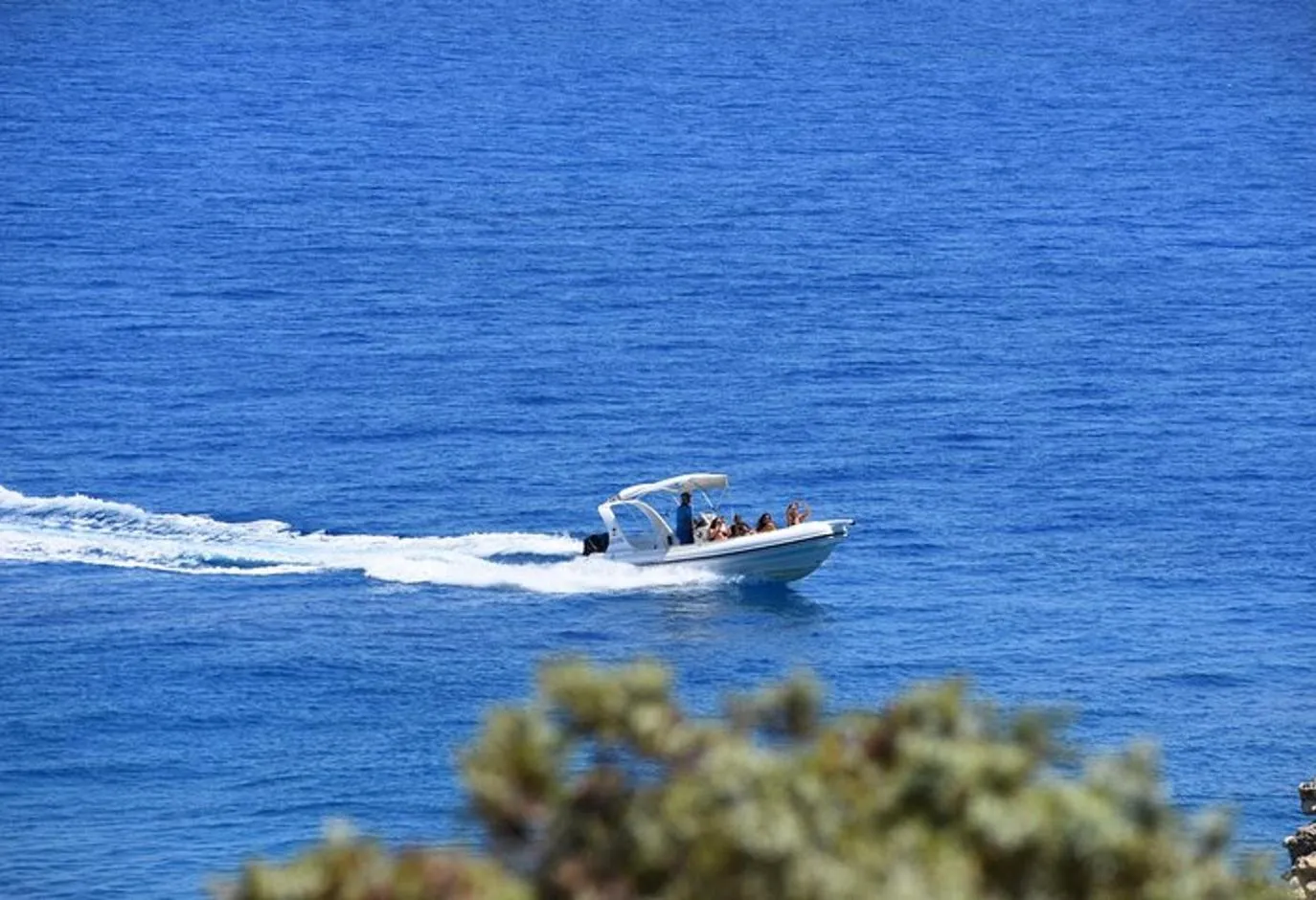
Gavdos Full-Day Private Tour All Inclusive
This is aimed at travelers for whom convenience matters far more than price, combining transfers, ferry travel, coastal exploration, food and the island’s major stops.
Check tour price & availabilityAffiliate link: I may earn a commission if you book, at no extra cost to you.
Where to Stay on Gavdos: Choose the Base Before the Room
Gavdos has so little accommodation that location matters more than hotel category. Sarakiniko is easiest if you are traveling without a vehicle. Kastri and Metochi make more sense if village life and central positioning matter. Korfos gives you a quieter coast. The farther you move toward the wild north, the more you trade services for atmosphere.
| Area | Best for | Advantage | Compromise |
|---|---|---|---|
| Sarakiniko | First trips, no-car stays | Beach, food, rooms, shops and transport close together. | The most social and busiest part of Gavdos in summer. |
| Kastri / Metochi | Village atmosphere, central location | Useful for food and moving between different parts of the island. | You are not directly on one of Gavdos’s headline beaches. |
| Korfos | Quiet beach stays | Calmer than Sarakiniko but still has seasonal food. | Far fewer services. |
| Agios Ioannis side | Nature and walking | The classic wild Gavdos atmosphere. | Much greater self-sufficiency required. |
Gavdos Accommodation I Would Compare First

Metochi Gavdos
Family-run accommodation around one kilometre from Korfos, with a restaurant, quiet setting and good positioning if hiking matters more than being directly on Sarakiniko.
Check prices & availability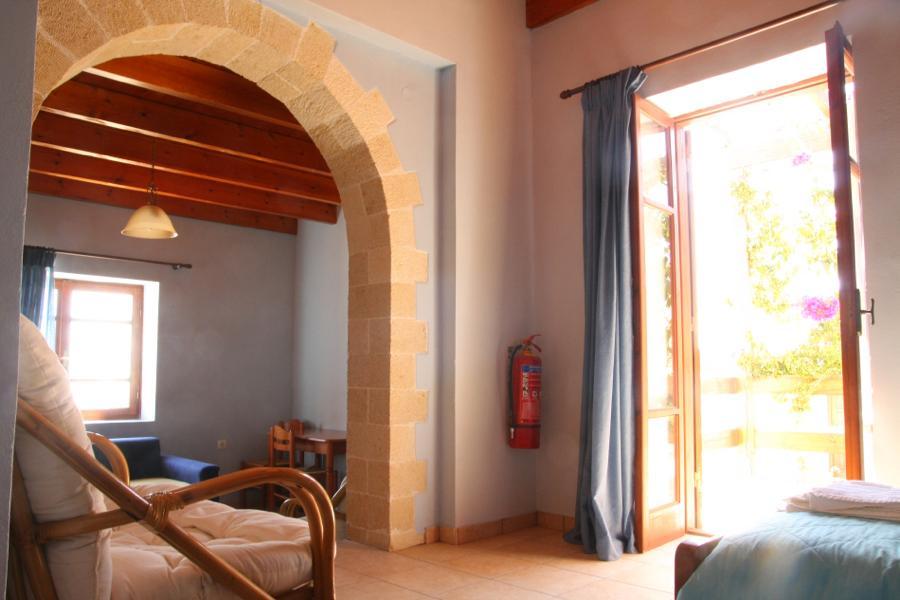
Gavdos Princess
Stone-built studios with sea and mountain views, restaurant access and a quieter setting away from the island’s busiest beach strip.
Check prices & availability
Exoristoi Nature Suites
A nature-focused stay at Sarakiniko with sea views, restaurant access and a particularly useful location if you want the island’s easiest beach base without giving up atmosphere.
Check prices & availabilityAccommodation links are affiliate links. If you book through them, I may earn a commission at no extra cost to you.
Gavdos Beaches: Choose by Effort, Not Just by Photos
The difference between Gavdos beaches is not simply sand versus pebbles. It is how much water, heat, walking and self-sufficiency stand between you and the sea. Sarakiniko is easy. Agios Ioannis asks a little more. Lavrakas, Pyrgos, Potamos and Lakoudi belong to a different category entirely.
| Beach | Best for | Access | Facilities | Reality |
|---|---|---|---|---|
| Sarakiniko | First visits, families, no-car stays | Road and bus | Most on Gavdos | The easiest proper beach day on the island. |
| Agios Ioannis | Dunes, junipers, atmosphere | Walk after road/bus access | Limited nearby | The landscape most people imagine when they think of wild Gavdos. |
| Lavrakas | Solitude | On foot beyond Agios Ioannis | None | A quieter continuation of the north-coast experience. |
| Potamos | Hiking and dramatic cliffs | Long hike or boat | None | Worth it when the approach itself is part of the appeal. |
| Tripiti | Southernmost-point experience | Hike or boat | None | Three sea arches and Europe’s symbolic southern edge. |
| Korfos | Quiet practical swimming | Road/walk | Seasonal tavernas | Much easier than the remote beaches but calmer than Sarakiniko. |
| Lakoudi | Snorkeling and solitude | Footpath or boat | None | White pebbles, clear water and rock formations. |
| Stavrolimni / Pyrgos | Longer north-coast exploration | On foot | None | For travelers staying long enough to go beyond the famous beaches. |
| Mpo | Small hidden cove | Steeper walk | None | Rockier, tiny and far outside the normal beach circuit. |
Check the wind before choosing the beach: Gavdos is exposed, and a beach that looks perfect on a map can be rough on the wrong day. Strong wind also matters for ferry reliability. I would choose the day’s beach from the actual conditions rather than locking every swim stop into the itinerary in advance.
Sarakiniko: The Beach That Makes Gavdos Manageable
Sarakiniko is where Gavdos becomes easy enough for a first visit. The long sandy bay sits close to rooms, tavernas, mini-markets and seasonal transport, so you can arrive without a vehicle and still have a functioning trip.
Its convenience is also its compromise. In July and August this is the island’s most social zone, with far more activity than the remote beaches. If total silence is what brought you south of Crete, Sarakiniko works better as a base than as the only place you see.

Agios Ioannis: Where Gavdos Starts Feeling Truly Remote
Agios Ioannis is a broad landscape rather than simply a swimming stop: pale sand, dunes, juniper trees and long horizons, with the built environment beginning to fall away.
The beach has become inseparable from Gavdos’s naturist and free-camping culture, but do not confuse that tradition with unlimited legal permission or environmental tolerance. The dunes and junipers are fragile, and the area has been at the center of tighter conservation enforcement.
Potamos: A Beach for People Who Want the Walk Too
Potamos is one of Gavdos’s most dramatic beaches, with reddish sand, steep clay-colored cliffs and very little around it to dilute the sense of isolation.
The important detail is access. The walk is exposed enough that Potamos does not make sense as a casual midday detour in high summer. Go because you want the hike and the beach together, not because a ranking told you it belongs in a top-five list.

Lavrakas: Keep Walking Past Agios Ioannis
Lavrakas is one of the simplest ways to make Gavdos feel significantly more remote. Continue west beyond Agios Ioannis and the north coast becomes quieter without yet demanding the commitment of a Potamos expedition.
There are no facilities to rescue poor planning. Bring your own water and supplies and treat the absence of infrastructure as the reason to come, not an inconvenience to complain about later.

Korfos: Quiet Without Going Completely Off-Grid
Korfos is the useful middle ground on Gavdos. It is much calmer than Sarakiniko but retains road access and seasonal places to eat, including some of the island’s best opportunities for fresh fish.
The beach itself is more pebbly and understated than the dramatic north coast. That is part of the appeal: Korfos works as somewhere to actually stay and swim rather than merely photograph.
Lakoudi: The Cove That Rewards a Longer Stay
Lakoudi looks nothing like Sarakiniko. White pebbles, clear turquoise water and rock formations give it a tighter, more enclosed feel, while access by foot or boat keeps it outside the easiest Gavdos circuit.
This is not where I would send somebody with a single night on the island. It becomes much more compelling once you have four or five days and can afford to spend half a day reaching one small cove properly.

Stavrolimni & Pyrgos: The North Coast Keeps Going
Stavrolimni lies between Lavrakas and Pyrgos and is small enough to be missed by travelers focused only on famous names. Continue farther and Pyrgos opens into two more remote coves framed by rougher landscape.
These beaches are best viewed as part of a north-coast walking day. They become disproportionately rewarding once your trip is long enough that there is no pressure to be somewhere else by lunch.

Mpo (Bo): Small, Rocky & Completely Unnecessary — Unless That Is Exactly What You Want
Mpo is a tiny rocky cove near Ambelos rather than a headline beach. There are no facilities or shade, and the descent makes water shoes and secure footwear useful.
Its value is precisely that it does not belong on a rushed itinerary. If you have a week on Gavdos and enjoy tracking down small coves, it earns its place.

Cape Tripiti: The Southernmost Point of Europe
Tripiti has become the geographical symbol of Gavdos. Three natural arches cut through the rock at the southern cape, while the oversized wooden chair above the sea marks what is widely treated as Europe’s southernmost point.
The chair is the photograph. The real experience is the approach: dry landscape, open sea and the sense that the inhabited Mediterranean has simply run out beneath you.

Do not underestimate Tripiti: depending on your starting point, this is a proper exposed walk. Start early in hot weather, carry substantial water and wear footwear suitable for rough paths.
The Gavdos Lighthouse: Keep One Evening Free for It
The reconstructed lighthouse near Ambelos is one of the island’s strongest sunset locations. Its elevated position opens across Gavdos and the Libyan Sea, and after a day spent hiking or swimming it works much better as an evening destination than another midday box to tick.
The original lighthouse dated from the late 19th century and once guided traffic between Crete and North Africa. Today the site combines that maritime history with one of the broadest views on the island.

Hiking on Gavdos: Distances Lie in the Heat
Gavdos looks tiny on a map, which makes it easy to underestimate. The real variables are exposure, loose terrain and how much water you are carrying.
The rule I would use: carry more water than the distance appears to justify. A short exposed Gavdos trail in August can be harder than a much longer shaded walk elsewhere.
Free Camping on Gavdos: Tradition Does Not Equal Legal Permission
Free camping has shaped the modern identity of Gavdos for decades, especially around Agios Ioannis, Lavrakas and Sarakiniko. That history is real, and so is the seasonal community that grew around it.
But the legal situation is often described too casually online. Greek law prohibits unauthorized camping on beaches, shore zones, forests and other public areas. Gavdos has historically seen varying degrees of tolerance, but conservation enforcement around the island’s sensitive juniper habitats has become a much more visible issue.
Do not plan your trip on the assumption that “wild camping is allowed on Gavdos.” Check the current local situation before sleeping outdoors, and never pitch or build structures in fragile dunes or juniper-root zones simply because other people have done so.
This is more than a legal technicality. The vegetation around Agios Ioannis and Lavrakas is one of the reasons the landscape feels so extraordinary. A remote-island culture that destroys the landscape sustaining it eventually defeats its own purpose.
Kastri, Vatsiana & the Gavdos Beyond the Beaches
Kastri
Kastri is the island’s administrative center, but calling it a capital creates the wrong image. It is a small dispersed settlement where you find essential services, tavernas and a glimpse of ordinary year-round life.
Vatsiana
Vatsiana is Europe’s southernmost inhabited village and fits naturally into a Tripiti day. Its small folklore collection gives some context to how people lived with Gavdos’s isolation before ferries, mobile networks and tourism made the island easier to reach.
Political Exile
Gavdos’s remoteness was not always romantic. In the 1930s the island was used for political exile, and that layer of history survives around the Exoristoi site. It is worth remembering when modern travel writing describes Gavdos only as an escape from civilization: people were once sent here because the isolation was considered punishment.
Where to Eat on Gavdos
Gavdos food works best when expectations stay rooted in the island itself. Think fresh fish when the catch cooperates, goat and lamb, Cretan pies, greens, vegetables, grilled dishes and whatever a small kitchen can source reliably.

| Area | Places to know | Why stop |
|---|---|---|
| Agios Ioannis | Theofilos Livykon | Coffee, meze and straightforward food near the wild north-coast beach area. |
| Kastri | Rakopagida, Princess Restaurant, Stella’s Bakery | Useful mix of meals, grilled meat, fish, pies and breakfast supplies. |
| Korfos | Akrogiali, Panorama | Fresh fish, seafood and simple island food with sea views. |
| Metochi | Oi Nostimies tis Eftichias | Home-style Cretan dishes, goat, rabbit and vegetarian food. |
| Sarakiniko | Chelona, Exoristoi Cafe, Nychterida, Stin Akri, The 4 Brothers | The island’s easiest concentration of food and drinks. |

Panorama in Korfos is especially useful after a swimming or hiking day because you can combine fresh fish with the view rather than making a separate restaurant pilgrimage.

Getting Around Gavdos
If you bring a car: fill the tank in Crete. Do not arrive on Gavdos expecting mainland-style fuel infrastructure.
Mobile Signal & Internet on Gavdos
Gavdos is one of the places in Greece where I would choose a mobile provider for network access first and price second.
Telekom — the network formerly branded Cosmote — is the one I would prioritize here. Its network has the strongest overall reach in southern Crete and Gavdos. Vodafone and Nova can work in certain parts of the island, particularly exposed locations that pick up signal from southern Crete, but I would not rely on either of them for consistent island-wide coverage.
Even with Telekom, cliffs, forest, coves and the island’s distance from Crete can create weak areas. Download offline maps and ferry details before hiking.
The eSIM I Would Prioritize for Gavdos

Orange Travel Greece eSIM
Orange Travel’s Greece eSIM can connect to Telekom/Cosmote, Vodafone and Nova. That multi-network access is particularly useful on Gavdos, where Telekom is the network I would want available but reception can vary by location.
Check Orange Travel Greece plansThe Orange Travel link is an affiliate link. If you buy through it, I may earn a commission at no extra cost to you.
Cash, Shops & Supplies
Gavdos is much easier than it once was, but it is still the wrong island for “I’ll just buy it when I get there.” Bring the things that would genuinely cause a problem if the island did not have them.
| What to plan | What to know |
|---|---|
| Cash | Bring enough from Crete for transport, meals and a contingency. Cards are accepted in more places than before, but do not depend on one payment method. |
| ATM | Treat access to cash on the island as backup rather than your primary plan. Withdraw what you need in Crete before boarding. |
| Food | Mini-markets in the more serviced settlements cover basic needs, but specific foods, dietary products and anything you strongly prefer should come with you from Crete. |
| Medication | Bring anything essential, plus a small personal first-aid kit. Gavdos is not where you want to discover that a particular medicine or pharmacy item is unavailable. |
| Hiking water | Remote beaches and trails do not reliably provide it. Carry more than the map distance makes you think you need, especially from June through September. |
| Offline essentials | Save your ferry confirmation, accommodation contact, bus information and offline maps before leaving Crete. Mobile signal can disappear exactly where you most need directions. |
Travel Cards I Use
Cards are useful on Gavdos, but they are a backup to cash rather than a replacement for it. I travel with both of these so I am not dependent on a single bank or card network.
How Many Days Do You Need on Gavdos?
A rushed Gavdos trip is usually a poor trade. You spend too much effort reaching the island to leave before its geography starts making sense.
A 4-Day Gavdos Itinerary That Leaves Breathing Room
Best Time to Visit Gavdos
| Period | What works | Main drawback |
|---|---|---|
| April–May | Green landscape, wildflowers and excellent walking weather. | Cooler sea and fewer tourist services. |
| June | One of the strongest overall months: long days, warm weather and fewer peak-season visitors. | Exposed trails are already getting hot. |
| July–August | Maximum services and the island at its most social. | Heat, accommodation pressure and far more activity around Sarakiniko and the camping areas. |
| September | Warm sea with fewer visitors and better hiking conditions than midsummer. | Always keep an eye on ferry and weather changes. |
| October | Quiet atmosphere and good walking temperatures. | Services and ferry frequency reduce. |
| Winter | The island at its most local and isolated. | Very limited services and much greater dependence on weather. |
A Short History of Gavdos: More Than Calypso
Gavdos has been inhabited for thousands of years and has repeatedly sat between isolation and Mediterranean connectivity. Archaeological evidence points to ancient settlement, while the island has often been proposed as one possible location for Ogygia, the island of Calypso in Homer’s Odyssey.
Its position between Crete and North Africa placed it near important maritime routes. Roman and early Christian traces survive, and the island is traditionally associated with the Apostle Paul’s storm-driven voyage through this part of the Mediterranean.
Later centuries brought depopulation, piracy and renewed isolation. The 20th century added one of Gavdos’s most important modern chapters when political dissidents were exiled here. That story gives the island a much more complicated history than the modern image of barefoot freedom and empty beaches suggests.
Gavdos FAQs
How do you get to Gavdos?
By ferry from southern Crete. Depending on the season and sailing day, routes connect Gavdos with Hora Sfakion, Palaiochora, Sougia and Agia Roumeli through the ANENDYK network.
Can you book Gavdos ferry tickets online?
Yes. ANENDYK now provides online route information and booking. Older guides saying tickets cannot be bought online are outdated.
How many days do you need on Gavdos?
Three to four nights is ideal for a first trip. Two nights only gives you a sample, while five to seven nights makes sense if remote beaches and hiking are central to the trip.
Where should a first-time visitor stay?
Sarakiniko is the easiest base without a vehicle because it combines a sandy beach, food, mini-markets, rooms and seasonal transport. Choose Korfos, Metochi or the Agios Ioannis side if quiet matters more than convenience.
Can you camp freely on Gavdos?
Gavdos has a long free-camping tradition, but unauthorized wild camping is prohibited under Greek law. Historical tolerance should not be confused with formal permission, particularly around protected juniper and dune habitats.
Do you need a car on Gavdos?
No. A car adds flexibility for villages, Korfos, Vatsiana and the lighthouse, but many of the most interesting beaches still require walking. A no-car trip works well if you accept the bus schedule and choose your base carefully.
Can you bring a car to Gavdos?
Yes, on ferry services carrying vehicles when space is available. Book early and arrive with fuel from Crete.
Can you visit Gavdos as a day trip?
Occasionally ferry timing may make a very short visit technically possible, but it misses the point of the island. Gavdos is much better as a multi-night destination.
Which mobile network works best on Gavdos?
Telekom, formerly Cosmote, is the network I would prioritize. Vodafone and Nova can work in some exposed areas where reception reaches across from Crete, but their coverage is more variable. Even Telekom can weaken in coves and remote terrain.
Which eSIM is useful for Gavdos?
An eSIM that can access Telekom/Cosmote is preferable to one locked to a weaker network. Orange Travel’s Greece eSIM currently lists Telekom/Cosmote, Vodafone and Nova among its partner networks.
Which is the easiest beach on Gavdos?
Sarakiniko is the easiest major beach because it combines road and bus access with tavernas, accommodation and shops.
Which beach feels the wildest?
Agios Ioannis gives the strongest classic Gavdos landscape without a very long expedition. Potamos, Pyrgos and smaller coves go considerably farther into remote territory.
Is the Tripiti hike difficult?
The challenge is exposure and heat rather than technical climbing. Bring plenty of water, start early in summer and use proper footwear.
Are there supermarkets and ATMs on Gavdos?
There are small shops rather than large supermarkets, and financial infrastructure is limited. Bring essential supplies and sufficient cash from Crete.
When is the best time to visit Gavdos?
June and September give the strongest balance for most travelers. Spring is excellent for hiking; July and August are hotter, busier and more social.
Is Gavdos naturist-friendly?
Yes. Gavdos has a long naturist tradition, particularly around the quieter northern beaches. You will still find mixed beach use, so follow the atmosphere of the specific area and be considerate around families, tavernas and settlements.
What should I bring to Gavdos from Crete?
Bring sufficient cash, essential medication, sun protection, proper walking shoes, a refillable water setup and any food or personal item you would be unhappy to go without. Download offline maps and save ferry and accommodation details before the crossing.
Does wind matter when choosing a beach on Gavdos?
Yes. Gavdos is exposed to the Libyan Sea, so wind can change swimming conditions considerably and can also affect ferries. Keep beach plans flexible and choose according to the day’s conditions rather than a fixed list.
Where to Go After Gavdos
Gavdos makes most sense when you think geographically. You return to Crete first; from there the next logical direction depends on whether you want to continue through Greece’s southern outliers or move into a conventional island group.
Kythira & Elafonissos: Continue the Southern-Greece Story
The most coherent thematic continuation is northwest through Crete toward Kythira and Elafonissos. Kythira is a proper multi-day island of villages, waterfalls, history and beaches; Elafonissos is much smaller and built around Simos Beach and its extraordinary shallow water.

Quiet Cyclades: Easier Islands, Similar Desire for Space
If you want quieter island life without Gavdos-level logistics, the quiet Cyclades are the cleaner next step. Folegandros, Sikinos, Anafi, Kimolos and the Small Cyclades offer much more regular infrastructure while still rewarding slower travel.

Karpathos & the Dodecanese: Continue East
For a larger island that still feels geographically exposed and culturally distinct, my Karpathos travel guide is a natural eastern continuation. For the broader island group, see the quiet Dodecanese guide.
Compare Gavdos With the Rest of Quiet Greece
If you are not committed to southern Greece yet, my 59 quiet Greek islands comparison is the fastest way to see whether Gavdos’s remoteness is actually what you want or whether another low-key island gives you the atmosphere with much easier logistics.
Final Thoughts: Gavdos Rewards Margin
The best Gavdos itineraries have margin built into them: margin for the ferry to move, for a walk to take longer than expected, for a bus not to appear exactly when you hoped, and for a beach to persuade you that whatever came next can wait.
Tripiti, Agios Ioannis and the lighthouse give the island its recognizable landmarks. But Gavdos is strongest in the space between them — long trails, small tavernas, difficult coves, ferries that remind you the sea is still in charge and a horizon that feels unusually empty even by Greek-island standards.
If that sounds inconvenient, Gavdos may not be the right island. If it sounds liberating, it probably is.
Last Updated on 26/09/2026 by Panos


