

Ongi Monastery Mongolia: The Desolate Ruins Between the Gobi and Kharkhorin
Ongi Monastery was one of the strangest stops on my journey across Mongolia. There was no great intact temple waiting at the end of the road, no busy town and almost no sense that I had arrived at a conventional attraction. There were ruins, wind, scattered animals, a thin river valley and an enormous amount of empty space.
And that is exactly why Ongiin Khiid works so well on a Mongolia itinerary.
I would not cross Mongolia solely to visit Ongi. I would absolutely stop here when traveling from the South Gobi toward Kharkhorin and the Orkhon Valley. It breaks up an otherwise punishing transfer, adds one of the country’s most powerful Buddhist-history sites, and gives you a night in a part of Mongolia that feels genuinely far from everything.
Updated October 2026 · Some links below are affiliate links. If you book through them, I may earn a commission at no extra cost to you.

Ongi Makes Most Sense as a One-Night Bridge Between the Gobi and Central Mongolia
If your route runs Bayanzag → Ongi → Kharkhorin / Orkhon Valley, stay one night near the ruins. Arrive in the afternoon, explore part of the complex, sleep in a ger camp, then continue north the following day.
That is a much stronger use of Ongi than making a separate return trip from Ulaanbaatar.
Ongi Is the Transition Between Two Very Different Mongolias
Its position on the route matters almost as much as the ruins themselves.
If you travel north after the classic South Gobi sights, the landscape does not suddenly switch from desert to the historical heartland around Kharkhorin.
Ongi sits in that transition zone.
After Bayanzag and the Gobi Desert, we drove for hours through sparse steppe before reaching the valley of the Ongi River. From there, the journey continues north toward Kharkhorin and eventually the Orkhon Valley.
Seen like this, Ongi stops being an isolated ruin in the middle of nowhere and becomes exactly what it was for me: a meaningful overnight on one of Mongolia’s most logical overland routes.
The 8-Day Gobi + Central Mongolia Tour Includes Ongi Exactly Where It Should
This is the organized option I would look at first if Ongi is part of a shorter Mongolia trip.
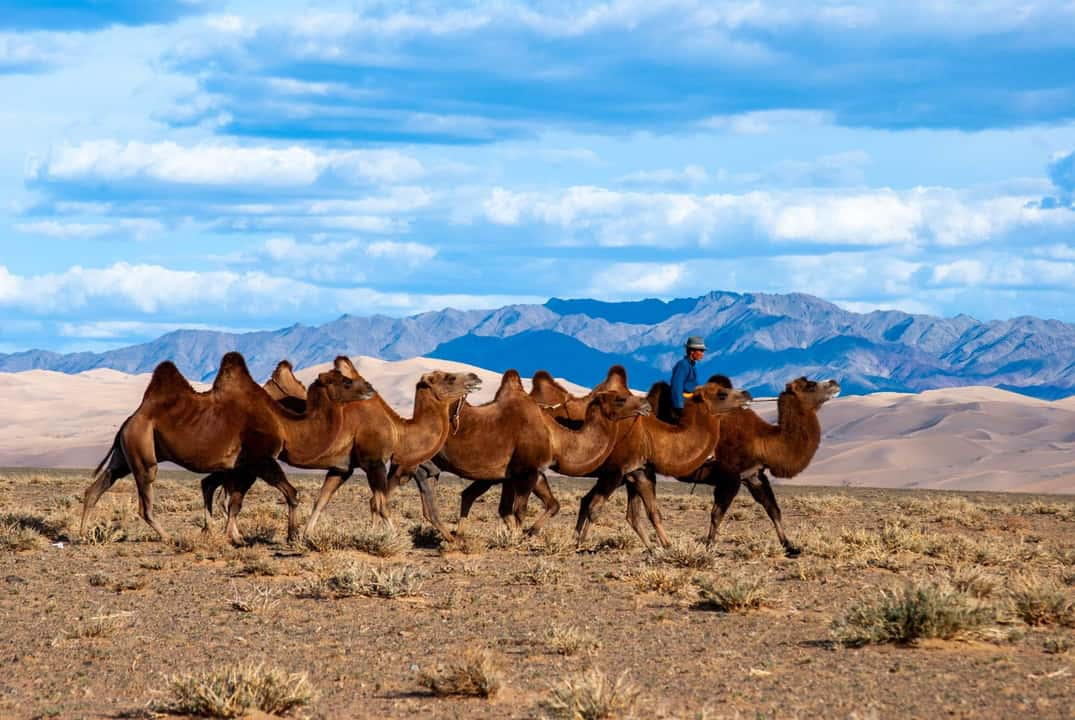
8-Day Gobi & Central Mongolia Tour
This route solves the main logistical problem Ongi creates for independent travelers: it links the monastery naturally between the Gobi and Central Mongolia instead of forcing you to organize a separate remote transfer.
The current itinerary includes Ongi after the major Gobi stops, then continues north through the Orkhon region and Kharkhorin.

Before the Ruins: Ongi Was One of Mongolia’s Major Buddhist Centers
The emptiness is much more powerful once you understand what once occupied the valley.
Ongiin Khiid was not originally one single monastery building. It developed as a much larger religious complex on opposite sides of the Ongi River, with Khutagt Khiid and Barlim Khiid forming the principal monastic areas.
The complex developed over the 17th and 18th centuries and eventually became one of the most important centers of Buddhist learning in the region.
At its height there were around 28 major temples, four Buddhist colleges and a monastic population of more than a thousand.

The Destruction of Ongi
That religious world was destroyed during Mongolia’s communist purges of the late 1930s.
Temples were demolished, monks were killed, imprisoned or forced from religious life, and Buddhist institutions throughout the country were systematically dismantled.
Ongi is particularly powerful because the destruction has not been hidden behind complete reconstruction.
Most of the former complex remains exactly what it looks like today: foundations, broken walls, stones and fragments spread across the valley.

Walking Through Ongi Feels More Like Archaeology Than Sightseeing
I spent the afternoon moving slowly through the old foundations and scattered masonry.
There is no grand sequence of restored halls telling you exactly where to look next. You have to read the landscape.
Low walls show where buildings once stood. Broken architectural fragments remain in the ground. The reconstructed temple and white stupa feel almost startlingly intact beside them.
And then there is the silence.
At times I could hear little more than wind, goats and distant voices.
It was perhaps the most desolate monastery site I visited in Mongolia, and that desolation made the scale of the loss easier to understand than any museum display could have done.

Do Not Skip the Small Museum
Near the restored religious area, a small museum preserves artifacts associated with the old monastery.
When I visited, the collection included religious objects and fragments connected with the destroyed complex. Some items survived because people hid objects during the repression.
It is a modest museum, but after walking through foundations where entire temples have disappeared, even small surviving objects take on much more weight.
The Rebuilt Stupa
The white stupa was one of the most visually striking elements of the modern site.
Against the brown and ochre landscape, it almost looks too bright. Prayer flags and the occasional pilgrims around it reinforce an important point: religious activity has returned to the valley even though most of the old monastery has not.

The Ger Camp Is Part of the Ongi Experience
You do not come here for hotel choice or nightlife.
I stayed in a ger near the monastery.
The landscape around us was sparse even by Mongolian standards: low hills, scrub, animals, the river valley and almost no artificial light at night.
My host, Batsaikhan, welcomed me with salty milk tea and dried curds. He spoke about his family’s connection with the monastery and the way memories and religious traditions survived within local families after the destruction of the monastic community.
Experiences like this were one reason the long overland route worked for me. The night at Ongi was not merely accommodation between two sightseeing stops.

During another local visit, we prepared khuushuur with a family and were offered airag, fermented mare’s milk. Those encounters put the ruined monastery into a living social landscape rather than leaving it as an isolated historical site.
I Also Spent Part of My Ongi Stay Sick in the Ger
Ongi gave me one of the most atmospheric monastery visits of the trip — and one of the less glamorous travel memories.
I developed a fever while we were there and ended up spending part of the stay lying inside the ger instead of wandering around the valley.
I do not know what caused it, and it passed, but being ill here made the remoteness rather tangible. This is not a place where you walk around the corner to a pharmacy, supermarket or comfortable hotel room.
It changed one piece of advice I would give travelers: carry the basic medication you normally use, oral rehydration salts, enough water and a small reserve of food when crossing remote Mongolia, even if you normally travel light.
And do not build a countryside itinerary so tightly that losing half a day ruins everything.
Ongi Is Worth Visiting, But Not for the Reason Most “Must-See” Lists Suggest
If your definition of a great monastery is elaborate intact architecture, Ongi will lose badly to Erdene Zuu or Amarbayasgalant.
That comparison misses the point.
Ongi shows you the part of Mongolia’s Buddhist history that the surviving monasteries cannot: what systematic destruction actually looked like on the ground.
That makes it an excellent companion to the other monasteries rather than an inferior version of them.
- Erdene Zuu: Buddhist history beside Karakorum and the imperial heartland.
- Ongi: destruction, absence and gradual religious revival.
- Amarbayasgalant: unusually extensive surviving historical architecture.
- Tövhön: Buddhism expressed through isolation and mountain retreat.
I compare these very different experiences in my guide to the best Buddhist monasteries in Mongolia.
How to Get to Ongi Monastery
This is one place where route planning matters more than the straight-line distance.
| Approach | Who it suits | What to expect | My take |
|---|---|---|---|
| South Gobi → Ongi | Most first-time overland trips | Long dirt-road transfer after Bayanzag | Best route |
| Ongi → Kharkhorin | Travelers continuing into Central Mongolia | Another substantial transfer north | Logical continuation |
| Ulaanbaatar → Ongi | Special-interest visitors | Very long direct journey | Not how I would use Ongi |
| Organized tour | Travelers avoiding remote-road logistics | Driver, accommodation and route handled | Easiest option |
Ongi lies near Saikhan-Ovoo in Dundgovi Province. There is no convenient public-transport system that makes it function like an ordinary city-to-city destination.
Most travelers reach it with a private driver or on an organized overland tour.
The roads through this part of Mongolia can be little more than dirt tracks across the steppe. Weather changes the experience quickly, particularly after rain.
Ongi Monastery on My Mongolia Route Map
Zoom out and the reason for spending the night here becomes obvious.
Can You Self-Drive to Ongi?
Experienced independent travelers can drive this route, but I would not choose Ongi as the place to learn remote-road driving.
You need to be comfortable with long distances, rough dirt tracks, limited services, navigation away from major roads and the possibility that weather changes the route.
For most first-time Mongolia visitors, a local driver or an organized Gobi–Central Mongolia tour is simply easier.

Compare Rental Cars for Mongolia
If you are considering Ongi as part of an independent Gobi-to-Kharkhorin route, choose the vehicle for the roughest road on your itinerary rather than the paved sections around Ulaanbaatar.
Want Ongi as Part of a Full Cross-Country Mongolia Trip?
The current 16-day itinerary also includes Ongi before moving into Central Mongolia.
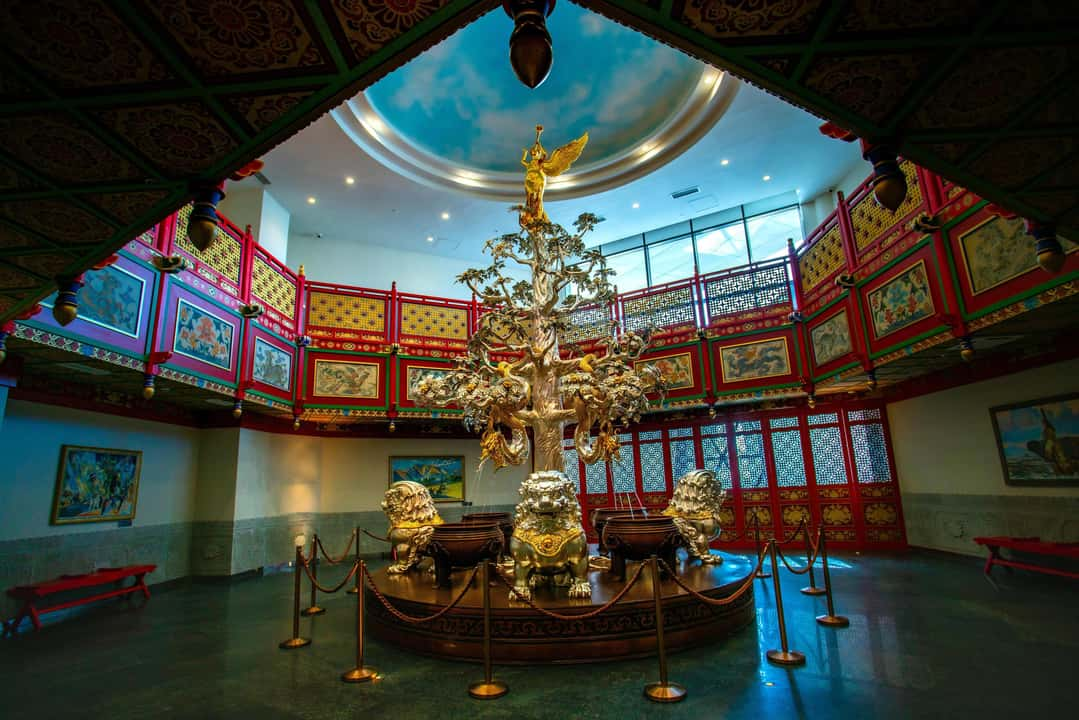
16-Day Mongolia Adventure: Gobi, Central Mongolia & Khuvsgul
This is the stronger choice if you want Ongi to be one chapter in a much larger Mongolia journey rather than the northern end of a short Gobi trip.
The current itinerary visits Ongi after Bayanzag, then continues to Kharkhorin, Erdene Zuu, the Orkhon region, Terkhiin Tsagaan Lake and eventually Khuvsgul.
This is much closer to the philosophy of my own 3-week Mongolia itinerary: move through the country continuously and let the landscapes and historical periods connect rather than flying back to Ulaanbaatar between every region.
Ongi Monastery Practical Tips
Where to Stay
Ger camps around the monastery are the logical option.
Expect relatively simple accommodation: beds, basic washing facilities, simple meals and varying access to electricity and hot water.
I would confirm what is included before arriving rather than assuming every tourist ger camp offers the same facilities.
Best Time to Visit
June to September is the easiest window for most travelers because temperatures are more manageable and overland routes are generally easier.
Mongolia’s weather can still change rapidly, and rain matters here because so much of the journey uses unpaved roads.
Opening Hours & Entrance
The ruins themselves are an open archaeological landscape rather than a tightly controlled attraction.
The small museum, restored temple and religious spaces can operate according to local hours, ceremonies and staffing, so I would aim to visit during normal daytime hours and ask your guide or ger camp about current access.
Mobile Signal
Treat connectivity as unreliable.
My earlier trip notes identified MobiCom as the network with useful coverage around the area, but I would still download maps and anything important before leaving the larger towns rather than relying on mobile data.
Ongi Was One of Those Places That Became Better Because It Was Empty
Ongi does not compete with the Flaming Cliffs for spectacle or Erdene Zuu for surviving architecture.
It does something else.
It puts you in a huge landscape where a major religious center once stood and then asks you to imagine what has disappeared.
There were moments when I looked across the valley and could barely reconcile the scattered walls in front of me with the idea that more than a thousand monks had once lived and studied here.
Add the long road, the ger camp, the wind, the almost complete absence of development — and, in my case, several feverish hours staring at the inside of a yurt — and Ongi became far more memorable than I expected.
I would not make a special cross-country journey just for Ongi. But on the Gobi-to-Kharkhorin route, I would absolutely stop again.
Ongi Monastery Mongolia FAQ
Is Ongi Monastery worth visiting?
Yes if you are already traveling between the South Gobi and Central Mongolia. I would not make a long standalone trip solely for Ongi, but it is one of the most meaningful and geographically useful stops on the Gobi-to-Kharkhorin route.
How long do you need at Ongi Monastery?
About two to three hours is enough for most travelers to explore the main ruins, restored temple, stupa and small museum. I would stay one night in the area because the driving distances on either side are substantial.
Where is Ongi Monastery?
Ongi Monastery lies near Saikhan-Ovoo in Dundgovi Province beside the Ongi River, between the classic South Gobi route and Central Mongolia.
Can you visit Ongi Monastery from Ulaanbaatar?
You can, but I would not recommend treating it as a normal day trip. It is far better incorporated into an overland Gobi and Central Mongolia itinerary.
Do tours include Ongi Monastery?
Yes. The current 8-day Gobi and Central Mongolia itinerary includes Ongi between the Gobi and the Orkhon/Kharkhorin region, while the current 16-day Gobi, Central Mongolia and Khuvsgul itinerary also visits Ongi before continuing north.
Why was Ongi Monastery destroyed?
The complex was destroyed during Mongolia’s anti-religious communist purges of the late 1930s, when monasteries across the country were closed or demolished and large numbers of monks were killed, imprisoned or forced out of religious life.
How large was Ongiin Khiid?
The wider monastic complex contained around 28 major temples and four Buddhist colleges and supported a community of more than a thousand monks at its height.
Is there accommodation at Ongi Monastery?
Yes. Ger camps operate around the area and are the most practical accommodation for travelers crossing between the Gobi and Central Mongolia. Facilities can be basic, so check what is included before arrival.
Do you need a 4WD for Ongi Monastery?
For an independent route I would use a capable high-clearance 4WD and only self-drive if you are already comfortable with remote unpaved roads. Most travelers use a local driver or organized tour.
What is the best route after Ongi?
Continue north toward Kharkhorin, Erdene Zuu and the Orkhon Valley. That creates a natural progression from the Gobi into Mongolia’s historic central heartland.
Last Updated on 06/10/2026 by Panos


