

Choosing where to stay in São Jorge is not as simple as picking a town and booking a room. The island is long, narrow, and shaped by steep volcanic slopes, with more than seventy fajãs scattered along the coast. Roads twist through forested ridges, weather changes quickly, and villages sit in pockets of land that can feel completely different from one another. On São Jorge, your base shapes the whole trip, from how early you start your days to how much driving you do and even the kind of landscape you wake up to.
If you want the full island loop, the viewpoints, the coffee farms, and the cultural stops, read my São Jorge travel guide, where I cover the island in depth. This guide focuses only on where to stay in São Jorge and which parts of the island make the best base depending on your travel style.
Where to stay in São Jorge
For most first-time visitors, the easiest choice is Velas. If you want a quieter and more local base, choose Calheta. For the island’s most atmospheric stays, look at the northern fajãs. If you want remote scenery and solitude, stay in Topo. For a peaceful nature-focused stay, look at Rosais and the northwest coast.
Velas
Best for first-time visitors who want the easiest base for ferries, restaurants, car rentals, and island-wide exploring without overthinking logistics.
Calheta
Best for travelers who want a calmer south-coast stay, a more local feel, and a base that still works well for exploring both ends of the island.
The Northern Fajãs
Best for travelers who want dramatic scenery, cliff-backed stays, and a more memorable sense of place, even if it is less convenient than Velas.
Topo
Best for travelers who want a greener, quieter corner of São Jorge with fewer people, wider views, and a real sense of remoteness.
The Northwest Coast
Best for travelers who want forested slopes, cliff scenery, and a peaceful base that feels slower and more scenic than practical.
My recommendation: choose Velas if you want the simplest first-time base, Calheta if you prefer something quieter and more local, the northern fajãs if atmosphere matters most, Topo if you want real solitude, and the northwest coast if you want a peaceful stay surrounded by nature.
Table of Contents
Understanding the Island’s Layout
São Jorge runs like a volcanic spine through the middle of the Atlantic. A central ridge forms the island’s backbone, with steep slopes dropping toward the sea on both sides. Most villages sit either along the south-coast road between Velas and Topo or down in the northern fajãs, where landslides and lava flows created narrow, flat strips of land at sea level.
That geography matters. You cannot approach São Jorge like São Miguel or Terceira. Distances may look short on a map, but everything moves more slowly here. A 20-kilometer drive can easily take half an hour, and a clear morning can turn foggy in minutes. Because the island is so stretched out, the best area to stay in São Jorge depends less on distance and more on the kind of trip you want.
Velas: The Practical Heart of the Island
Velas is the closest thing São Jorge has to a main hub. Ferries from Pico and Faial arrive here, the marina sits in the center of town, and the streets are compact enough to explore on foot. It is the kind of place where you can step off the ferry, drop your bags, and be sitting at a café facing Pico within minutes.
The town has a calm, self-assured feel. Whitewashed houses built from volcanic stone line the streets, the promenade curves around the harbor, and the day starts early with fishing boats returning from the channel. Velas is not lively in the way larger Azorean towns can be, but it has an easy rhythm that makes it a very comfortable base.
For most travelers, Velas is the best area to stay in São Jorge. It is the easiest option logistically, with restaurants, bakeries, supermarkets, car rentals, and ferry access all close at hand. If you are visiting São Jorge without a car, this is also the only base that feels genuinely practical.
Where to Stay in Velas, Sao Jorge


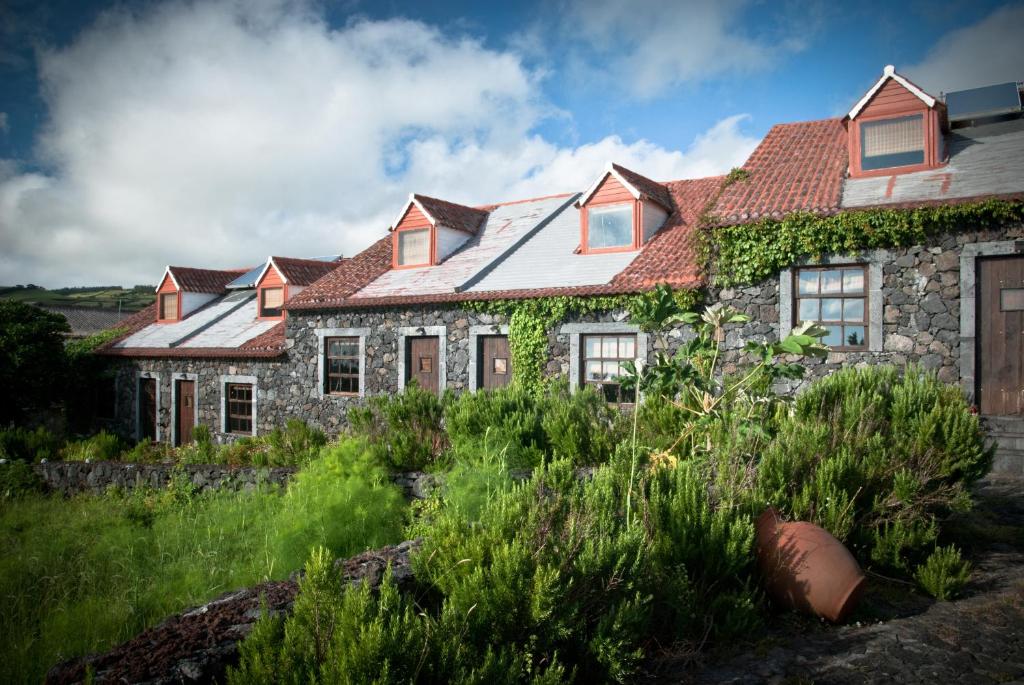

Calheta: A Quieter South‑Coast Base
Calheta sits farther east along the south coast and feels noticeably quieter than Velas. The harbor is the center of village life, with fishing boats coming and going and a handful of cafés gathered near the waterfront. Behind it, the slopes rise steeply, catching beautiful late-afternoon light.
The south coast often feels warmer and more sheltered than the north, which makes Calheta an appealing base if you prefer more stable weather. It also works well as a midpoint for travelers who want to explore both the eastern and western sides of the island without constantly backtracking.
Calheta has a more local, lived-in feel than Velas. People gather at the bakery in the morning, the harbor stays quietly active through the day, and evenings are peaceful. If you want a base that feels authentic without feeling too remote, Calheta is one of the strongest options on the island.
Where to Stay in Calheta, Sao Jorge
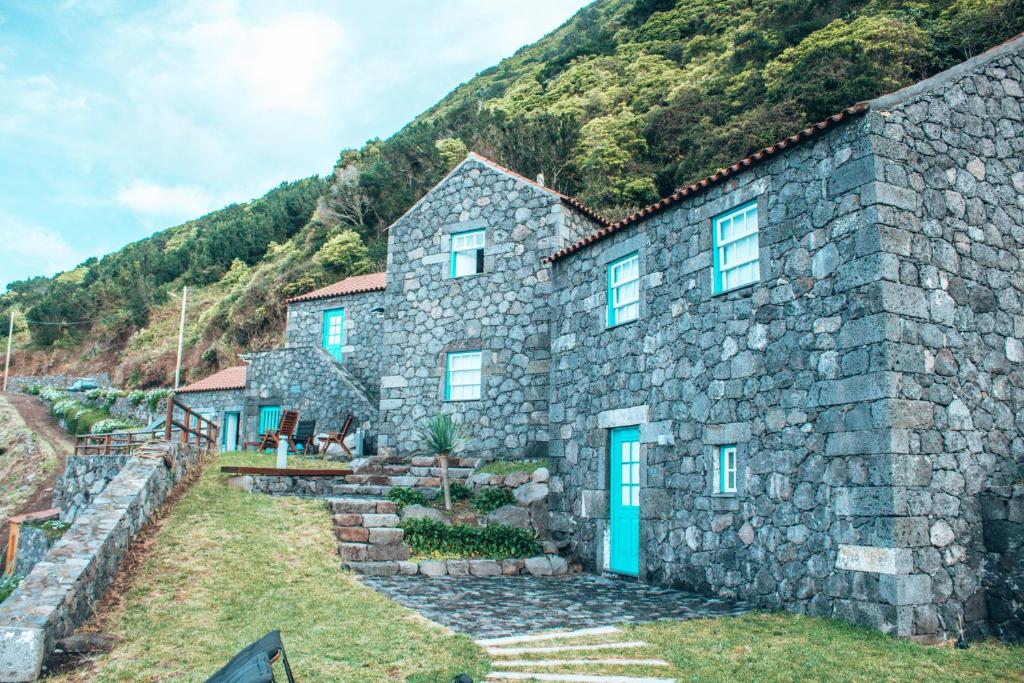
The Northern Fajãs: For Travelers Who Want Atmosphere First
The northern fajãs are the most distinctive places to stay on São Jorge. These small coastal plains sit at the base of towering cliffs and are reached by narrow, winding roads that drop from the ridge above. Life feels different here. The ocean is closer, the air is cooler, and the sound of the sea is constant.
Staying in a fajã is less about convenience and more about immersion. You wake to open Atlantic views, hear the cliffs echo when the swell is strong, and spend nights in near-total silence apart from the waves. This is the side of São Jorge where the island’s geography feels most powerful.
It is also the best area if your priorities are scenery and hiking. If you want to walk to Fajã da Caldeira de Santo Cristo, visit Fajã dos Cubres, or stay near Fajã do Ouvidor and the Simão Dias natural pools, basing yourself in the northern fajãs makes a lot of sense. It is less ideal if you want restaurants nearby or easy driving days.
Where to Stay in the Sao Jorge Fajãs


Topo and the Eastern Tip: Remote, Green and Wild
Topo is one of the oldest settlements on São Jorge, and it still feels shaped by the ocean. The lighthouse stands on a rocky headland, waves hammer the cliffs below, and on clear days you can see all the way toward Terceira. The vegetation here feels greener and more humid than on the western side of the island, giving the east a softer, wilder mood.
This part of São Jorge is remote. There are fewer services, fewer restaurant options, and fewer people. But if you want silence, space, and dramatic landscapes, it can be a deeply memorable base. It also works well for travelers who want to explore the viewpoints around Serra do Topo or spend time on the island’s eastern walking trails.
Topo is not the easiest choice for first-time visitors, and I would not recommend it without a car. But for travelers who want somewhere that feels genuinely far from everything, it is one of the most distinctive places to stay in São Jorge.
Where to Stay in Topo, Sao Jorge
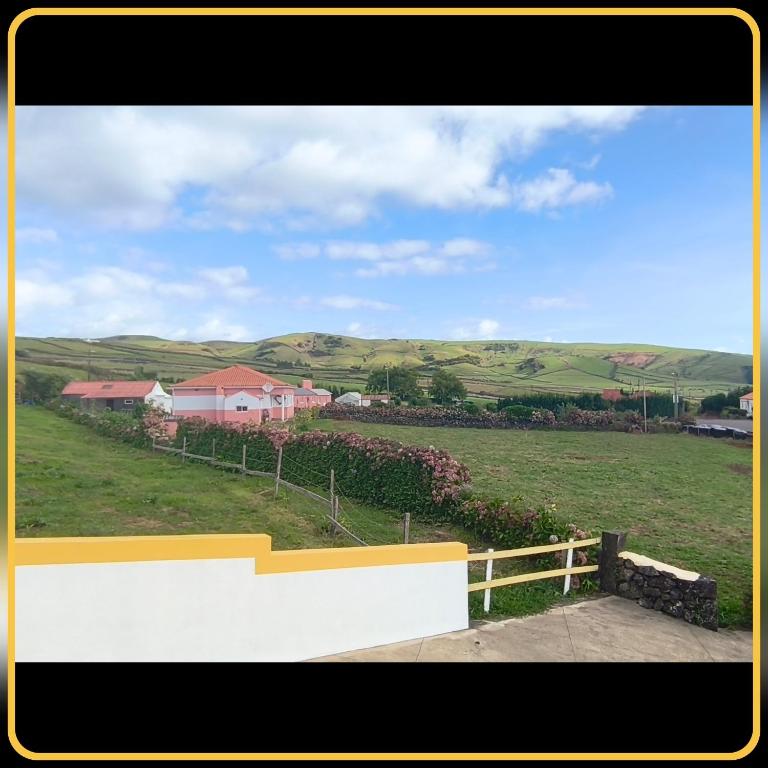
The Northwest Coast: Forests, Springs and Slow Mornings
The northwest coast of São Jorge is one of the island’s most scenic areas, with high cliffs, forested slopes, and long views toward Pico and Faial. Around Sete Fontes, the landscape feels especially lush, with shaded walking paths, freshwater springs, and a mix of native and exotic trees.
Accommodation here is limited, but the setting is beautiful if you want a quiet base surrounded by nature. Compared with the north, the west feels softer and less exposed. It is the kind of place that suits slow mornings, photography, and short walks through the trees rather than busy sightseeing days.
This may not be the most convenient part of São Jorge, but it is one of the most peaceful.
So, Which Is the Best Area to Stay in Sao Jorge?
São Jorge doesn’t have a single “best” base. It has several good ones, each offering a different way into the island.
- Velas is the easiest and most practical, especially for first‑time visitors.
- Calheta is quieter, warmer and more local.
- The northern fajãs are the most atmospheric and the most dramatic.
- Topo is remote and wild, perfect if you want solitude.
- The west coast is peaceful and scenic, ideal for nature‑focused trips.
For the full loop, best viewpoints, coffee farms and coastal trails, read my São Jorge travel guide, which covers everything beyond accommodation.
Last Updated on 30/03/2026 by Panos


